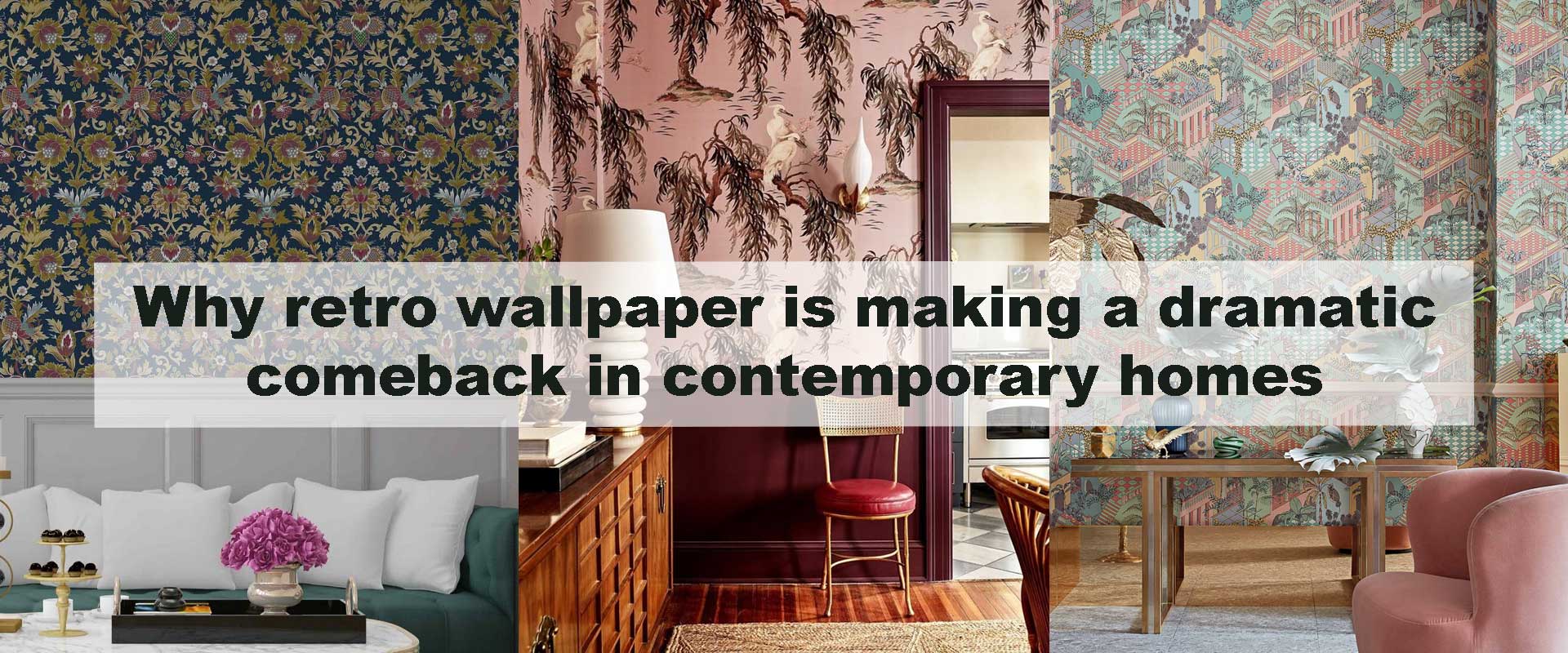
Why retro wallpaper is making a dramatic comeback in contemporary homes
Retro design has slipped back into modern interiors with surprising confidence, and retro wallpaper is leading the revival. What once felt nostalgic or theme-specific now appears inventive, warm, and visually expressive—qualities homeowners crave in an era of minimalist fatigue. As patterns evolve into sophisticated reinterpretations of mid-century, Art Deco, and ’70s-inspired motifs, they pair effortlessly with today’s architecture, especially when layered with textural furnishings or curated lighting. The renewed interest also reflects a shift toward personality-driven spaces, making this comeback both stylish and emotionally resonant.
Across contemporary homes, retro patterns create something layered rooms often miss: visual storytelling. Whether the design leans geometric, botanical, or ornamental, the style’s rhythmic symmetry adds a sense of crafted charm. A single accent wall can shift the entire mood, proving why options like Vintage Wallpaper remain timeless classics in evolving interiors.
The Real Reason Retro Wallpaper Feels Fresh Again
The revival of retro styles isn’t simply nostalgia; it reflects a deeper craving for tactility, pattern variation, and emotional warmth. After years of minimalism and monochromatic palettes, homeowners are gravitating toward expressive detailing that adds character without overwhelming a room. Retro wallpapers offer this balance with rich palettes, stylized shapes, and rhythmic compositions that feel personal yet refined.
Designers note that curved forms, layered motifs, and saturated mid-century hues introduce visual softness—something modern furnishings often lack. This shift aligns with the rise in maximalist-leaning interiors, where retro prints serve as grounding elements. Even the softer end of the spectrum, such as muted geometric repeats or tone-on-tone botanicals, blends beautifully with Scandinavian-inspired woods and neutral upholstery.
When homeowners lean into playful patterning, they often encounter inspirations similar to the mood described in Vintage floral wallpaper ideas that transform classic living rooms, which emphasizes how heirloom-style florals breathe elegance into modern layouts.
A Response to Minimalist Fatigue
Minimalism dominated interiors for years, prioritizing clean lines and pale palettes. But the pendulum is swinging back. Many homeowners feel their spaces lack warmth, narrative, and lived-in charm. Retro wallpaper fills this gap by offering pattern, personality, and movement—without compromising the serenity of a room.
Soft retro hues—mustards, olives, terracottas—pair effortlessly with trending materials like walnut, bouclé fabrics, or brass. This makes retro wallpaper remarkably adaptable for living rooms, bedrooms, and even transitional spaces.
This adaptive nature echoes themes often highlighted in pieces such as Interior designers are leaning toward panoramic nature murals to build visual depth this year, where the interplay of scale, pattern, and ambiance creates immersive room experiences.
Retro Wallpaper Works Beautifully With Contemporary Architecture
Modern homes often rely on architectural openness—expansive layouts, generous ceiling heights, minimal trim, and large glazing that floods rooms with natural light. While these features feel clean and airy, they can also create visual emptiness unless balanced with pattern or texture. Retro wallpaper steps in as the connective tissue that brings scale, intimacy, and character back into these streamlined spaces. Its motifs introduce rhythm across long sightlines, helping color and form flow naturally from one zone to the next, especially in open-concept plans where cohesion is essential.
Retro designs also complement the sculptural nature of contemporary materials. Polished concrete floors, slim-framed windows, and floating staircases gain warmth when set against mid-century curves or ’70s botanicals. Even a single feature wall can recalibrate the spatial atmosphere, making large rooms feel more composed and thoughtfully layered. This ability to soften modern geometry is a key reason why designers turn to retro patterns whenever a space needs both architectural clarity and emotional depth.
Why the pairing works so well
- Retro pattern → warmth and intimacy
Minimalist layouts can read as stark, but retro motifs introduce comforting movement. Their soft arcs, repeating shapes, and inviting palettes help large rooms feel more human-scaled and grounded. - Geometric flow → spatial balance
Mid-century geometrics bring structure to broad, uninterrupted walls. They provide a subtle framework that visually organizes open rooms without disrupting architectural simplicity. - Organic motifs → visual layers
Retro botanicals echo the natural materials used in modern interiors—oak, clay, linen, rattan—creating a layered, sensory-rich backdrop that enhances curved furniture and soft upholstery.
Designers often highlight how even understated mid-century lines can elevate a room’s architectural detailing. Paired with narrow console tables, sculptural pendants, or freeform rugs, retro wallpaper becomes an element that ties material, light, and space together with effortless cohesion.
Color Psychology Behind Retro Motifs
Retro wallpaper resonates deeply because its color palettes tap into emotional familiarity—tones that feel warm, grounded, and enduring. These shades move away from the coldness often associated with stark minimalism, instead introducing a comforting sense of presence. Retro hues bridge nostalgia and modern refinement, creating rooms that feel both stylish and deeply lived in.
Their psychological impact is subtle yet powerful: they soften edges, warm up cooler materials like metal or concrete, and make large architectural volumes feel more approachable. Whether used as a statement wall or throughout a full interior, retro colors bring emotional stability and visual balance to contemporary spaces.
Common retro color moods
- Burnt orange & terracotta → warm nostalgia; uplifting, sun-baked energy
- Olive & moss green → grounding tones that connect interiors to nature
- Golden ochre → gentle optimism and soft radiance
- Teal & petrol blue → moody mid-century coolness with elegant depth
- Muted pastels → quiet romantic charm and softened light reflection
These palettes adapt beautifully to different interpretations of retro design. They feel especially harmonious in styles like Pastel Vintage Wallpaper or the gentle, atmospheric gradients in Soft Dreamy Vintage Wallpaper, proving that retro doesn’t rely on boldness alone—its softest expressions are just as compelling.
A Perfect Fit for Today’s Textural Interior Trends
Contemporary interiors increasingly revolve around tactility—spaces layered with bouclé upholstery, ribbed timber, matte ceramics, brushed metals, and woven natural fibers. These textures create warmth, but they also need a backdrop that feels equally intentional. Retro wallpaper excels here, adding a patterned foundation that enhances how these materials interact with light and shadow, making rooms feel more dimensional and curated.
Geometric mid-century motifs sit gracefully behind rounded armchairs, fluted sideboards, or curved sofas, offering a structured balance to soft silhouettes. Retro florals, especially those with diffused edges or earthy tones, turn living areas into inviting conversation zones when paired with plush rugs and layered, ambient lighting. The wallpaper becomes part of the room’s tactile story, contributing visual rhythm to complement the physical textures.
This synergy becomes even more pronounced when designers combine retro patterning with raw, organic finishes—stone, jute, clay, and reclaimed timber. The contrast between nostalgic motifs and unrefined materials creates a collected-over-time feeling, giving contemporary homes a sense of history, craft, and lived-in depth that many minimalist spaces lack.
Retro Patterns Allow Personal Expression
While minimalism often encourages restraint, retro wallpaper embraces individuality—inviting homeowners to lean into expressive choices that still feel thoughtfully curated. Retro design offers remarkable range, from energetic ’70s curves to delicate micro-geometric repeats reminiscent of vintage textiles. This diversity allows people to build rooms that reflect their personality rather than conforming to a pared-back formula.
Those drawn to spirited interiors may gravitate toward bold ’70s palettes, rich with amber tones, olive greens, and mod oranges that ignite energy and warmth. Others may prefer the sculptural clarity of streamlined Art Deco geometry, where symmetry and refined curvature create quiet glamour. For a more timeless interpretation, Geometric Vintage Wallpaper provides structure without overwhelming the room, offering just the right amount of retro character.
Retro wallpaper becomes a form of self-expression—emotional, nostalgic, and intentionally imperfect in a way modern décor often avoids—making each room feel uniquely personal.
Retro Wallpaper Makes Small Rooms Feel More Designed
Small rooms often lack architectural presence, which is why pattern becomes a powerful design tool in compact spaces. Retro wallpaper introduces purpose and personality, turning secondary areas—like powder rooms, reading nooks, or walk-in closets—into memorable design moments that feel planned rather than overlooked.
Mid-scale repeats work beautifully in tight spaces because they create visual depth without overwhelming the eye. Soft retro botanicals or muted mod patterns keep the room feeling open and airy, while vibrant retro colorways inject energy into spaces that might otherwise feel purely functional. Even narrow hallways, transitional zones, or entryways become more welcoming with pattern, giving the home a cohesive sense of charm.
Designers rely on retro wallpaper to elevate these areas precisely because it delivers a high-impact transformation with minimal effort. When used thoughtfully, it turns small rooms into curated, expressive pockets of style that enhance the home’s overall narrative.
The Flexibility of Peel-and-Stick Retro Wallpaper
For renters, frequent movers, or design lovers who enjoy refreshing their interiors often, peel-and-stick wallpaper has transformed what retro styling can look like in everyday homes. Its versatility allows people to explore bolder palettes, try out new pattern scales, or bring in nostalgic mid-century touches without committing to permanent installation. Instead of feeling like a risk, experimenting becomes part of the creative process—freeing homeowners to shift their space with seasons, moods, or new décor choices.
Peel-and-stick formats also streamline the practical side of decorating. They install quickly, peel away cleanly, and require virtually no prep, adhesives, or professional help. This ease encourages playful styling: a weekend makeover, a refreshed home office corner, or a cozy retro reading wall can happen instantly. Retro motifs look particularly captivating in peel-and-stick because digital printing sharpens mid-century geometry, Art Deco curves, and ’70s botanicals, giving each design greater clarity and impact.
For those who love low-commitment creativity, Peel & Stick Vintage Wallpaper blends expressive retro charm with the freedom to redesign whenever inspiration strikes.
Retro Wallpaper Enhances Focal Points Without Overwhelming
One of retro wallpaper’s most impressive strengths is its ability to gently direct attention without dominating a room. These patterns excel at framing architectural moments—turning quiet corners or transitional zones into defined, memorable spaces. Whether the design is geometric, botanical, or Deco-inspired, retro motifs add intention and rhythm, guiding the eye toward areas that deserve emphasis.
Ideal focal areas
- Reading alcoves gain intimacy with soft curves or micro-geometric repeats.
- Dining nooks feel more cohesive when anchored by a stylized retro backdrop.
- Fireplace surrounds transform into sculptural features when framed by rhythmic patterning.
- Floating shelves stand out against patterned walls, creating a curated display moment.
- Bed backdrops benefit from mid-century lines or ’70s botanicals that add depth and visual calm.
By highlighting these key zones, retro wallpaper enriches the room’s overall design language. Instead of overpowering the space, pattern works like a subtle, artistic spotlight—enhancing architectural character while preserving modern balance.
How Retro Meets Modern: Blending Styles Seamlessly
Retro wallpaper integrates effortlessly into today’s interiors because its expressive motifs balance modern architectural clarity with nostalgic warmth. Instead of feeling thematic or era-locked, these patterns adapt to current design languages, offering gentle contrast, tonal richness, and sculptural rhythm. This fusion allows homeowners to create rooms that feel both curated and emotionally resonant—spaces where past craftsmanship and contemporary simplicity coexist beautifully.
1. Japandi + Retro
Japandi’s calm minimalism becomes even more inviting when paired with subtle retro geometrics. Soft mid-century lines introduce quiet movement across the walls while preserving the serene palette typical of Japandi spaces. The result is a room that feels thoughtful rather than sparse, grounding natural woods and low-slung silhouettes with a whisper of pattern. Retro wallpaper adds the warmth that tightly edited spaces often crave, allowing tranquility and personality to live side by side.
2. Mid-Century Modern Revival
Mid-century furnishings naturally resonate with retro wallpaper, but the pairing feels unexpectedly fresh in contemporary settings. Tapered legs, walnut tones, and sculptural lighting fixtures find a harmonious rhythm against geometric repeats or stylized botanicals. The wallpaper acts as a narrative layer—amplifying the warmth of woodgrain, highlighting architectural lines, and establishing a cohesive design language. Even a single accent wall can transform a mid-century room into a balanced blend of modern livability and vintage charm.
3. Organic Contemporary
Organic contemporary interiors focus on softness, natural materials, and fluid silhouettes, making botanical retro prints an ideal companion. Their gently curved forms echo the movement found in stoneware ceramics, linen upholstery, or curved sofas. This interplay creates a layered environment where pattern feels like a natural extension of the décor instead of an added element. Retro botanicals introduce subtle nostalgia while reinforcing the room’s earthy, grounded mood—an elegant bridge between past texture and present calm.
4. Glam Deco
Glam Deco thrives on expressive geometry, metallic accents, and sculptural detail, making retro ornamental patterns an effortless fit. Art Deco–inspired curves, fans, and elongated lines shimmer beautifully when paired with velvet upholstery, brass fixtures, or arched mirrors. These motifs offer both drama and refinement, elevating dining rooms, lounges, and bedroom suites with a luxurious yet structured presence. A polished interpretation of this style is reflected elegantly in Ornamental Vintage Wallpaper, where retro character meets contemporary sophistication.
Retro Wallpaper as a Sustainable Design Choice
Homeowners today are increasingly drawn to décor that supports long-term use rather than rapid stylistic turnover, and retro wallpaper aligns beautifully with this shift. Its motifs carry an inherent timelessness—patterns that once defined earlier decades now feel grounded, familiar, and emotionally connected, reducing the impulse to constantly refresh walls. Instead of trends that fade quickly, retro designs foster mindful decorating by encouraging rooms to evolve slowly and intentionally.
Beyond style longevity, the material itself often proves far more resilient than standard painted surfaces. Quality wallpaper resists everyday wear, stands up to high-traffic environments, and maintains its richness for years, making it not just a style choice but a meaningful investment in sustainable living. As homeowners move toward pieces that endure, retro wallpaper’s durability and lasting visual relevance make it an environmentally thoughtful option.
Material Innovation Makes Retro Better Than Ever
What truly elevates retro wallpaper’s comeback is how modern material innovation breathes new life into classic motifs. Advanced printing technology captures sharper lines, richer tonal gradients, and more dimensional detailing than earlier eras could achieve, giving retro patterns newfound sophistication. Today’s wallpapers maintain color integrity longer, resist fading even in sunlit rooms, and offer improved surface strength that suits active households.
This evolution also expands stylistic versatility. Retro designs now appear across matte finishes that soften light, textured surfaces that mimic woven fabrics, and refined papers with a subtle architectural character. Larger repeat scales allow mid-century shapes and ’70s botanicals to feel balanced on wide statement walls, while smaller motifs gain precision and clarity. These advancements make retro wallpaper compatible with minimal, contemporary, or luxury interiors, allowing vintage charm to feel fully at home in modern design.
Retro Wallpaper vs. Modern Minimalist Walls
| Feature | Retro Wallpaper | Modern Minimalist Walls |
|---|---|---|
| Visual Impact | High; expressive and layered | Low; clean and simple |
| Mood | Warm, nostalgic, personal | Calm, sparse, sometimes cold |
| Best Use | Living rooms, bedrooms, feature walls | Kitchens, ultra-modern layouts |
| Flexibility | Works with multiple décor styles | Can feel repetitive |
| Texture Compatibility | Pairs well with contemporary materials | Requires strong furniture/textural accents |
How to Choose the Right Retro Wallpaper for Your Home
Selecting retro wallpaper becomes effortless when you understand how scale, color, and room architecture interact. Retro patterns have strong visual personalities, so choosing the right one can transform an interior from feeling simply styled to beautifully curated. The goal is to let the pattern enhance your space, not compete with it, which is why thoughtful pairing makes all the difference.
1. Match the Scale to the Room
Pattern scale determines how a room feels before furniture, lighting, or accessories enter the equation. Large mid-century geometrics or sweeping ’70s botanicals thrive in open layouts where they can breathe and make a confident design statement. Smaller or micro-patterned repeats—often inspired by vintage textiles—shine in intimate rooms, adding depth without crowding the walls. When the scale aligns with the room’s proportions, the wallpaper supports the architecture rather than overwhelming it.
2. Choose Colors That Support Your Palette
Color harmony is the key to making retro wallpaper feel intentional instead of nostalgic. Warm neutrals like sand, caramel, or muted walnut echo natural woods and soften modern lines, creating grounding warmth. Deeper shades—petrol blue, olive, ochre—pair elegantly with mid-century lighting, brass accents, or sculptural décor. Think of your existing palette as the rhythm and the wallpaper as the melody; when chosen thoughtfully, they blend into a cohesive composition.
3. Look for Patterns That Add Rhythm
Retro patterns are known for their musicality—geometric lines, repeating arcs, mod grids, and stylized florals all introduce movement. When a room feels static or lacks a focal point, a rhythmic retro print can guide the eye and create flow. Straight-line geometrics anchor open spaces, while softer curved motifs bring warmth to rooms with crisp modern furniture. The right pattern doesn’t scream for attention; instead, it subtly shapes how the room feels and moves.
4. Use Pattern to Frame Architectural Details
One of the hidden strengths of retro wallpaper is how effectively it highlights a room’s structure. A mid-century motif placed behind open shelving creates a layered, curated backdrop, while Art Deco curves can draw attention to high ceilings or arched doorways. Even small wall niches, dining alcoves, or reading corners gain definition when framed with pattern. Retro wallpaper doesn’t just decorate—it adds architectural clarity and emotional dimension to the home.
Retro Wallpaper Styles That Are Trending Now
Mid-Century Geometric
Mid-century geometric wallpaper continues to lead the retro revival because of its clean rhythm, sculptural simplicity, and architectural feel. These patterns create a refined framework around contemporary furnishings, especially when paired with walnut finishes, globe lighting, or tapered silhouettes. Their bold symmetry introduces order without stiffness, making them a perfect match for open layouts that need subtle visual anchoring.
Soft ’70s Botanicals
’70s-inspired botanicals are returning with a gentler, more romantic mood, using earth-washed greens, amber tones, and flowing petal shapes that feel nostalgic without appearing dated. These designs soften modern architecture by adding natural curvature and warm color depth. Their diffused, dreamy palette pairs beautifully with rattan textures, linen sofas, and low lighting, offering a grounded atmosphere ideal for cozy living spaces.
Art Deco–Inspired
Art Deco patterns merge retro glamour with sculptural precision, creating expressive walls that feel both vintage and luxurious. Curved arcs, fan motifs, and metallic accents catch ambient light in a way that adds refined drama to bedrooms and dining rooms. When balanced with contemporary minimal furniture, these motifs bring a sophisticated blend of past and present, elevating the room’s architectural character effortlessly.
Micro-Patterned Retro Textures
Micro-patterned retro designs appeal to homeowners who want depth without heavy visual contrast. These finely detailed textures provide a soft backdrop that gently structures a room while keeping the palette calm and airy. Choices echoing the feel of Textured Vintage Wallpaper work beautifully in offices, hallways, and multipurpose spaces where subtlety matters. Their understated presence allows furniture and décor to shine without losing the warmth of retro styling.
Where Retro Wallpaper Works Best
Retro wallpaper adapts remarkably well across contemporary homes because its expressive patterns help define purpose and personality in each room.
In living rooms, retro geometry or botanicals create an inviting centerpiece that ties together seating, artwork, and lighting. Bedrooms benefit from the soft curves and warm palettes of retro motifs, which introduce calm atmosphere while still offering visual depth behind a headboard. Entryways become memorable transition zones, where a vintage-inspired design adds immediate charm and sets the emotional tone for the rest of the home.
In dining spaces, Deco and mid-century prints frame the table setting by giving the room a refined, cohesive structure. And in creative zones or home studios, expressive retro motifs encourage imagination and rhythm, helping the space feel intentional without overwhelming productivity. Every room gains a sense of crafted individuality, turning simple surfaces into meaningful design expressions.
Conclusion
The dramatic resurgence of retro wallpaper reflects a larger movement toward richer, more emotionally layered interiors. Homeowners are rediscovering the beauty of crafted patterns, warm palettes, and nostalgic motifs that enhance rather than compete with contemporary architecture. From expressive feature walls to soft geometric repeats, retro design has proven that personality and timelessness can coexist effortlessly. As more people gravitate toward meaningful styling, retro wallpaper stands as one of the most compelling choices for transforming modern homes with depth, charm, and enduring character.
Frequently Asked Questions
Is retro wallpaper difficult to pair with modern furniture?
Not at all. Retro motifs complement clean-lined furnishings beautifully by softening geometry and adding warmth.
Does retro wallpaper make rooms feel smaller?
Only if the scale is mismatched. Small repeats or tone-on-tone palettes maintain spaciousness in compact rooms.
Is retro wallpaper too bold for minimalist homes?
Not necessarily. Subtle retro patterns offer warmth without overwhelming minimalist layouts.
Can retro wallpaper work in open-concept homes?
Yes. Retro motifs help connect zones, introduce rhythm, and build cohesive color stories.