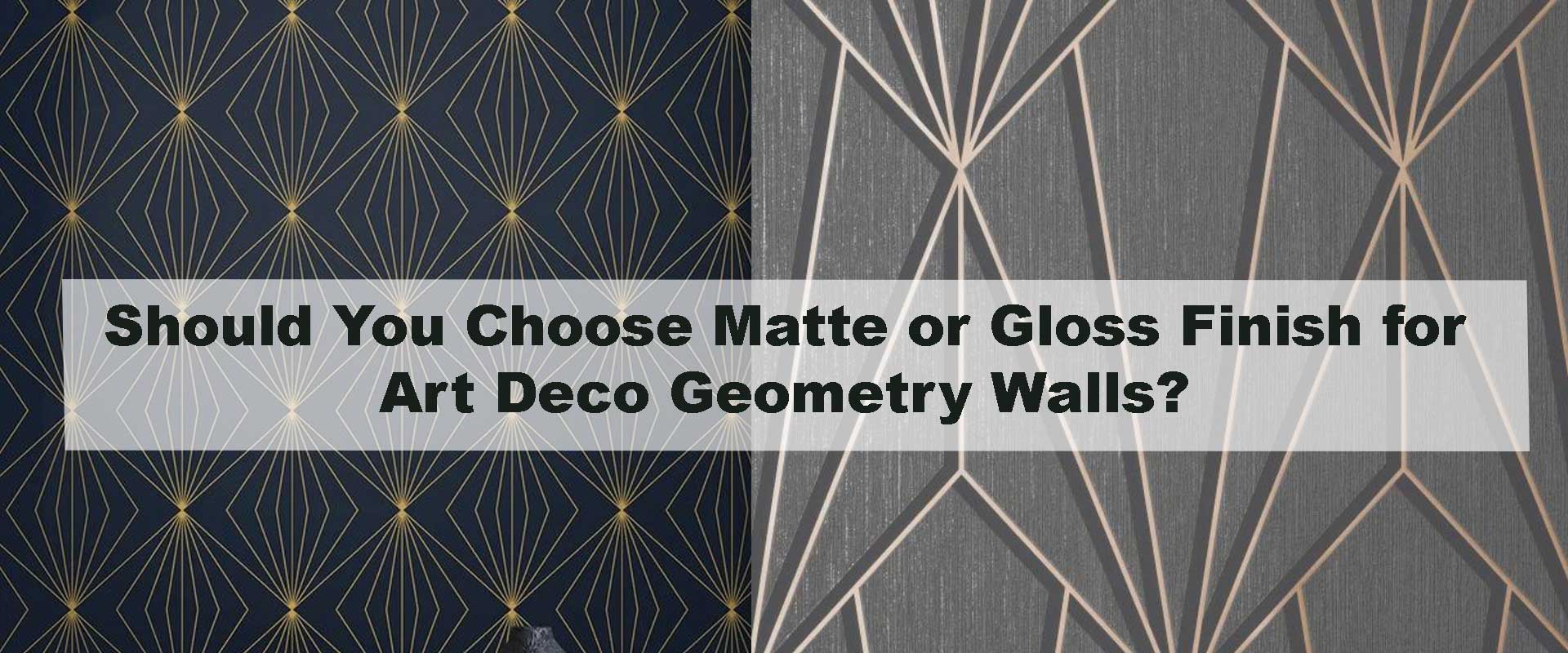
Should You Choose Matte or Gloss Finish for Art Deco Geometry Walls?
Bold geometry, striking symmetry, and sculptural linework define Art Deco interiors. Yet beyond pattern choice, one decision quietly shapes how these designs feel in real spaces—the surface finish. When planning Art Deco geometry walls, choosing between matte and gloss is not just a style preference; it directly affects light behavior, depth perception, and overall atmosphere. If you’re investing in statement walls that rely on rhythm and precision, understanding how finish influences the final result becomes essential.
Art Deco geometry walls thrive on contrast, repetition, and visual clarity. The finish you select determines whether those elements appear soft and architectural or luminous and dramatic. This guide breaks down matte and gloss finishes in detail, helping you decide which works best for your space, lifestyle, and design intent—without overwhelming the geometry that makes Art Deco so powerful.
Understanding Finish Choices in Art Deco Geometry Walls
Art Deco design is rooted in precision, symmetry, and deliberate luxury. Unlike organic or free-form wall styles, geometric Art Deco walls are highly responsive to surface treatment. The finish you choose doesn’t sit quietly in the background—it actively shapes how the pattern performs throughout the day.
Think of the finish as a visual filter. It controls how light moves across sharp angles, stepped forms, and repeating motifs. Depending on whether the surface absorbs or reflects light, the same geometric pattern can feel architectural and composed or dramatic and kinetic. This makes finish selection a foundational decision rather than a decorative afterthought.
Why Finish Matters More With Geometric Patterns
Geometric Art Deco walls rely on clean edges, disciplined repetition, and structured symmetry. These elements are inherently sensitive to changes in reflectivity. A matte finish gently softens transitions between shapes, helping the geometry feel stable and grounded. A gloss finish, on the other hand, intensifies edges and highlights movement, giving patterns a sense of energy and depth.
Because Art Deco geometry is exact by nature, even subtle variations in sheen can dramatically alter how balanced or bold a wall appears. This sensitivity becomes even more pronounced in spaces where light shifts from morning brightness to evening ambience. In such rooms, the finish plays an active role in how the wall evolves visually over time.
Light, Reflection, and Depth Perception
Finish determines how light behaves once it hits the wall surface. Matte finishes scatter light evenly, reducing glare and keeping visual focus on form and composition. This creates a calm, consistent reading of geometry from all angles.
Gloss finishes reflect light back into the space, increasing contrast and enhancing dimensionality. As light sources change, the geometry appears to shift and layer, adding visual movement. In Art Deco interiors—where alignment and proportion are essential—this can heighten elegance when used thoughtfully or feel overpowering if not balanced carefully. The right choice depends on whether you want geometry to quietly frame the room or actively command attention.
Matte Finish: Subtle Sophistication for Art Deco Geometry
Matte finishes bring a refined restraint to Art Deco geometry walls. They allow the design to assert itself through structure rather than shine, making them ideal for interiors that prioritize balance, composure, and long-term elegance.
How Matte Enhances Geometric Clarity
By minimizing reflections, matte surfaces keep attention on the pattern itself. Lines appear crisp without harsh highlights, and repeated motifs feel orderly rather than busy. This is particularly effective for intricate linework, fan patterns, and stepped designs where visual clarity defines quality.
In spaces with layered décor or strong architectural features, matte Art Deco geometry walls act as a stabilizing backdrop. They reinforce design intent without competing for dominance, allowing furnishings, lighting, and materials to coexist harmoniously.
Best Spaces for Matte Art Deco Geometry Walls
Matte finishes feel especially natural in spaces designed for rest, focus, or understated sophistication. Bedrooms, libraries, and refined living areas benefit from the softness matte surfaces provide. When paired with diffused lighting, tactile fabrics, and warm metallic accents, matte geometry walls create an atmosphere that feels curated rather than performative.
This approach reflects the understated elegance highlighted in Why Art Deco Wallpaper Is Returning as the Biggest Luxury Design Trend, where luxury is expressed through restraint rather than overt shine.
Matte Finish and Color Depth
Matte finishes excel at revealing color richness. Deep blues, emerald greens, charcoal blacks, and warm neutral tones take on a velvety depth without reflective interference. This quality makes matte especially appealing for darker Art Deco palettes, where mood and sophistication are central to the design.
For homeowners drawn to interiors that feel intentional, grounded, and enduring, matte finishes often read as timeless rather than trend-driven.
Gloss Finish: Bold Glamour for Statement Geometry Walls
Gloss finishes celebrate the expressive, forward-looking side of Art Deco. They amplify light, heighten contrast, and introduce a sense of movement that aligns perfectly with the era’s fascination with progress and opulence.
How Gloss Amplifies Art Deco Geometry
Gloss surfaces act like mirrors, responding dynamically to both natural and artificial light. As illumination shifts, geometric forms appear more sculptural—lines sharpen, curves gain fluidity, and layered motifs feel more pronounced.
This interaction can elevate even simple geometric patterns into powerful visual statements. When combined with metallic detailing or high-contrast color schemes, gloss finishes reinforce Art Deco’s signature sense of glamour and confidence.
Where Gloss Finishes Shine Best
Gloss Art Deco geometry walls thrive in spaces designed to impress and engage. Dining areas, entrance halls, and entertainment rooms benefit from their reflective energy, especially during evening hours. Artificial lighting becomes part of the design, casting highlights that animate the geometry.
In interiors inspired by cinematic drama, gloss finishes echo the visual impact explored in How Art Deco Geometry Transforms Modern Living Spaces, where reflection becomes an intentional design tool rather than a byproduct.
Gloss and Perceived Space Expansion
Because gloss reflects light outward, it can make rooms feel more open and luminous. Narrow corridors or areas with limited daylight often benefit from this effect, as reflection helps distribute available light more evenly.
That said, restraint is key. Dense or overly complex geometry paired with high gloss can overwhelm smaller spaces. Successful use relies on balanced pattern selection, ensuring reflection enhances rather than distracts from the design.
Matte vs Gloss: A Direct Comparison for Art Deco Geometry Walls
Understanding the practical differences between matte and gloss finishes helps clarify which aligns best with your interior goals.
| Feature | Matte Finish | Gloss Finish |
|---|---|---|
| Light Interaction | Absorbs and diffuses light | Reflects and amplifies light |
| Visual Mood | Calm, refined, architectural | Dramatic, glamorous, expressive |
| Pattern Emphasis | Highlights structure subtly | Enhances depth and contrast |
| Best For | Relaxed, elegant interiors | Statement and social spaces |
| Color Appearance | Deep, velvety tones | Bright, high-contrast tones |
| Maintenance Feel | Forgiving, understated | Polished, high-impact |
Both finishes suit Art Deco geometry walls; the decision depends on how much presence you want the wall to command within the room.
Matching Finish to Art Deco Geometry Styles
Not all Art Deco geometry behaves the same once it’s placed on the wall. Some patterns rely on precision and restraint, while others thrive on drama and dimensionality. Because of this, the relationship between surface finish and pattern complexity plays a defining role in how successful the final wall feels.
Choosing the right finish is less about rules and more about understanding how a pattern wants to be experienced. When finish and geometry work in harmony, the wall feels intentional, balanced, and unmistakably Art Deco.
Line-Based and Fan Motif Geometry
Clean linework, sunbursts, chevrons, and fan motifs often reach their full potential with matte finishes. By reducing surface reflection, matte allows symmetry, spacing, and proportion to remain visually dominant. The geometry reads clearly and confidently without competing with light glare.
This pairing creates walls that feel composed and architectural rather than decorative for decoration’s sake. The result is a refined statement—one that draws attention through structure instead of shine. Such designs align beautifully with interiors that rely on Geometric Art Deco Wallpaper to establish rhythm, balance, and visual order rather than overt spectacle.
Layered, 3D, and Metallic Geometry
More dimensional Art Deco patterns—particularly those with stepped layers, shadow play, or metallic accents—tend to benefit from gloss finishes. Reflection enhances depth, making the geometry feel sculptural and alive as light moves across the surface.
Gloss introduces visual motion, allowing layered elements to shift subtly throughout the day. When paired with reflective materials like brass lighting, mirrored furniture, or polished stone, gloss geometry walls reinforce Art Deco’s luxurious identity. This effect mirrors the bold dimensional presence found in 3D Effect Art Deco Wallpaper, where depth becomes a defining feature rather than a secondary detail.
Marble-Inspired and Textured Geometry
Geometry inspired by stone, marble veining, or tactile textures typically favors matte finishes. A low-sheen surface preserves the illusion of material depth, allowing patterns to feel grounded and authentic rather than glossy and artificial.
Matte prevents reflective highlights from flattening or overpowering natural-looking textures. This creates a more restrained, sophisticated interpretation of Art Deco—one where elegance comes from surface nuance rather than shine. The approach works especially well with Marble Art Deco Wallpaper, where texture and pattern already carry enough visual interest on their own.
Lighting Conditions: The Deciding Factor Many Overlook
Lighting is often the silent influencer in finish selection. Even the most carefully chosen Art Deco geometry can feel underwhelming or excessive if lighting conditions are ignored. Finish and light must work together, not compete.
Understanding how your space behaves throughout the day helps ensure the geometry remains visually balanced from morning through evening.
Natural Light and Finish Behavior
Rooms filled with natural daylight typically benefit from matte finishes. By diffusing light evenly, matte surfaces reduce glare and prevent sharp reflections that can disrupt the clarity of geometric patterns—especially on larger walls.
Gloss finishes in bright rooms can sometimes create overly reflective hotspots, pulling attention away from the geometry itself. However, in spaces with filtered or limited daylight, gloss can play a supportive role by redistributing light and preventing the wall from feeling flat or muted.
Artificial Lighting and Evening Ambience
Artificial lighting reveals the true character of gloss finishes. Warm ambient lighting interacts beautifully with reflective surfaces, creating depth, contrast, and a sense of evening glamour that feels distinctly Art Deco.
Matte finishes, in contrast, offer visual consistency. They maintain the same tone and texture regardless of lighting shifts, making them ideal for spaces where calm continuity is preferred. Designers often evaluate these differences carefully when selecting finishes for rooms that transition from daylight functionality to nighttime atmosphere.
Lifestyle Considerations When Choosing Finish
While visual impact matters, the true success of an Art Deco geometry wall is revealed through daily life. How the surface responds to movement, touch, lighting shifts, and routine activity determines whether the wall continues to feel refined—or slowly becomes a source of frustration. Finish choice, in this sense, is as much about lifestyle rhythm as it is about design preference.
A beautifully designed wall should support the way a home is used, not demand constant attention to preserve its appearance.
Matte Finish and Everyday Living
Matte finishes feel naturally accommodating. Their low-sheen surface diffuses light gently, which helps mask fingerprints, soft scuffs, and minor surface inconsistencies that occur through everyday use. This makes matte Art Deco geometry walls especially well suited to spaces that see regular activity without feeling busy or exposed.
In family-oriented homes, shared living areas, or personal spaces designed for calm, matte finishes maintain their visual integrity with minimal upkeep. The geometry remains elegant and intentional, even as the room evolves through daily routines. Rather than feeling precious, matte walls feel confident—designed to be lived with, not tiptoed around.
Gloss Finish and Maintenance Expectations
Gloss finishes project polish and confidence, but they also reveal more of their environment. Reflections accentuate surface detail, which means fingerprints, smudges, and light marks are more visible—particularly in high-touch or high-traffic areas.
That said, for homes designed around hosting, visual drama, or statement interiors, this trade-off often feels worthwhile. Gloss Art Deco geometry walls reward attention with heightened impact, especially under curated lighting. When chosen deliberately, gloss becomes a conscious design decision—an embrace of glamour rather than a compromise on practicality.
Combining Matte and Gloss for Layered Art Deco Walls
Some interiors don’t need to choose sides. A layered approach that blends matte and gloss finishes can create depth, hierarchy, and sophistication without leaning too heavily on a single visual effect.
By varying finish rather than pattern, the geometry gains nuance—allowing certain elements to step forward while others remain composed and supportive.
Accent Walls and Contrast Techniques
Using gloss on a single feature wall while keeping surrounding walls matte creates a controlled contrast that feels intentional rather than overpowering. The geometry gains prominence without dominating the entire room, allowing light to interact selectively with the design.
This approach works particularly well in open-plan spaces, where visual zoning matters. It reflects the principles discussed in When Art Deco Accent Walls Feel More Luxurious Than Full Coverage, where restraint strengthens impact and gives statement walls room to breathe.
Pattern-Based Finish Variation
Some Art Deco geometric designs incorporate both matte and gloss elements within the same pattern. Instead of relying on bold color shifts, this technique introduces contrast through surface interaction alone. Light subtly catches certain lines or shapes while others remain softly grounded.
The result feels layered and bespoke—less decorative, more architectural. For advanced Art Deco interiors, this finish variation adds quiet complexity, delivering sophistication that feels intentional, curated, and enduring rather than overtly dramatic.
Choosing Finish Based on Room Function
Every room engages with Art Deco geometry walls in a different way. Movement patterns, lighting behavior, and emotional purpose all influence how a finish will be experienced over time. Viewing finish selection through the lens of function helps ensure the geometry enhances the room’s role rather than working against it.
Instead of asking which finish looks better in isolation, it’s more effective to consider how each space is meant to feel, flow, and perform.
Living Rooms and Social Areas
Living rooms and dining areas are naturally animated spaces. Light shifts throughout the day, people move constantly, and conversation gives the room an energetic rhythm. In these settings, gloss finishes often perform exceptionally well, as they respond dynamically to both natural and artificial light.
Reflective surfaces amplify the geometry’s presence, making patterns feel more celebratory and expressive during gatherings or evening hours. When paired thoughtfully with Art Deco Wallpaper for Living Room, gloss finishes heighten the sense of occasion without feeling excessive, turning geometry into a focal point that supports social interaction rather than overpowering it.
Bedrooms and Private Spaces
Bedrooms and personal retreats demand a different relationship with geometry. Here, visual calm and emotional softness take priority over drama. Matte finishes excel in these environments by absorbing light and minimizing contrast, allowing the geometry to remain present without becoming intrusive.
Subtle geometric patterns rendered in matte finishes add depth and refinement while preserving a restful atmosphere. This balance works seamlessly with Art Deco Wallpaper for Bedrooms, where structure and symmetry enhance comfort rather than stimulation, supporting spaces designed for unwinding and recovery.
Transitional Spaces and Entryways
Transitional areas such as hallways, corridors, and entryways act as visual connectors between rooms. These spaces often lack generous natural light, making finish choice particularly impactful. Gloss finishes can be highly effective here, reflecting available light to prevent narrow passages from feeling enclosed or flat.
In brighter entryways, however, matte finishes offer a more composed and intentional first impression. They allow geometry to introduce structure and identity without overwhelming the transition into the home. Choosing the finish based on light availability ensures these in-between spaces feel purposeful rather than overlooked.
Common Mistakes to Avoid When Choosing Finish
Even the most striking Art Deco geometry can lose its impact if the finish choice is made too quickly. Because geometric patterns are precise and visually assertive, small misjudgments in sheen often become amplified once the wall is fully installed.
One common mistake is overusing gloss in compact or low-clearance rooms. While gloss reflects light beautifully, excessive shine in tight spaces can cause visual fragmentation, making geometry feel busy rather than elegant. Reflections multiply angles and lines, which can overwhelm the eye instead of guiding it.
On the other end of the spectrum, pairing matte finishes with overly intricate or densely layered patterns can dull the design’s presence. Without enough contrast or light interaction, complex geometry may appear flat or visually restrained, losing the dimensional character Art Deco is known for.
Lighting is another frequently overlooked factor. Ignoring window orientation, light temperature, or fixture placement often leads to unintended glare, uneven highlights, or walls that feel lifeless at certain times of day. A finish that looks perfect in a showroom can behave very differently once exposed to real-world lighting conditions.
Testing samples on-site—under both daylight and evening lighting—remains one of the most reliable ways to avoid regret. Observing how a finish responds throughout the day ensures the geometry performs consistently, not just in ideal conditions.
Final Thoughts: Matte or Gloss for Art Deco Geometry Walls?
Choosing between matte and gloss finishes for Art Deco geometry walls is ultimately about intention rather than trend. Matte offers quiet confidence, architectural clarity, and a timeless sense of balance, while gloss delivers bold glamour, light movement, and visual drama rooted in Art Deco’s celebratory spirit. Both finishes express different sides of the same design language.
Neither option is inherently better—each serves a distinct purpose within the broader world of Art Deco Wallpaper. By considering lighting conditions, room function, pattern complexity, and everyday lifestyle, you can select a finish that enhances the geometry instead of competing with it. When chosen thoughtfully, the right finish transforms Art Deco geometry walls into enduring design statements that feel intentional, personal, and refined.
FAQs About Matte vs Gloss Art Deco Geometry Walls
Do matte finishes make Art Deco geometry look flat?
No. Matte finishes emphasize structure and proportion, allowing geometry to read clearly without glare.
Are gloss finishes suitable for small rooms?
Yes, when patterns are balanced. Gloss can reflect light and visually expand compact spaces if geometry is not overly dense.
Which finish works better with metallic Art Deco accents?
Gloss often pairs more dramatically with metallics, while matte creates a softer, more balanced contrast.
Can I mix matte and gloss finishes in one room?
Absolutely. Combining finishes adds depth and helps highlight feature walls without overwhelming the space.
Does finish affect the longevity of Art Deco geometry walls?
Both finishes are durable when chosen correctly. The key difference lies in maintenance preferences rather than lifespan.