Should you layer statement lighting over dramatic nature wallpaper or keep it simple?
Dramatic nature wallpaper instantly defines the emotional tone of a space. Expansive landscapes, moody forests, and layered natural scenes create atmosphere before any lighting decision is made. Once a wall carries that much visual weight, lighting must respond thoughtfully—either enhancing depth or quietly stepping back to let the design breathe. Choosing between statement lighting and a simpler approach isn’t about trend preference, but about preserving balance.
Nature-inspired interiors thrive on cohesion. When lighting aligns with the wallpaper’s scale, contrast, and mood, the room feels intentional and grounded. When it competes, even high-end design can feel unsettled. Understanding how different nature styles interact with lighting makes this choice far clearer.
How Dramatic Nature Wallpaper Sets the Visual Hierarchy
Dramatic nature wallpaper almost always establishes itself as the visual anchor of a room, particularly when it spans an entire wall surface. Layered forests, sweeping mountain ranges, or softly dissolving horizons instinctively draw the eye and hold it there, shaping how the space is perceived from the moment you enter. Because these designs carry such strong spatial authority, lighting must respect that hierarchy rather than attempt to redirect attention.
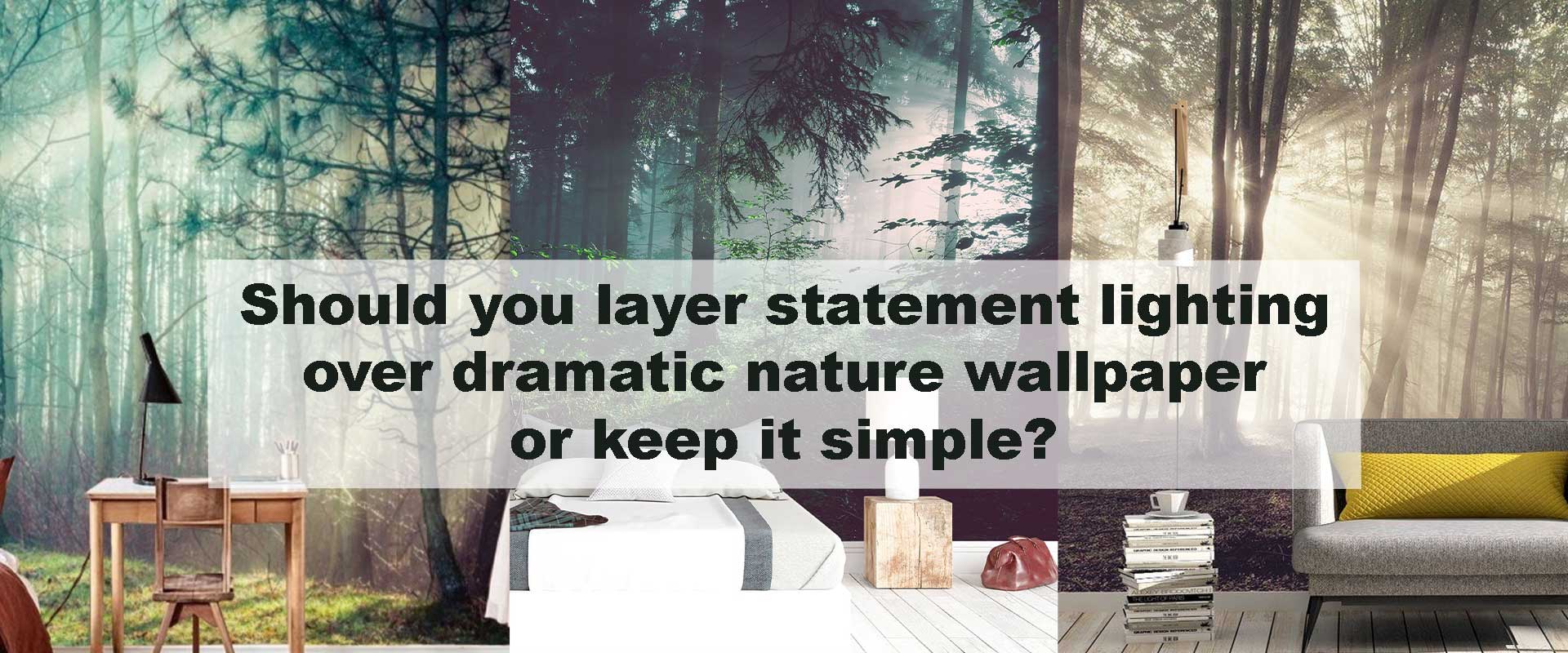
Highly detailed compositions introduce their own sense of rhythm and movement. In interiors styled with Forest nature wallpaper, overlapping foliage, shadow play, and organic depth already create a feeling of enclosure. Subtle lighting helps preserve this continuity, allowing the wall to feel immersive and cohesive rather than visually interrupted. When illumination remains restrained, the wallpaper’s layered depth becomes more pronounced, encouraging the eye to move naturally through the scene instead of jumping between competing focal points.
Visual calm is usually achieved when one element leads the narrative. When nature wallpaper takes on that role, lighting functions best as a supporting frame—enhancing texture and atmosphere without challenging the wall’s dominance.
When Statement Lighting Works With Nature Wallpaper
Statement lighting can complement nature wallpaper beautifully when there is enough spatial freedom for both elements to coexist without visual tension. The key lies in balance—ensuring that lighting engages in dialogue with the wall rather than competing for control.
Open Layouts With Height and Breathing Space
Large living rooms and dining areas often benefit from vertical layering, especially when ceilings are generous and sightlines remain open. In these environments, a refined statement fixture can help balance proportions, anchoring the upper portion of the room while the wallpaper grounds the walls. Here, lighting feels architectural in purpose, contributing to structure rather than ornamentation.
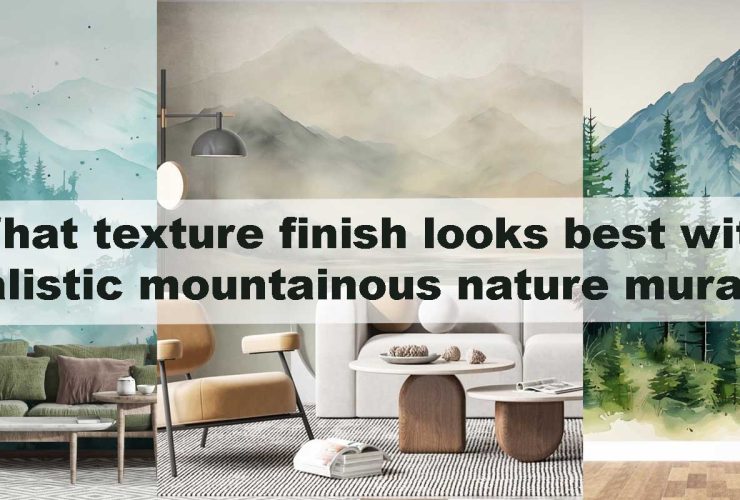
This balance is particularly effective with expansive scenic compositions such as Mountain nature wallpaper. Open horizons and gradual elevation shifts leave visual room for lighting to exist comfortably above, preventing the space from feeling top-heavy or visually compressed.
Soft, Atmospheric Nature Styles
Not all nature wallpaper carries the same visual density. Designs featuring mist, soft gradients, or painterly transitions tend to feel lighter and more fluid. Because these walls don’t demand constant visual attention, they allow lighting to introduce character without overwhelming the composition.
Interiors that rely on panoramic flow—often similar to spaces where panoramic nature murals build visual depth across large feature walls respond well to expressive fixtures that echo scale and form while maintaining restraint. When finishes remain subtle and lines stay refined, lighting enhances rather than interrupts the atmosphere.
Minimal Furniture Environments
Rooms with restrained furniture and limited décor naturally leave more visual capacity for lighting to make a statement. In these settings, a sculptural fixture paired with organic wall imagery creates a controlled contrast. The softness of the nature wallpaper offsets the clarity of the lighting form, resulting in a space that feels intentional rather than sparse.
When both elements are carefully chosen, the room gains dimension without clutter—blending natural calm with curated design confidence.
When Keeping Lighting Simple Creates Better Harmony
In many interiors, restraint creates the strongest visual impact. Dramatic nature wallpaper already carries atmosphere, texture, and narrative, so lighting works best when it reinforces those qualities quietly rather than competing for attention. Simple lighting allows the wall to remain immersive, letting the room feel composed instead of visually busy.
When illumination is subtle, the eye moves naturally across the wallpaper’s layers rather than being pulled upward or outward by competing elements. This approach strengthens cohesion and supports the emotional tone the nature design is meant to deliver.
Dark, Layered, or High-Contrast Nature Walls
Dense forests, twilight landscapes, and richly saturated scenes already possess emotional gravity. These designs rely on shadow, contrast, and tonal depth to create immersion. Introducing bold or sculptural lighting in such spaces can disrupt that balance, fragmenting the mood and shifting focus away from the wall itself.
Soft, warm illumination preserves continuity, allowing details to emerge gradually rather than all at once. This is particularly effective in restorative environments where Nature wallpaper for bedrooms is selected to support relaxation and visual calm rather than stimulation.
Compact or Intimate Rooms
Smaller rooms benefit greatly from visual restraint. When dramatic wallpaper is paired with statement lighting in limited space, the room can quickly feel crowded or top-heavy. Minimal lighting keeps sightlines clean and proportions balanced, helping the space feel more open and intentional.
In dining or sleeping areas, understated illumination supports comfort and ease. Designers often apply this approach in interiors that follow the same emotional principles as nature wall murals designed to encourage calm before rest, where uninterrupted visual flow is essential to maintaining a soothing atmosphere.
Wallpaper as the Only Statement
When nature wallpaper is intended to define the entire room, lighting should remain secondary. Concealed fixtures, recessed lights, or softly diffused ceiling illumination allow the wall to retain full visual authority. By stepping back, lighting strengthens the wallpaper’s presence rather than diluting it.
This restraint ensures the design feels confident and complete, without relying on additional focal points to create interest.
Lighting Temperature and Its Effect on Nature Designs
Fixture style matters far less than lighting temperature when working with nature wallpaper. Organic designs respond best to warm, natural light that enhances depth and preserves tonal richness. Cooler lighting can flatten textures and drain warmth from earth tones, greens, and atmospheric skies.
Warm illumination reveals subtle color transitions and surface movement, especially in gradient-heavy designs such as Sunset nature wallpaper. Adjustable lighting allows the room’s mood to evolve throughout the day while maintaining harmony with the wall’s natural rhythm.
Statement Lighting vs Simple Lighting at a Glance
| Design Aspect | Statement Lighting | Simple Lighting |
|---|---|---|
| Ideal Room Size | Large, open spaces | Small or intimate rooms |
| Best Nature Styles | Panoramic, airy scenes | Dense, dramatic compositions |
| Visual Impact | Architectural presence | Immersive calm |
| Emotional Effect | Expressive and curated | Grounded and serene |
| Main Risk | Competing focal points | Insufficient brightness |
Making the Right Choice for Your Space
The most effective approach is to begin with simplicity. Start with warm, understated lighting and observe how the wallpaper behaves throughout the day. If the room already feels balanced, additional lighting layers may be unnecessary. If the space feels incomplete, a carefully chosen statement fixture can be introduced later.
Successful interiors treat lighting as a framing tool. When it enhances depth without stealing focus, nature wallpaper feels intentional rather than overstyled.
Frequently Asked Questions
Can statement lighting overpower dramatic nature wallpaper?
Yes. When both elements demand attention, the room can lose cohesion.
Is simple lighting enough for bold nature walls?
Often, yes. Minimal lighting preserves texture, color flow, and emotional continuity.
Does ceiling height influence the lighting decision?
Absolutely. Taller ceilings support layered lighting more comfortably than lower ones.
Can accent lighting work without becoming distracting?
Yes. Wall washers and concealed lighting gently highlight surfaces without breaking focus.
Should wallpaper or lighting be chosen first?
Wallpaper should always lead. Lighting should respond to its scale and mood.
Final Thoughts
Whether to layer statement lighting or keep things simple depends on how much visual weight your nature wallpaper already carries. Expansive, airy designs can welcome sculptural lighting, while richly detailed or intimate spaces benefit from restraint. When lighting supports the wall instead of competing with it, nature-inspired interiors feel calm, balanced, and timeless.