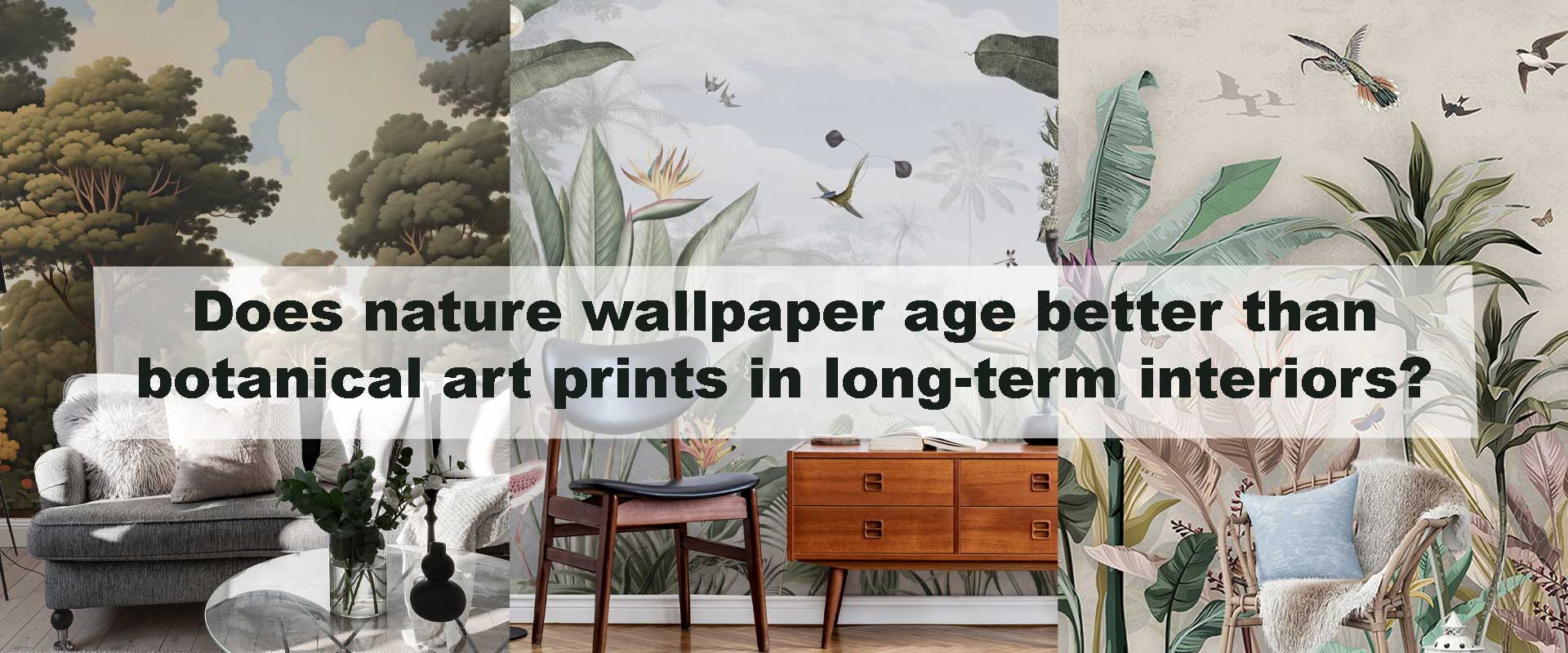
Does nature wallpaper age better than botanical art prints in long-term interiors?
When planning a space meant to last, one quiet question often shapes every design decision. Will the visual story you choose still feel relevant, calming, and intentional years from now? This is exactly where the comparison between nature wallpaper and botanical art prints becomes important. In long-term interiors, walls are not temporary backdrops—they are emotional anchors that influence how a room matures over time.
Nature wallpaper, with its immersive scale and atmospheric depth, often behaves very differently from framed botanical prints as years pass. While prints bring charm and flexibility, wallpaper becomes part of the architecture itself. Understanding how each option ages visually, emotionally, and stylistically helps homeowners and designers make choices that remain satisfying well beyond current trends.
Nature Wallpaper vs Botanical Art Prints Over Time
| Aspect | Nature Wallpaper | Botanical Art Prints |
|---|---|---|
| Visual aging | Softens and integrates | Can feel dated without updates |
| Spatial impact | Immersive and architectural | Decorative and object-based |
| Emotional consistency | High, calming over years | Variable, depends on style |
| Adaptability | Works with evolving décor | Requires repositioning |
| Long-term cohesion | Strong visual continuity | Can become fragmented |
Style Adaptability Across Interior Trends
Nature wallpaper adapts exceptionally well to shifting design preferences because it is rooted in organic form rather than decorative fashion. A misty forest wall feels equally at home beside minimalist furniture, warm rustic wood, or clean-lined contemporary silhouettes, allowing the space to evolve without visual conflict. As materials, finishes, and layouts change over the years, the wall continues to feel intentional rather than reactive to trend cycles.
For example, Forest nature wallpaper often ages beautifully because layered foliage, depth, and shadow mirror natural environments that never feel tied to a specific era. In the same way, Mountain nature wallpaper maintains long-term relevance by emphasizing horizon lines, scale, and openness instead of surface ornamentation. These qualities allow the wall to support both contemporary and transitional interiors without appearing dated.
Botanical prints, while adaptable in theory, are more sensitive to surrounding style shifts. Changes in frame profiles, metal finishes, wall colors, or furniture tones can quickly alter how a print is perceived. What once felt refined may begin to feel visually dense or stylistically anchored to a past moment when the surrounding materials evolve.
Maintenance and Visual Wear Over the Years
From a visual aging standpoint, nature wallpaper tends to be more forgiving over time than framed art. Subtle textures, tonal gradients, and organic patterning help diffuse light evenly across the surface, naturally concealing minor marks, edge wear, or gradual fading. This allows the wall to retain its depth and atmosphere without drawing attention to signs of age.
Botanical prints, particularly those with pale backgrounds or fine linework, often reveal wear more quickly. Paper discoloration, frame scuffing, and reflective glare from glass become increasingly noticeable as years pass. These visual shifts can disrupt balance within the room, prompting reframing or replacement to restore harmony—an upkeep cycle that wallpaper is far less likely to require in long-term interiors.
Room-Specific Longevity Considerations
In shared living spaces, wallpaper tends to outperform prints in long-term satisfaction because it establishes a continuous visual narrative. A cohesive wall scene holds its intention even as furniture arrangements, rugs, or lighting evolve, preventing the room from feeling visually fragmented over time. This continuity is especially valuable in areas where multiple functions overlap, allowing the space to feel grounded rather than constantly restyled.
In private spaces, the emotional consistency of nature wallpaper becomes even more pronounced. Soft tonal designs like Watercolor nature wallpaper age gracefully in bedrooms because their painterly transitions feel gentle and unforced, supporting rest rather than stimulation. Botanical prints, by contrast, may begin to feel episodic in these settings, often requiring periodic refreshes to maintain the same sense of visual calm.
Sustainability of Visual Decisions
Long-term interiors benefit from design choices that naturally reduce the desire for frequent updates. Nature wallpaper supports this by delivering a complete visual experience from the moment it’s installed, eliminating the need for continual layering or replacement. As years pass, the wall continues to serve its purpose without demanding new additions, helping interiors feel settled rather than in flux.
Prints, on the other hand, invite rotation and replacement as tastes shift. While this suits dynamic or experimental styling, it can feel less sustainable for those seeking visual permanence. Wallpaper, once established, becomes a stable design investment—one that quietly supports the space rather than asking to be reworked.
When Botanical Prints Still Make Sense
This comparison doesn’t diminish the value of botanical art prints; instead, it clarifies their strengths. Prints remain ideal for renters, collectors, or anyone who enjoys the freedom to change visual direction without long-term commitment. They offer flexibility and personal expression in spaces where permanence isn’t the goal.
In long-term interiors, however, botanical prints tend to work best as supporting elements rather than primary anchors. When walls already provide a calm, nature-inspired foundation, framed botanicals add nuance and personality without competing for attention. Used this way, prints enhance the space while allowing the wallpaper to maintain visual leadership.
Final Verdict: Which Ages Better?
Nature wallpaper generally ages better than botanical art prints in long-term interiors because it integrates emotionally and visually into the space. Rather than signaling a specific moment in design history, it becomes part of how the room breathes and evolves. Prints retain charm, but they often require ongoing curation to stay relevant.
For homeowners seeking longevity, cohesion, and emotional consistency, nature wallpaper offers a quieter, more enduring solution.
Frequently Asked Questions
Does nature wallpaper ever feel outdated?
Timeless nature scenes with soft color transitions age far more gracefully than trend-driven motifs.
Are botanical prints easier to update?
Yes, prints are simpler to replace, but that flexibility often requires more frequent changes.
Which option feels calmer over time?
Nature wallpaper typically provides a more continuous and calming experience in daily life.
Can both be used together?
Absolutely. Wallpaper can act as the foundation, with botanical prints used as subtle accents.
Conclusion
Choosing between nature wallpaper and botanical art prints ultimately depends on how long you want your walls to feel complete. In long-term interiors, nature wallpaper proves to be the more enduring choice, offering emotional stability, visual cohesion, and adaptability as styles evolve. Botanical prints remain valuable for flexibility, but they often need refreshing to maintain harmony. If your goal is a space that matures quietly and beautifully, nature wallpaper delivers lasting satisfaction without constant reinvention.