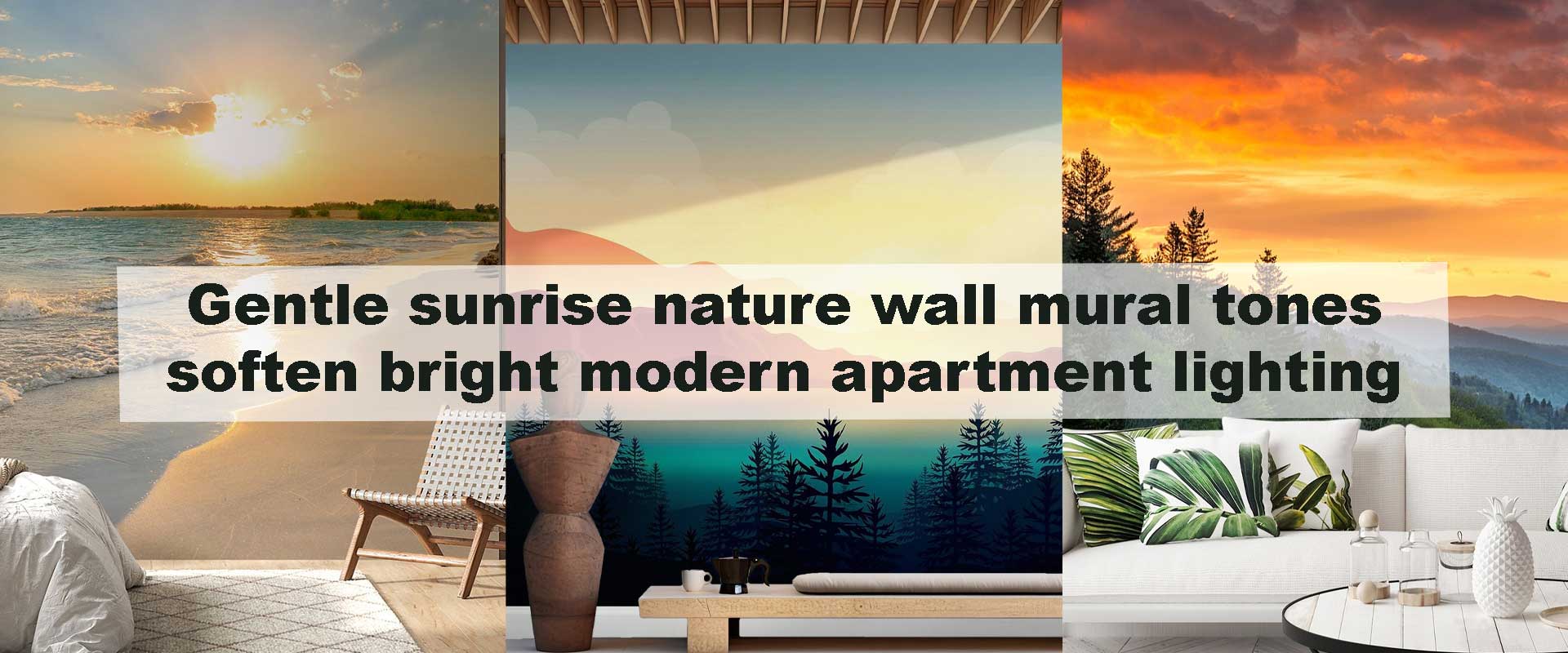
Gentle sunrise nature wall mural tones soften bright modern apartment lighting
Light-filled apartments are energising by day, but when sunlight fades and artificial illumination takes over, many modern homes begin to feel sharp or overly exposed. Gentle sunrise nature wall mural tones soften bright modern apartment lighting by acting as a visual filter—warming glare, calming reflections, and restoring balance to sleek interiors. Instead of fighting strong lighting systems, sunrise-inspired walls work with them, creating atmospheres that feel natural from morning through evening.
Soft gradients, pale horizons, and warm pastel skies translate light into mood rather than intensity. These murals subtly reshape how brightness is perceived, making contemporary apartments feel calmer, more grounded, and emotionally comfortable without sacrificing openness or clarity.
Why Modern Apartment Lighting Often Feels Too Harsh
Modern apartments depend heavily on layered artificial lighting to offset compact footprints, tall ceilings, and expansive glass surfaces. While this approach ensures brightness and functionality, it often introduces an unintended side effect: visual intensity that overwhelms rather than comforts.
High-output LEDs reflect sharply off white walls, polished flooring, and glass or metal furniture. Instead of dispersing evenly, light rebounds across surfaces, creating glare, hard edges, and an atmosphere that can feel sterile or overly exposed. Over time, this constant brightness contributes to visual fatigue, especially in spaces designed for rest, unwinding, or emotional reset.
Sunrise-toned nature murals counteract this harshness by changing how light is perceived, not how much light exists. Their gentle colour gradations visually absorb and refract illumination, softening contrast and slowing the way light travels across the room. Rather than ricocheting between reflective surfaces, brightness settles more naturally, creating a calmer and more livable environment.
The Psychology of Sunrise Tones in Interior Spaces
Sunrise colours are instinctively calming because they align closely with human circadian rhythms and emotional regulation. Shades such as pale peach, warm blush, misted gold, and soft lavender are associated with safety, renewal, and low-alert states—signals the brain recognises as restorative rather than stimulating.
Unlike saturated or high-contrast colours that demand attention, sunrise palettes operate quietly in the background. Positioned between warm and neutral, they reduce sensory overstimulation while still providing emotional warmth. This balance is particularly valuable in apartments where artificial lighting remains active for extended hours.
When these hues are expressed through nature murals—featuring distant horizons, softened hills, or abstract dawn skies—the effect becomes immersive rather than decorative. The wall no longer functions as a flat surface; it becomes a regulating element within the space, gently stabilising visual energy and allowing the room to feel emotionally balanced rather than visually demanding
How Sunrise Murals Interact With Artificial Light
Artificial lighting responds very differently depending on the surface it meets. Flat white walls reflect light uniformly but often harshly, amplifying glare and flattening the room. Dark surfaces do the opposite, absorbing too much illumination and making spaces feel heavier than intended. Sunrise murals sit precisely between these extremes.
Their layered pigments and soft colour transitions gently receive artificial light rather than deflecting it. Instead of sharp reflection, light is visually absorbed and redistributed across tonal gradients, creating a diffused glow that feels closer to natural daylight than electrical illumination.
In apartments fitted with ceiling-mounted LEDs or track lighting, this quality becomes especially valuable. Sunrise murals temper directional beams, preventing hotspots and shadow breakage. The light feels warmer, calmer, and more evenly spread—reducing visual strain while preserving the clarity modern interiors depend on.
Visual Softening Without Reducing Brightness
One of the most defining strengths of sunrise nature murals is their ability to soften visual intensity without diminishing light levels. This balance is essential in modern apartments designed to feel open, airy, and connected rather than dim or enclosed.
The mural’s tonal movement introduces depth where flat walls feel static. Brightness remains present, but it no longer feels piercing or confrontational. Instead of the eye confronting a single illuminated surface, it travels naturally across layered hues, lowering the perceived intensity of light.
This behaviour closely mirrors natural light at dawn—bright yet gentle, luminous without sharp contrast. It’s why rooms with sunrise murals feel immediately more comfortable. The space doesn’t feel darker or quieter—it feels calmer, balanced, and instinctively right.
Best Rooms for Sunrise Nature Wall Murals
Living Rooms With Open Lighting Plans
Open-plan living areas often rely on multiple light sources to maintain even brightness across seating, dining, and circulation zones. Without a visual anchor, this layered lighting can feel scattered or overly sharp. Sunrise murals introduce a unifying calm, gently absorbing brightness and giving the eye a place to rest.
When positioned behind the main seating arrangement or along the longest uninterrupted wall, the mural acts as a soft horizon that visually connects lighting zones. This approach works especially well when Nature wallpaper is used as a grounding presence—subtle enough to support modern architecture, yet expressive enough to bring warmth and cohesion to the space.
Bedrooms With Strong Overhead Lights
Bedrooms are particularly sensitive to lighting intensity, especially in apartments where ceiling fixtures remain the primary source of illumination. Bright overhead lights can feel intrusive at night, even when dimmed. A sunrise mural placed behind the headboard gently buffers this effect, transforming direct light into a calmer, more diffused experience.
The mural’s gradual tones create a natural transition from day to evening, working harmoniously with bedside lamps, wall sconces, and indirect lighting. Even when lights stay on, the room feels settled rather than alert, encouraging rest without requiring dramatic lighting changes.
Dining Areas in Compact Apartments
Dining spaces in compact apartments often depend on pendant lighting that casts focused, downward beams. While visually striking, this can create harsh contrasts against plain walls. A sunrise mural behind the dining table softens this intensity, catching light and redistributing it across warm gradients instead of sharp edges.
Rather than competing with statement fixtures, the mural supports them—adding depth and warmth while preserving the clarity of minimalist layouts. The result is a dining environment that feels intimate and inviting, encouraging slower meals and relaxed conversation without dimming the space.
Sunrise Murals vs Other Nature Wall Styles
| Nature Wall Style | Interaction With Bright Lighting | Overall Mood |
|---|---|---|
| Sunrise landscapes | Softens glare, diffuses brightness | Calm, warm, balanced |
| Dense forest scenes | Absorbs light, reduces brightness | Cozy, enclosed |
| Ocean blues | Reflects cool light tones | Airy, refreshing |
| Mountain silhouettes | Creates contrast under light | Grounded, dramatic |
| Abstract botanical | Varies depending on saturation | Expressive, artistic |
Sunrise murals excel in modern apartments because they enhance light rather than resisting it. This makes them ideal for homes that rely heavily on artificial illumination.
Choosing the Right Sunrise Palette for Modern Interiors
Not all sunrise murals soften light in the same way—their effectiveness depends largely on how well the palette aligns with your lighting temperature and surrounding finishes. The most successful choices work with illumination rather than trying to counteract it.
Warm-neutral sunrise palettes layered with blush, soft beige, muted apricot, and pale gold feel especially harmonious in apartments using warm LEDs or mixed lighting schemes. These tones gently echo the warmth already present, helping light feel enveloping instead of glaring.
In interiors lit primarily by neutral-white lighting, cooler dawn palettes offer better balance. Subtle lavender, misty blue, and powdery grey-rose hues absorb brightness without flattening it, allowing the space to remain fresh while feeling visually calm.
Highly saturated oranges or reds are best avoided in bright modern apartments. Under strong lighting, these tones can intensify warmth too aggressively, causing the room to feel heavy or overstimulating rather than serene and restorative.
How Texture and Detail Influence Light Softening
Beyond colour, the texture and level of detail within a sunrise mural play a crucial role in how light behaves across the wall. Soft-focus landscapes and gradual tonal shifts disperse illumination evenly, preventing harsh hotspots and reducing visual fatigue.
Murals featuring atmospheric depth—such as hazy hills, distant horizons, or abstract sky forms—allow light to glide gently across the surface. This creates a sense of movement without contrast, making brightness feel natural rather than imposed.
By contrast, sharp edges, high-definition detailing, or strong foreground elements tend to interrupt light flow, introducing contrast that can reintroduce glare. For modern apartments seeking calm, restraint in detail is often more effective than realism.
This philosophy aligns beautifully with Landscape nature wallpaper, where expansive scenes and softened horizons naturally ease visual tension, allowing light to settle quietly into the space instead of dominating it.
Integrating Sunrise Murals With Modern Furniture
Modern furniture is defined by restraint—clean silhouettes, neutral fabrics, and surfaces that reflect light rather than absorb it. Sunrise murals pair effortlessly with this language by introducing warmth and atmosphere without interrupting the visual simplicity modern interiors rely on.
Low-profile seating allows the mural to remain visually expansive, while matte finishes prevent competing reflections. Pale woods, soft bouclé, linen textures, and brushed metals echo the mural’s gentle tones, creating cohesion between furnishings and wall without forcing contrast.
In rooms styled with darker furniture, sunrise murals play a crucial balancing role. Their lifted horizons and warm undertones counter visual weight, preventing the space from feeling dense or closed-in. The result is an interior that feels structured yet emotionally open, where modern forms gain softness rather than severity.
Lighting Placement Tips for Maximum Effect
While colour temperature sets mood, lighting placement determines whether sunrise murals feel luminous or flat. Thoughtful positioning allows the mural’s gradients to unfold naturally across the wall, enhancing depth instead of spotlighting contrast.
Wall washers and concealed indirect lighting are especially effective, as they let light skim across the surface rather than strike it directly. This creates a glow-like diffusion that mirrors early morning light, keeping the mural calm and atmospheric.
Floor lamps placed close to the mural add another layer of softness. Their upward cast mimics sunrise illumination, reducing dependence on overhead fixtures and easing glare. When light rises gently rather than falling harshly, the mural feels alive—subtle, dimensional, and visually restorative.
Sunrise Murals in High-Rise Apartments
High-rise apartments often move between two extremes—strong daylight pouring through expansive windows during the day, followed by intense artificial lighting once the sun sets. Sunrise murals act as a visual bridge between these shifts, helping interiors feel emotionally consistent rather than reactive to changing light conditions.
In daylight hours, soft dawn tones echo the natural glow entering the space, allowing walls to feel integrated with the exterior view instead of competing against it. As evening lighting takes over, those same gradients temper brightness, preventing glare and keeping the atmosphere calm, even when LEDs or track lights remain active.
This ability to stabilise light perception mirrors the calming impact described in nature wall mural scenes of lakeside sunrises slow the pace of busy primary bedrooms, where gentle horizons help interiors transition smoothly from day to night without emotional disruption. In high-rise living, that sense of continuity is what makes spaces feel grounded rather than exposed.
Complementary Nature Styles That Enhance Soft Lighting
While sunrise murals are particularly effective at softening brightness, other nature styles can support or extend this effect when used thoughtfully. Forest nature wallpaper featuring mist, haze, or layered foliage gently absorbs light in more intimate zones, creating a cocooned feel without dimming the room.
In contrast, Mountain nature wallpaper introduces structure and visual grounding, making it ideal for spaces that need definition while still maintaining balance under strong lighting. Its silhouettes interact beautifully with directional light, adding depth without sharp contrast.
When sunrise tones are paired with these softer natural textures, the result is layered calm—an interior that feels visually rich yet never overstimulating, even in apartments surrounded by glass, height, and constant illumination.
Long-Term Comfort and Visual Wellbeing
Living under intense artificial lighting can subtly affect emotional balance and visual comfort over time, especially in modern apartments where brightness remains consistent from morning through night. Gentle sunrise murals support long-term visual wellbeing by easing contrast, softening transitions between illuminated surfaces, and allowing the eyes to rest instead of constantly adjusting to sharp light shifts.
Their enduring appeal also helps interiors remain emotionally stable rather than visually exhausting as trends change. This sustained calm echoes the effects described in nature wall mural scenes of lakeside sunrises slow the pace of busy primary bedrooms, where gradual horizon lines and muted dawn tones create spaces that feel naturally restorative rather than overstimulating.
Over time, this kind of visual gentleness contributes to a home that feels supportive rather than demanding—an environment where lighting exists to serve comfort, not dominate it.
Practical Styling Mistakes to Avoid
Even the most gentle sunrise murals can lose their impact if paired without intention. Highly glossy finishes nearby—such as lacquered cabinetry, glass-heavy décor, or polished stone—can bounce light back into the room, undoing the mural’s softening effect and reintroducing visual glare.
Surrounding walls should remain calm and restrained so the mural can quietly regulate brightness. When too many colours or strong patterns compete for attention, the sunrise tones lose their ability to soothe, turning what should feel atmospheric into visual noise.
Equally important is lighting restraint. Over-layering bright fixtures flattens the mural’s gradients, stripping away the subtle depth that makes sunrise imagery feel natural. These walls perform best when light supports their tonal flow rather than overpowering it.
Why Sunrise Murals Feel Instinctively Right
Human perception evolved around gradual changes in light, not fixed illumination levels. Sunrise imagery resonates deeply because it mirrors the slow transitions our eyes and nervous systems recognise as safe, calming, and familiar.
In modern apartments where lighting rarely shifts organically, sunrise murals quietly reintroduce a sense of passage and rhythm. The space begins to feel responsive rather than static, gently echoing the natural progression from morning to evening.
This instinctive connection explains why sunrise nature walls feel comforting without demanding attention. They don’t decorate the room—they stabilise it, allowing light, mood, and movement to coexist in a way that feels effortlessly human.
Frequently Asked Questions
Do sunrise nature wall murals make rooms feel smaller?
No. Their light tones and expansive imagery often increase perceived depth, helping rooms feel more open rather than confined.
Are sunrise murals suitable for apartments with cool LED lighting?
Yes. Cooler dawn palettes with soft lavender or misty blue balance neutral LEDs effectively, reducing sharpness.
Can sunrise murals work in minimalist interiors?
Absolutely. Their subtle gradients align beautifully with minimalist principles, adding warmth without clutter.
Do these murals age well over time?
They do. Sunrise tones are timeless and rooted in natural colour harmony rather than fleeting trends.
Should sunrise murals cover one wall or multiple walls?
In most apartments, a single feature wall provides enough softening. Larger spaces may support wider application if lighting remains controlled.
Final Thoughts
Gentle sunrise nature wall mural tones soften bright modern apartment lighting by transforming intensity into atmosphere. They work quietly, reshaping how light feels rather than how much light exists. Through soft gradients, emotional warmth, and natural balance, sunrise murals help modern apartments feel calmer, more human, and effortlessly inviting. If your home feels bright but not always comfortable, sunrise-inspired nature walls may be the missing layer that brings harmony back into your space.