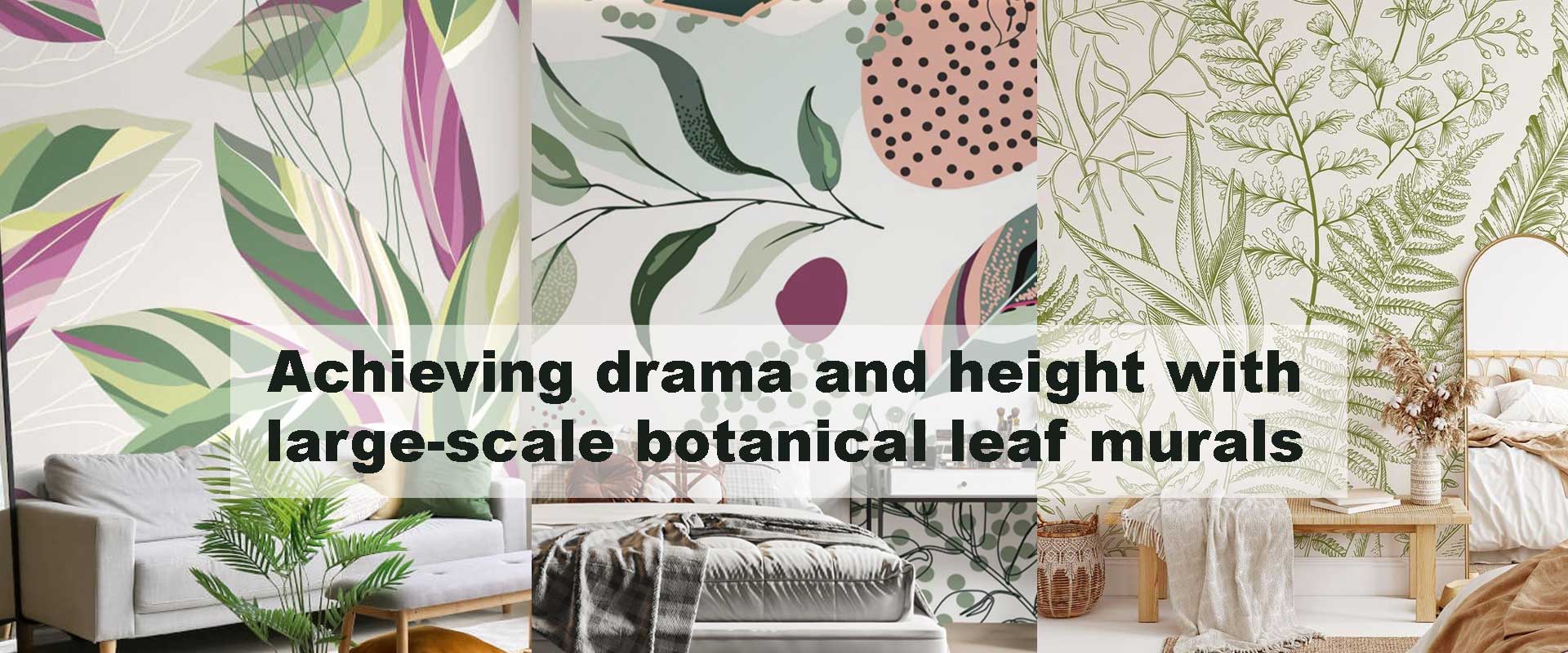
Achieving drama and height with large-scale botanical leaf murals
Bold leaves stretching from floor to ceiling have a way of transforming a room instantly. When oversized botanical murals reach upward in sweeping motions, they create the illusion of taller walls, deeper perspectives, and richer atmosphere. Large-scale leaf patterns don’t just decorate a surface—they reshape the entire room’s proportions, offering the sense of height and quiet drama usually found in grand architectural spaces. For anyone wanting a statement that feels both natural and sculptural, large leaf murals deliver both presence and poetry.
Large botanical murals also connect seamlessly with modern interiors. Their scale softens the boundaries of a room, creating fluid visual motion that lifts the eye. With the right palette and layout, they add restful depth or vivid energy while remaining grounded in organic form. Whether you choose hand-painted strokes, tropical contours, or fine abstract foliage, these murals offer a powerful visual anchor and a natural path toward creating height within any interior style.
How Large Botanical Leaf Murals Elevate Vertical Space
Oversized foliage has an instinctive way of drawing the gaze upward, making it one of the most effective visual methods for height enhancement. Large botanical forms echo the natural rise of plants reaching toward sunlight, and when scaled across a wall, they introduce a vertical cadence that makes the room feel more open and elongated. Their presence reshapes the proportions of a space, adding a sense of quiet grandeur rooted in organic movement. A similar upward motion appears in Bringing calm to modern homes with soft botanical wallpaper themes, where gentle leaf structures create a lifted, tranquil field that supports vertical clarity.
Visual Anchoring Through Scale
Smaller patterns often create busy textures, but large leaf silhouettes offer spaciousness. Their expansive shapes reduce repetition and give the wall room to breathe. This openness helps the vertical surfaces feel taller and more refined, transforming the wall into a broad canvas that enhances the room’s proportions with minimal effort.
Depth Through Layering
Layered foliage—expressed through tonal shifts, soft gradients, or diffused shadows—adds dimensional depth. This layered construction naturally pushes the visual field backward, creating a sense of height and gentle distance. The effect echoes the feeling of looking through a canopy where multiple leaf layers create quiet depth, allowing the eye to move upward with ease.
Organic Lines That Guide the Eye
Many botanical forms carry innate direction. The graceful curve of a palm frond, the upward rise of banana leaves, or the elegant reach of philodendron stems all encourage vertical movement. These natural lines reshape the room’s geometry, guiding the gaze upward and subtly redefining the space without any structural alteration.
A mural built around tall, expressive foliage pairs beautifully with designs such as Botanical Wallpaper, especially when aiming for an elevated, nature-led ambiance that emphasizes height and openness.
Choosing the Right Botanical Style for Height and Drama
Large-scale botanical murals offer a wide spectrum of moods, ranging from calm and minimal to bold and theatrical. The personality of each style shapes how the height effect feels—subtle, airy, or deeply dramatic. Selecting the right leaf form and visual treatment ensures the vertical lift feels intentional and beautifully integrated into the room.
Tropical Oversized Leaves
Tropical murals often carry strong, sculptural silhouettes such as broad monstera, sweeping banana leaves, and expressive fan palms. These shapes deliver immediate presence, making them ideal for feature walls in living rooms or tall entryways. A richer palette from Dark Botanical Wallpaper intensifies the effect, while lighter tropical tones create a soft and uplifting atmosphere.
Soft Minimal Botanical Murals
Minimal leaf murals rely on clean contours and gentle linework to introduce height without overwhelming the space. Their simplicity brings clarity and calm, especially in bedrooms, reading corners, or creative work areas. Designs within Minimal Line Art Botanical Wallpaper offer refined structure that enhances vertical flow while maintaining a light, modern touch.
Watercolor Botanical Murals
Watercolor botanicals add height through fluid transitions and luminous gradients. Their transparent layers drift upward softly, giving the wall both motion and tranquility. This style blends well with interiors seeking a gentle lift—one that feels artistic, natural, and quietly expansive.
Large Tropical Jungle Leaves
For spaces needing strong visual depth and expressive energy, jungle-inspired murals bring lush layering and dramatic contours. Their bold scale fills a wall with movement and adds a sculptural quality that feels immersive and powerful. This approach is perfect when aiming for pronounced height and rich spatial impact.
How Color Impacts Height Perception
Color plays a crucial role in shaping the height illusion. When paired with the right scale and shape, the palette can expand a room, add softness, or deliver dramatic vertical emphasis.
Light Tones for Open Space
Soft greens, pale olive, delicate sage, and gentle watercolor neutrals brighten the wall and create an extended vertical field. These tones reflect light upward, allowing the foliage to appear taller and the ceiling to feel more elevated.
Deep Tones for Sculptural Drama
Deep greens, shadowed charcoals, and muted jungle hues add intensity and depth. When balanced with warm lighting, these tones form a strong visual anchor that naturally pulls the gaze upward through contrast. The result is a room that feels taller, richer, and more grounded in atmosphere.
Gradient Backgrounds
Gradients that shift from darker bases to lighter upper tones replicate the way natural light softens as it rises. This transition guides the eye upward, amplifying the height effect and creating a gentle sense of vertical expansion. Gradients work especially well in rooms with lower ceilings, adding lift without visual strain.
Designing Around Large Botanical Leaf Murals
Furniture Height Matters
Choosing furniture with lower profiles preserves the upward motion created by oversized leaves. Sofas with slim backs, lightweight accent chairs, and streamlined console tables allow the mural’s vertical rhythm to remain uninterrupted. This balance ensures that the mural retains its presence as the room’s natural focal point, letting the eye travel upward with ease.
Lighting for Height
Soft lighting amplifies the sculptural quality of large botanical murals. Warm uplighting, angled ceiling lights, or tall floor lamps enrich the shadows between layered leaves, adding both depth and height. This interplay of illumination and foliage echoes the refined atmospheric styling described in Why dark botanical floral walls feel luxe in moody interior styling, where lighting brings out the richness and dimension of deep botanical themes.
Texture Pairings
Natural textures help ground the mural’s larger-than-life scale. Linen fabrics, cane and rattan accents, matte woods, and soft weaves complement botanical shapes without competing for attention. These organic materials support the mural’s flow, allowing the space to feel cohesive, calm, and richly layered.
Avoid Clutter
Oversized botanical murals thrive when given space. Reducing unnecessary objects keeps the walls visually open, allowing tall foliage to guide the eye upward. A few thoughtfully chosen accents maintain balance while preserving the mural’s spacious, airy feel.
Where These Murals Work Best
Living Rooms
Large botanical murals bring instant drama and sculptural beauty to living rooms. Positioned behind a sofa or on a dedicated feature wall, they anchor the space with a bold natural presence. Designs within Botanical Wallpaper for Living Rooms are especially well-suited for creating heightened visual depth.
Bedrooms
Botanical murals introduce softness and upward flow behind a bed, creating a restful yet uplifting atmosphere. Their vertical motion supports calm interiors, making them ideal for rooms centered around quiet elegance. Options offered within Botanical Wallpaper for Bedrooms enhance this serene energy.
Dining Rooms
Tall botanical silhouettes add intimacy to dining rooms while accentuating ceiling height. Their layered structure brings subtle drama without overwhelming the space, resulting in a warm, inviting setting that feels elevated and grounded at once.
Entryways
Entryways benefit greatly from murals with strong vertical lines. A large-scale leaf design placed here can instantly open up a narrow corridor or enclosed foyer, creating a sense of height and depth the moment someone steps inside. It sets a confident tone that carries through the rest of the home.
Large-Scale Botanical Styles for Height
| Style Type | Visual Effect | Height Impact | Ideal Rooms | Mood |
|---|---|---|---|---|
| Oversized Tropical Leaves | Bold silhouettes, dramatic edges | Strong height lift | Living rooms, entryways | Luxurious, expressive |
| Minimal Botanical Lines | Soft, airy contours | Moderate height lift | Bedrooms, offices | Calm, modern |
| Watercolor Botanicals | Diffused gradients, gentle strokes | Subtle height expansion | Bedrooms, light-filled rooms | Soothing, artistic |
| Deep Jungle Murals | Shadowed layers, dense depth | High height and depth impact | Dining rooms, feature walls | Moody, immersive |
Tips for Maximizing Height With Botanical Murals
Choose a Single Feature Wall
A large-scale botanical mural feels most architectural when it’s given room to breathe. Concentrating the design on one dominant wall lets the sweeping leaf forms become the visual anchor of the space. With fewer elements competing for attention, the eye follows the vertical movement of the leaves effortlessly, strengthening the perception of height and creating a dramatic sense of direction.
Extend Beyond the Ceiling Line
Designs that lighten, fade, or soften near the top edge of the wall blur where the mural ends and the ceiling begins. This subtle transition hints that the foliage continues upward out of sight, making the ceiling feel higher and the room more expansive. It’s a visual technique borrowed from scenic art—one that introduces depth without overwhelming the surroundings.
Use Vertical Leaf Orientation
When leaves stretch upward in tall, elongated arcs, they guide the gaze vertically in a single fluid motion. Whether it’s palm fronds reaching skyward or slim philodendron stems flowing upward, this orientation adds a natural lift to the room’s proportions. Horizontal motifs can still add character, but nothing enhances perceived height as powerfully as strong vertical botanical flow.
Pair With Light Ceilings
A pale ceiling reflects light and acts as a visual “extension” of the mural’s upward movement. When the mural rises into a soft white, ivory, or gentle pastel overhead, it creates the feeling of an open canopy. This pairing keeps the space airy, ensuring the mural’s vertical energy is uninterrupted and fully appreciated.
Common Mistakes to Avoid
Overloading the Room With Pattern
Large botanical murals thrive on balance. When combined with too many patterned cushions, rugs, or curtains, the room can start to feel visually crowded. The vertical lift created by the mural becomes lost among competing motifs. Keeping surrounding décor more restrained preserves the spotlight on the sweeping foliage and maintains the intended sense of height.
Choosing the Wrong Lighting
Good lighting brings out the dimensional depth of oversized leaves, while harsh or direct overhead lights can flatten their contours. Soft uplighting, wall washers, and warm-toned lamps add gentle shadows that emphasize height and sculptural detail. The goal is to enhance the mural’s natural gradients, not wash them out.
Using Too Many Wall Colors
High-contrast or overly saturated adjacent walls can break the vertical flow created by the mural. When the surrounding walls remain neutral and cohesive, the tall botanical forms stay uninterrupted, making the height illusion stronger. Simplifying the palette ensures the mural remains the primary feature and the room feels unified and intentional.
Why Large Botanical Murals Feel Naturally Dramatic
Drama arises from scale, contrast, and form. Oversized botanical leaves fill the visual field in a way that no small pattern can replicate. Their sweeping curves add gesture and presence, mimicking the grandeur of larger-than-life natural landscapes. When these forms stretch upward, the room begins to feel sculpted—full of dimension, movement, and character.
The height illusion blends beautifully with contemporary and minimal décor styles. Clean spaces benefit from large natural shapes that add motion without clutter. Rooms that feel too flat suddenly gain depth and upward pull.
Conclusion
Large-scale botanical leaf murals are more than decorative choices—they are architectural tools. With their sweeping shapes, layered silhouettes, and upward motion, they bring instant height, dynamic presence, and natural energy into any room. Whether you prefer dramatic tropical leaves or soft minimal botanicals, choosing the right scale and palette can visually transform your space. These murals offer an effortless path to creating drama, elegance, and spaciousness while keeping the atmosphere rooted in nature.