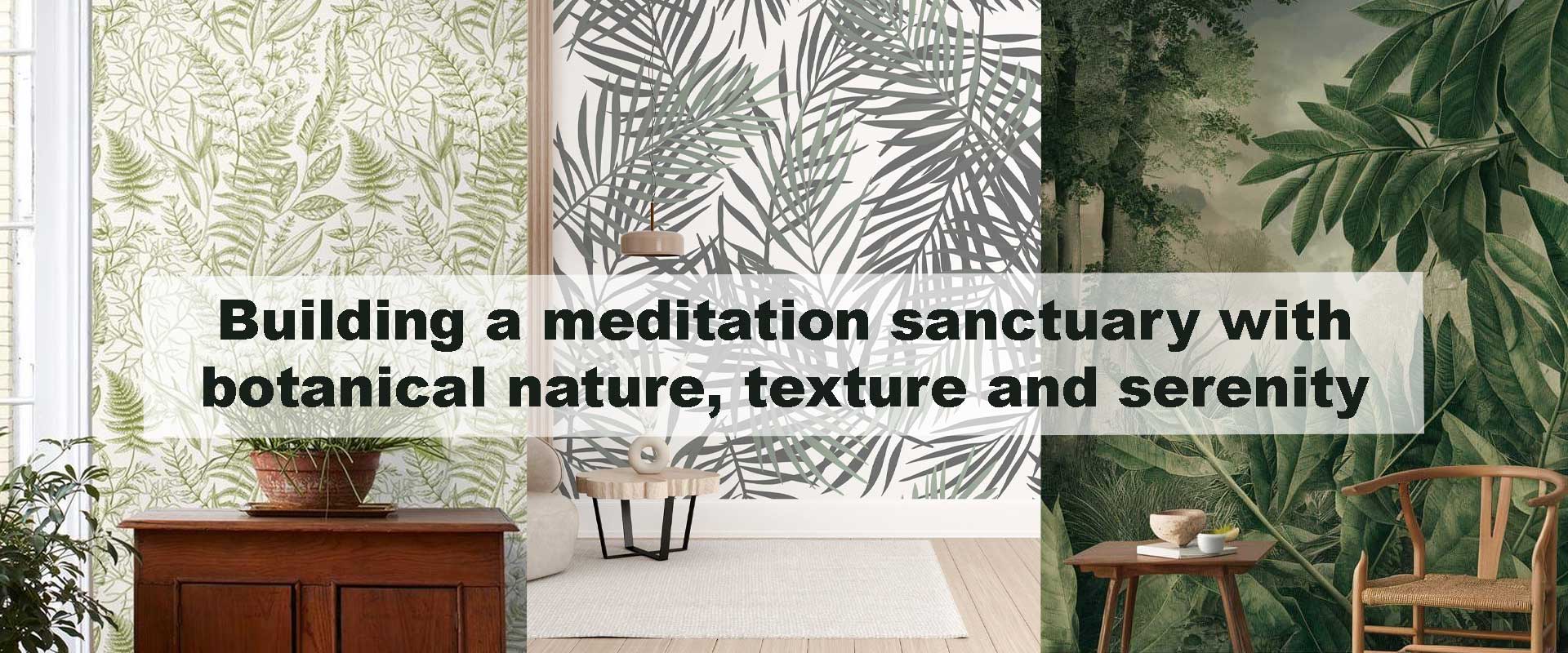
Building a meditation sanctuary with botanical nature, texture and serenity
A meditation sanctuary is not defined by silence alone—it is shaped by how gently a space holds your attention. The moment you step inside, the room should signal calm, safety, and slowness. Botanical wallpaper plays a key role in creating this atmosphere, transforming plain walls into soft, nature-inspired surfaces that support stillness rather than distraction. When botanical elements are paired with subtle texture and soothing colour, the space begins to feel restorative before meditation even begins.
Unlike decorative interiors designed to impress, a meditation sanctuary is designed to receive you. Botanical wall designs help achieve this by mimicking the quiet rhythms of the natural world—flowing leaves, softened stems, and organic forms that feel instinctively familiar. This visual familiarity allows the mind to relax, making it easier to disconnect from daily noise and reconnect with breath and presence.
Why botanical wallpaper feels naturally calming
Botanical wallpaper works so well in meditation spaces because it avoids visual rigidity. Nature never moves in perfect lines or harsh symmetry, and botanical designs reflect this truth. The eye is allowed to wander slowly across the wall, resting without being pulled or overstimulated.
This gentle movement has a psychological effect. Organic patterns help regulate visual pacing, which in turn supports emotional regulation. Instead of demanding focus, botanical walls invite it. This makes them particularly effective in spaces dedicated to mindfulness, breathwork, yoga, or quiet reflection.
Designs chosen from collections like Botanical Wallpaper offer a wide spectrum of styles, from minimal line drawings to softly layered foliage, making it easier to find a look that aligns with personal meditation practices.
The role of texture in a meditation sanctuary
Texture is one of the most underrated elements in calming interior design. In meditation spaces, texture replaces visual noise with quiet depth. Botanical wallpapers with plaster-inspired finishes, watercolor effects, or hand-rendered strokes introduce tactility without clutter.
These subtle surface variations absorb light rather than reflect it, preventing glare and harsh contrast. As daylight shifts, the texture responds gently, allowing the room to evolve throughout the day without becoming distracting. This slow, almost imperceptible change mirrors natural environments and reinforces a sense of timelessness.
Texture also allows the space to remain intentionally minimal. With richly layered walls, fewer decorative objects are needed, keeping the room focused and uncluttered.
Choosing colours that support serenity
Colour is central to how a meditation sanctuary feels. Botanical wallpaper excels in offering nature-based palettes that calm the nervous system rather than stimulate it.
Soft greens, sage, eucalyptus, muted olives, warm stone, and gentle clay tones help ground the space emotionally. These colours are neither too cool nor too warm, allowing the room to feel balanced at any time of day. Lighter botanical shades reflect natural light beautifully, while deeper hues provide a cocooning effect ideal for evening meditation.
Many serene interiors lean toward Green Botanical Wallpaper because green is strongly associated with balance, renewal, and emotional steadiness.
Creating focus without overwhelming the senses
Meditation spaces benefit from restraint. Instead of covering every wall, a single botanical feature wall often creates the strongest sense of calm. This approach gives the mind a gentle focal point while allowing surrounding surfaces to remain quiet and open.
Larger-scale leaf movements or softly spaced botanical motifs work well behind meditation cushions or low seating. They define the practice zone without enclosing it too tightly. For those who prefer visual simplicity, styles such as Minimal Line Art Botanical Wallpaper offer clarity and calm without decorative excess.
Light, shadow, and botanical flow
Lighting dramatically influences how botanical wallpaper is experienced. Matte finishes and soft textures respond best to natural light, allowing shadows to drift slowly across leaf forms and textured surfaces. This interaction creates a living quality within the room—movement without activity.
Artificial lighting should remain warm and indirect. Avoid spotlights or cool white bulbs, which can flatten texture and disrupt serenity. In lower-light spaces, deeper tones such as Dark Botanical Wallpaper can feel grounding and protective when paired with soft illumination.
Integrating walls with mindful furnishings
Botanical wallpaper sets the emotional tone, but furnishings should echo its language. Low seating, floor cushions, woven mats, natural wood benches, and soft textiles reinforce the organic narrative of the walls.
Avoid rigid forms or sharp edges that contradict the flowing nature of botanical designs. Instead, choose rounded shapes and tactile materials that feel comfortable and unforced. The aim is coherence—each element supporting calm without competing for attention.
This approach aligns with ideas explored in Bringing calm to modern homes with soft botanical wallpaper themes, where botanical walls act as a steady, calming presence rather than a decorative statement.
A sanctuary that adapts over time
Meditation practices change, and a sanctuary should be able to evolve with them. Botanical wallpaper rooted in natural forms offers long-term flexibility. It supports a wide range of rituals—from guided meditation to journaling or gentle movement—without feeling tied to a single aesthetic moment.
Rather than following trends, botanical walls age gracefully. They remain relevant as cushions are replaced, lighting shifts, or practices deepen. This adaptability is what transforms a styled room into a lasting sanctuary.
Botanical Wallpaper vs Other Wall Treatments for Meditation Spaces
| Wall Treatment | Visual Calm | Texture & Depth | Sensory Comfort | Long-Term Serenity |
|---|---|---|---|---|
| Botanical wallpaper | High – organic flow soothes the eye | Layered and soft | Strong grounding effect | Timeless and adaptable |
| Plain painted walls | Moderate | Very low | Can feel flat | Colour-dependent |
| Geometric patterns | Low | Minimal | Visually stimulating | Trend-sensitive |
| Textured plaster only | Moderate | High | Earthy but static | Best when layered |
| Framed nature art | Localised calm | None | Limited immersion | Less impactful |
Frequently Asked Questions
Why is botanical wallpaper ideal for meditation rooms?
Botanical patterns mirror nature’s rhythms, helping the eyes slow down and the mind relax. This makes it easier to enter and sustain a meditative state.
Is it better to wallpaper all walls or just one?
A single feature wall is often more effective, providing focus without overwhelming the senses or enclosing the space too tightly.
Which botanical colours feel most calming?
Muted greens, sage tones, soft neutrals, and gentle earth shades promote balance and emotional ease.
Does wall texture really matter for meditation?
Yes. Soft textures reduce glare and harsh contrast, making the room feel warmer, quieter, and more supportive for longer sessions.
Can botanical wallpaper still suit minimal interiors?
Absolutely. Line-art and lightly washed botanical designs maintain simplicity while offering the calming benefits of nature.
Will a botanical meditation sanctuary age well?
Nature-inspired designs are timeless. Botanical wallpaper adapts easily as practices, furnishings, or routines change.
Conclusion
Building a meditation sanctuary with botanical nature, texture, and serenity is about creating a space that gently guides the mind toward stillness. Botanical wallpaper softens walls with organic movement, calming colour, and tactile depth that supports focus without effort. When paired with mindful lighting, natural materials, and restrained furnishings, the room becomes more than a place to meditate—it becomes a quiet teacher of calm. Over time, simply entering the space signals the body to slow down, breathe deeper, and return to balance with ease.