Classic trellis wallpaper patterns that add structure to open-plan spaces
Open-plan homes thrive on openness, but they also depend on subtle architectural cues to maintain flow, organization, and visual comfort. This is why classic trellis wallpaper has become such a dependable design tool. Its repeating lattice lines create order without closing a room in, offering a soft architectural framework that guides movement and defines areas naturally. Design cues in trellis styles often mirror the intuitive composure described in pieces such as Vintage floral wallpaper ideas that transform classic living rooms, showing how structured patterns elevate larger spaces with ease. Many homeowners also appreciate how these motifs echo traditional craftsmanship while complementing modern layouts, similar to the quiet refinement found in Vintage Wallpaper.
Rather than dividing spaces physically, trellis motifs draw the eye upward, outward, and across wider distances. This restores balance in rooms where furniture zones may appear to float, giving the entire plan a sense of purpose. Using classic lattice patterns in open-plan settings can transform an undefined layout into one that feels structured yet gentle, especially when paired with soft neutrals or transitional décor. This influence mirrors the rhythm highlighted in Why retro wallpaper is making a dramatic comeback in contemporary homes, where repeat motifs shift the atmosphere of a room effortlessly.
Why Trellis Patterns Work So Well in Open-Plan Interiors
Trellis designs bring a naturally structured rhythm to open-plan layouts, acting as a visual organizer that feels intentional yet gentle. Their repeating geometry functions like a soft architectural framework, bringing clarity to rooms where walls are minimal and furniture zones tend to float. Because trellis patterns echo craftsmanship, joinery, and traditional latticework, they offer a timeless sense of order that stabilizes wide, open sightlines without weighing them down. In expansive living–dining–kitchen combinations or loft-style interiors, this subtle geometry anchors movement and restores balance, helping the entire space read as harmonious rather than scattered.
Pattern Scale and Its Importance
Scale determines how the trellis interacts with the room’s proportions. A large-scale trellis repeat introduces bold structure that commands expansive walls, guiding the eye across long distances and grounding oversized furniture effortlessly. In contrast, smaller repeats create intimacy, tightening wide layouts just enough to feel composed. They behave like a refined texture—still structured, but soft and cohesive—making them ideal for homes seeking clarity without dramatic contrast. Choosing the right scale ensures the wallpaper enhances spatial logic rather than competing with it.
How Trellis Wallpaper Defines Zones in Open-Plan Spaces
One of the central challenges in open-plan living is giving each functional area its own sense of purpose. Trellis wallpaper solves this through quiet visual boundaries shaped by geometry rather than physical barriers. The pattern directs attention, hints at transitions, and provides a gentle sense of separation while maintaining the overall openness that makes these layouts so desirable.
Trellis Behind the Dining Zone
Placing trellis wallpaper behind the dining area creates a refined architectural backdrop that behaves almost like custom paneling. The inherent symmetry of the lattice reinforces the balanced proportions of a table-and-chair setting, grounding the zone with elegance. This structured backdrop also elevates the atmosphere, making even informal meals feel more intentional and settled.
Trellis as a Living Room Anchor
In open-plan living rooms, seating arrangements often lack a clear boundary. A trellis accent wall behind the sofa provides an instant anchor, creating a defined focal point that shapes the rest of the layout. The pattern strengthens the sense of place, ensuring the living zone doesn’t blend indistinctly into the surrounding spaces. It brings a center of gravity that encourages a cohesive seating arrangement and visually unifies the entire conversational area.
Trellis Near Kitchen Extensions
Applying trellis wallpaper near bar counters, side walls, or subtle extensions of the kitchen helps outline the culinary zone without interrupting flow. Instead of a hard division, the pattern acts like a soft signal of transition, marking the shift from cooking to dining or gathering. This gentle framing is especially effective in layouts where cabinetry lines continue into adjoining rooms—the trellis becomes the element that reinstates definition while preserving the open-plan freedom.
Popular Trellis Styles for Open-Concept Homes
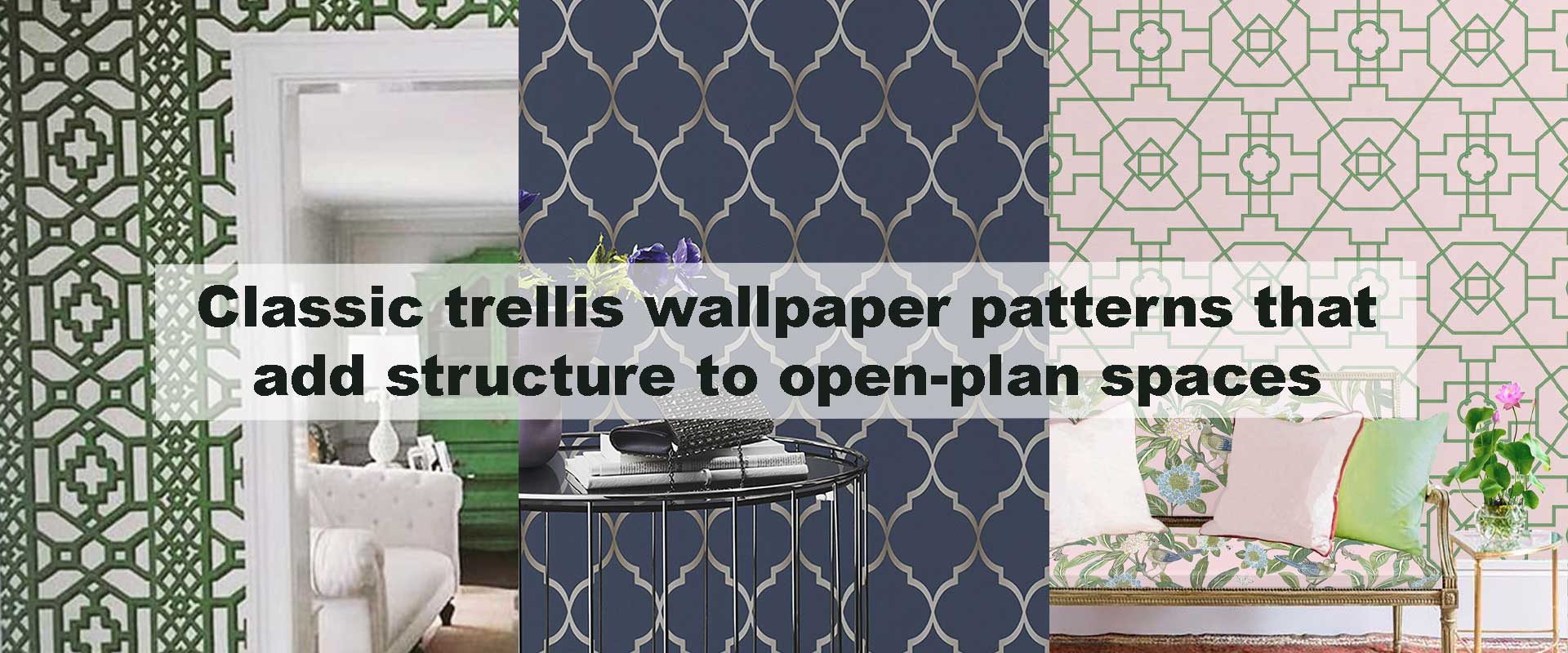
Classic trellis wallpaper comes in a wide range of interpretations, each capable of shaping the atmosphere of an open-plan interior in its own subtle way. These variations allow homeowners to choose how softly or boldly they want structure to appear, whether through clean-lined geometry, heritage-inspired detailing, or nature-kissed frameworks that soften the overall grid.
Minimal Line Trellis for Modern Calm
Minimal trellis motifs are built on crisp outlines and quiet tonal shifts, making them ideal for interiors where clarity and airiness matter. Their lightweight geometry complements Scandinavian and modern spaces, slipping into the background while still providing the order that open-plan layouts often need. When paired with muted woods, stone textures, or linen upholstery, minimal trellis patterns feel effortless—almost like a structural whisper that enhances spatial flow. Their balanced simplicity parallels the streamlined charm found in Geometric Vintage Wallpaper, where the focus is on graceful proportion rather than ornamentation.
Ornate Trellis for Heritage Charm
Ornate trellis styles draw from traditional craftsmanship, echoing the curves and intersections found in wrought-iron gates, carved joinery, and classical garden structures. These motifs introduce a sense of rooted elegance that brings warmth to large, open-plan rooms. They feel especially inviting when paired with brass accents, heirloom woods, or upholstered seating that leans toward vintage refinement. The delicacy of the lattice helps maintain visual movement even as the pattern adds richness, creating a soft historical undertone that elevates the entire layout. Their detailing aligns naturally with the graceful character expressed in Ornamental Vintage Wallpaper.
Botanical Trellis for Organic Warmth
Botanical trellis blends structured geometry with the softness of nature, often weaving leaves, tendrils, or subtle floral touches into the latticework. This hybrid approach brings both discipline and warmth—perfect for transitional or open-plan homes that want gentle movement without losing clarity. These motifs feel especially appealing in spaces that incorporate cane textures, woven textiles, or pale woods, where the natural elements pick up the organic cues from the wallpaper. Botanical trellis patterns introduce a welcoming tactility, similar to the natural elegance cherished within Botanical Vintage Wallpaper collections.
Best Color Palettes for Trellis Wallpaper in Open-Plan Homes
Color plays a pivotal role in determining how trellis wallpaper influences the energy of open-plan interiors. The right palette can establish harmony across shared zones, soften transitions, or create grounding strength where needed.
Neutral Trellis for Gentle Structure
Soft neutrals—beige, warm white, stone, sand, and greige—deliver structure with quiet restraint. They reflect natural light beautifully, making wide layouts feel open yet orderly. This palette is ideal when the goal is to support multiple décor styles within one continuous environment, especially in homes where furniture pieces vary in tone or texture. Neutrals help unify everything effortlessly, allowing the lattice pattern to guide the space without dominating it.
Deep Trellis Tones for Bold Contrast
For homeowners wanting more definition, deep trellis shades such as navy, charcoal, espresso, and forest green bring depth and gravity to open-plan settings. These richer tones anchor expansive walls, helping large furniture groupings feel grounded rather than adrift in open space. They also create a luxurious backdrop for metallic accents, sculptural lighting, or moody textiles. While bold, deep trellis tones remain structured enough to maintain rhythm and coherence across long sightlines.
Pastel Trellis for Airy Continuity
Pastel trellis patterns—soft blush, powder blue, mist green, and gentle lavender—introduce a breezy, uplifting feel that keeps open-plan homes light and flowing. These hues offer structure with the softness of watercolor, ideal for interiors that lean toward romantic, airy, or serene aesthetics. Pastel trellis ensures divisions between zones feel subtle and seamless, allowing the entire space to read as calm, cohesive, and gracefully connected.
Trellis Styles for Open-Plan Homes
| Feature | Minimal Trellis | Ornate Trellis | Botanical Trellis |
|---|---|---|---|
| Look | Clean, modern | Classic, refined | Nature-inspired |
| Best For | Contemporary spaces | Heritage layouts | Transitional homes |
| Spatial Effect | Clarifies zones | Adds elegance | Adds warmth |
| Ideal Colors | Neutrals | Warm tones | Pastels & nature hues |
| Best Zone | Living or kitchen walls | Dining & lounge zones | Cozy seating areas |
How to Style Trellis Wallpaper Seamlessly Across Zones
Consistency is the key to ensuring trellis wallpaper feels intentional within an open-plan home. Because these spaces rely on continuous sightlines, every design choice must echo the next. When styled with care, trellis motifs become the visual thread that guides the eye through connected rooms, forming a calm, cohesive rhythm without interrupting movement.
Use Trellis as a Vertical Anchor
Trellis patterns naturally draw the eye upward, making them ideal for grounding zones while elongating the space. Their vertical geometry introduces a sense of quiet architecture, helping wide layouts feel more proportioned. When placed behind tall shelving, cabinetry, or accent seating, the lattice subtly organizes the room, guiding pathways and giving the interior a more composed, navigable feel.
Repeat Pattern Colors Through Furnishings
The easiest way to unify an open-plan layout is to pull shades from the trellis design and echo them across soft furnishings and décor. Pillows, rugs, ceramics, throws, and even lampshades act as small visual connectors, allowing the wallpaper’s palette to travel gracefully from one zone to the next. This repetition softens transitions, making the entire space feel curated rather than scattered, especially when the colors appear in varying textures or finishes.
Pair Trellis with Warm, Organic Materials
Trellis geometry becomes even more compelling when balanced with earthy warmth. Wood tones ground the symmetry, brass adds refined highlights, and soft textiles introduce tactile comfort. These natural materials counterbalance the structure of the lattice, preventing the room from feeling overly rigid. When layered thoughtfully, the combination of crisp geometry and organic surfaces creates a harmonious blend of order and softness—perfect for open-plan homes that aim for both sophistication and approachability.
Accent Wall vs. Full Room Trellis in Open-Plan Spaces
Each approach shapes the atmosphere differently, allowing homeowners to decide how strongly the trellis geometry should influence the room’s layout and mood.
Accent Wall Trellis
An accent wall introduces trellis structure with controlled intensity, grounding a chosen zone while keeping the rest of the space light and fluid. In open dining or living areas, this works beautifully to establish a focal point that stabilizes floating furniture and gives the eye a place to rest. The geometry enhances balance without requiring a dramatic commitment, making it ideal for layouts where one feature wall sets the tone for the entire room. Accent applications are also helpful when you want the pattern to support other décor rather than define the whole plan, allowing architectural and furnishing choices to shine through gently.
Full Room Trellis
Applying trellis across the entire open-plan layout creates a cohesive architectural rhythm that feels immersive and intentional. Instead of highlighting a single area, the pattern becomes the connective thread that unifies long sightlines, tall ceilings, and continuous movement between zones. Light or small-scale trellis repeats work especially well for this approach because they maintain spaciousness while introducing subtle structure. In expansive homes, full-room trellis adds harmony and purpose—it feels almost like paneling or millwork drawn softly onto the walls, giving the entire layout a composed, elegantly framed environment.
Enhancing Trellis Wallpaper with Furniture and Lighting
Once the wallpaper is in place, furniture and lighting choices play a key role in shaping how the trellis pattern behaves within the room.
Linear Furniture for Structured Harmony
Rectilinear furniture pieces—long sofas, slim benches, streamlined cabinetry—strengthen the natural rhythm of the trellis lines. Their shapes echo the latticework, reinforcing its vertical and horizontal cues without competing for attention. In open-plan spaces, this partnership creates a steady visual foundation that helps each zone feel organized and anchored, especially when furniture placement follows the implied symmetry of the wallpaper.
Lighting That Highlights Pattern Depth
Trellis motifs gain depth and character when paired with lighting that enhances shadow and refinement. Wall washers bring soft gradients across the pattern, while sconces cast gentle highlights that emphasize its geometry. Pendant lights, especially those placed over dining tables or seating areas, draw focus to the pattern behind them and create pockets of warmth. The interplay between light and lattice introduces quiet dimension, making the wallpaper feel part of the architecture rather than a surface treatment alone.
Curved Elements for Soft Contrast
To prevent an overly linear environment, curved furniture and décor provide essential balance. Rounded coffee tables, circular mirrors, arched lamps, or sculptural ceramics soften the trellis geometry, adding a sense of flow and approachability. In wide open-plan spaces, these curves help break up rigid lines and encourage a more natural, inviting movement through the room. The contrast keeps the design elevated and harmonious, blending structure with softness in a way that feels timeless and welcoming.
Creative Ways to Use Trellis Wallpaper in Open-Plan Homes
Behind Open Shelving
Using trellis wallpaper behind open shelving adds layered visual depth that feels both architectural and decorative. The lattice pattern becomes a soft backdrop for ceramics, books, or greenery, making the shelf display feel curated rather than scattered. This technique works beautifully in large spaces where walls can otherwise appear too plain or distant, allowing the trellis to connect objects and create a cohesive visual story.
On Support Columns
Support columns in open-plan rooms often feel disconnected, yet trellis wallpaper can turn them into intentional design features. Applying the pattern around the column visually links it to the surrounding elements, softening its structural presence. Instead of appearing awkward or isolated, the column adopts a sculptural quality—almost like a refined architectural post that reinforces the spatial rhythm of the room.
Inside Recessed Niches
Trellis wallpaper inside recessed niches instantly elevates these architectural cutouts, giving them purpose and personality. The pattern draws the eye inward, turning a simple niche into an elegant display point for artwork, lighting, or treasured décor pieces. In expansive open-plan layouts, this added detail helps create micro-moments of interest that break up long walls and bring gentle visual movement across the space.
Around Passageways
Applying trellis wallpaper around openings or passageways frames transitions with subtle geometry. This creates a quiet cue that guides movement between zones while maintaining the openness of the layout. The pattern acts like a soft threshold—there is no interruption to flow, but the area gains definition and a sense of arrival. It’s an especially effective technique when you want to give purpose to areas that lack strong architectural boundaries.
Conclusion
Open-plan spaces flourish when guided by subtle structure, and classic trellis wallpaper offers the perfect visual framework. Its repeating geometry defines zones, enhances flow, and adds architectural rhythm without compromising openness. Whether minimal, botanical, or ornate, trellis patterns bring order, warmth, and elegance to expansive layouts. When paired with thoughtful styling, these motifs unify a home’s shared spaces while letting each area express its unique mood.
Frequently Asked Questions
Does trellis wallpaper make open-plan rooms feel smaller?
Correct scale and light tones preserve spaciousness while adding definition.
Is trellis wallpaper suitable for modern homes?
Absolutely. Minimal trellis designs align beautifully with clean modern lines.
Can trellis patterns define zones naturally?
Yes. The geometry introduces gentle boundaries without blocking openness.
Which colors work best in wide layouts?
Neutrals, pastels, and muted greens maintain harmony across long sightlines.
Are botanical trellis motifs good for large rooms?
Yes. They add warmth and organic movement while preserving structure.