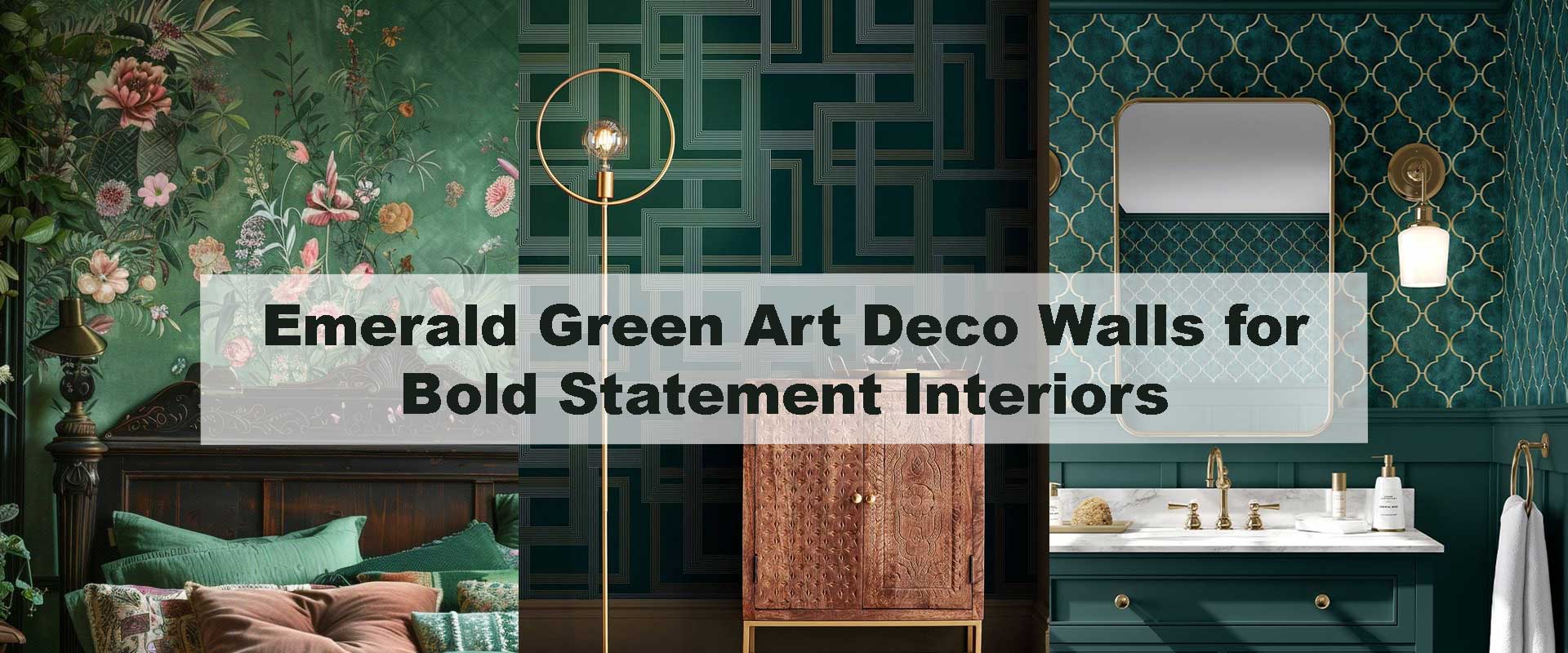
Emerald Green Art Deco Walls for Bold Statement Interiors
Rich emerald tones have always carried a sense of depth, drama, and old-world elegance, but when paired with Art Deco geometry, the effect becomes irresistibly striking. Emerald green Art Deco walls introduce a layered visual impact that feels luxurious from the very first glance, and the style works beautifully in modern homes that crave substance over neutrality. Whether you’re curating a glamorous living room, elevating a dining area, or designing a boutique-inspired bedroom, this palette offers one of the most expressive pathways to bold interior identity. By incorporating symmetry, metallic highlights, and deep greens, you create a timeless backdrop that aligns flawlessly with emerald green Art Deco wallpaper aesthetics while maintaining contemporary sophistication.
Emerald green behaves differently under warm lighting, softening in dim corners yet glowing vibrantly where metallic lines reflect ambient brightness. This makes it a favorite for showpiece interiors that lean into mood and atmosphere. Its ability to feel both deeply grounded and vividly expressive creates a unique duality—calm yet dramatic, structured yet artistic. This exact quality has contributed to rising demand for modern Deco patterns across luxury homes, echoing the same design resurgence highlighted in Why Art Deco Wallpaper Is Returning as the Biggest Luxury Design Trend.
To build a fully immersive Deco experience, consider combining emerald tones with stylized geometry, layered arches, bold linework, and opulent materials. Pairing your design with selections from the Art Deco Wallpaper collection strengthens cohesion and offers endless pattern options that harmonize with emerald’s richness.
Below is your full guide to designing bold and unforgettable interiors using emerald green Art Deco walls.
The Power of Emerald Green in Deco-Inspired Design
Emerald green has long symbolized luxury and cultivated glamour, but within Art Deco design, it becomes something even more expressive. Its saturated richness carries both drama and composure, making it one of the few bold colors that feels timeless rather than trendy. In Deco interiors—where symmetry, metallics, and sculptural forms play central roles—emerald becomes the perfect bridge between vibrant opulence and refined restraint. It adds intensity without heaviness, confidence without chaos, and elegance without austerity.
Emerald’s secret lies in its layered depth: the color holds shadow and light simultaneously. In bright settings, it radiates a jewel-like brilliance; in dimmer rooms, it transforms into a velvety backdrop that enhances every contour of the space. This adaptability makes emerald an indispensable tool for shaping mood-rich, polished interiors.
Why Emerald Works So Well with Art Deco Geometry
Art Deco thrives on harmony between structure and spectacle. Emerald green deepens this relationship beautifully, serving as an anchor for the movement’s iconic motifs.
- It amplifies metallic lines.
Gold, brass, and champagne metallics gain luminous clarity against emerald, producing a glowing contrast that highlights every curve and angle of the pattern. - It supports bold symmetry.
Geometric shapes—sunbursts, zigzags, arches, diamonds—feel sculptural and authoritative when paired with emerald’s saturated foundation. - It mimics nature’s drama.
Deco interiors often lean toward polished artifice, and emerald reintroduces a sense of organic richness. It offers a natural counterbalance, warming spaces that might otherwise feel formal or rigid.
In this way, emerald green becomes more than color—it becomes a design principle. It enhances rhythm, strengthens silhouettes, and allows interiors to feel expressive yet beautifully cohesive.
How Emerald Responds to Light
Emerald’s relationship with light is one of its most transformative qualities. Few colors shift so gracefully across different lighting conditions:
- Warm light
Under golden ambient lighting, emerald glows with a soft, atmospheric radiance. The color deepens, revealing earthy undertones ideal for dining rooms, lounges, and statement living areas. - Cool light
Cooler lighting sharpens emerald’s clarity, emphasizing geometric precision. Linework appears more defined, making the space feel modern and architectural. - Indirect light
Soft, diffused lighting introduces a velvety calmness. This works beautifully with tactile finishes such as Textured Art Deco Wallpaper, where subtle shadows bring depth and movement to the walls.
This dynamic interaction ensures emerald walls never look the same twice—they evolve with natural and artificial light, creating a living, breathing interior atmosphere.
Choosing the Right Emerald Shade for Bold Interiors
Emerald is not a singular shade; it spans an entire spectrum of moods and intensities. Choosing the right variant transforms the room’s character, ensuring the color aligns with your intended aesthetic.
1. Deep Emerald for Glamorous Evenings
Deep emerald gives interiors a cinematic quality—rich, moody, and irresistibly sophisticated.
It pairs beautifully with:
- Dark walnut or ebony woods
- Bronze or aged-brass hardware
- Plush upholstery and layered textiles
- Sculptural lighting that casts warm, low shadows
This shade evokes the spirit of 1920s glamour, making it ideal for spaces that lean into nighttime ambience. Yet its richness feels modern, especially when paired with contemporary silhouettes.
2. Fresh Emerald with Gold Linework
Lighter emerald hues add freshness and energy without losing their luxurious depth. When combined with gold linework—particularly in structured motifs like Geometric Art Deco Wallpaper—the effect becomes lively and engaging.
Rooms styled with fresh emerald often feel:
- More open
- More vibrant
- More interactive with natural light
This version suits modern homes that prefer bold color anchored by clarity rather than heaviness.
3. Jewel-Tone Emerald with Velvet Textures
Jewel-tone emerald carries the emotional richness of gemstone colors—lush, immersive, and beautifully dramatic.
Pairing it with velvet or soft textiles intensifies its depth, creating a tactile, sensorial atmosphere.
Metallic accents—gold, brass, or champagne—blend seamlessly with jewel tones, adding artistic refinement without overpowering the palette.
This shade is especially effective in:
- Bedrooms seeking boutique-hotel glamour
- Reading corners with soft pools of light
- Living rooms that embrace layered texture
Jewel-tone emerald offers the perfect balance between expressive color and comforting atmosphere.
Pairing Emerald with Key Art Deco Elements
Emerald green becomes truly transformative when paired with the defining elements of Art Deco design—geometry, symmetry, light, and opulent materials. This color thrives on contrast and structure, and when these elements work in harmony, the result is a space that feels immersive, polished, and unmistakably luxurious. Every finish, every angle, and every texture becomes an opportunity to showcase emerald’s depth and luminous undertones.
Metallic Accents That Intensify Emerald
Metallic finishes act as amplifiers, shaping how emerald interacts with light.
- Gold
The most iconic Deco pairing. Gold enriches emerald’s warmth, creating a radiant glow that shifts beautifully throughout the day. Under warm lighting, this combination feels cinematic—soft highlights skim across the surface, giving the geometry a sculptural presence. - Brass
Slightly muted yet deeply sophisticated, brass introduces a note of vintage refinement. Its subtle patina grounds emerald, evoking heritage lounges and classic Art Deco interiors without feeling heavy. - Chrome
Chrome’s cool brilliance introduces contemporary clarity. When paired with emerald, it sharpens the room’s edges, making geometric patterns feel crisp and modern. This pairing suits homes that embrace Deco influence without leaning fully into nostalgia. - Black metal
Black accents bring depth and strength, anchoring the palette. They create visual punctuation—clean, decisive lines that frame emerald’s richness.
When integrated through Luxury Metallic Art Deco Wallpaper, these metals work not just as accents but as active participants in the room’s composition. Light shifts across the metallic elements, giving emerald a changing expression from morning clarity to evening drama.
Geometry That Amplifies Boldness
Geometry is the heartbeat of Art Deco design, and emerald green provides the perfect canvas for its sharp precision and rhythmic flow. The color enhances symmetry, allowing repetitive motifs to feel intentional and elevated rather than busy.
Consider patterns such as:
- Zigzags that create dynamic movement across the wall
- Fan motifs that expand outward like stylized sunbursts
- Sunrise patterns that introduce uplifting energy
- Arches that soften edges while retaining Deco elegance
- Diamond repeats that add clarity and visual tempo
When these shapes unfold across an emerald backdrop, the room gains a sense of architecture. The geometry guides the eye, reinforcing a feeling of order and refined expression. The result is a room that feels composed, glamorous, and effortlessly bold.
Textures That Add Dimensional Warmth
Texture is the quiet luxury that elevates emerald green from bold to breathtaking.
Tactile surfaces deepen the color, catch light differently throughout the day, and create a sensory richness that smooth-finished walls simply can’t offer.
Try pairing emerald with:
- Velvet gradients that enhance the palette with soft shading
- Raised linework that creates a subtle interplay of shadow and highlight
- Matte-metallic blends offering understated shimmer without overpowering the room
- Embossed geometry that gives the wall a sculptural, architectural feel
Textures such as those found in Textured Art Deco Wallpaper bring dimension to emerald, making the walls feel more intimate, layered, and luxurious. Under evening lighting, their tactile qualities become even more pronounced, giving the space a soft but commanding presence.
Where Emerald Green Art Deco Walls Make the Biggest Impact
Some rooms feel tailor-made for emerald green. These spaces benefit from its depth, mood, and sense of curated richness—balancing expression with elegance.
Emerald in Living Rooms: Drama Without Excess
Living rooms often serve as the emotional core of a home, and emerald brings a striking yet welcoming presence. Many assume bold colors will overwhelm a shared space, but emerald does the opposite: it adds maturity, visual structure, and quiet confidence.
A living room gains focus with a single emerald feature wall, especially when using Emerald Green Art Deco Wallpaper. The geometry creates definition, while the color sets a tone of luxurious comfort. Layering neutrals, gold side tables, or softly curved seating ensures balance and keeps the room from feeling heavy.
This layered drama aligns with themes reflected in Black and Gold Art Deco Bedroom Walls That Feel Like a 5-Star Hotel, where bold palettes shape high-end ambience effortlessly.
Emerald in Dining Rooms: The Ultimate Evening Ambience
Dining rooms are inherently atmospheric spaces, and emerald amplifies this quality with stunning ease. Under warm lighting, emerald takes on a velvety depth that transforms meals into experiences rather than routines.
For a refined dining setting, consider:
- Gold or champagne pendant lighting
- Upholstered chairs in cream, charcoal, or muted jewel tones
- Curved silhouettes that counterbalance geometric precision
Emerald pairs beautifully with sculptural patterns such as 3D Effect Art Deco Wallpaper, which add dimension without overwhelming architectural simplicity.
The overall impression is one of sophistication, comfort, and effortless evening glamour.
Emerald in Bedrooms: A Boutique-Hotel Aesthetic
Emerald offers serenity and indulgence—qualities that define boutique-hotel bedrooms. When paired with diffused lighting, shadow-soft fabrics, and clean symmetry, the color creates a restful atmosphere with dramatic undertones.
For perfect balance:
- Incorporate silvery metallics for cooler glow
- Use curved nightstands or rounded lamps to soften geometry
- Position soft, layered lighting for gentle ambience
Choosing designs from Art Deco Wallpaper for Bedrooms ensures the patterns maintain harmony with rest-focused spaces.
The result is a bedroom that feels curated, intimate, and unmistakably luxurious.
Emerald in Entryways: Powerful First Impressions
Entryways benefit immensely from bold color because small doses make a disproportionate impact. Emerald transforms even compact foyers into statement spaces, setting a tone of sophistication the moment guests arrive.
Slim mirrors brighten the space and reflect geometric lines; gold accents add spark; indirect lighting softens the color’s richness into an inviting glow.
An emerald entryway doesn’t merely greet guests—it establishes the visual identity of the home with confidence.
Styling Emerald Green Art Deco Walls in Modern Homes
Emerald green thrives in modern interiors because it bridges glamour, structure, and mood with remarkable ease. Its sophistication lies in its adaptability—whether the goal is full Deco opulence or a subtle infusion of luxury. The key is pairing emerald with materials, shapes, and palettes that enhance its depth while allowing the geometry to remain the central design voice.
Furniture Pairings
Emerald is one of the few bold colors that integrates effortlessly into multiple design approaches. Each styling direction reveals a different personality of the color:
- Modern glamour
Gold-framed furniture, soft velvets in muted jewel tones, and reflective surfaces elevate emerald’s brilliance. The interplay of metallic warmth and plush tactility creates the quintessential glamorous environment. - Art Deco revival
Stepped silhouettes, ribbed textures, lacquered finishes, and symmetry-forward furniture echo the structured lines found in emerald wallpapers—especially those featuring bold geometry. This pairing makes the space feel richly curated and architecturally defined. - Minimalism with luxury
Clean silhouettes, matte finishes, and restrained décor allow emerald to become the single expressive feature in an otherwise quiet room. This approach suits modern apartments where every design choice is deliberate yet understated. - Contemporary vintage
Blending modern forms with nostalgic details—like soft curves, smoked glass, or antique brass touches—helps emerald feel rooted in Deco heritage while remaining fresh. This fusion is ideal for transitional homes that want personality without heaviness.
These furniture styles don’t compete with emerald; instead, they sculpt how the color behaves in the space, guiding the room toward mood, elegance, or architectural clarity.
Color Palettes That Complement Emerald
Emerald green’s versatility truly emerges when paired with the right supporting palette.
Each combination brings out a different aspect of the color:
- Cream and ivory soften emerald’s intensity while adding quiet refinement.
- Black accents emphasize its jewel-like elegance and anchor geometry with contrast.
- Blush neutrals introduce warmth and approachability, ideal for modern glamour.
- Brass or gold intensify emerald’s luxury, reflecting light with Deco richness.
- Charcoal deepens the palette, perfect for moody interior concepts.
- Soft taupe adds calm, balancing emerald in understated living areas.
For bolder cross-room coordination, emerald pairs beautifully with deeper tones such as terracotta, mustard, or navy.
In larger homes, emerald transitions seamlessly into adjoining spaces through complementary palettes. For example, pairing emerald living rooms with adjacent zones featuring Navy Blue Art Deco Wallpaper builds a sophisticated multi-room color story.
Emerald Green and 1920s Nostalgia
Few colors embody the spirit of the Art Deco era as elegantly as emerald green. Its presence evokes memories of Jazz Age glamour—lounges lined with mirrored surfaces, grand hotel ballrooms shimmering with metallic accents, and train carriages adorned with polished woods and green marbled details. Emerald captures the essence of abundance without feeling loud, making it a timeless emblem of Deco luxury.
This nostalgic quality is not merely visual; it’s atmospheric. Emerald creates the sense of stepping into a space shaped by craftsmanship, celebration, and architectural precision. Modern interiors tap into that nostalgia by blending emerald with sharp geometry, curved motifs, and reflective finishes that mirror the iconic design language of the 1920s.
Rich Cultural Influence
Art Deco architecture celebrated bold materials—green marble, lacquered panels, stained glass, and burnished metals—all of which amplified the era’s love for symmetry and ornamentation. Emerald green played a starring role in these settings because of its intrinsic capacity to feel expensive, dimensional, and emotionally expressive.
Today’s interiors reinterpret these influences through high-impact wallpapers. For example, Marble Art Deco Wallpaper captures the organic veining and luxurious movement reminiscent of historic Deco foyers and lounges. The fluid textures soften angular geometry, creating a contemporary translation of old-world glamour.
Emerald remains the color that best bridges Deco’s indulgent spirit with modern aesthetics. It carries nostalgia without feeling dated, offering a timeless backbone for interiors that celebrate both heritage and innovation.
Using Emerald in Small Rooms Without Overwhelming Them
Compact interiors are often where emerald green Art Deco design shines most unexpectedly. Instead of shrinking a room, emerald creates a sense of curated intention—turning tight spaces into dramatic, expressive moments. When geometry, lighting, and décor are balanced well, emerald becomes a tool for depth, making small rooms feel layered rather than crowded.
Emerald’s velvety undertones absorb and reflect light in ways that enhance intimacy without closing the space visually. A carefully chosen wallpaper—especially one with refined symmetry or soft metallic detailing—creates an immediate focal point, pulling the walls outward through visual rhythm. Wallpapers such as Textured Art Deco Wallpaper or patterns with fine linework add dimension without overwhelming the room.
Tips for Smaller Rooms
- Use one emerald feature wall to build depth
A single bold wall anchors the room, drawing the eye forward and adding perceived length. The geometry becomes a sculptural backdrop rather than a full wrap of intense color. - Pair with mirrors to expand space naturally
Mirrors bounce light across emerald’s rich surface, creating the illusion of added width. They also enhance any metallic accents within the wallpaper. - Choose vertical or fan-shaped patterns to elongate proportions
Lines that reach upward stretch the room visually. Fan motifs and rising arcs—common in Geometric Art Deco Wallpaper—create height even in low-ceilinged spaces. - Add metallic accessories for visual lift
Brass, gold, or champagne metal details lighten the palette by introducing reflective contrast. Small accents go a long way in compact layouts. - Keep surrounding décor streamlined
Minimal furniture silhouettes and uncluttered surfaces let emerald and geometry stay expressive without visual competition.
Small rooms often respond beautifully to confident choices. Emerald shifts the narrative from “limited space” to “intentional jewel box”—a refined environment shaped by color, mood, and structure.
Decor Pairings That Transform Emerald Green Art Deco Walls
Décor becomes especially important when working with emerald green, as the right selections can intensify its richness or create harmonious contrast. Art Deco spaces are defined by visual balance—softened curves, strong silhouettes, and luxurious textures—each playing off emerald’s depth to create a polished narrative.
1. Curved Lighting Fixtures
Curves counterbalance the angular precision of Art Deco geometry, ensuring the room feels inviting rather than overly linear. Globe pendants, arc lamps, ribbed glass sconces, and tiered chandeliers distribute warm light that glides across emerald surfaces. Their sculptural form echoes Deco elegance while softening the boldness of the walls.
2. Velvet Sofas & Upholstery
Velvet’s plush texture absorbs light subtly, complementing emerald’s jewel-toned intensity. In living rooms, velvet sofas in charcoal, cream, or muted jewel tones stabilize the visual impact of emerald walls, creating a harmonious interplay of softness and structure. The combination evokes boutique luxury—ideal for spaces that want comfort wrapped in glamour.
3. Sculptural Décor Pieces
Sculptural elements help reinforce the interior’s Deco character:
- Tiered shapes reflect the stepped silhouettes iconic to the era.
- Strong silhouettes—from angular vases to geometric side tables—anchor the eye and support the wallpaper’s rhythm.
- Vintage brass finishes further highlight emerald’s dimensional glow, especially when paired with patterns like Abstract Art Deco Wallpaper or curved Art Deco motifs.
These pieces don’t crowd the room—they act as punctuation marks. Each one adds emphasis to emerald’s richness, creating a cohesive story that feels thoughtfully composed and visually balanced.
Emerald Green Art Deco for Commercial Interiors
Emerald green Art Deco design has become a defining choice for commercial spaces that aim to leave a lasting impression. Its depth, glamour, and clear visual identity create an immediate sense of exclusivity—ideal for venues that rely on atmosphere as part of the experience. Boutique hotels use emerald geometry to build intimate yet opulent lounges; upscale restaurants incorporate layered metallic lines to shape evening ambience; and luxury retail spaces adopt emerald as a signature color that communicates sophistication the moment a customer steps inside.
Unlike lighter palettes that fade into the background, emerald commands attention while still feeling refined. Its rich undertones interact beautifully with architectural lighting, reflective fixtures, and sculptural décor commonly found in contemporary hospitality environments. When paired with patterned selections such as Textured Art Deco Wallpaper or sleek metallic geometry, commercial interiors gain a sense of curated drama that elevates the entire brand experience.
Advantages in Commercial Spaces
- Creates unmistakable visual identity
Bold emerald instantly distinguishes a venue, making the atmosphere memorable and setting the tone for premium service. - Enhances perceived luxury
Jewel tones paired with gold or brass geometry embody refined taste, strengthening the customer’s impression of an elevated environment. - Encourages longer guest engagement
Rich, moody color schemes paired with symmetrical Deco structure feel immersive without overwhelming, inviting guests to linger comfortably. - Supports expressive thematic design
Whether the aesthetic is vintage glamour, modern classicism, or boutique exclusivity, emerald blends seamlessly with Art Deco narratives and architectural details.
Retail spaces particularly benefit from emerald’s magnetism: the color draws attention toward product displays without visually crowding the space. When used as a backdrop for merchandise, emerald enhances perceived value and creates a sense of thoughtful curation.
Mixing Emerald With Neutrals for Balanced Design
Not every space requires full Deco grandeur. Emerald transitions elegantly into softer palettes when paired with well-chosen neutrals, allowing interiors to retain richness without leaning into maximalism. This approach works beautifully in homes and commercial spaces seeking sophistication without intensity. When emerald forms the central color anchor and neutrals build the supporting atmosphere, the result is a calm, composed, and thoroughly modern interpretation of Deco.
How Neutrals Soften Emerald While Preserving Luxury
- Stone textures
Natural stone introduces gentle movement and tactile grounding. Paired with emerald, it creates a refined tension between organic softness and geometric precision. - Off-white textiles
Creams and warm whites brighten emerald walls, lifting the palette and creating airiness while maintaining elegance. Upholstery, drapery, and rugs in these tones soften the jewel-like intensity. - Unfinished wood
Light, matte wood finishes bring warmth and a subtle contemporary edge. They keep the space inviting, especially in rooms transitioning from bold emerald to softer adjacent zones. - Champagne metals
Champagne gold introduces understated shimmer—less bold than classic gold but warmer than chrome. It creates a polished balance between glamour and restraint, working beautifully with emerald wallpapers such as Geomatric art Deco Wallpaper.
This blend of emerald and neutrals results in interiors that feel cultivated and approachable. The palette maintains Deco charm without overwhelming the room, making it ideal for modern homes that want sophistication supported by comfort.
Comparing Emerald with Other Bold Deco Colors
A quick comparison helps clarify emerald’s unique impact.
Emerald vs. Navy
| Feature | Emerald Green | Navy Blue |
|---|---|---|
| Mood | Vibrant, polished, luxurious | Sophisticated, calm, refined |
| Best Use | Feature walls, dining rooms | Bedrooms, offices |
| Lighting Response | Glows under warm light | Holds depth under cool light |
| Pairing | Gold and brass | Silver and chrome |
| Style Impact | Bold and expressive | Smooth and understated |
Emerald vs. Black & Gold
| Feature | Emerald Walls | Black & Gold Walls |
|---|---|---|
| Visual Weight | Medium-heavy | Heavy and dramatic |
| Atmosphere | Warm luxe | High glamour |
| Geometry Compatibility | Excellent | Excellent |
| Best Spaces | Living rooms, dining rooms | Bedrooms, entertainment rooms |
How Furniture Materials Influence Emerald Walls
Furniture materials shape the way emerald green behaves in a room, intensifying its depth, refining its glow, or softening its boldness. The interplay between texture and color is especially important in Deco interiors, where contrast and harmony work together to build visual rhythm. Choosing the right materials ensures that emerald remains the star while still feeling balanced, elegant, and thoughtfully composed.
Wood Finishes
Wood introduces warmth that naturally complements emerald’s richness, and the right finish can shift the atmosphere dramatically.
- Walnut and dark oak
Deep-toned woods echo emerald’s moody undertones, creating a high-contrast palette that feels sophisticated and grounded. Their grain patterns add an organic softness that offsets geometric sharpness. - Lighter woods such as ash or maple
These create a gentle counterbalance, lifting the weight of emerald and bringing a soft Scandinavian brightness to the Deco palette. When paired with symmetrical geometry—especially in designs featuring structured patterns—this contrast keeps rooms airy yet expressive.
The warmth of wood also pairs beautifully with metallic Deco accents, allowing emerald to glow rather than absorb light.
Stone & Marble
Marble introduces structure and a sense of refined permanence. Its veining adds softness while its cool finish tempers emerald’s richness.
- White or cream marble amplifies emerald’s jewel-like clarity, perfect for living rooms or dining areas leaning into polished luxury.
- Green-veined marble strengthens color continuity, echoing the nuance found in patterns like Abstract Art Deco Wallpaper where fluid movement balances structured linework.
- Black marble brings dramatic contrast, ideal for bold Deco concepts that embrace depth and high glamour.
Stone surfaces reflect ambient light gently, offering a sophisticated counterpoint to metallics without competing with them.
Glass & Mirror
Glass and mirrored finishes are transformative partners for emerald walls. Their reflective qualities introduce brightness, enhance pattern visibility, and give geometry a luminous edge.
- Mirrors expand visual space and amplify any metallic linework in the wallpaper, making gold or brass elements shimmer subtly across the room.
- Smoked or tinted glass adds a Deco-luxe moodiness, creating layered reflections that echo architectural silhouettes.
- Clear glass furniture—from coffee tables to sideboards—reduces visual weight, allowing emerald and geometric patterns to remain prominent without interruption.
Together, glass and mirror surfaces shape a dynamic interplay of light and shadow, ensuring emerald green continues to shift enchantingly throughout the day.
Building a Cohesive Multi-Room Emerald Theme
Carrying emerald green through multiple rooms can create a unified, luxurious aesthetic—one that feels intentional rather than repetitive. The key lies in treating emerald as a thematic thread, not a duplicated statement. When thoughtfully varied, it behaves like a sophisticated color story woven across your home, shifting in temperature, texture, and geometry as you move from one space to the next.
Emerald’s versatility allows it to adapt effortlessly to different moods. In living zones, it can feel bold and expressive; in bedrooms, calm and velvety; in dining areas, glamorous and atmospheric. By blending tones, changing pattern scale, and introducing complementary palettes, the home becomes a seamless narrative of Deco-inspired refinement.
Techniques for Multi-Room Cohesion
- Shift shade intensity strategically
Use deep emerald in social spaces where drama suits the atmosphere, and transition to lighter, balanced greens in resting zones. This creates a natural visual rhythm without diluting the color’s richness. - Vary metallic partnerships from room to room
Pair emerald with warm gold in living areas for glamour, then move toward brushed brass or champagne metallics in bedrooms for softer refinement. Using Luxury Metallic Art Deco Wallpaper can help define these subtle shifts through sheen and contour. - Alternate geometry scale to match the architecture
Large, expressive motifs work beautifully in open spaces, guiding movement and anchoring furniture layouts. In compact rooms, tighter geometric repeats—like those in Geometric Art Deco Wallpaper—maintain clarity while keeping proportions balanced. - Use complementary Deco palettes to link transitions
Colors such as navy, charcoal, champagne, and soft ivory pair elegantly with emerald. Combining emerald in one room with Navy Blue Art Deco Wallpaper in the next creates continuity with personality, ensuring each space feels unique yet connected.
A multi-room emerald concept succeeds when every space contributes a different chapter to the same visual narrative—harmonious, polished, and unmistakably Deco.
Emerald Green Art Deco Feature Walls
A feature wall allows emerald to express its full intensity without overwhelming the room. It serves as a focal point, anchoring the space with sculptural presence, color density, and refined geometry. When paired with metallic detailing or textured finishes such as Textured Art Deco Wallpaper, the impact becomes even more elevated.
Feature walls are ideal for:
- Framing architectural elements
Arches, niches, paneling, and stepped forms gain depth when surrounded by emerald geometry. - Highlighting fireplaces and built-ins
Emerald’s saturation draws the eye naturally, turning structural elements into elegant centerpieces. - Anchoring entertainment or lounge zones
Behind TV units or seating arrangements, emerald delivers visual gravitas without requiring additional décor. - Adding sculptural drama to open layouts
Its rich tone and structured patterning provide instant definition in otherwise fluid or minimalist spaces.
Emerald performs exceptionally well behind:
- Sofas, where it forms a backdrop of atmosphere and layered depth
- Dining consoles, especially in rooms aiming for mood and evening charm
- Bed headboards, where the combination of geometry and jewel-tone richness creates a boutique-hotel feel using Art Deco Wallpaper for Bedrooms
The power of a feature wall lies in its ability to introduce boldness with precision—making emerald the commanding element that shapes the room’s identity without dominating its entirety.
Art Deco Lighting That Enhances Emerald Walls
Lighting is not just a finishing touch—it’s the element that unlocks emerald green’s full atmospheric depth. When emerald meets the right glow, the color shifts from velvety richness to radiant gemstone brightness. Deco lighting, known for its sculptural forms and metallic finishes, amplifies geometry and brings patterned wallpapers such as Luxury Metallic Art Deco Wallpaper to life through controlled highlights and shadows.
Best Lighting Choices for Emerald Walls
- Globe Pendants
Their rounded silhouette softens emerald’s intensity while echoing the classic Art Deco fascination with spherical forms. Opal glass diffuses light gently, creating a warm sheen across metallic linework. - Brass Wall Sconces
Brass introduces a historic Deco warmth that harmonizes beautifully with emerald’s jewel-tone depth. Symmetrical sconces frame patterned walls and create rhythmic lighting that enhances geometric structure. - Tiered Chandeliers
Nothing captures Deco decadence like stepped or tiered chandeliers. Their multi-level design casts layered shadows, adding movement and sculptural drama to emerald backdrops. - Ribbed Glass Fixtures
Ribbed or fluted glass scatters light in distinctive vertical lines, reinforcing the symmetry found in Geometric Art Deco Wallpaper. This creates a shimmering atmosphere that feels glamorous without overpowering the room.
Thoughtfully chosen lighting serves as a design conductor, guiding the eye across deep color fields and emphasizing emerald’s luxurious glow at every hour of the day.
Common Mistakes to Avoid
Bold interiors thrive on intentional balance. Emerald green offers monumental beauty, but without the right supporting elements, its strength can overwhelm the room. Avoiding a few common pitfalls ensures the palette remains polished, elevated, and true to Deco sophistication.
1. Overcrowding the Room
Emerald green walls perform best when allowed to breathe. Heavy or overly ornate furniture interrupts the visual flow and diminishes the clarity of geometric linework. Opt for cleaner silhouettes, slim metallic accents, and strategically placed décor that enhances rather than competes with wallpaper such as Emerald Green Art Deco Wallpaper.
2. Excessive Pattern Mixing
Art Deco design already carries strong rhythm and structure. Introducing additional competing motifs—florals, busy stripes, or layered prints—can dilute the impact. Instead, choose supporting textures like velvet, ribbed upholstery, matte metals, or stone surfaces. This keeps the geometry from Textured Art Deco Wallpaper or metallic linework firmly in the spotlight.
3. Incorrect Metal Pairing
Metals shape the overall mood.
- Gold or bronze adds warmth, aligning perfectly with emerald’s classic glamour.
- Chrome or silver introduces a cooler modern edge that sharpens geometry.
Mixing too many metal tones creates visual confusion and disrupts cohesion. Choose one dominant metal and let secondary finishes appear only in small, deliberate accents.
Conclusion
Emerald green Art Deco walls offer one of the most expressive ways to define luxurious and bold interiors. Their ability to merge strong geometry with rich color creates unforgettable rooms that feel both nostalgic and modern. Whether incorporated into living spaces, bedrooms, or dining areas, emerald green transforms design into a statement. Pairing it with Emerald Green Art Deco Wallpaper or other Deco selections strengthens the room’s identity, allowing you to curate an aesthetic filled with depth, polish, and timeless charm. This palette is more than decoration—it’s a visual signature that elevates every space it touches.
FAQ
1. Do emerald green Art Deco walls make a room feel too dark?
Not necessarily. Emerald carries depth, but when paired with warm lighting, gold accents, and controlled geometry, it feels vibrant rather than heavy. Reflective metallic lines and mirrors also help the color glow beautifully without reducing spaciousness.
2. Is emerald green suitable for small interiors?
Yes. Small rooms benefit from bold choices when applied with intention. A single emerald feature wall, especially with balanced geometric structure, adds depth and dimension. Patterns with vertical movement or subtle metallic highlights enhance perceived height and openness.
3. What furniture pairs best with emerald green Art Deco wallpaper?
Emerald thrives with curvilinear silhouettes, gold or brass detailing, textured fabrics, and sculptural lighting. Velvet seating, black accents, and marble tables complement the color while grounding the room’s glamorous tone.
4. Can emerald green Art Deco wallpaper work in minimalist homes?
It can, provided the design stays controlled. Pair emerald with clean-lined furniture, soft neutrals, and restrained décor. Minimalism gains warmth and character when the walls provide structured geometry instead of visual overload.
5. Which metallic finishes complement emerald green most effectively?
Gold remains the most iconic pairing due to its warmth and historical Deco influence. Brass brings vintage character, while chrome introduces a sharper modern edge. Each creates a unique contrast depending on the atmosphere you want.
6. Are emerald green Art Deco walls suitable for bedrooms?
Yes. Bedrooms benefit from emerald’s calm richness. Pairing it with soft lighting, plush textiles, and symmetrical geometry helps create a boutique-style retreat. Using Art Deco Wallpaper for Bedrooms ensures patterns tailored to restful spaces.
7. How do I prevent emerald walls from overwhelming a dining room?
Balance is key. Combine emerald with warm lighting, curved furniture silhouettes, and subtle metallic detailing. Geometry in controlled scale—such as repeats found in 3D Effect Art Deco Wallpaper—adds structure without visual weight.
8. What color palettes match emerald green in Deco interiors?
Emerald works with cream, ivory, black, taupe, blush neutrals, brass tones, and deep navy. These palettes support emerald’s boldness while preserving harmony. For multi-room layouts, pairing emerald with Navy Blue Art Deco Wallpaper in adjacent zones creates seamless cohesion.
9. How do I style emerald walls with modern décor?
Introduce sleek materials such as glass, mirrored surfaces, sculptural lighting, and simplified silhouettes. These elements allow emerald’s depth and the wallpaper’s geometry to shine without clashing with contemporary design.
10. Can emerald green Art Deco wallpaper enhance open-plan spaces?
Absolutely. Emerald introduces visual anchors that help define zones in open layouts. Geometric lines guide flow, while the deep color adds structure. Patterns from Geometric Art Deco Wallpaper work especially well for this purpose.