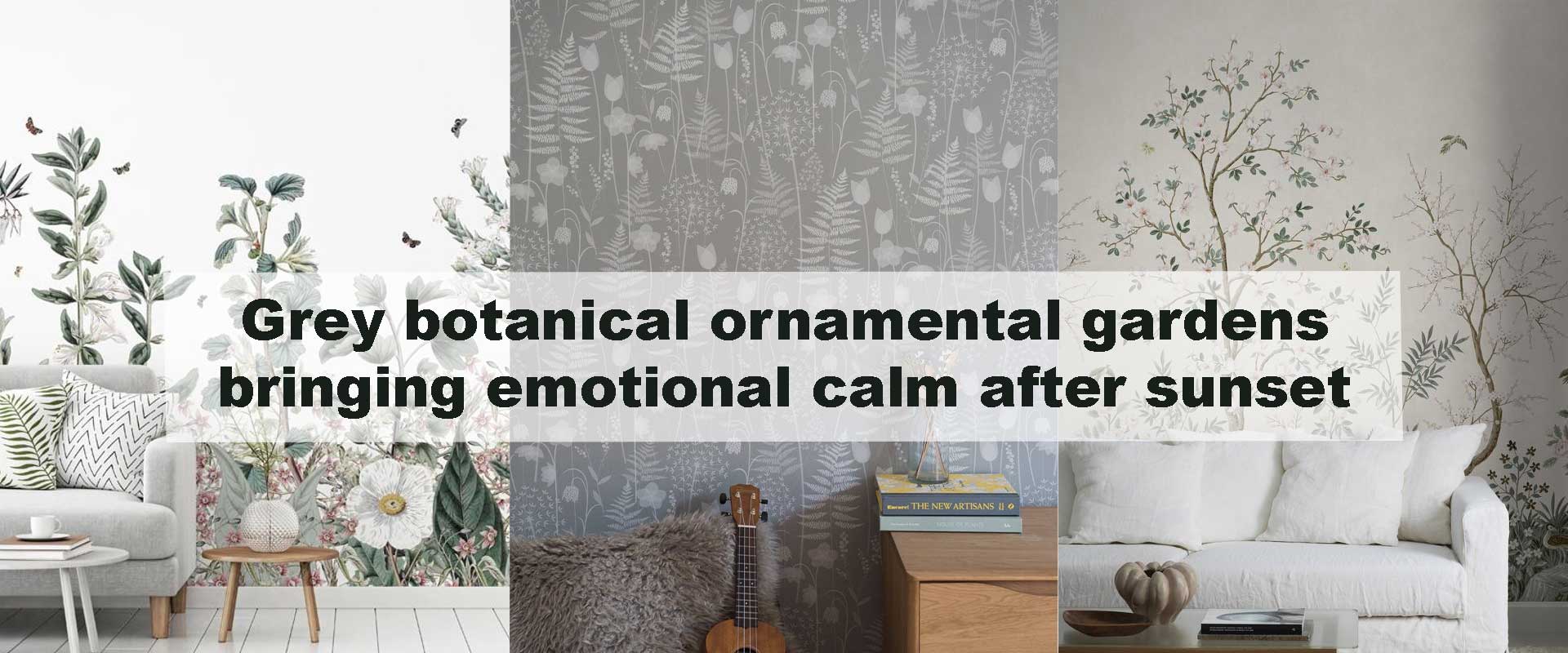
Grey botanical ornamental gardens bringing emotional calm after sunset
As evening settles in, interiors begin to influence how the mind unwinds from the pace of the day. Grey botanical ornamental gardens offer a refined way to soften this transition, using muted tones and nature-inspired structure to create emotional ease. Their layered foliage and decorative flow feel gentle rather than dramatic, allowing walls to support calm without demanding attention. In low evening light, these designs quietly reshape atmosphere, turning rooms into spaces meant for rest and reflection.
Unlike brighter botanical palettes, grey ornamental gardens respond beautifully to artificial lighting. They absorb warmth, reduce visual sharpness, and create a sense of enclosure that feels reassuring after sunset. This balance between ornament and restraint makes them especially suited to homes seeking calm without sacrificing elegance.
The emotional effect of grey after sunset
Grey occupies a rare and calming position between light and shadow, making it especially responsive once the sun goes down. As natural light fades and artificial lighting takes over, this neutrality reduces visual strain by eliminating sharp contrast. Grey botanical walls soften boundaries within a space, allowing the eye to drift gently across surfaces instead of reacting to abrupt shifts in tone or brightness.
Botanical ornamentation deepens this calming response through rhythm and familiarity. Repeating leaves, vines, and garden-inspired forms create a sense of continuity that the mind instinctively reads as stable and reassuring. This predictable movement encourages emotional unwinding, reflecting the same soothing principles found in bringing calm to modern homes with soft botanical wallpaper themes, where gentle pattern flow supports evening relaxation without visual demand.
Why ornamental garden patterns feel grounding
Ornamental botanical designs feel grounding because they rely on balance rather than spontaneity. Unlike loose, expressive florals, these patterns are structured and intentional, offering visual order at a time of day when the nervous system seeks quiet. After sunset, this sense of composure becomes especially important, helping interiors feel settled rather than overstimulating.
Rendered in grey palettes, ornamental garden motifs shift from decoration to atmosphere. They contribute depth and presence without competing for attention, allowing the room to feel emotionally anchored. Within the broader language of Botanical Wallpaper, these designs act as a bridge between classical elegance and contemporary calm—timeless in structure, yet perfectly aligned with modern needs for clarity, balance, and emotional ease.
Light, shadow, and evening depth
As daylight fades, grey botanical ornamental gardens begin to show their quiet sophistication. Warm lamps and indirect lighting trace the contours of leaves and vines, creating gentle shadow layers that feel immersive rather than dramatic. This soft interaction prevents visual flatness, allowing the wall to gain depth without introducing distraction or contrast fatigue.
Grey tones are particularly responsive to shifting light conditions. As the evening progresses, they deepen subtly, wrapping the space in a calm, cocoon-like atmosphere that feels protective and grounding. This quality is especially effective when paired with deeper palettes such as those found in Dark Botanical Wallpaper, where grey acts as a visual mediator—maintaining intimacy while preventing the room from tipping into heaviness.
Creating harmony with surrounding elements
Grey botanical walls feel most balanced when supported by natural, tactile materials. Soft-grain wood, woven linen, stone surfaces, and matte finishes mirror the organic rhythm of the pattern, reinforcing calm through texture rather than color contrast. Ornamental garden motifs allow these materials to coexist gracefully, creating a space that feels layered and intentional instead of overly styled.
Restrained furnishings amplify the emotional role of the wall. When furniture and décor remain understated, the botanical surface becomes the steady visual presence in the room. This philosophy aligns with the principles behind grey botanical wallpaper creating balance in contemporary interiors, where neutrality is not passive but actively shapes comfort, clarity, and emotional ease.
Where grey botanical ornamental gardens work best
Grey botanical ornamental gardens naturally suit spaces designed for slower moments later in the day. Living rooms benefit from their ability to soften conversation and reduce visual noise, while dining areas take on a composed, lingering warmth that encourages unhurried gatherings. In bedrooms, the repeating garden structure offers visual reassurance, supporting rest without stimulation.
For interiors that value flexibility, removable designs provide a practical solution. Options within the Peel and Stick Botanical Wallpaper range allow homeowners to introduce evening-focused calm with ease, adapting spaces as moods, seasons, or routines shift—without sacrificing emotional continuity.
Grey botanicals versus lighter botanical palettes
| Aspect | Grey Botanical Ornamental Gardens | Light Botanical Palettes |
|---|---|---|
| Evening atmosphere | Cocooning, emotionally calm | Fresh but more alert |
| Light response | Soft absorption, gentle depth | Higher reflection |
| Emotional tone | Grounded, introspective | Uplifting, energizing |
| Best after sunset | Highly suitable | Moderately suitable |
This contrast highlights why grey ornamental gardens feel especially aligned with post-sunset interiors, where quiet presence matters more than brightness.
Styling for lasting evening calm
To maintain the restorative mood created by grey botanical ornamental gardens, focus on finishes that soften rather than reflect. Matte woods, brushed stone, and gently textured fabrics prevent light from bouncing sharply, allowing the wall pattern to unfold slowly as evening lighting takes over. Avoiding high-gloss surfaces keeps the atmosphere cohesive and prevents visual interruption after sunset.
Layered lighting plays a key role in sustaining calm. Floor lamps, shaded table lamps, and low wall lighting create pools of warmth that interact gently with the botanical forms, enhancing depth without overpowering the pattern. This layered approach allows the wall to shift subtly throughout the evening, supporting a relaxed, unhurried pace.
Accessories should remain understated and organic. Sculptural ceramics, woven elements, or tonal artwork that references leaf shapes or garden symmetry reinforce the theme without repetition. By keeping decorative choices intentional and restrained, the grey botanical wall continues to act as the emotional anchor, guiding the space into a steady, peaceful night-time atmosphere.
Frequently Asked Questions
Do grey botanical ornamental gardens make interiors feel gloomy at night?
No. Grey tones soften light rather than blocking it, creating depth without heaviness. With warm lighting, the result feels comforting and calm.
Are ornamental patterns too formal for relaxed spaces?
While structured, ornamental garden designs feel balanced rather than rigid. In grey palettes, they support relaxation through rhythm and predictability.
What lighting suits grey botanical walls best after sunset?
Warm lamps, sconces, and indirect lighting enhance the pattern’s depth. Cool lighting should be avoided, as it reduces the calming effect.
Can these designs work in compact rooms?
Yes. The restrained color palette and flowing repetition add dimension without overwhelming smaller spaces.
Do grey botanical ornamental gardens suit modern homes?
Absolutely. Their classic structure paired with neutral tones makes them versatile across modern, transitional, and timeless interiors.
Conclusion
Grey botanical ornamental gardens bring emotional calm after sunset by blending tonal restraint with nature-inspired structure. Their ability to soften light, guide visual rhythm, and ground evening interiors makes them an elegant choice for spaces designed to slow down. Thoughtfully styled, these walls become a quiet presence that supports comfort, reflection, and ease as the day fades into night.