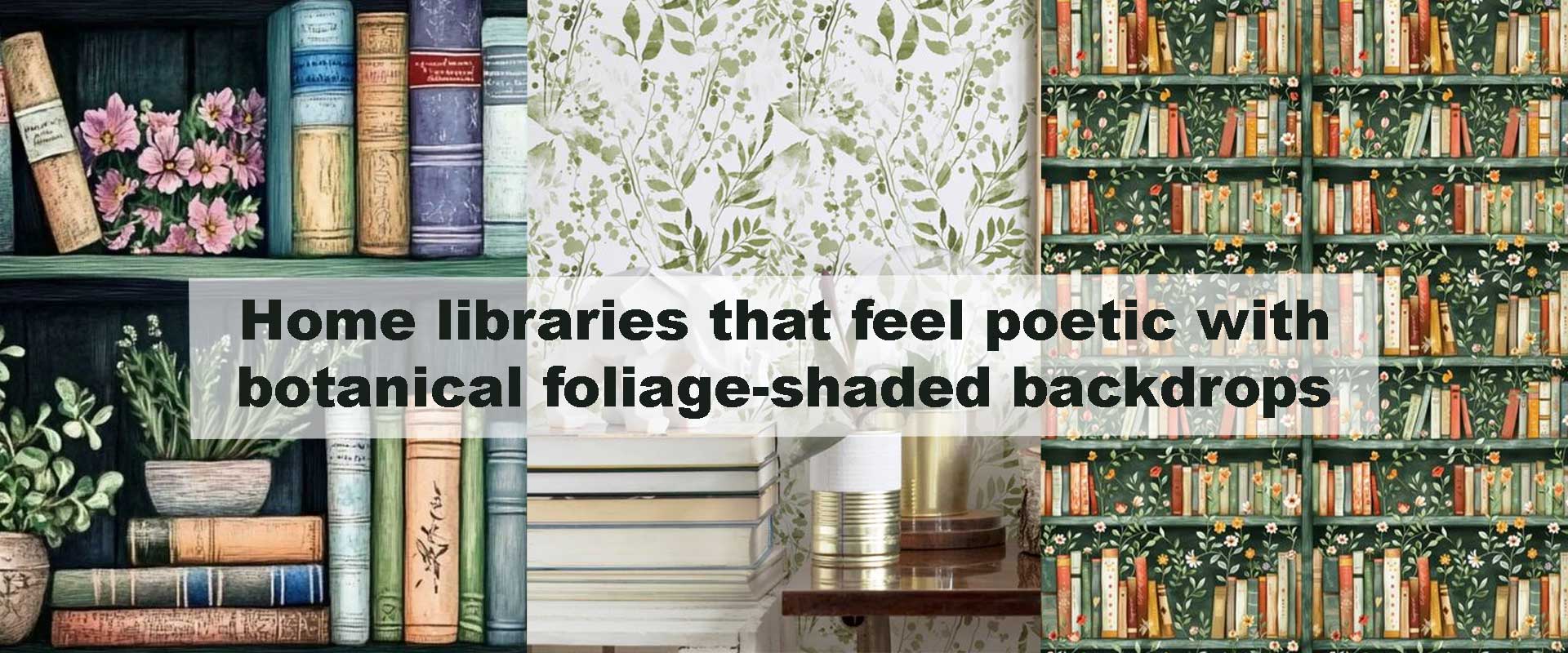
Home libraries that feel poetic with botanical foliage-shaded backdrops
A home library should feel like a pause in the day—quiet, thoughtful, and gently immersive. When walls are wrapped in botanical foliage-shaded backdrops, that sense of stillness deepens into something almost poetic. Leaves, stems, and softly layered greens echo the rhythms of nature, allowing bookshelves to feel less architectural and more alive. In spaces devoted to reading and reflection, botanical wall designs soften edges, absorb visual noise, and encourage slow moments with pages and ideas.
Botanical wallpaper works beautifully in libraries because it bridges intellect and emotion. The presence of foliage patterns recalls gardens, herbaria, and pressed leaves between old book pages, creating a subtle dialogue between literature and the natural world. Whether the palette leans toward sage, moss, or ink-washed greens, these backdrops give libraries a sense of narrative depth—walls that feel written rather than merely decorated.
Why Botanical Backdrops Suit Home Libraries So Well
Libraries thrive on atmosphere. Unlike high-energy spaces, they benefit from calm repetition, layered textures, and tonal restraint. Botanical foliage-shaded backdrops provide exactly that balance. Their organic forms introduce movement without distraction, while their color stories ground the room visually.
Green-based palettes are especially effective for long reading sessions. They rest the eyes and create continuity across shelves, seating, and floors. Subtle botanical patterns also soften the vertical presence of bookcases, preventing walls of books from feeling rigid or overwhelming. The result is a space that feels curated yet relaxed, scholarly yet inviting.
Botanical Wallpapers as Storytelling Surfaces
A library is already a collection of stories. Botanical wallpaper adds another narrative layer—one told through leaves, branches, and botanical illustrations. These designs often reference historical sketchbooks, garden journals, or vintage scientific prints, which pairs naturally with classic and contemporary literature alike.
Using a refined botanical wallpaper from the broader world of Botanical Wallpaper allows walls to feel intentional rather than ornamental. The motifs act like a quiet background score, supporting the main performance—your books—without competing for attention.
Vintage Botanicals and Literary Romance
Vintage botanical designs bring an especially poetic quality to home libraries. Their slightly faded inks, hand-drawn lines, and muted palettes echo the age and texture of well-loved books. When paired with wood shelving and linen upholstery, they create spaces that feel timeless rather than trend-driven.
A carefully chosen Vintage Botanical Wallpaper can make a modern library feel established and storied, as though it has evolved over decades. These designs suit readers who love classics, essays, and poetry—genres that reward slow engagement and atmosphere.
Foliage-Shaded Greens That Encourage Focus
Color plays a crucial role in how a library feels over time. Bright or high-contrast walls can become tiring, while overly neutral tones may feel flat. Botanical foliage-shaded greens strike a rare balance. They provide depth without drama and interest without interruption.
Soft moss, eucalyptus, and sage tones are especially effective behind shelves. They recede gently, allowing book spines to stand out while maintaining a cohesive backdrop. This approach aligns closely with ideas explored in Bringing calm to modern homes with soft botanical wallpaper themes, where muted botanical palettes are shown to support relaxation and mental clarity.
Darker Greens for Evening Reading
Libraries often come alive at night. Deeper foliage shades—forest, olive, or bottle green—add intimacy under warm lighting. These tones create a cocoon-like effect, ideal for evening reading or reflective writing sessions.
In rooms where lighting is controlled and shelves are rich in tone, a Dark Botanical Wallpaper can transform a simple library into a sanctuary. The darker backdrop absorbs excess light, reducing glare and enhancing focus.
Designing the Perfect Botanical Library Wall
Creating a poetic library isn’t about covering every surface. Strategic placement is key. Many homeowners choose to wallpaper the main shelving wall, allowing foliage patterns to frame books like an illustrated manuscript. Others use botanical designs on adjacent walls to create a wraparound sense of immersion.
Large-scale leaf patterns work well in spacious libraries, while finer botanical repeats suit compact reading rooms. For flexible spaces, especially those that evolve over time, Peel and Stick Botanical Wallpaper offers a way to experiment without permanence, keeping the design process as thoughtful as the space itself.
Feature Walls vs Full Coverage
Choosing between a feature wall and full-room coverage depends on the library’s scale and light levels. Feature walls create a focal point behind seating or shelving, while full coverage envelops the reader completely.
| Approach | Visual Impact | Best For | Overall Mood |
|---|---|---|---|
| Feature botanical wall | Focused and elegant | Small libraries, shared rooms | Curated and calm |
| Full botanical coverage | Immersive and poetic | Dedicated reading rooms | Enveloping and introspective |
| Alcove or nook treatment | Intimate and layered | Window seats, corners | Cozy and reflective |
Pairing Botanical Walls with Shelving Materials
The interaction between wallpaper and shelving determines much of the room’s character. Light wood shelves paired with green botanicals feel airy and contemporary. Dark wood introduces gravity and tradition. Painted shelves—especially in soft neutrals—allow foliage patterns to take center stage.
Metal accents should be used sparingly in libraries with botanical walls. Brass or aged bronze can add warmth, while matte black works best when patterns are subtle. The goal is harmony rather than contrast, letting the room read as a single composition.
Botanical Libraries in Different Home Styles
Botanical foliage-shaded libraries adapt easily across design styles. In classic homes, they reinforce heritage and craftsmanship. In modern interiors, they soften clean lines and minimal palettes. Even in eclectic spaces, botanical backdrops provide a unifying thread.
Scandinavian-inspired libraries benefit from pale botanical sketches and light greens, while more maximalist homes can embrace layered foliage with richer tones. This versatility mirrors themes discussed in How green botanical prints create an earth-inspired living room atmosphere, where greenery acts as a grounding element across styles.
Libraries as Transitional Spaces
Many home libraries double as passageways or transitional rooms. Botanical wallpaper helps these spaces feel intentional rather than leftover. A leafy backdrop encourages people to slow down, even when simply passing through, reinforcing the library’s reflective purpose.
Choosing the Right Scale and Pattern Density
Pattern scale influences how poetic or energetic a library feels. Fine line-art botanicals feel delicate and contemplative, while large leaves add drama and presence. In reading spaces, restraint usually wins.
Designs like Minimal Line Art Botanical Wallpaper are especially effective for readers who prefer visual quiet. Their simplicity allows the mind to rest, making them ideal for study-focused libraries or writing rooms.
Lighting That Complements Botanical Backdrops
Lighting completes the story. Botanical walls respond beautifully to warm, directional light. Wall washers can highlight pattern texture, while adjustable reading lamps create intimate pools of brightness against leafy backdrops.
Avoid overly cool lighting, which can flatten green tones and make patterns feel harsh. Instead, opt for layered lighting that shifts from day to night, allowing the botanical backdrop to change mood subtly as natural light fades.
Botanical Libraries and Emotional Wellbeing
Reading is often a restorative act, and the environment plays a role in that restoration. Botanical foliage-shaded backdrops reinforce feelings of calm, safety, and connection to nature—qualities that enhance concentration and emotional comfort.
Studies and design observations increasingly point to biophilic elements as beneficial in quiet spaces. Walls that echo gardens and forests help libraries feel less enclosed and more expansive, even in smaller homes.
Styling Finishing Touches Around Botanical Walls
Accessories should support, not compete with, botanical backdrops. Natural textures—wool throws, leather chairs, ceramic lamps—pair well with foliage patterns. Artwork can be minimal or omitted entirely, letting the wallpaper serve as the visual anchor.
Plants, interestingly, should be chosen carefully. Too many can clutter the space visually. One or two sculptural plants echoing the wallpaper’s motifs are often enough to reinforce the theme without distraction.
Long-Term Appeal of Botanical Library Designs
Trends come and go, but botanical designs have proven longevity. Their roots in art, science, and nature give them staying power. In libraries especially, this timelessness matters. These rooms are built for years of use, growth, and personal evolution.
Choosing foliage-shaded backdrops ensures that the space matures gracefully alongside your book collection, adapting to new genres, interests, and stages of life without needing constant redesign.
Conclusion
Home libraries that feel poetic rely on more than shelves and seating—they depend on atmosphere. Botanical foliage-shaded backdrops provide that atmosphere through color, pattern, and emotional resonance. By echoing the natural world, these designs create libraries that invite pause, curiosity, and reflection. Whether through vintage sketches, soft greens, or immersive leaf patterns, botanical walls transform reading spaces into quiet sanctuaries where stories—both written and visual—can unfold naturally.