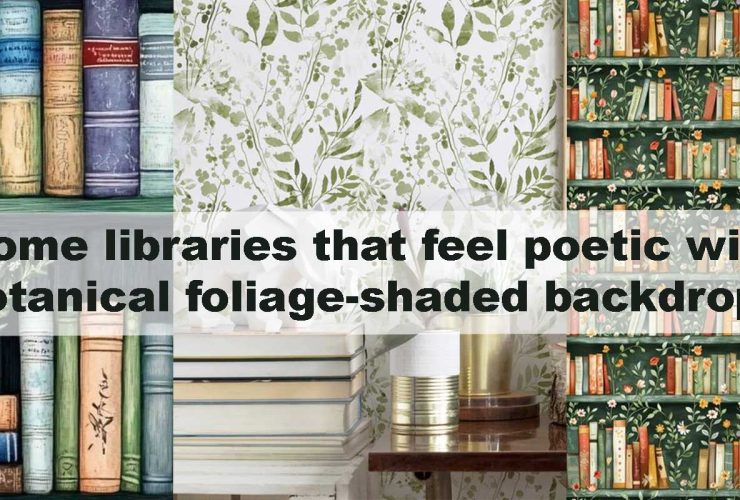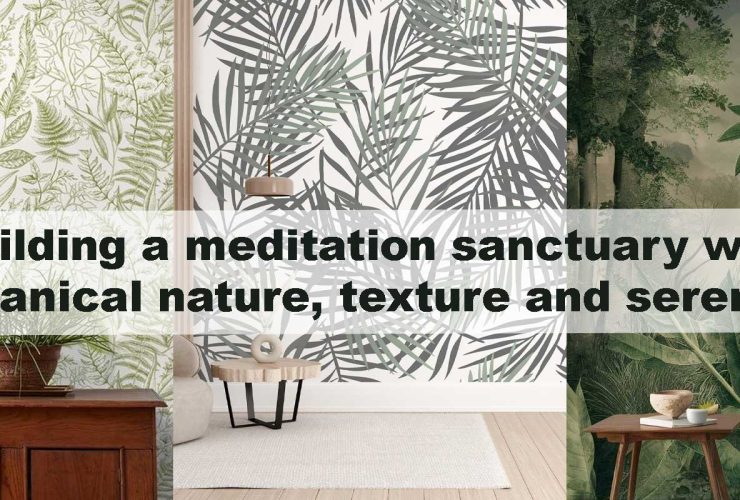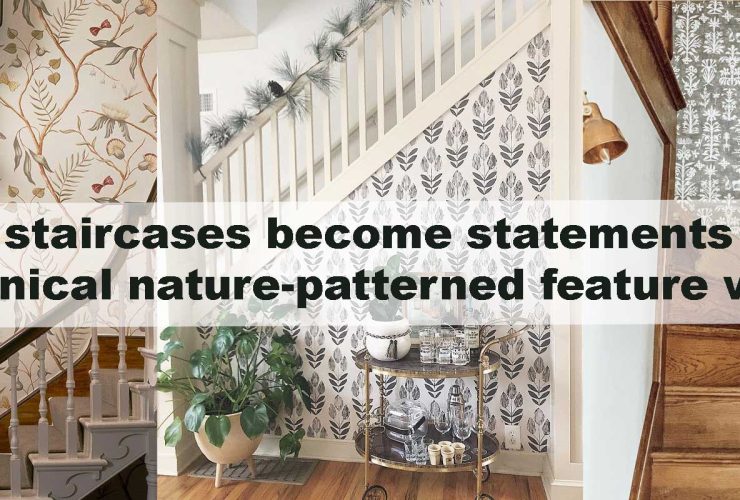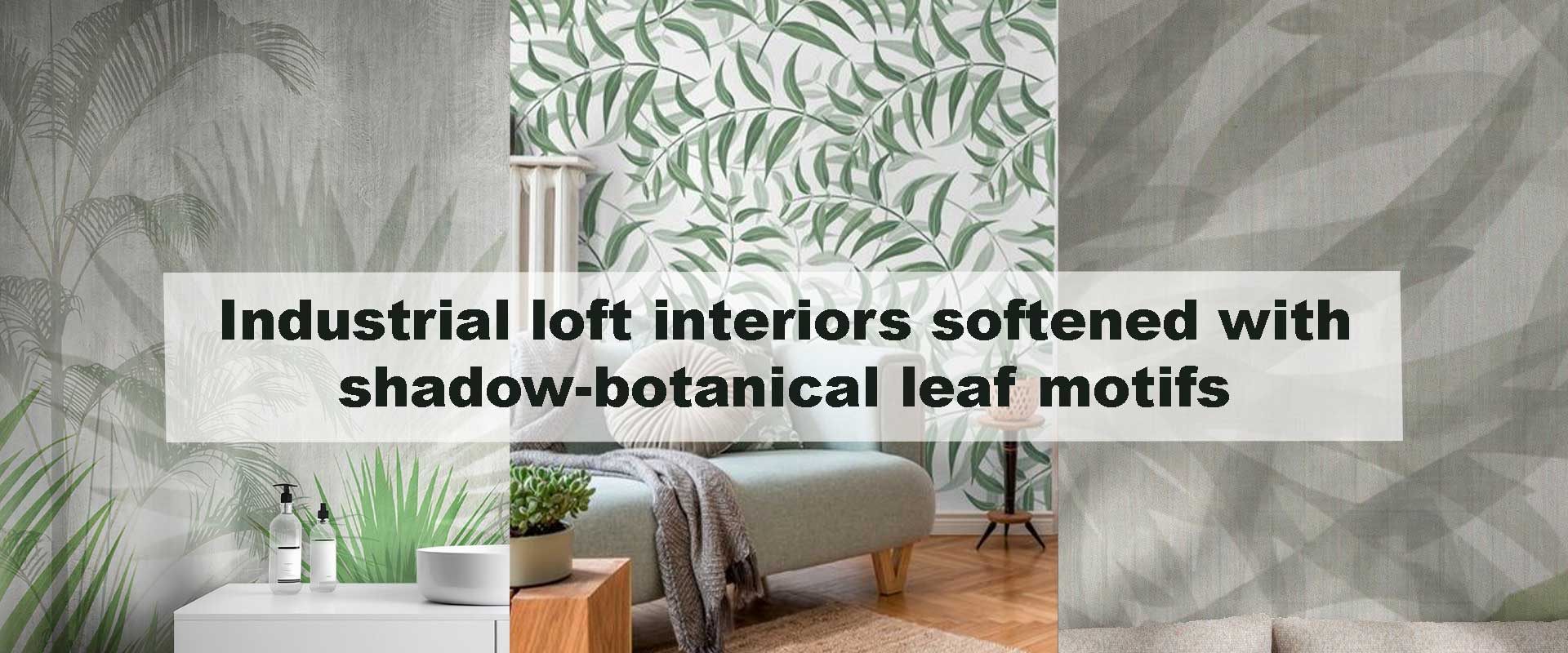
Industrial loft interiors softened with shadow-botanical leaf motifs
Raw materials don’t have to feel cold. Industrial loft interiors are celebrated for concrete floors, steel framing, and expansive open plans, yet those same features can sometimes feel stark or echoing. Introducing shadow-botanical leaf motifs brings a subtle organic layer that softens edges without compromising the loft’s urban character. When foliage appears as tonal silhouettes rather than bold color, it blends naturally with brick, metal, and weathered wood, creating a calm visual rhythm that feels intentional rather than decorative.
In the first moments of entering a loft, walls set the emotional tone. Shadow-inspired botanical designs gently break up large surfaces, allowing industrial spaces to feel grounded and welcoming while preserving their architectural honesty. This balance is what makes industrial loft interiors softened with shadow-botanical leaf motifs such a compelling design direction today.
Why Industrial Loft Spaces Benefit From Botanical Softness
Industrial lofts were originally utilitarian spaces, designed for function rather than comfort. High ceilings, exposed ductwork, and expansive walls provide drama, but they also amplify hardness if left untreated. Shadow-botanical motifs introduce visual warmth without clutter, acting almost like a soft filter across the space.
Unlike colorful florals or dense patterns, shadow-style botanicals rely on tone-on-tone contrast. Leaves appear as misty outlines, charcoal silhouettes, or layered grayscale forms. This subtlety allows the pattern to coexist peacefully with concrete, steel, and brick, enhancing depth rather than competing for attention.
These designs also echo nature in a restrained way. The mind registers organic shapes, which instinctively feels calming, while the industrial framework remains dominant. This interplay supports a loft atmosphere that feels balanced, composed, and quietly sophisticated.
Understanding Shadow-Botanical Leaf Motifs
Shadow-botanical motifs focus on form rather than color. Leaves, stems, and branches appear as softened silhouettes, often inspired by light filtering through foliage. The result is a pattern that feels atmospheric instead of decorative.
In loft interiors, this approach works especially well because it mirrors how natural light behaves across textured surfaces. As sunlight moves through large windows, the botanical shadows seem to shift and deepen, creating a living quality on the walls. This subtle movement brings life to otherwise static industrial elements.
Because shadow-botanical designs avoid strong outlines or saturated hues, they remain timeless. They don’t lock the space into a specific trend, making them ideal for loft owners who value longevity and adaptability.
Balancing Raw Materials With Organic Wall Design
One of the defining strengths of industrial loft interiors is their commitment to material honesty. Concrete remains raw and unapologetic, metal surfaces reveal age and patina, and brick walls proudly display their irregularities. Shadow-botanical walls work in harmony with this philosophy, introducing softness without concealing or diluting the character of these materials.
Against exposed brick, dark botanical silhouettes heighten texture through contrast, allowing every groove and imperfection to feel intentional. On smooth concrete surfaces, the same motifs create visual layering, preventing walls from feeling flat or monolithic. When paired with steel beams or blackened window frames, the gentle curves of botanical forms subtly counterbalance rigid architectural lines, easing the space without weakening its structure.
This interplay feels deliberate rather than decorative. Each surface retains its identity, yet nothing competes for dominance. The result is a cohesive environment where industrial strength and organic calm coexist with quiet confidence.
Choosing The Right Botanical Scale For Loft Walls
Scale plays a critical role in open-plan loft environments, where walls stretch uninterrupted and visual proportion becomes essential. Patterns that are too small can disappear across expansive surfaces, while overly large motifs risk overwhelming the architecture if applied without restraint. Shadow-botanical designs offer a flexible middle ground that adapts naturally to loft proportions.
Large-scale leaf silhouettes perform especially well on feature walls, such as behind seating areas or along extended corridors. Their simplified forms allow them to command attention without visual noise. Medium-scale motifs, on the other hand, are ideal for wrapping entire living zones, creating continuity that supports the openness of the layout rather than fragmenting it.
Because these designs rely on restrained contrast, even generous wall coverage feels composed. Thoughtful spacing between motifs allows negative space to breathe, reinforcing the loft’s expansive feel while maintaining visual softness.
Color Palettes That Enhance Shadow-Botanical Effects
Shadow-botanical motifs reach their full potential within muted, earthy color palettes. Shades such as charcoal, smoke gray, soft taupe, and deep olive naturally echo industrial materials while introducing warmth and depth. These tones absorb and diffuse light rather than reflecting it harshly, reducing glare in high-ceilinged spaces and creating a calmer visual rhythm.
In lofts filled with natural daylight, darker botanical palettes establish a moody, gallery-like atmosphere that feels intentional and refined. In spaces with limited light, lighter gray or stone-washed interpretations preserve softness without making walls feel heavy or enclosed.
These palettes integrate seamlessly with aged wood, leather upholstery, and brushed metal finishes. Together, they reinforce the industrial-organic dialogue, allowing the loft to feel grounded, balanced, and quietly expressive rather than stark or severe.
Creating Visual Zones In Open-Plan Lofts
Open-plan living defines industrial loft interiors, yet the absence of walls can sometimes make spaces feel visually unanchored. Shadow-botanical walls offer an elegant way to introduce definition without interrupting openness. Rather than dividing areas physically, they establish subtle shifts in mood that guide how each zone is experienced.
A botanical feature behind a dining area creates a sense of place, visually separating it from adjacent lounging zones while preserving continuity. In work-from-home corners, the same soft leaf silhouettes encourage focus by reducing visual distraction without enclosing the space. Because shadow-botanical patterns rely on gentle contrast, transitions between zones feel fluid and intentional rather than abrupt or segmented.
This approach reflects the same calm-first design thinking discussed in Bringing calm to modern homes with soft botanical wallpaper themes, where botanical restraint enhances clarity, flow, and emotional balance in contemporary interiors.
Pairing Shadow-Botanical Walls With Loft Furniture
Furniture in industrial lofts often carries strong visual weight—low-profile sofas, metal-framed tables, exposed joinery, and sculptural lighting all command attention. Shadow-botanical walls act as a soft counterbalance, allowing these bold forms to stand out without overwhelming the space.
Leather seating feels warmer when set against organic silhouettes, while open shelving appears more deliberate when framed by subtle botanical movement. Even statement lighting benefits from this backdrop, as the interplay of light and shadow echoes the leafy forms on the walls. The result is a space where furniture feels thoughtfully composed, supported by walls that enhance presence without competing for focus.
Using Botanical Motifs To Soften Loft Bedrooms
Loft bedrooms often exist as part of larger open layouts, making visual calm essential for rest. Shadow-botanical designs are especially effective here, introducing a sense of enclosure through atmosphere rather than structure. Soft leaf silhouettes create a gentle backdrop that signals rest while preserving the loft’s openness.
Positioned behind the bed, these motifs add intimacy without heaviness. Neutral bedding, layered textiles, and tactile finishes feel more grounded against organic wall patterns, helping the bedroom shift away from industrial starkness toward quiet comfort. For cohesive results, designs curated within Botanical Wallpaper for Bedrooms naturally support restful loft sleeping areas while maintaining architectural flow.
Industrial Kitchens And Botanical Contrast
Loft kitchens are often defined by stainless steel surfaces, concrete counters, and exposed shelving—elements that emphasize function and durability. While visually striking, these materials can feel cool when left unbalanced. Shadow-botanical walls introduce a subtle organic counterpoint, softening the atmosphere without interfering with the kitchen’s practical rhythm.
When applied along dining-adjacent walls or breakfast nooks, botanical motifs warm the space while maintaining clarity. Their tonal quality prevents visual noise, allowing the kitchen to remain composed even during busy moments. The gentle contrast between hard finishes and leaf-inspired shadows makes the kitchen feel more welcoming, supporting both everyday routines and shared meals without shifting away from its industrial roots.
Selecting The Right Finish For Loft Conditions
Industrial lofts present unique environmental conditions, from soaring ceilings to shifting natural light throughout the day. Selecting the right wall finish ensures shadow-botanical designs retain their depth and elegance over time. Matte and soft-sheen surfaces are especially effective, as they reduce glare from large windows while allowing botanical silhouettes to appear layered and dimensional.
These finishes also respond beautifully to artificial lighting, enhancing shadow effects rather than flattening them. In high-traffic loft areas, durability becomes just as important as aesthetics. A well-chosen finish protects the visual integrity of botanical walls, allowing them to function as a lasting design feature rather than a delicate accent. Over time, this thoughtful approach ensures the walls continue to support the loft’s atmosphere instead of fading into the background.
Comparing Wall Design Approaches In Industrial Lofts
| Wall Style | Visual Impact | Suitability For Lofts | Overall Atmosphere |
|---|---|---|---|
| Exposed Concrete Only | Stark, raw | High | Minimal, cold |
| Painted Neutral Walls | Clean, simple | High | Calm, plain |
| Bold Color Murals | Dramatic | Moderate | Expressive, intense |
| Shadow-Botanical Leaf Motifs | Soft, layered | Very High | Balanced, warm |
This comparison highlights why shadow-botanical motifs feel so natural in industrial loft settings. They deliver atmosphere without disrupting architectural integrity.
When To Choose Botanical Wallpaper Over Art
In expansive loft interiors, traditional wall art can often feel visually disconnected from the scale of the space. Large walls demand proportion, and unless artwork is oversized or meticulously curated, it may appear scattered or underwhelming. Shadow-botanical wallpaper solves this effortlessly by acting as immersive, architectural-scale artwork that feels integrated rather than applied.
Instead of relying on multiple framed pieces to fill visual gaps, a single botanical wall treatment establishes cohesion and rhythm across the room. The organic silhouettes read as atmospheric art, creating depth without dictating focal points too rigidly. This flexibility allows furniture layouts to change freely, as the wall remains visually relevant regardless of how the space evolves.
Over time, this approach proves especially rewarding. Botanical walls don’t age like trend-driven artwork; they quietly adapt, continuing to support the space long after tastes, furnishings, or functional needs shift.
Integrating Botanical Collections Thoughtfully
Refined loft interiors benefit from intentional selection rather than visual excess, and curated botanical collections provide that clarity. Designs emphasizing shadow, tonal layering, and fluid organic movement naturally complement industrial materials such as concrete, steel, and aged wood, reinforcing cohesion rather than contrast.
Exploring a wide range of Botanical Wallpaper allows loft owners to align pattern density and mood with their architecture. Deeper, shadowed designs enhance drama in moody urban spaces, while softer, diffused outlines support lofts filled with natural light.
Designers often gravitate toward styles like Dark Botanical Wallpaper to anchor expansive interiors with depth, or Minimal Line Art Botanical Wallpaper when restraint and structure take priority. Where subtle freshness is desired, Green Botanical Wallpaper introduces a gentle organic lift without disrupting the industrial foundation.
Long-Term Appeal Of Shadow-Botanical Loft Design
While design trends continually cycle, shadow-botanical motifs endure because they prioritize form, atmosphere, and emotional balance over novelty. Their quiet presence allows industrial loft interiors to mature gracefully, absorbing changes in furniture, lighting, and layout without visual friction.
This adaptability makes them a thoughtful long-term choice for loft living. Rather than demanding attention, the walls support daily life—grounding the space, softening its edges, and maintaining relevance as design preferences evolve. In an environment defined by permanence and structure, shadow-botanical walls offer a sense of continuity that feels both timeless and deeply livable.
Frequently Asked Questions
Do shadow-botanical motifs suit small industrial lofts?
Yes. Because the designs rely on tonal contrast rather than bold color, they add depth without visually shrinking the space.
Will botanical walls clash with exposed brick or metal?
No. Organic silhouettes balance hard surfaces, enhancing texture rather than competing with it.
Are these designs too subtle for statement interiors?
Their restraint is their strength. They create impact through atmosphere instead of loud visuals.
Can shadow-botanical walls work in work-from-home lofts?
Absolutely. The calming forms support focus while maintaining a professional, composed environment.
Conclusion
Industrial loft interiors thrive on contrast, and shadow-botanical leaf motifs provide the perfect counterpoint to raw materials. By introducing organic softness through tonal silhouettes, these designs create balance, warmth, and visual depth without compromising architectural honesty. The result is a loft that feels grounded yet refined, expressive yet calm. For those seeking to soften industrial spaces while preserving their character, shadow-botanical walls offer a timeless, thoughtful solution that grows more rewarding over time.