Luxury Art Deco Murals That Redefine Feature Walls This Year
A feature wall has always carried a certain expectation—drama, presence, and visual depth—but this year’s luxury Art Deco murals raise that expectation into something far more architectural. Designers are leaning toward grand geometric symmetry, saturated color fields, metallic gradients, and softened deco curves that reshape the way a room feels at first glance. Luxury Art Deco murals are no longer simply decorative surfaces; they act as statement structures that guide light, movement, and proportion throughout the space. With the renewed interest brought forward by the momentum seen in Why Art Deco Wallpaper Is Returning as the Biggest Luxury Design Trend, this year showcases murals that embrace theatrical elegance while remaining strikingly modern.
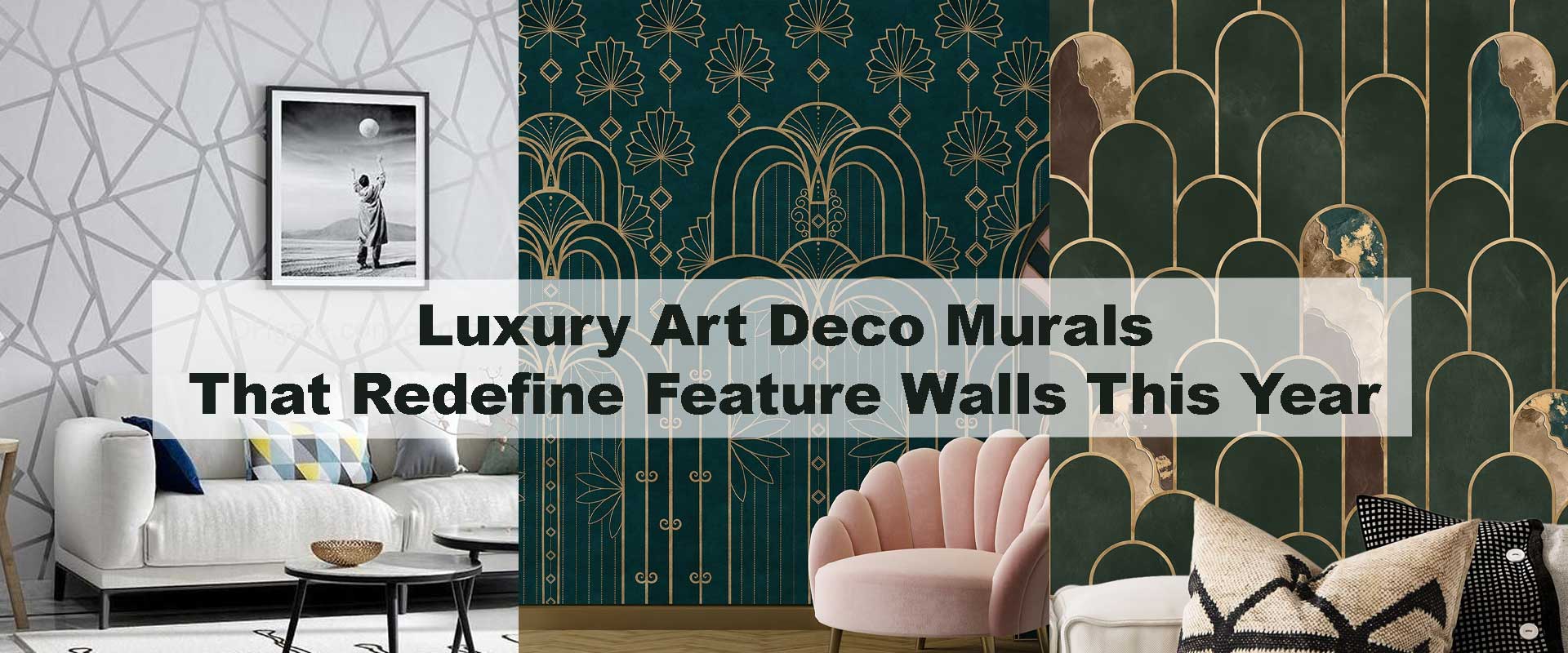
A noticeable shift is the preference for immersive mural-scale compositions over repetitive prints. These large-format Art Deco murals behave like architectural panels—it is this sense of intentionality that helps them become the natural anchor for living rooms, dining areas, primary bedrooms, and even transitional hallways. Rich color themes such as emerald, ink blue, caramel gold, pewter, champagne, and black lacquer combine with controlled geometry to deliver an interior presence impossible to achieve through furniture alone. It is also why more homeowners turn to Art Deco Wallpaper murals when building a signature focal point capable of grounding all surrounding décor choices.
How Luxury Art Deco Murals Transform the Modern Feature Wall
Scale That Builds Drama Without Overwhelming
Large-format murals use scale in a way that traditional repeating patterns cannot. While repeating prints create rhythm, murals create intention. In Art Deco design, scale is essential because symmetry and balance rely on clear visual anchors. Oversized sunbursts, rising arches, stepped facades, and metallic rays deliver a sense of grandeur that immediately strengthens room architecture. Homes with simple ceiling lines or plain rectangular layouts benefit most from these murals because the pattern introduces visual geometry where none existed.
Color gradients allow the mural to maintain softness despite its scale. For example, brushed gold fading into warm champagne tones creates a gentle glow that matches perfectly with Luxury Metallic Art Deco Wallpaper for accent sections. Instead of overwhelming the eye, these gradients invite the viewer into a more cinematic room ambience. This is why many stylists recommend murals for entryways and lounges—these spaces become the place where scale meets quiet glamour.
Deco Geometry That Feels Sculpted
The most defining feature of a luxury Art Deco mural is its sculptural geometry. Unlike smaller repeating motifs, mural geometry behaves like architectural relief—broad, intentional strokes that shape the room. Arches, rays, and stepped forms can mimic carved stonework or polished metal surfaces. When gold or copper detailing is applied to these shapes, warm light deepens their dimensional appeal.
Modern homeowners often balance this structure with softer furnishings: velvet seating, curved ottomans, ribbed cabinetry, and linen draperies that diffuse natural light. This interplay between soft organic forms and sculpted geometric structure is what makes Deco murals so enduring. The control of geometry also complements the clean energy of Geometric Art Deco Wallpaper in adjoining walls without creating visual conflict.
Color Stories That Set the Emotional Tone
Color is a central character in Art Deco styling. Luxury murals this year highlight jewel tones, softened metallics, burnished neutrals, and twilight shades. Emerald remains the most expressive and timeless color for delivering depth. When layered into murals with gold or brass accents, emerald creates a sense of refined glamour—much like the immersive mood found in Emerald Green Art Deco Wallpaper, which thrives under warm or directional lighting.
For contemporary spaces, ink blue and charcoal remain favorites because they frame furniture beautifully and allow metallic geometry to shine. Blush champagne, taupe gold, and oyster silver dominate soft-luxury interiors where calm sophistication matters more than contrast. This year’s color stories prove that luxury does not always mean boldness—sometimes it means the quiet confidence of a muted palette executed with exquisite detail.
Why Feature Walls Benefit More From Art Deco Murals Than Any Other Style
They Create Visual Architecture
A feature wall carries the responsibility of anchoring the entire room, and no style fulfils that role with more authority than Art Deco. Its foundations—symmetry, proportion, hierarchy—naturally impose visual order, giving even the simplest room a sense of designed precision. When applied at mural scale, these geometric systems behave like stylized architecture: stepped forms evoke grand facades, rising rays mimic sculptural relief, and sweeping arcs suggest crafted stonework. This transforms a plain surface into a commanding architectural plane that gives a room depth, direction, and a visual framework. In open-plan homes especially, where boundaries blur, the mural becomes the silent structural guide that connects spaces without relying on partitions or physical barriers.
They Add Instant Luxury Without Overstyling
Luxury often falters when it becomes heavy-handed, which is why Art Deco murals excel—they deliver richness through refinement rather than excess. Their sculptural forms feel intentional, controlled, and precise, allowing the room to appear effortlessly curated. Metallic accents, gentle gradients, and well-balanced geometry create the impression of handcrafted detail without overwhelming the eye. This aligns perfectly with the modern “quiet luxury” movement, where beauty is defined by material quality, tonal harmony, and architectural clarity instead of elaborate ornamentation. A Deco mural elevates a minimalist space by adding depth and emotion, yet it also enhances richly furnished interiors by providing a beautifully structured backdrop that ties every element together.
They Interact With Light in Beautiful Ways
Light is where a Deco mural truly reveals its personality. Metallic detailing captures illumination and redirects it gently across the wall, creating subtle glimmers and shifting gradients throughout the day. Morning light produces soft reflections, afternoon brightness sharpens geometric edges, and evening lamps cast warm halos that enlarge the mural’s presence. Downlighting, sculptural chandeliers, and floor lamps deepen this dynamic interplay, allowing the mural’s symmetry and linework to expand and contract with every change in ambiance. This fluid interaction gives the mural a cinematic quality—alive, dimensional, and emotionally responsive—while still maintaining visual restraint.
Top Luxury Art Deco Mural Styles Dominating Feature Walls This Year
1. Metallic Fanburst Murals
Fanburst motifs remain the quintessential language of Art Deco, symbolizing optimism, upward movement, and refined celebration. At mural scale, these radiating forms stretch across the wall with elegance and power, lifting the room’s energy instantly. Whether finished in gold, champagne, bronze, or brushed silver, fanburst murals offer a timeless glamour that pairs beautifully with sculptural lighting, velvet seating, and dark-toned furniture. Their symmetrical sweep feels architectural, making them ideal for grand living areas and dining rooms where presence matters.
2. Grand Architectural Panels
Art Deco’s historic connection to architecture shines in murals that mimic fluted columns, stepped structures, and stylized skyscraper silhouettes. These designs bring a sense of monumentality to interiors, echoing the grandeur of early 20th-century buildings. They pair flawlessly with marble floors, curved sofas, and brass accents, creating a sophisticated environment where structure and softness coexist. These murals are especially effective in tall rooms or long walls that benefit from vertical emphasis and sculptural rhythm.
3. Emerald and Gold Luxe Murals
Emerald is one of the most emotionally resonant colors in Deco design—deep, atmospheric, and beautifully dramatic. When layered with fine gold detailing, it creates a luxurious interplay of warmth and depth that instantly elevates a room. These murals excel in spaces where glamour and intimacy are equally important, such as lounges, bedrooms, and intimate dining areas. The contrast between jewel-tone richness and metallic clarity produces a mural that feels both bold and timeless.
4. Soft Metallic Gradient Murals
For interiors that prefer subtlety over spectacle, soft metallic gradients offer a polished yet understated luxury. Champagne, pewter, and oyster-silver palettes fade seamlessly into each other, allowing the mural to glow without demanding attention. Paired with gentle Deco arches, these gradients create an atmospheric backdrop that enhances texture and materiality—velvet, ribbed wood, matte ceramics, or sculptural glass feel even more refined against such a softly luminous surface. This style suits minimalist living rooms, serene bedrooms, and modern dining spaces that value controlled elegance.
5. Abstract Deco Curves for Contemporary Interiors
Modern homes often call for a softer interpretation of Deco, and abstract curved murals meet that need beautifully. Elliptical lines, diffused metallic arcs, and atmospheric gradients create a contemporary expression of Deco glamour without strict symmetry. These murals bridge the gap between vintage inspiration and modern sensibility, making them incredibly versatile. Smaller rooms or transitional spaces benefit from pairing these murals with the refined direction seen in Abstract Art Deco Wallpaper, ensuring the design language stays cohesive without becoming repetitive. Their fluid shapes introduce motion, elegance, and a quiet sculptural pulse.
How to Style Luxury Art Deco Murals for Maximum Impact
Choose Lighting That Complements Metallic Geometry
Lighting is one of the strongest tools for enhancing a Deco mural, because metallic lines thrive on interaction with glow, shadow, and reflective warmth. Disc sconces, sculptural tiered chandeliers, and frosted orb fixtures cast soft gradients that glide across the mural, helping its geometry come alive with dimensional movement. When lighting is placed thoughtfully—angled toward the mural or positioned at varying heights—the metallic rays shift beautifully throughout the day, adding an atmospheric rhythm that turns the entire feature wall into a dynamic visual experience rather than a static backdrop.
Use Contrast Furniture to Anchor the Wall
A luxury Art Deco mural works best when anchored by furniture that reinforces its hierarchy without overpowering it. Black lacquer consoles introduce a refined silhouette that frames metallic tones elegantly, while white marble surfaces provide a cool counterpoint to warmer Deco palettes. Emerald velvet seating deepens the mural’s richness, offering tactile luxury that complements architectural geometry. Champagne-toned cabinetry and curved accent pieces keep the balance soft, allowing the strong lines of the mural to remain the hero while the furniture quietly builds cohesion.
Pair With Complementary Secondary Walls
A feature wall gains more presence when the surrounding surfaces support it through texture, tone, or pattern. Subtly structured wallpapers—like the refined direction found in Textured Art Deco Wallpaper—make adjoining walls feel intentional rather than blank. Using muted versions of Deco shapes or soft tonal gradients ensures transitions feel seamless, especially in open‐plan settings. This layered approach keeps the mural from appearing isolated and instead allows the entire room to function as a unified, cinematic Deco environment.
Maintain Material Harmony
Material choices can either elevate or dilute the impact of a mural. Polished brass and brushed gold echo metallic detailing with luxurious precision. Ribbed glass and fluted wood enhance the sculptural feel by introducing tactile rhythm that mirrors Deco geometry. Velvet softens strong lines, while onyx black introduces grounding depth that prevents the palette from feeling too airy. Marble, with its natural veining, offers a timeless counterbalance to structured patterns. When these materials coexist with intention, the room gains effortless refinement—luxury that feels designed, not decorated.
Luxury Art Deco Murals for Every Room Type
Living Rooms
In a living room, a luxury Art Deco mural becomes the defining gesture that shapes the entire seating arrangement. Emerald, navy, black-gold, or champagne-blush murals give immediate architectural presence to the space, guiding where sofas, consoles, and lighting naturally situate themselves. Here, scale becomes theatrical but never overwhelming; the mural acts as a quiet conductor, orchestrating color, light, and proportion throughout the room. With the right accessories and balanced textures, the feature wall transforms the living area into a refined showcase of modern glamour.
Dining Rooms
Dining spaces gain remarkable intimacy and sophistication when defined by Deco geometry. A feature wall behind the dining table creates a stage-like ambiance, especially when paired with sculptural chandeliers and metallic tableware that echo the mural’s contours. Soft arches and radiant linear motifs frame conversations and enhance the sense of occasion during evening meals. This pairing turns ordinary dining rooms into elevated entertaining spaces that feel grounded in luxury without demanding elaborate décor.
Bedrooms
The headboard wall is where Deco murals shine with quiet elegance. Soft curves, diffused metallic rays, and champagne or pewter palettes create restful depth without sacrificing richness. These murals deliver a sense of sanctuary—calming yet sophisticated, atmospheric yet understated. When layered with upholstered headboards, warm bedside lighting, and minimal accessories, the room gains a serene rhythm that supports both relaxation and style. The mural becomes the gentle architectural spine that shapes the bedroom’s entire visual flow.
Home Offices
A Deco mural can be surprisingly effective in workspaces because structured geometry inspires clarity, focus, and a sense of intentionality. Straight lines, symmetrical forms, and thoughtfully restrained metallic details lend the environment a grounded, organized energy. Soft neutrals or deep jewel tones provide emotional tone—either calming or energizing—depending on the color story chosen. With streamlined furniture and controlled décor, the mural turns the home office into a polished, motivational, and aesthetically consistent part of the home.
Luxury Art Deco Murals vs Traditional Wallpaper Prints
| Feature | Luxury Art Deco Murals | Traditional Wallpaper Prints |
|---|---|---|
| Scale | Architectural, immersive | Repetitive, rhythmic |
| Lighting Interaction | Strong metallic glow | Subtle surface reflection |
| Mood | Cinematic, structured luxury | Decorative, textural |
| Best For | Feature walls, focal points | Full-room application |
| Impact Level | High, sculptural | Moderate |
Choosing the Right Mural for Your Interior Mood
Warm, Opulent Homes
Homes that lean toward warmth and richness benefit from murals that feel layered, indulgent, and softly radiant. Gold, bronze, and deep emerald tones work beautifully because they echo the glow of ambient lighting, polished accents, and plush textures often found in luxurious living rooms. When combined with steppedArt Deco geometries, these colors create a sense of architectural grandeur—almost like a softly illuminated theater backdrop. The result is a room that feels inviting yet unmistakably elevated, perfect for spaces where velvet seating, marble tables, and warm brass details already speak a language of opulence.
Soft, Minimal Homes
For minimalist interiors, the ideal mural whispers rather than declares. Champagne, taupe, and oyster-silver tones deliver elegance without introducing visual clutter. Gentle gradients allow the wall to shift with the light across the day, offering subtle movement without compromising the serenity minimal homes rely on. When paired with streamlined furniture and matte finishes, these murals create a calming focal point—one that adds depth while preserving the interior’s quiet, refined character. They are especially effective in spaces that need atmosphere but prefer minimal ornamentation.
Bold, Dramatic Homes
When your interior thrives on drama—dark furniture, sculptural lighting, expressive accents—your mural should match that strength. Black, navy, and graphite backdrops create cinematic depth that instantly intensifies the room’s mood. Metallic lines running through these shades behave like luminous pathways, catching light and directing it in surprising ways. These murals suit homes where mood lighting, glossy finishes, and strong silhouettes already dominate the palette, helping the space feel intentional, moody, and visually magnetic.
Light-Filled Modern Homes
Bright, airy interiors need murals that complement rather than compete with their natural luminosity. Pastel metallics, brushed-gold rays, and pale stone-inspired patterns introduce elegant structure while allowing natural light to remain the hero. These murals softly frame the room, providing gentle geometric direction without overwhelming openness. In sunlit living rooms or modern dining areas, this approach enhances clarity and makes the interior feel fresh, uplifting, and harmoniously balanced. Their subtle glow works particularly well with contemporary materials like ribbed wood, matte ceramics, and sculptural glass décor.
When to Use Mural-Scale Deco Designs Instead of Small Patterns
1. When the room needs structure
Mural-scale Art Deco designs act like instant architecture. In open-plan layouts, long hallways, or square rooms with no defining features, these murals introduce hierarchy and direction. Their sweeping rays, stepped silhouettes, and controlled symmetry guide the eye and subtly zone the interior without relying on physical partitions. A feature wall that previously felt flat suddenly becomes the visual anchor around which the rest of the décor can confidently organize itself.
2. When the room requires emotion
Smaller repeating prints offer rhythm, but murals deliver atmosphere. Color stories spread across wider surfaces create emotional temperature—emerald warms a dim lounge, champagne tones soften a bedroom, and deep navy adds evening luxury to a dining area. These murals invite depth and movement, letting gradient tones shift gently with natural or ambient lighting. Because the transitions are broader and more theatrical, the room takes on a more cinematic mood than is possible with tightly repeated motifs.
3. When luxury detailing matters
Art Deco thrives on meticulous linework, metallic finishes, and refined geometry. At mural scale, these details express themselves fully. Metallic rays stretch across the wall with elegant proportion, brushed gold accents glow more evenly, and sculptural curves appear carved rather than printed. The craftsmanship feels intentional rather than decorative, making the mural look like a bespoke architectural panel rather than surface ornamentation. In interiors where luxury must feel curated, not loud, large-format Deco murals provide that elevated restraint effortlessly.
How to Make a Deco Feature Wall Look Balanced and Modern
A Deco feature wall works best when the surrounding space honors its presence rather than competes with it. Begin with supportive silhouettes—furniture featuring soft curves, slender frames, or matte surfaces keeps the composition elegant without introducing visual noise. Metallic accents should echo the tones within the mural: brushed brass with gold rays, polished chrome with silver gradients, or burnished bronze for deeper palettes. Lighting becomes just as important; sconces that diffuse glow upward or chandeliers with frosted globes highlight the mural’s geometry without casting harsh shadows.
Keep the area around the mural open so the lines can expand naturally across the room. Too many accessories interrupt its rhythm. A few sculptural décor pieces placed intentionally are far more effective than a crowded display. When extending the design language across the room, secondary walls pair beautifully with the gentler direction found in Art Deco Wallpaper for Living Room or the softly structured patterns featured in Art Deco Wallpaper for Bedrooms. This continuity ensures the mural remains the hero wall, while the surrounding palette feels cohesive, modern, and deeply refined.
Conclusion
Luxury Art Deco murals redefine feature walls this year by merging sculptural geometry, atmospheric lighting interaction, rich color stories, and immersive scale into a single expressive design language. These murals operate as architectural statements, capable of reshaping the room’s identity with minimal additional décor. Their controlled structure, metallic details, and visual clarity give modern interiors the perfect balance of drama and sophistication. As more homeowners embrace the elegance highlighted through evolving Deco trends, mural-scale designs stand out as the most impactful way to elevate feature walls while keeping the entire room unified. Whether you love bold emerald arches, soft champagne gradients, or architectural fanbursts, Art Deco murals bring enduring luxury into the home with effortless refinement.