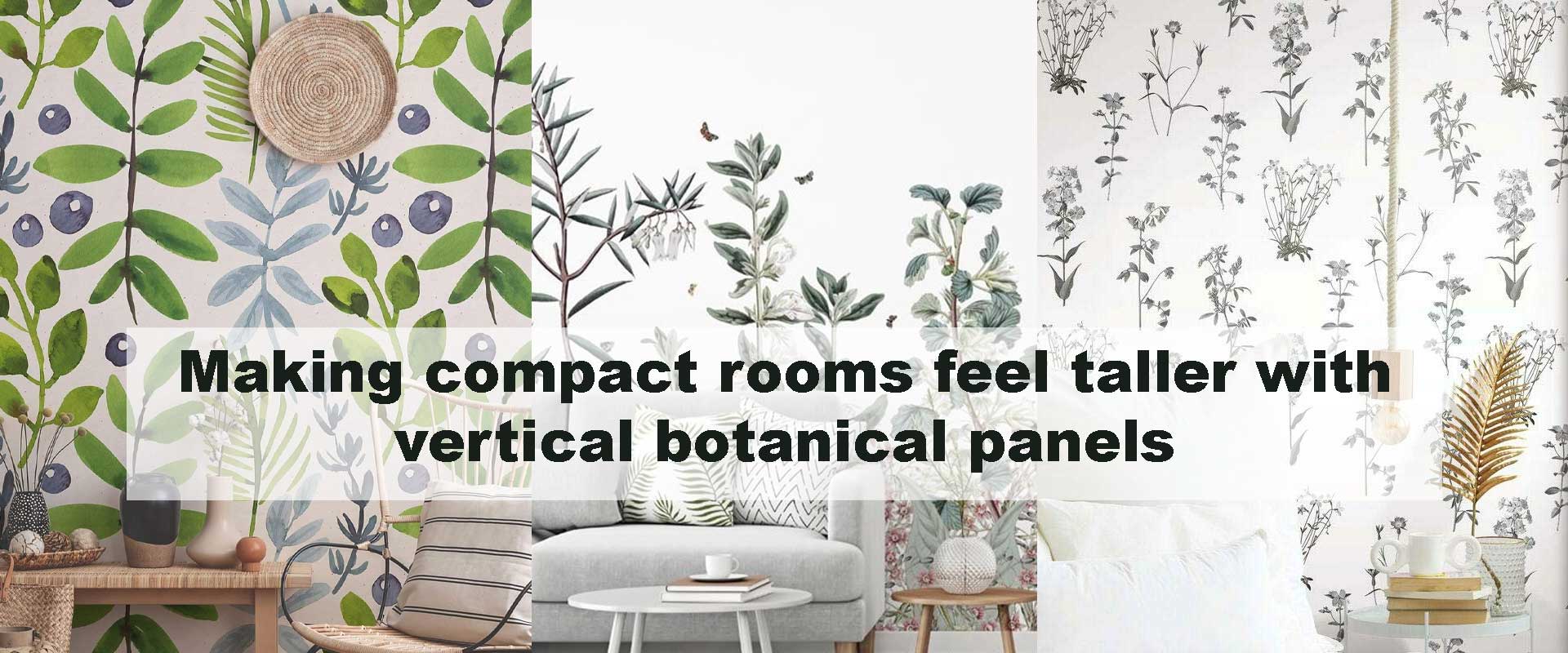
Making compact rooms feel taller with vertical botanical panels
Compact rooms often struggle with feeling boxed in, but the right visual strategy can completely transform that sense of limitation. Vertical botanical panels are one of the most effective ways to create height in smaller spaces because they encourage the eye to travel upward, enhancing the perception of elevation without any structural changes. The elongated stems, rhythmic leaf formations, and natural vertical movement echo what we experience outdoors—tall grasses, slender palms, climbing vines—which helps the room feel more open, taller, and visually softened. When used with intention, these designs reshape everything from narrow hallways to cozy bedrooms.
Vertical botanical designs rely on directionality, and direction is powerful in interior psychology. Humans naturally follow lines. When those lines move upward, the entire room feels as though it is stretching gracefully toward the ceiling. This is why homeowners and designers frequently turn to vertical botanical styles when they want compact rooms to feel airier and less compressed. These panels are especially transformative when paired with collections like Green Botanical Wallpaper, because soft greens introduce height through both color and form. The combination of organic hues and vertical structure creates a seamless uplift that feels calming and natural.
What makes vertical botanicals particularly compelling is how they interact with light. Soft lighting grazes the leaves and stems, forming elongated shadows that reinforce the upward direction. Even in rooms with limited natural light, the interplay between shadows and vertical shapes enhances visual height. This gentle behavior mirrors the same emotional softness that homeowners appreciate in foliage-based interiors: a feeling of being connected to nature and surrounded by a balanced, breathable atmosphere. The panels don’t overwhelm; they guide, elongate, and brighten.
To choose the right vertical botanical design, it helps to understand how each style affects spatial perception. Some panels lean heavily into slender leaves and minimal detail, while others embrace watercolor gradients or vine-like upward climbs. Each approach serves a slightly different purpose, but all of them support vertical expansion when used correctly.
Understanding Why Vertical Botanical Panels Stretch a Room
The core reason vertical botanicals make rooms appear taller is due to visual flow. When the eye moves vertically, the ceiling appears farther away. Instead of reading the wall as a single compressed plane, vertical lines break it into elongated sections. These sections trick the brain into perceiving height that isn’t physically there.
Vertical botanicals are especially effective because they pair height with softness. Whereas strong geometric stripes can feel rigid, the natural movement of leaves and stems adds height without harshness. The organic shapes prevent the room from feeling overly structured, which is important for smaller spaces where too much rigidity can make the design feel tight.
Rooms with lower ceilings or squared layouts benefit significantly from these patterns. They redirect visual energy, pulling it away from the ceiling line and toward the flow of the botanical design. This creates an illusion of spaciousness, which is why vertical botanicals are often recommended for apartments, compact bedrooms, small living rooms, and narrow corridors.
When homeowners scan through different forms of Botanical Wallpaper while planning these transformations, they naturally gravitate toward vertical styles with delicate detail or upward gradients. These choices work especially well because they integrate height with calmness, making the small room feel not just taller but also more breathable and soothing.
Types of Vertical Botanical Designs and Their Height Effects
Not every botanical style creates the same sense of lift. Vertical panels behave differently depending on leaf shape, color transitions, and the way each motif guides the eye. Understanding these variations helps homeowners choose designs that genuinely elevate compact spaces, allowing the walls to feel taller, lighter, and more architectural.
1. Slender Leaf Panels
Slender leaf designs rely on narrow silhouettes that move upward with clarity and ease. Think of palms stretching toward the sun, bamboo rising in straight lines, or tall ferns layered with soft, feathery rhythm. These shapes send a strong vertical signal, making even low ceilings appear noticeably higher. Their refined structure keeps the wall visually calm, allowing the upward movement to take center stage.
They’re extremely effective in:
- Compact bedrooms needing height
- Narrow hallways that tend to feel compressed
- Small living rooms seeking a cleaner sense of lift
Styles within Large Leaf Botanical Wallpaper can work beautifully too when the leaves are arranged in elongated patterns rather than wide, sweeping spreads.
2. Watercolor Vertical Botanicals
Watercolor botanicals create height through softness rather than strong direction. Their diffused transitions, gentle washes, and seamless gradients let the eye drift naturally upward without any stark lines. This makes them ideal for homeowners who want a light, elegant vertical effect that doesn’t dominate the room.
They are especially suited for:
- Calm, airy living rooms
- Soothing bedrooms designed for soft mood
- Minimalist interiors where subtle height enhancement works best
Because watercolor transitions avoid dense clusters, they lift compact spaces without overwhelming the volume of the room.
3. Vertical Vine Panels
Vertical vines offer the closest mimicry to nature’s effortless climb. Their delicate stems and upward-curving leaves create a continuous motion that reads as organic and graceful. Rather than commanding attention, vine-based botanicals bring quiet elevation, making them perfect for rooms that need height without added visual weight.
They work beautifully in:
- Corners that benefit from upward flow
- Areas framing windows or doors
- Slim entry walls needing direction
- Any compact space requiring a gentle, refined lift
Their light touch prevents the walls from closing in, making small rooms feel more open.
4. Monochrome Vertical Foliage
Monochrome vertical botanicals introduce height through simplicity and structure. With black, charcoal, or soft beige linework against a neutral base, these designs create a clean architectural impression. The absence of multicolored foliage keeps the look precise, allowing the vertical motion to take full effect.
They are ideal for:
- Modern homes where clarity is essential
- Minimalist spaces that embrace quiet elevation
- Compact rooms that benefit from strong directional flow without clutter
These styles function almost like soft vertical columns, adding height and definition with artistic restraint.
5. Deep Forest Vertical Gradients
Deep forest botanicals bring richness and depth while still contributing to height. Their secret lies in gradient behavior. When a design starts darker near the lower portion and gradually brightens toward the top, it naturally pulls the ceiling upward. The transition mimics how forest canopies lighten near the sky, creating a visually elongated wall.
They excel in:
- Dark, cozy rooms needing refined height
- Stylish alcoves where depth matters
- Narrow dining nooks that benefit from a dramatic vertical lift
This style adds atmosphere and visual height simultaneously, making compact rooms feel taller and more immersive.
Color Palettes That Strengthen Vertical Height
Vertical botanical panels rely on color just as much as form. When the palette is chosen with intention, even the smallest rooms gain a sense of effortless lift, as if the ceiling is rising quietly above the space. Colors influence how the eye travels, how shadows behave, and how softly the botanical shapes settle into the room, making palette selection one of the most powerful tools for height enhancement.
Soft Greens
Soft greens create a visual pathway that feels calm and continuous, guiding the eye upward without interruption. Their gentle transitions mimic natural foliage, allowing the vertical stems to appear taller and lighter. These tones work especially well in compact layouts because they avoid harsh contrast that might shorten the wall. Designs within Botanical Wallpaper for Bedrooms show how subtle green shading introduces height while preserving serenity.
Neutral Tones
Whites, creams, beiges, and pale taupes offer some of the cleanest height illusions. Their brightness allows the botanical details to stretch upward with minimum resistance, creating clarity and visual space. Because neutral tones reflect more light, they keep the walls feeling open and uninterrupted, helping the vertical silhouettes move freely from floor to ceiling. This makes them ideal for tight hallways, narrow living rooms, and compact spaces craving softness and elevation.
Blended Watercolor Shades
Watercolor palettes introduce height through fluidity. When a panel deepens toward the base and gradually brightens near the top, the eye naturally drifts upward, following the luminosity. This gradient effect mimics sunlight filtering through foliage and gives the upper portion of the wall a lighter, more open presence. In small rooms where architectural height is limited, these blended panels create a gentle vertical glow that makes the ceiling feel noticeably higher.
Monochrome Palettes
Monochrome botanicals achieve height through clarity and restraint. The absence of varied color keeps the focus entirely on form, allowing vertical stems and detailed leaf linework to stand out. Without competing tones, the upward movement becomes stronger and more defined. Monochrome panels also pair beautifully with minimalist furniture, giving very compact rooms a precise, elongated feel that is both modern and calming.
How Lighting Enhances Vertical Botanical Panels
Lighting is one of the most influential elements in strengthening the height illusion created by vertical botanical panels. The right illumination doesn’t just brighten the room—it highlights the natural rise of the foliage, deepens the sense of dimension, and guides the eye upward with elegance. When lighting interacts with botanical textures, shadows become longer, gradients grow softer, and the room gains an architectural lift that feels calm and intentional.
Grazing Light
Wall-grazing light creates some of the most dramatic height effects. When a slim LED or sconce is placed close to the wall, the beam travels across the botanical surface, catching every curve and contour. Shadows stretch vertically behind slender leaves and stems, amplifying the upward motion of the design. This subtle shadow play makes compact rooms feel loftier, as if the foliage is gently lifting away from the wall.
Soft Overhead Glows
Soft, diffused overhead lighting brightens the upper portion of the wall without creating harsh hotspots. This upward glow works beautifully with botanicals that lighten toward the top, drawing the eye toward the ceiling and reinforcing the feeling of elevation. In compact rooms where heavy ceiling fixtures can feel overwhelming, gentle overhead illumination becomes a powerful tool to enhance vertical flow.
Warm Side Lighting
Side lighting introduces depth and dimensionality without flattening the botanical pattern. Warm-toned sconces or slim floor lamps create delicate highlights along the stems, giving the foliage a sculptural, almost three-dimensional quality. This layered illumination encourages the eye to move upward across the design, making the room feel taller and more expansive.
Window Positioning
Natural light adds its own shifting gradient throughout the day. Panels placed opposite or near windows receive brighter illumination at their upper sections as sunlight spreads downward. This natural brightness reinforces the botanic rise and helps even the smallest rooms take on a lighter, more vertical presence from morning to evening.
Furniture Strategies That Complement Vertical Botanicals
Even the most thoughtfully chosen botanical panel can lose height impact if furniture interrupts the vertical flow. The key is to support the upward movement through furniture choices that create breathing space, openness, and clarity.
Keep Furniture Low Profile
Low sofas, low platform beds, and shorter storage pieces leave plenty of vertical space above them, allowing the botanical pattern to stretch uninterrupted. This open gap between furniture and foliage strengthens the illusion of height, making compact rooms feel instantly taller and more relaxed.
Choose Slim-Legged Pieces
Furniture with slim legs, open frames, or floating silhouettes keeps the lower section of the wall visually light. Instead of blocking the base of the panel, these pieces let the botanical design rise freely from the floor, maintaining the natural upward momentum.
Avoid Bulk Against the Feature Wall
Tall bookcases, heavy cabinets, and bulky wardrobes disrupt vertical direction and visually shorten the wall. When tall furniture is unavoidable, placing it on an adjacent wall or choosing a softer, lighter silhouette helps preserve the botanical flow. Gentle curves and smooth finishes create harmony rather than interruption.
Maintain a Small Gap Between Furniture and Wall
Even a narrow gap of a few centimeters adds depth and stops the room from feeling compressed. This micro-space creates a soft shadow line behind the furniture, giving the impression of layered height and preventing the wall from feeling blocked.
Layout Techniques for Maximum Height
Layout strategy plays a major role in how effectively vertical botanicals reshape a compact room. With a few intentional choices, the panels become a powerful architectural tool that redefines space.
Full-Height Application
Running the botanical design from baseboard to ceiling delivers maximum visual lift. When the pattern reaches all the way up, the eye experiences a continuous rise, making the ceiling feel farther away. Any break—such as a chair rail or partial-height installation—interrupts this upward flow.
Narrow Panel Spacing
Panels placed closer together create a rhythmic rise, almost like a series of soft natural columns. This vertical repetition strengthens the perception of structure and height, giving the wall an elegant, elongated feel. It’s especially effective in narrow rooms where vertical rhythm can dramatically reshape proportion.
Feature Wall Focus
Choosing one strategic wall as the vertical feature ensures the upward motion becomes the room’s main visual anchor. This focal direction helps reshape the entire space, guiding the eye toward the height effect and making the room feel more balanced and open.
Corner Positioning
Positioning the botanical panel to extend slightly around a corner enhances the sense of vertical stretch. When the eye travels along two directions at once—up one wall and into the next—the height illusion becomes even stronger, giving compact rooms a feeling of layered architectural rise.
Vertical Botanical Styles for Compact Rooms
| Style Type | Visual Behavior | Best For | Height Impact |
|---|---|---|---|
| Slender Vertical Leaves | Strong upward lift | Bedrooms, narrow halls | Very High |
| Watercolor Vertical Botanicals | Soft blended height | Calm living rooms | High |
| Vine-Based Vertical Botanicals | Gentle upward climb | Corners, entryways | Moderate–High |
| Monochrome Vertical Panels | Clean architectural height | Modern compact spaces | Very High |
| Deep Forest Gradient Verticals | Dramatic upward shading | Small stylish rooms | High |
Practical Styling Tips for a Taller-Looking Compact Room
- Use matte textures to avoid reflections that flatten the pattern.
- Choose sheer curtains that don’t interrupt vertical flow.
- Add tall plants on the floor to echo the panel’s upward lines.
- Keep artwork minimal near the botanical wall.
- Use neutral bedding or upholstery to maintain a clean upward lift.
- Let natural light skim across the panel whenever possible.
FAQ: Vertical Botanical Panels for Small Rooms
1. Do vertical botanical panels truly make small rooms feel taller?
Yes. Their upward flow and elongated leaf structures guide the eye toward the ceiling, making the room feel noticeably taller and more open.
2. Which botanical style is most effective for height?
Slender leaves and vine-based panels create the strongest vertical movement, but watercolor verticals work beautifully for soft, subtle height.
3. Can vertical botanicals work in dark rooms?
Absolutely. If the design brightens toward the top or has light detailing, it still enhances vertical lift even in deeper color palettes.
4. Are vertical panels good for rental spaces?
Yes. Peel-and-stick versions offer height-enhancing effects without permanent installation, making them ideal for renters.
5. Does furniture height affect the vertical illusion?
Very much. Lower or slim-framed furniture leaves vertical breathing room, helping the botanical design stretch freely upward.
6. Should the panel cover an entire wall?
Full-height coverage is ideal for maximum upward flow, but even a tall narrow strip can make a strong vertical statement in compact rooms.
Conclusion
Vertical botanical panels offer one of the most effortless ways to lift compact rooms, guiding the eye upward through gentle leaf structure and elongated form. Their ability to reshape height perception becomes even stronger when paired with calm tonal choices and soft gradients, a principle that aligns closely with insights from Bringing calm to modern homes with soft botanical wallpaper themes, where natural rhythm plays a key role in creating visual ease. Many homeowners also draw inspiration from ideas shared in How oversized botanical leaves turn simple walls into maximalist statements, especially when using vertical forms to build presence without overwhelming the room.
When combined with thoughtful lighting, low-profile furniture, and soft natural textures, these panels bring both architectural height and emotional comfort into smaller spaces. For anyone wanting to elevate a compact room without construction, vertical botanicals provide an elegant, nature-forward solution that opens the space and refreshes the atmosphere with minimal effort.