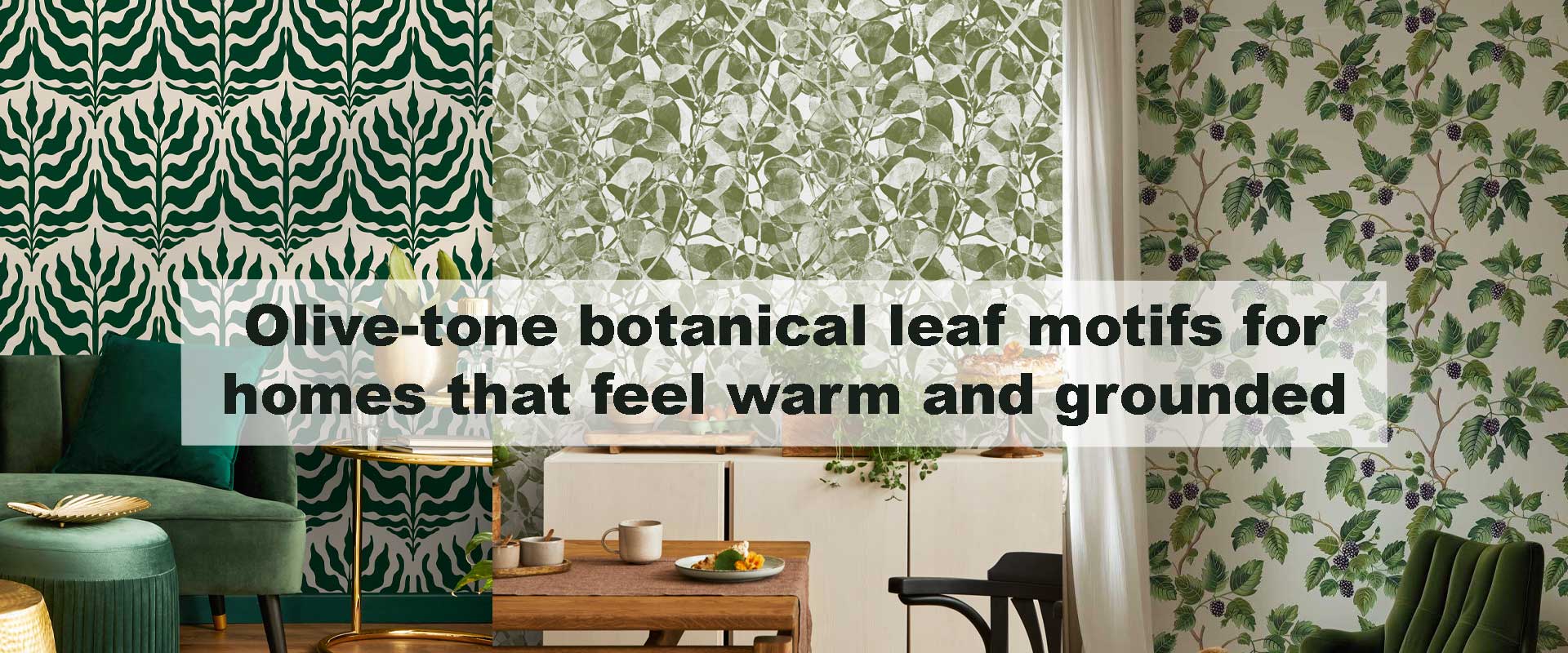
Olive-tone botanical leaf motifs for homes that feel warm and grounded
There’s something deeply comforting about olive-tone botanical leaf motifs—they sit quietly between green and brown, creating interiors that feel warm, grounded, and naturally balanced. Unlike brighter greens that energize a space, olive tones bring calm, stability, and an earthy softness that works beautifully across modern, classic, and transitional homes. When paired with flowing botanical forms, these hues echo nature in its most timeless state—sun-drenched leaves, shaded gardens, and well-worn landscapes.
Olive-tone botanical leaf motifs have become a go-to choice for homeowners who want their spaces to feel intentional rather than trendy. Within the first moments of entering a room, these designs create a sense of rooted calm, making walls feel like a backdrop rather than a statement competing for attention. As part of a broader Botanical Wallpaper aesthetic, olive tones offer unmatched versatility while maintaining a refined, organic presence that ages beautifully over time.
Why Olive Tones Feel Instantly Grounding
Olive sits at the center of nature’s most reassuring color spectrum. Neither crisp nor dark, it carries a quiet balance that grounds interiors without weighing them down, allowing spaces to feel settled, warm, and emotionally calm.
A Color That Mirrors Natural Landscapes
Olive tones echo moss-covered forests, sun-softened Mediterranean groves, and shaded garden foliage—landscapes that feel enduring rather than fleeting. These associations trigger a subconscious sense of ease and familiarity. When expressed through botanical leaf motifs, olive reinforces organic continuity instead of visual contrast, helping rooms feel cohesive, calm, and emotionally anchored rather than visually styled.
Warmth Without Overpowering the Space
Unlike emerald or forest greens that lean toward drama, olive carries gentle warmth through its muted yellow and brown undertones. This warmth softens architectural edges, allowing rooms to feel lived-in and welcoming instead of formally designed. The result is a space that supports connection and comfort, making olive especially effective in areas intended for relaxation, gathering, and everyday living.
Botanical Leaf Motifs: Soft Structure for Interior Walls
Botanical leaf motifs bring structure to walls in the most natural way—through movement rather than geometry. Their flowing forms introduce rhythm and depth without adding visual noise, making them ideal companions to olive’s subdued richness.
Gentle Flow Instead of Bold Contrast
Leaf motifs guide the eye across the wall in a slow, continuous rhythm. Rendered in olive tones, this movement feels almost meditative, allowing the wall to support furnishings and décor instead of competing with them. The space feels visually balanced, with the pattern acting as a backdrop that enhances rather than dominates.
Timeless Over Trend-Driven
Botanical patterns have endured for centuries because they reflect nature’s inherent balance. Olive tones deepen that longevity, anchoring the design in something familiar and enduring. Together, they create walls that feel rooted in tradition while remaining adaptable to contemporary interiors—quietly timeless rather than tied to passing trends.
Bedrooms Designed for Rest and Emotional Ease
Bedrooms respond especially well to olive’s naturally calming character, making it one of the most supportive tones for spaces dedicated to rest, restoration, and emotional balance.
Lowering Visual Stimulation
Olive botanical walls soften visual contrast, reducing the kind of sharp definition that can keep the mind alert. Their muted depth allows the eye to rest, while leaf motifs introduce gentle movement without urgency or visual tension. The result is an environment that feels quieter and more composed, helping the body and mind ease naturally into relaxation and sleep.
This calming effect closely reflects the principles discussed in Bringing calm to modern homes with soft botanical wallpaper themes, where walls are shaped to support emotional stillness rather than compete for attention.
A Retreat That Feels Timeless
Olive tones resist the cycle of trends, offering comfort that feels familiar rather than fleeting. Botanical patterns add depth and quiet complexity, ensuring the bedroom feels thoughtfully layered instead of sparse or overly styled. Over time, the space becomes less about decoration and more about atmosphere—an enduring retreat that continues to feel right as personal tastes evolve.
Natural Materials Come Alive Against Olive Botanical Walls
One of olive’s most understated strengths is its ability to elevate natural materials without overpowering them, creating interiors that feel cohesive and effortlessly grounded.
Wood, Stone, and Organic Finishes
Against olive botanical walls, wood tones appear warmer and more dimensional, whether it’s the softness of oak, the richness of walnut, or the character of reclaimed timber. Stone and ceramic surfaces feel balanced rather than cold, as the olive backdrop gently bridges hard and soft elements. Together, these materials create a space that feels as though it has developed organically over time, not assembled all at once.
Soft Textiles That Feel Elevated
Linen, wool, and cotton take on greater depth when set against olive backdrops. Their natural fibers become more visually tactile, adding quiet luxury through texture rather than contrast. Instead of fading into the background, these textiles feel intentional and refined, reinforcing the room’s warmth while maintaining a calm, understated elegance.
Choosing the Right Leaf Scale for Your Space
The scale of botanical motifs plays a defining role in how olive tones shape the mood and visual balance of a room. While color establishes warmth, scale determines whether that warmth feels expansive, intimate, or quietly supportive.
Large-Scale Leaves for Calm Impact
Oversized leaf motifs introduce depth through proportion rather than contrast. When rendered in olive tones, their generous scale feels composed and architectural, allowing the pattern to breathe instead of overwhelm. These designs work beautifully on feature walls or within open-plan layouts, where the eye has space to travel and absorb the organic flow without visual interruption.
Options like Large Leaf Botanical Wallpaper allow walls to feel expressive yet grounded, creating presence without noise and movement without restlessness.
Smaller Motifs for Subtle Warmth
Fine, repeating leaf patterns create a gentle visual texture that settles quietly into the background. Their smaller scale reinforces continuity, making walls feel cohesive rather than decorative. This approach is especially effective in spaces where calm, balance, and long-term comfort matter more than visual drama, allowing olive tones to softly anchor the room without drawing focus away from furnishings or light.
How Light Transforms Olive Botanical Interiors
Lighting plays a defining role in how olive botanical walls are perceived, allowing the same surface to shift mood naturally from morning to evening.
Daylight Reveals Soft Warmth
In natural daylight, olive tones gently lift, revealing their warmer undertones and subtle complexity. Sunlight softens the color, allowing botanical motifs to feel lighter and more fluid, almost as if the leaves are breathing across the wall. This interaction enhances openness and creates an atmosphere that feels calm, fresh, and quietly welcoming throughout the day.
Evening Light Deepens Intimacy
As daylight fades, warm artificial lighting draws olive tones inward, deepening their richness without making the space feel heavy. Botanical patterns gain depth and shadow, creating a cocooning effect that feels intimate and comforting. In the evening, living and dining spaces wrapped in olive botanicals naturally encourage relaxation, conversation, and a slower, more reflective pace.
Styling Olive Botanical Walls With Intention
Olive botanical walls set a naturally grounded tone, and the most successful interiors allow that calm presence to guide every styling choice. Rather than layering for impact, these spaces benefit from restraint—where each element feels considered and quietly supportive.
Let the Walls Anchor the Room
Olive botanical designs work best when they are allowed to lead visually. Neutral upholstery, warm wood finishes, and softly aged metals create a supportive backdrop that enhances the wall without competing with it. Simple furniture forms allow the botanical pattern to establish mood and depth, resulting in a space that feels balanced, cohesive, and effortlessly composed.
Avoid Competing Visual Elements
Botanical motifs already introduce organic movement and visual rhythm, so additional patterns should be used sparingly. Limiting bold prints and high-contrast textures preserves harmony, allowing the eye to move gently through the space. This restraint keeps the room feeling calm and intentional, ensuring the olive walls remain a grounding presence rather than one element among many.
Olive Botanical Motifs in Transitional Interiors
Transitional interiors thrive on balance, and olive botanical motifs offer a natural way to bridge contrasting design languages without visual tension. Their grounded tone allows spaces to feel cohesive even when modern and traditional elements coexist.
A Natural Link Between Old and New
Olive botanical designs soften clean, contemporary silhouettes while gently refreshing classic forms. Their organic lines ease the sharpness of modern furniture and prevent traditional pieces from feeling heavy or dated. This visual mediation ensures mixed styles feel deliberate and harmonious, creating interiors that appear thoughtfully layered rather than stylistically divided.
Heritage Influence With Modern Ease
For homeowners drawn to timeless character, Vintage Botanical Wallpaper in olive palettes introduces a sense of heritage without formality. The muted green tempers ornate detailing, allowing nostalgic patterns to feel relaxed, approachable, and fully compatible with modern living rather than reserved for period homes alone.
Kitchens and Dining Spaces With Earthy Warmth
Olive botanical motifs bring unexpected softness to functional spaces, transforming them from purely practical zones into environments that feel inviting and emotionally grounded.
Kitchens That Feel Inviting
In kitchens, olive walls counterbalance hard finishes like stone, tile, and metal, preventing the space from feeling sterile or overly utilitarian. Botanical motifs introduce subtle movement and warmth, helping the room feel lived-in and welcoming while still maintaining visual clarity and cleanliness.
Dining Areas That Encourage Lingering
Olive tones naturally slow the pace of a space, making dining areas feel comfortable and grounded rather than formal. Their warmth supports relaxed conversation and extended meals, creating an atmosphere where gatherings unfold naturally and the room feels designed for connection rather than efficiency.
Comparing Olive Botanical Motifs With Other Green Palettes
| Green Tone | Visual Effect | Best For | Overall Mood |
|---|---|---|---|
| Olive | Warm, grounded, earthy | Living rooms, bedrooms | Calm and balanced |
| Sage | Light, airy, fresh | Small spaces | Soft and uplifting |
| Emerald | Rich, dramatic | Feature walls | Luxurious and bold |
| Forest Green | Deep, moody | Statement interiors | Intimate and dramatic |
Olive stands out for its ability to feel warm without becoming heavy, making it one of the most versatile botanical color choices.
Minimal Versus Expressive Olive Botanical Styles
Olive botanical designs have a unique ability to shape atmosphere through subtle shifts in detail and scale. The mood they create depends less on color intensity and more on how the botanical forms are expressed across the wall.
Minimal Line-Based Botanicals
Line-drawn leaf motifs in olive tones introduce depth through suggestion rather than statement. Their fine outlines create a gentle visual rhythm that adds texture without demanding attention, allowing walls to feel calm, continuous, and softly layered. This restrained approach suits modern and transitional interiors where quiet elegance, spatial clarity, and visual breathing room are essential.
Detailed Leaf Illustrations
More expressive botanical illustrations bring a sense of nature gradually unfolding across the surface. Visible veins, overlapping foliage, and organic curves add richness and narrative, making the wall feel immersive rather than decorative. These styles are ideal for spaces intended to feel personal and collected, where character and atmosphere matter as much as balance.
Why Olive Botanical Walls Feel Emotionally Grounding
The emotional impact of olive botanical walls is rooted in color psychology and our instinctive response to nature-inspired environments. These tones don’t stimulate or demand attention—instead, they quietly reassure, allowing a space to feel emotionally settled from the moment you enter.
A Sense of Stability and Belonging
Olive tones carry an inherent sense of permanence, drawn from landscapes that feel enduring rather than fleeting. When used on walls, they create an atmosphere of safety and familiarity, helping interiors feel emotionally secure and gently anchored. This sense of belonging is especially valuable in spaces designed for everyday living and rest, where comfort matters more than visual impact.
Encouraging Slower, Mindful Living
Walls shape how we move and behave within a space. Olive botanical motifs soften visual energy, reducing the sense of urgency that brighter or high-contrast designs can create. Their calm presence naturally encourages slower movement, longer pauses, and quieter moments, supporting a more relaxed and mindful rhythm at home. This approach aligns closely with Creating a minimalist sanctuary with neutral botanical wall designs, where restraint, softness, and visual balance become essential elements of comfort rather than design afterthoughts.
Long-Term Appeal of Olive Botanical Leaf Motifs
Olive botanical leaf motifs endure because they are grounded in nature rather than seasonal design movements. While trends often rely on novelty or contrast, olive works quietly in the background, offering consistency and comfort that doesn’t demand reinvention every few years.
Designed to Age Gracefully
Olive tones evolve beautifully as a home evolves. Their natural undertones allow them to soften over time, developing a lived-in richness rather than feeling visually outdated. As lighting changes, materials patina, and interiors gain character, olive botanical walls feel increasingly integrated—like a permanent part of the home’s identity rather than a past design choice.
Flexible With Changing Décor
One of olive’s greatest strengths is its ability to adapt without resistance. Whether a space shifts from minimal to layered, modern to classic, or neutral to warm-toned, olive walls continue to support the transition effortlessly. They anchor new furniture, textiles, and accents without clashing, allowing homeowners to refresh their interiors freely without ever needing to reconsider the walls themselves.
Final Thoughts: Why Olive Botanical Motifs Feel Like Home
Olive-tone botanical leaf motifs offer more than visual beauty—they create emotional grounding. Their warmth, subtlety, and natural flow transform walls into quiet companions rather than loud statements. Whether used in living rooms, bedrooms, or social spaces, they foster balance, comfort, and a sense of belonging.
For homeowners seeking interiors that feel settled rather than styled, olive botanical designs provide a timeless foundation. They invite nature indoors in its most comforting form, ensuring spaces feel warm, grounded, and effortlessly cohesive for years to come.
FAQs About Olive-Tone Botanical Leaf Motifs
Do olive botanical walls make rooms feel darker?
No. Olive tones balance warmth and depth, especially when paired with good lighting and lighter furnishings.
Are olive botanical designs suitable for modern interiors?
Absolutely. Their muted palette complements clean lines and contemporary materials beautifully.
Can olive tones work in smaller rooms?
Yes. When used thoughtfully, olive botanical motifs add depth without overwhelming compact spaces.
Do olive botanical walls pair well with neutral furniture?
They pair exceptionally well, enhancing creams, beiges, and warm greys.
Will olive botanical wallpaper feel outdated over time?
Unlikely. Its natural inspiration and timeless color base help it remain relevant across changing trends.