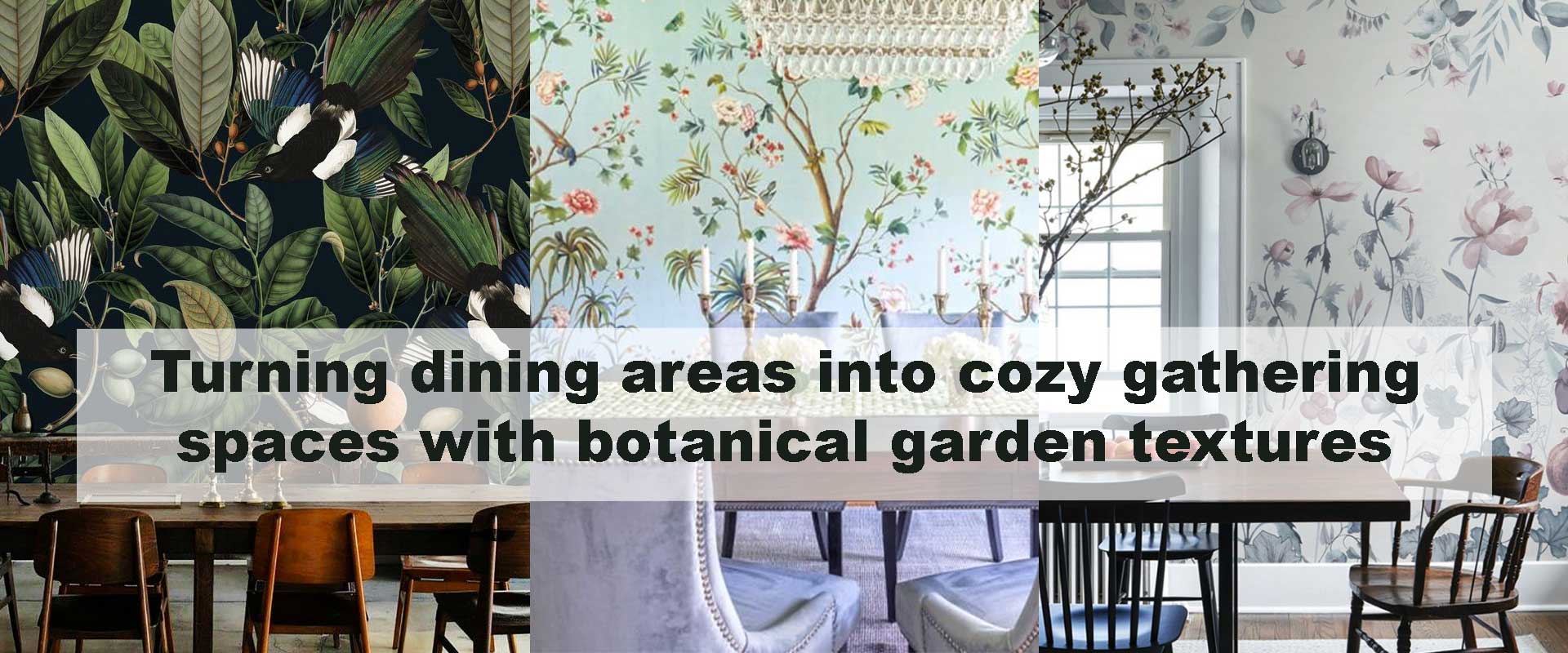
Turning dining areas into cozy gathering spaces with botanical garden textures
Dining areas often feel more inviting when the space wraps guests in natural warmth, soft detailing, and gentle surface movement. Using botanical garden textures is one of the easiest ways to shift a dining room from simple to soul-warming, creating a setting that sparks conversation and comfort. When leafy silhouettes, quiet gradients, and natural shapes become part of the backdrop, the room instantly gains an atmosphere that feels grounded and emotionally expressive. This immersive effect flows even deeper when nature-inspired visuals are paired with accent lighting, rich textiles, and earthy tones, especially when the space draws from styles similar to our Botanical Wallpaper range.
Why Botanical Garden Textures Work So Well in Dining Spaces
They Encourage Warm, Shared Moments
Leaf-inspired forms soften the overall tone of a dining space, giving guests something calming to settle into. Botanical contours instinctively feel familiar; the eye rests more easily on natural movement than on sharp geometric lines. This quiet rhythm sets the stage for relaxed meals, deep conversation, and a subtle sense of connection. Designs with soft leafy gradients—like those often found in Tropical Botanical Wallpaper—add organic dimension without overwhelming the room.
A layered green palette becomes even more expressive during evening hours. Gentle lighting glides over the patterns and creates a soft glow that naturally encourages guests to linger. This warm-toned illumination reflects the atmosphere described in Bringing calm to modern homes with soft botanical wallpaper themes, creating an environment where simplicity and nature-inspired comfort feel effortless.
They Add Depth Without Adding Clutter
In many dining spaces, the challenge isn’t adding visual interest; it’s adding warmth without crowding the room. Botanical textures solve this elegantly through overlapping shapes, gentle gradients, and fluid leaf movement. Lightweight foliage—especially watercolor-based designs similar to Watercolor Botanical Wallpaper—keeps the room visually open while adding organic charm.
This approach echoes the expressive impact highlighted in How oversized botanical leaves turn simple walls into maximalist statements, where scale and softness combine to shape a comforting backdrop. In dining spaces, this balance ensures the walls feel quietly layered, never overwhelming the furniture or lighting.
How to Choose the Right Botanical Texture for a Cozy Dining Mood
1. Choose Between Airy Lightness or Deep, Intimate Warmth
Botanical textures have an incredible ability to shift the emotional temperature of a dining room. Lighter tones—soft neutrals, pale greens, and gentle watercolor washes—create an uplifting space that feels open, bright, and easy to breathe in. These palettes work beautifully for homes that lean toward fresh, minimal styling or for dining rooms that double as everyday gathering spots.
When the goal is a more intimate dining mood, deeper shades step in with quiet luxury. Moody greens, charcoal touches, and shadowed leaf silhouettes foster a cocooning atmosphere ideal for evening meals or slow, candlelit gatherings. Warm earth tones with fine leaf detailing sit comfortably between these extremes, offering a look that works gracefully throughout the day.
Patterns similar to Dark Botanical Wallpaper bring a grounded sophistication, especially when they meet warm wood, deep handmade ceramics, and soft metal accents. In compact dining rooms, gentle upward-flowing leafwork—reflecting the principles discussed in How oversized botanical leaves turn simple walls into maximalist statements—adds a natural sense of lift that visually heightens the space without overwhelming it.
2. Match Botanical Depth to Your Dining Furniture’s Personality
Furniture carries its own emotional weight, and the right botanical texture amplifies it. Light oak or ash dining tables feel instantly refreshed beside soft leafy linework, giving the room a breezy, welcoming calm. Walnut or dark-stained wood naturally gravitates toward richer botanical palettes, where deeper greens or watercolor shadows echo the warmth of the timber.
Materials like cane, jute, linen, and woven textiles thrive when paired with watercolor foliage. Their handmade feel mirrors the organic movement in botanical patterns, giving the room a cohesive, lived-in warmth. If you want the wallpaper to act as a quiet whisper behind stronger furniture pieces, choose airy designs with light spacing, similar to Minimal Line Art Botanical Wallpaper. When a more expressive mood is desired, large-leaf designs like Large Leaf Botanical Wallpaper bring striking movement and an inviting sense of depth.
3. Use Lighting to Pull Everything Into One Mood
Botanical textures bloom under warm, layered lighting. Pendant lamps, rattan shades, frosted globes, or gently diffused wall fixtures allow leaf patterns to glow softly, highlighting every curve and shadow. This lighting isn’t just practical—it shapes the emotional experience of the room. Evening meals feel more intimate when the foliage catches warm glimmers of light, creating an atmosphere that quietly wraps around the table.
Lighting also helps unify surfaces. Soft directionality pulls together natural materials—wood grains, stoneware, fabrics—while emphasizing the gentle forms of the botanical textures. The result is a dining space that feels grounded, connected, and beautifully composed.
Color Palettes That Make Dining Areas Feel More Welcoming
Warm Greens and Earth Neutrals
Warm greens instantly create emotional calm, grounding the dining room with their natural rhythm. When paired with earthy neutrals—beige, wheat, clay, or soft taupe—they form a balanced palette that supports long, relaxed meals. These tones echo the quiet harmony found in outdoor spaces, making the dining area feel peaceful and familiar.
Golden Undertones for an Evening Glow
Introducing gold, amber, or soft beige undertones brings a romantic, dusk-like warmth. These hues reflect candlelight and soft pendants beautifully, sending a gentle shimmer across the room. Botanical patterns with golden undertones help shape a dining mood that feels welcoming during gatherings and effortlessly warm after sunset.
Rich and Moody Shades
Charcoal greens, deep olives, and warm browns create an enveloping dining atmosphere filled with character. These palettes thrive in low, warm lighting and pair perfectly with matte finishes, textured ceramics, and dark-stained furniture. When used through watercolor leafwork or shadowed silhouettes, they bring gentle movement without adding visual heaviness, allowing the room to feel refined, layered, and deeply inviting.
Styling Tips for a Cozy Botanical-Inspired Dining Area
Use Natural Materials to Deepen the Botanical Mood
Natural textures shape the emotional character of a dining space, especially when paired with leafy murals. Woven baskets, soft linen tablecloths, ceramic serveware, and rattan chandeliers echo the warmth already present in botanical patterns. These tactile layers create a comforting balance between organic softness and gentle visual structure, allowing the greenery on the walls to feel more grounded and connected to the furniture. When each material reflects a tone or texture found in nature, the room takes on a unified, calming presence.
Let the Wall Pattern Influence Your Table Setting
Botanical garden textures can guide the entire dining mood, right down to table décor. If the wall carries delicate, airy foliage, choose smooth ceramics in muted whites, creams, or pale greens to maintain a light, effortless feel. When your pattern leans deeper—rich olive tones, moody charcoal leaves, or shadowed florals—smoky glassware, bronze cutlery, or textured stoneware help balance the richness. This mindful pairing allows the table to echo the wall’s personality without overwhelming the senses.
Bring in Subtle Metallic Warmth
Metallic accents can lift a botanical dining room in quiet, memorable ways. Instead of bright shimmer, a soft gleam—matte gold candleholders, brushed brass frames, or warm bronze details—adds gentle depth that lives harmoniously with natural leaf movement. This effect mirrors the soothing glow highlighted in Soft metallic botanical leaf accents that create evening glow and luxury ambience, where a touch of light-reflective warmth enriches the atmosphere without overpowering the design. In evening settings, these metallic accents help the room feel softly illuminated and beautifully composed.
Botanical Garden Texture Placement Ideas for Dining Rooms
Create a Feature Wall Behind the Dining Table
Placing botanical textures directly behind the table instantly frames the dining area, especially in open-plan layouts. Watercolor foliage or large botanical silhouettes create gentle emphasis, offering a serene backdrop that makes every meal feel slightly elevated. The balance of scale and softness keeps the room from feeling dominated by pattern while delivering a grounded focal point.
Wrap the Entire Room for a Cozy Botanical Nook
For intimate or smaller dining rooms, continuing subtle botanical patterns across all walls creates a warm, enclosed effect that feels like stepping into a natural retreat. Airy leafy styles—especially those similar to Floral Botanical Wallpaper—keep the room bright and open while still adding a cocooning sense of comfort. This approach works beautifully alongside soft lighting and lightly textured upholstery.
Pair Botanical Walls With Soft, Inviting Upholstery
Upholstered dining chairs reinforce the gentle atmosphere set by botanical textures. Fabrics like linen, velvet, chenille, or textured cotton bring tactile softness that echoes the organic lines on the walls. This pairing creates a layered warmth ideal for long meals and relaxed conversations. When the patterns and fabrics share a similar palette, the dining room feels cohesive, expressive, and naturally welcoming.
Choosing the Right Botanical Texture for Your Dining Room
| Botanical Style | Atmosphere | Best For | Strength |
|---|---|---|---|
| Light Watercolor Foliage | Airy, soft, relaxed | Small dining areas | Opens visual space |
| Large Tropical Leaves | Bold, warm, expressive | Feature walls | Creates a strong focal point |
| Minimal Line Botanical | Clean, modern, structured | Contemporary dining rooms | Pairs well with simple furniture |
| Dark Moody Botanicals | Cozy, intimate, elegant | Evening-focused dining | Adds depth and richness |
| Soft Floral Botanicals | Romantic, calm | Neutral dining spaces | Adds gentle visual movement |
Bringing It All Together: Creating a Harmonious Dining Experience
A dining space becomes truly cozy when visual comfort, natural textures, and warm lighting come together. Botanical garden textures do more than decorate walls—they set an emotional tone that encourages conversation, connection, and lingering moments around the table. When combined with layered textiles, curated lighting, and natural materials, these leafy patterns transform ordinary dining corners into warm, memorable gathering spaces.
The versatility of botanical patterns means you can create nearly any mood—from soft and serene to deep and dramatic—simply by choosing the right palette and style. Designs inspired by Abstract Botanical Wallpaper or calming watercolor foliage can shift the entire room’s emotional rhythm.
FAQs
1. Are botanical textures suitable for small dining rooms?
Yes. Soft leafy patterns create visual flow and reduce harsh edges, making compact dining corners feel more open and relaxed.
2. Which botanical style works best for cozy evening gatherings?
Deep greens, warm charcoal tones, and moody watercolor foliage work beautifully for evening-focused dining moods.
3. Do botanical garden textures pair well with wooden dining furniture?
Absolutely. Light woods pair well with airy foliage, while deeper wood tones harmonize with richer botanical palettes.
4. Can botanical designs work in open-plan dining spaces?
Yes. A feature wall with soft foliage helps frame the dining zone and creates a natural center within a larger layout.
5. What lighting enhances botanical textures the most?
Warm, diffused lighting adds depth and creates soft highlights that make botanical textures feel more expressive.
Conclusion
Turning dining areas into cozy gathering spaces becomes effortless when botanical garden textures take the lead. Their gentle movement, natural harmony, and adaptable color palettes reshape the room into a place where people feel grounded and welcomed. Whether you prefer airy watercolor botanicals or mood-rich leafy silhouettes, each design contributes its own sense of warmth and comfort. With the right mix of natural materials, soft lighting, and thoughtfully placed décor, your dining space can glow with the inviting atmosphere that only nature-inspired textures can bring.