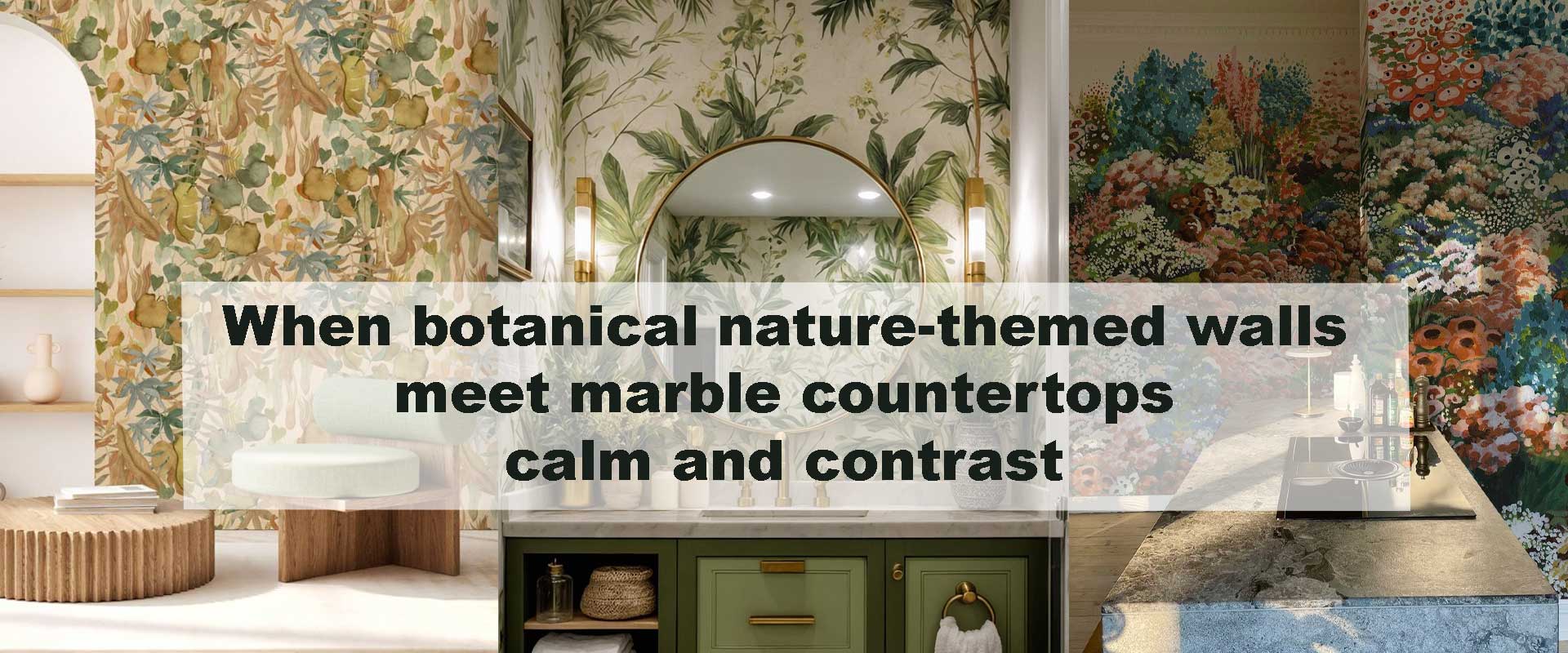
When botanical nature-themed walls meet marble countertops — calm and contrast
There’s a quiet confidence that emerges when organic wall art meets refined stone. Botanical nature-themed walls paired with marble countertops create a balance that feels both grounded and elevated, blending softness with structure in a way few combinations can. This pairing works because it draws from nature twice—once through flowing foliage and once through mineral beauty—allowing interiors to feel calm without losing visual interest. When designed thoughtfully, the contrast becomes the room’s strongest feature rather than a competing element.
Natural motifs on walls soften the cool precision of marble surfaces, preventing spaces from feeling overly formal. At the same time, marble introduces a sense of permanence and polish that keeps botanical patterns from appearing too casual. Together, they form an interior language rooted in nature yet refined for contemporary living.
Why botanicals and marble feel naturally balanced
Botanical wall designs are inherently expressive. Their lines, leaves, and organic rhythms echo landscapes, gardens, and quiet outdoor moments, bringing emotional warmth into interiors. Marble, by contrast, is structured and timeless, known for its veining, density, and cool visual weight. When these two elements meet, the room gains both movement and stillness.
This balance is especially effective in open-plan kitchens and dining spaces, where marble countertops often dominate sightlines. Botanical walls introduce softness behind or around these surfaces, ensuring the space feels inviting rather than stark. Designers often rely on this contrast to create rooms that feel serene yet layered, a principle echoed in spaces inspired by Bringing calm to modern homes with soft botanical wallpaper themes.
Choosing the right botanical style for marble surfaces
Not all botanical patterns interact with marble in the same way. Fine-line illustrations and lightly spaced foliage work beautifully with heavily veined marble, as they avoid visual overload. Larger leaf designs, on the other hand, pair well with subtle marble finishes, allowing each material to stand out without competing.
Color choice plays a major role here. Soft greens, muted olives, and warm botanical neutrals complement white, beige, and grey marble surfaces seamlessly. Deeper botanical tones can also work, particularly when paired with dramatic marble featuring bold veining, creating a high-contrast yet cohesive environment. For a broad range of refined nature styles, curated collections of Botanical Wallpaper offer options that adapt easily to marble-led interiors.
How contrast creates calm rather than chaos
Contrast doesn’t always mean boldness. In this pairing, contrast is about texture and temperature rather than color alone. Marble’s cool, smooth surface sets a visual baseline, while botanical walls introduce softness through illustrated leaves, stems, and organic spacing. This interplay prevents monotony and keeps the eye engaged without overwhelming the senses.
The key is restraint. When botanical walls are treated as a backdrop rather than a focal overload, marble countertops become sculptural accents. This approach works particularly well in spaces where daily rituals take place, such as kitchens and dining zones, where calm visual flow supports comfort and ease.
Styling kitchens with botanical walls and marble countertops
Kitchens are one of the most effective spaces for this combination. Marble countertops naturally signal refinement, while botanical walls soften cabinetry lines and appliances. Using nature-inspired wall patterns behind open shelving or adjacent to marble islands creates visual depth without clutter.
Subtle botanical designs also allow cabinetry finishes—wood, matte lacquer, or soft neutrals—to shine. Many homeowners gravitate toward understated greenery styles such as Green Botanical Wallpaper for kitchens, as these tones bridge the gap between cool stone and warm furnishings. The result is a kitchen that feels both elevated and welcoming, rather than strictly utilitarian.
Dining spaces that feel relaxed yet refined
In dining areas, the botanical-marble pairing fosters a sense of occasion without formality. Marble tables or countertops provide a polished anchor, while botanical walls introduce rhythm and softness behind seating areas. This balance encourages lingering conversations and relaxed gatherings.
Patterns inspired by traditional illustrations or hand-drawn foliage work especially well here, adding a sense of heritage and artistry. Spaces styled this way often echo the same design harmony discussed in Why wooden furniture feels richer against soft botanical garden-print walls, where natural materials amplify one another rather than compete.
Modern contrast in contemporary interiors
In modern interiors, where clean lines and minimal detailing dominate, botanical walls prevent marble surfaces from feeling cold. Abstract or simplified botanical patterns are ideal in these settings, offering organic influence without visual clutter. This approach maintains modern clarity while introducing emotional warmth.
For homeowners seeking understated drama, darker botanical palettes paired with light marble can be striking. Options such as Dark Botanical Wallpaper add depth and sophistication, especially in spaces with ample natural light. The marble acts as a visual counterweight, keeping the room balanced and composed.
Creating cohesion through accessories and finishes
Accessories play a quiet yet essential role in bringing botanical walls and marble surfaces into a single visual rhythm. Brushed brass, aged bronze, or soft matte black finishes echo the organic flow of botanical patterns while sitting comfortably against marble’s refined surface. Natural wood accents—whether light oak, walnut, or gently weathered finishes—bridge the warmth of foliage with the cool elegance of stone, preventing the space from feeling overly polished or cold.
Textiles further soften the contrast. Linen curtains, woven runners, or subtly textured upholstery introduce tactile depth that complements illustrated leaves without competing for attention. Lighting is equally important; warm, diffused illumination enhances the delicacy of botanical details while reducing marble’s sharp reflections, allowing both elements to feel calm and inviting rather than stark.
Designers often advise restraint at this stage. Let the walls and countertops remain the visual anchors, with accessories acting as supportive layers rather than statements. This measured approach preserves clarity, ensuring the contrast feels intentional and soothing, not busy or overstimulating.
Long-term appeal of botanical and marble pairings
The enduring appeal of botanical walls paired with marble countertops lies in their shared connection to nature and permanence. Marble has long represented craftsmanship, heritage, and longevity, while botanical imagery speaks to comfort, renewal, and timeless beauty. Together, they form a design language that feels familiar yet elevated, resisting short-lived trends.
As interiors evolve, this pairing adapts effortlessly. Botanical walls can shift in mood through changes in furniture, artwork, or accessories, while marble continues to ground the space with quiet authority. This flexibility allows rooms to feel refreshed over time without losing their core identity, making botanical and marble combinations ideal for homes that value lasting style with emotional warmth.
Final thoughts
When botanical nature-themed walls meet marble countertops, the result is a refined balance of calm and contrast. Organic patterns soften stone’s precision, while marble elevates botanical artistry into timeless elegance. By choosing thoughtful scales, harmonious colors, and restrained styling, this pairing transforms everyday interiors into spaces that feel grounded, graceful, and quietly luxurious. For homes seeking natural beauty with lasting sophistication, this union remains one of the most rewarding design choices.
Frequently Asked Questions
Do botanical nature-themed walls work with all types of marble countertops?
Yes. Botanical wall designs pair well with most marble types, from soft white Carrara to bold, high-contrast veined marble. The key is balancing scale and tone so neither element overwhelms the other.
Will botanical walls make marble kitchens feel too busy?
Not when patterns are chosen thoughtfully. Lightly spaced botanicals or fine-line designs add softness without visual clutter, allowing marble surfaces to remain the refined focal point.
Are botanical walls suitable for modern marble interiors?
Absolutely. Simplified or abstract botanical patterns complement modern spaces by adding organic warmth while preserving clean lines and contemporary clarity.
What color botanical walls look best with white or grey marble?
Soft greens, muted olives, warm neutrals, and gentle earthy tones work especially well. These shades enhance marble’s elegance while maintaining a calm, cohesive atmosphere.
Is this pairing better for feature walls or full-room coverage?
Both work, depending on the space. Feature walls keep the look subtle and refined, while full-room botanical coverage can feel immersive when patterns remain airy and well-balanced.