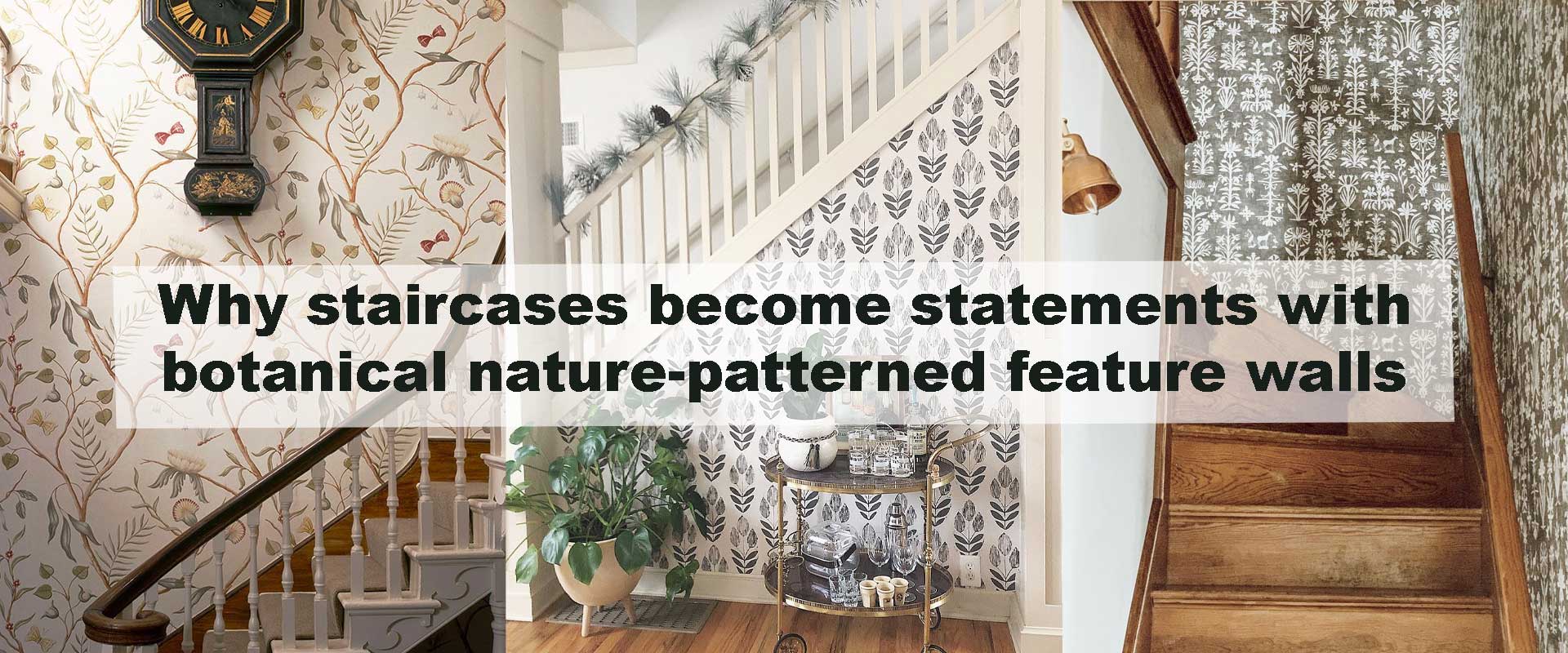
Why staircases become statements with botanical nature-patterned feature walls
Staircases are no longer quiet connectors between floors. In today’s design-forward homes, they have become visual pauses—spaces where movement slows and atmosphere takes over. When layered with botanical nature-patterned feature walls, staircases transform into sculptural experiences rather than functional transitions. This shift reflects a broader desire to weave nature into everyday interiors, even in overlooked architectural zones.
Botanical wallpaper introduces rhythm, scale, and softness to staircases, turning vertical movement into a curated journey. From leafy silhouettes climbing alongside steps to oversized florals stretching across landings, nature-inspired walls create depth where flat surfaces once existed. This design approach doesn’t just decorate—it reshapes how staircases feel, guiding the eye upward and grounding the home in calm, organic beauty.
Staircases as Visual Pathways, Not Just Passages
Unlike rooms shaped by furniture and decor, staircases are defined almost entirely by surfaces. Walls, railings, light, and shadow carry the full visual responsibility, making every material and pattern choice feel more pronounced. This is precisely why botanical feature walls perform so well here—they engage the vertical journey, revealing themselves gradually as the eye moves upward or downward.
Nature-inspired motifs echo the movement found outdoors: vines climbing toward light, leaves drifting with air currents, branches extending across space. These organic gestures align instinctively with the rhythm of stairs, allowing Botanical Wallpaper to feel purposeful rather than decorative, guiding the ascent with visual continuity instead of abrupt stops.
Botanical patterns also soften the hard geometry of steps, balustrades, and landings. Straight lines feel gentler, transitions between levels feel more fluid, and the staircase shifts from a purely functional connector into a memorable design moment. What was once overlooked becomes expressive—an architectural feature people pause to admire, remember, and instinctively capture as part of the home’s story.
Why Botanical Patterns Work Exceptionally Well on Staircase Walls
Vertical Scale Amplifies Natural Motifs
Botanical designs are inherently comfortable with height. Tall stems, elongated leaves, and layered foliage feel instinctively at home on multi-floor walls, where their proportions can unfold without compression. Staircases provide the vertical canvas these motifs need, allowing patterns to breathe, stretch, and reveal themselves gradually rather than all at once.
Large-scale leaves or softly trailing vines visually extend the wall plane, making stairwells appear taller and more expansive. This upward pull subtly shifts perception, turning what might have felt narrow or transitional into a space with architectural presence. The effect becomes especially striking in homes where staircases sit near entryways or open living zones, as the botanical wall sets an immediate tone of openness and natural flow.
Organic Flow Complements Movement
Botanical patterns mirror the way the human eye prefers to travel—smoothly, organically, and without interruption. Unlike rigid geometric repeats that feel static, botanical forms guide the gaze in gentle arcs and layered paths. As people move up or down the stairs, the design seems to move with them, reinforcing a sense of rhythm rather than visual pause.
This is why staircases dressed in Large Leaf Botanical Wallpaper often feel calm yet dramatic at the same time. The scale creates impact, while the natural spacing and curvature prevent visual overload, allowing the wall to feel expressive without ever becoming overpowering.
Light, Shadow, and Botanical Texture
Staircases often benefit from dynamic lighting conditions—skylights filtering daylight, side windows casting angled shadows, or pendant fixtures illuminating steps from above. Botanical wallpapers respond beautifully to these shifts, transforming the wall into a surface that subtly changes character throughout the day.
Delicate leaf veins catch highlights, deeper foliage recedes into shadow, and layered compositions create depth that flat paint simply cannot replicate. As light moves, the wall gains dimension, making each ascent or descent feel slightly different. In the evening, botanical patterns soften the sharper contrasts created by artificial lighting, reducing harsh shadows cast by steps and railings and enhancing overall warmth.
For staircases with limited natural light, deeper palettes found in Dark Botanical Wallpaper introduce richness and intimacy rather than heaviness. When paired with warm lighting, these tones absorb glare and add visual depth, ensuring the staircase feels enveloping and refined—not closed in.
Choosing the Right Botanical Style for Staircase Statements
Selecting the right botanical style is what turns a staircase from decorative to deliberate. Because staircases unfold gradually, the pattern choice should support movement, scale, and light rather than compete with them. Different botanical expressions influence how the ascent feels—calm and architectural, expressive and narrative, or timeless and grounding.
Minimal Line Art for Architectural Calm
Fine botanical outlines are especially effective in modern homes where structure and clarity lead the design language. Their restrained forms introduce nature in its most distilled state, allowing staircases to remain light, composed, and visually uncluttered. Rather than commanding attention, these patterns quietly support the architecture, enhancing flow without distraction.
Designs like Minimal Line Art Botanical Wallpaper are particularly well suited to narrow stairwells or minimalist interiors, where every visual element must earn its place. Their subtle rhythm elongates walls and reinforces verticality, making staircases feel taller and more intentional.
Lush Florals for Expressive Homes
Homes with expressive personalities benefit from botanical florals that unfold generously across staircase walls. These designs bring narrative depth, allowing the staircase to feel like a journey rather than a simple climb. Each step reveals new petals, layers, and movement, transforming transition spaces into immersive experiences.
The layered forms and organic motion found in Floral Botanical Wallpaper lend staircases an almost gallery-like presence. Rather than acting as background, the wall becomes a living artwork—especially powerful when staircases connect social zones where visual drama is welcomed.
Vintage Botanicals for Timeless Character
In heritage homes or interiors seeking warmth and continuity, vintage botanical illustrations offer quiet richness. Their hand-drawn details and softened palettes introduce a sense of history that feels grounded rather than ornamental. These designs resonate beautifully with traditional materials such as wood, stone, and classic railings.
Styles inspired by Vintage Botanical Wallpaper bring enduring elegance to staircases, aging gracefully as the home evolves. Instead of following trends, they anchor the space in familiarity and craftsmanship, making staircases feel deeply rooted in the home’s story.
How Botanical Staircase Walls Influence Spatial Perception
Staircases are often overlooked visually, treated as compressed or secondary zones. Botanical feature walls counter this by giving vertical spaces narrative importance. Patterns guide the eye upward, encouraging movement and transforming height into a design asset rather than a challenge.
Soft green palettes found in Green Botanical Wallpaper further enhance this effect. Green tones naturally recede in visual perception, helping staircases feel broader, calmer, and less enclosed—even within compact layouts. The wall begins to breathe, easing the sense of confinement often associated with stairwells.
This subtle expansion aligns closely with the principles explored in How green botanical prints create an earth-inspired living room atmosphere, where nature-led palettes gently reshape how interiors are experienced. In staircases, the result is a space that feels intentional, open, and emotionally balanced—no longer just a connector, but a meaningful part of the home’s design journey.
Feature Walls vs Full Staircase Coverage
While some staircases benefit from full botanical immersion, others shine with a single feature wall. The decision often depends on architecture, light, and how central the staircase is within the home.
| Design Approach | Visual Impact | Best For |
|---|---|---|
| Single Botanical Feature Wall | Focused, elegant | Narrow staircases, minimalist homes |
| Full Staircase Coverage | Immersive, dramatic | Open stairwells, statement interiors |
| Landing-Only Botanical Wall | Transitional emphasis | Multi-level homes, visual breaks |
Feature walls allow the pattern to breathe, while full coverage creates a cocoon-like journey between floors.
Botanical Staircases as Emotional Anchors
Staircases quietly connect contrasting emotional zones within a home—moving from social, energetic spaces to private, restorative ones. Botanical wallpapers soften these transitions by introducing nature as a visual constant, grounding the journey between levels in calm, familiarity, and rhythm. Instead of feeling like a purely functional passage, the staircase becomes a gentle pause that prepares the mind for what comes next.
Soft foliage patterns create a sense of visual exhale during everyday routines, easing movement and reducing sensory tension. More expressive botanical forms, on the other hand, add subtle momentum, energizing the climb without overwhelming it. This balance reflects the same restorative principles explored in Bringing calm to modern homes with soft botanical wallpaper themes, where nature-led design helps regulate mood and emotional flow throughout interiors.
In multi-level homes, staircases are experienced repeatedly rather than occasionally. A thoughtfully chosen botanical feature wall ensures that each pass feels intentional and reassuring, turning routine movement into a familiar, calming ritual rather than a rushed transition.
Material Pairings That Elevate Botanical Staircase Walls
Botanical wallpapers reach their full potential when layered alongside tactile, natural materials. Wood railings echo the organic curves of leaves and branches, reinforcing visual harmony through texture. Stone or concrete steps provide grounding contrast, anchoring airy botanical patterns with weight and permanence, while metal accents introduce refined tension that sharpens the overall composition.
These material pairings prevent botanical designs from feeling overly decorative. Instead, they become integrated architectural elements, enhancing depth and authenticity without competing for attention. Even within clean-lined, contemporary staircases, botanical walls soften rigid geometry, introducing warmth and visual balance where structure dominates.
For modern interiors seeking restraint with personality, abstract interpretations found in Abstract Botanical Wallpaper offer an ideal middle ground. Their fluid forms and simplified references to nature maintain architectural clarity while adding movement and artistic expression, allowing staircases to feel both curated and effortlessly refined.
Practical Considerations Without Compromising Design
Staircases experience constant movement, changing light, and frequent visual exposure, which makes durability just as important as aesthetics. Botanical wallpapers designed for flexibility allow these high-traffic vertical zones to retain their beauty without feeling precious or restrictive. Rather than limiting creativity, practical materials open the door to bolder pattern choices that still feel livable over time.
Options such as Peel and Stick Botanical Wallpaper provide a thoughtful balance between visual impact and adaptability. They allow homeowners to evolve their staircase styling as interiors shift, seasons change, or tastes mature—without sacrificing the layered depth and organic richness that botanical designs are known for.
Pattern scale plays a crucial role in how staircases feel. Oversized botanical forms enhance tall stairwells by celebrating vertical height, while finer, more rhythmic patterns maintain harmony in compact or enclosed staircases. Choosing the right scale ensures the wall feels intentional rather than overwhelming, regardless of architectural constraints.
Why Staircases Are Ideal for Bold Botanical Choices
Unlike living rooms or bedrooms, staircases exist free from visual competition. There are no sofas, rugs, or artwork vying for attention—only movement, light, and surface. This makes them uniquely suited for expressive botanical designs that might feel too dominant elsewhere.
Homeowners often feel more confident experimenting here, selecting dramatic foliage, layered florals, or deep botanical tones knowing the space can support visual richness without disrupting daily comfort. This freedom results in staircase walls that feel curated and memorable, setting the emotional tone for the entire home.
In many ways, staircases function as vertical galleries. Each step reveals a new angle, shadow, or detail, allowing botanical wallpapers to unfold gradually rather than all at once. The wall becomes living artwork—experienced in motion, not just at rest—turning every ascent and descent into a subtle design moment.
Frequently Asked Questions
Can botanical wallpaper make staircases feel wider?
Yes. Vertical botanical patterns draw the eye upward, reducing the feeling of narrowness and enhancing spatial flow.
Are bold botanical designs suitable for small staircases?
When used as a feature wall with balanced color palettes, bold botanicals can actually make small staircases feel more intentional and curated.
Do botanical staircase walls work in modern homes?
Absolutely. Minimal, abstract, or line-art botanical styles integrate seamlessly with modern architecture.
Should staircase botanicals match nearby rooms?
They should complement rather than copy. Staircases benefit from slightly elevated visual interest to mark transition.
Conclusion
Staircases become statements when botanical nature-patterned feature walls transform movement into experience. These designs bring softness to structure, rhythm to height, and emotional continuity between floors. Whether subtle or expressive, botanical wallpapers redefine staircases as integral design moments rather than overlooked zones.
By choosing patterns that align with architecture, light, and personal style, staircases evolve into living artworks that quietly shape how a home feels every day. Botanical design doesn’t just decorate the climb—it gives it meaning.