1920s-Era Art Deco Wallpaper Patterns That Still Work in 2026
Nearly a century later, 1920s Art Deco wallpaper patterns still feel confident, refined, and surprisingly current. In 2026, interiors are shifting toward expressive restraint—spaces that feel layered, intentional, and visually structured without excess. This is exactly where classic Art Deco excels. Its geometry, symmetry, and polished detailing create walls that feel architectural rather than decorative, allowing vintage influence to sit comfortably alongside modern furniture and lighting.
What makes these patterns endure is not nostalgia, but balance. The 1920s introduced a visual language rooted in progress, proportion, and optimism. When interpreted through today’s softer palettes, matte finishes, and controlled metallic accents, these wallpapers feel calm, luxurious, and relevant. From subtle linear repeats to confident sunburst motifs, Art Deco patterns continue to shape interiors that feel both grounded and forward-looking.
Why 1920s Art Deco Patterns Still Feel Right in 2026
Art Deco was never about excess for its own sake. At its core, the style focused on structure, rhythm, and visual clarity—principles that align seamlessly with how modern interiors are designed today. In 2026, spaces are expected to feel intentional and composed, and Deco’s disciplined approach answers that need effortlessly.
Geometry That Organises Space
Chevron lines, stepped forms, and symmetrical repeats give walls a sense of architectural purpose. Rather than functioning as surface decoration alone, these patterns guide the eye and subtly organise zones within a room. This visual order is especially valuable in contemporary open layouts, where walls often play a key role in defining spatial flow.
Ornament with Discipline
Unlike heavily ornate historical styles, Art Deco uses ornament sparingly and with intention. Even bold motifs feel controlled and measured, allowing them to integrate naturally with minimalist furniture, modern lighting, and clean-lined interiors. This balance ensures that Deco walls enhance a space rather than dominate it.
Metallic Accents That Age Well
Gold, bronze, champagne, and brushed silver were central to 1920s design, but their longevity lies in how they interact with light. When used with restraint today, metallic accents add depth and quiet luminosity without visual noise. This refined use of shine supports the softer, more layered interiors favoured in 2026.
This enduring relevance is closely tied to how structured geometry continues to shape modern spaces, a connection clearly reflected in How Art Deco Wallpaper Enhances Modern Minimalist Furniture, where proportion, balance, and visual discipline allow decorative walls to coexist effortlessly with clean-lined contemporary interiors.
1920s Art Deco Wallpaper Patterns That Translate Beautifully Today
Stepped Chevron and Zigzag Designs
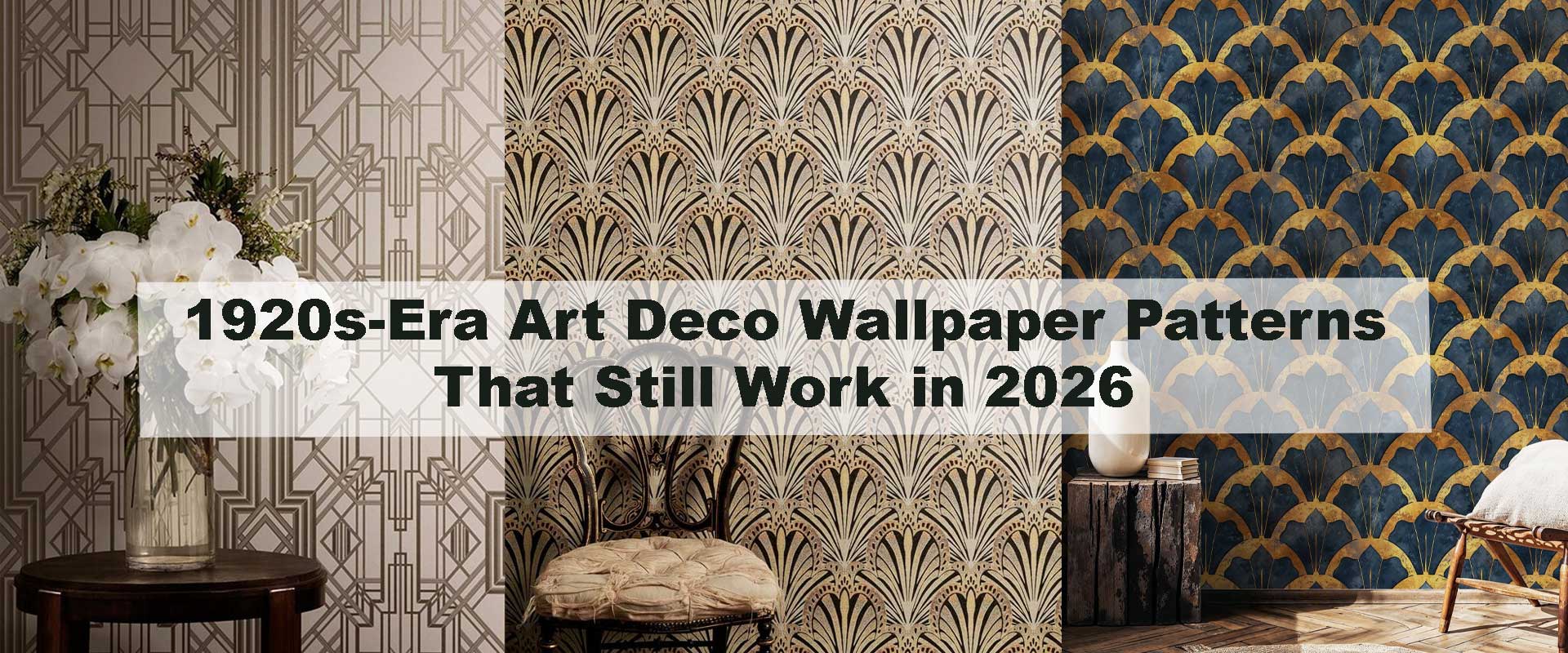
Stepped chevron and zigzag patterns captured the architectural confidence of the 1920s, reflecting a fascination with progress, precision, and movement. Their angular repetition introduces energy and direction to walls while maintaining visual order, making them feel purposeful rather than decorative. In contemporary interiors, these patterns are especially effective in softened palettes where form and proportion take priority over bold colour.
Their compatibility with streamlined seating, stone surfaces, and warm wood finishes makes them ideal for spaces that value clarity and balance. More refined interpretations appear within Geometric Art Deco Wallpaper selections, where structure becomes a subtle framework rather than a dominating statement.
Sunburst Motifs
Sunburst motifs emerged as symbols of optimism, growth, and modernity during the Deco era. Today, they serve as architectural focal points—drawing the eye outward while maintaining composure. When rendered with neutral backdrops or brushed metallic finishes, sunbursts feel sculptural and intentional rather than theatrical.
These designs perform best when given singular prominence. Used on one wall, they establish visual hierarchy and anchor the room, aligning seamlessly with modern preferences for curated statement surfaces instead of full-room pattern saturation.
Fan and Shell Patterns
Fan and shell motifs introduce a softer rhythm into the Art Deco vocabulary. Their repeating curves gently counterbalance sharp architectural lines, creating interiors that feel structured yet inviting. This balance between geometry and fluidity allows the pattern to enrich a space without becoming visually dominant.
In 2026 interiors, these designs are frequently chosen for settings where calm sophistication matters most. Their restrained elegance aligns closely with the refined resurgence discussed in Why Art Deco Wallpaper Is Returning as the Biggest Luxury Design Trend, making fan and shell patterns particularly well suited to interiors that value atmosphere, depth, and understated luxury over overt drama.
Linear Stripe Variations
Linear stripe patterns were historically used to reinforce proportion and enhance spatial perception. Vertical lines subtly elevate ceilings, while horizontal stripes widen visual boundaries, making them among the most adaptable Deco patterns still in use today. Their strength lies in influence rather than presence.
When executed with slim metallic detailing against matte backgrounds, stripes introduce quiet texture and refined light interaction. The result is a wall surface that feels architectural, contemporary, and effortlessly composed.
Abstract Geometric Blooms
Art Deco’s approach to nature was never literal. Instead, organic forms were distilled into geometry, resulting in abstract bloom patterns that feel artistic and architectural. These designs offer individuality without sentimentality, making them particularly appealing in modern interiors that value originality over nostalgia.
Paired with understated furnishings and restrained palettes, abstract geometric blooms allow the wall to function almost as an art installation—adding character and depth while maintaining visual discipline.
Where 1920s Art Deco Wallpapers Work Best Today
Living Areas
In shared living spaces, 1920s Art Deco wallpaper introduces a sense of visual order that helps anchor furniture arrangements and define seating zones. The structured geometry naturally guides the eye, making open layouts feel more intentional and composed. When paired with neutral upholstery and soft textiles, subtle metallic accents add warmth and depth without overwhelming the room, a balance often found within Art Deco Wallpaper for Living Room selections.
Bedrooms
Bedrooms benefit from the quieter side of Art Deco expression. Fan motifs, fine linear patterns, and softly muted metallic tones create an atmosphere that feels cocooning rather than dramatic. Instead of commanding attention, these designs work in the background to add richness and refinement, supporting rest and relaxation while still delivering a layered, boutique-like aesthetic.
Dining Spaces
Dining areas are especially well suited to Art Deco patterns due to their inherent symmetry and sense of rhythm. These qualities echo the structured nature of dining furniture and table layouts, reinforcing a feeling of ceremony and intention. Positioned behind a dining table or sideboard, Deco wallpaper elevates the space with presence and polish, creating visual impact without introducing distraction.
Colour Pairings That Keep Deco Feeling Current
Modern interpretations of 1920s Art Deco wallpaper rely heavily on thoughtful colour relationships that soften the style’s historic boldness while preserving its elegance.
- Black and muted gold combinations offer depth and contrast, delivering drama in a controlled, sophisticated way that feels timeless rather than theatrical.
- Cream paired with champagne metallics introduces warmth and gentle luminosity, making these patterns ideal for interiors that favour lightness and understated luxury.
- Emerald tones with brushed brass bring richness and confidence while remaining composed, a pairing frequently explored within Emerald Green Art Deco Wallpaper designs that balance colour intensity with refined detailing.
- Stone grey combined with silver accents feels architectural and modern, lending itself particularly well to minimalist interiors where texture and proportion take precedence over colour.
Together, these palettes allow Art Deco wallpaper to adapt seamlessly to contemporary expectations, offering calm, depth, and enduring elegance rather than overt glamour.
1920s Art Deco vs Contemporary Minimal Patterns
| Aspect | 1920s Art Deco Patterns | Contemporary Minimal Patterns |
|---|---|---|
| Visual Structure | Strong geometry and symmetry | Soft repetition or open spacing |
| Decorative Presence | Expressive yet controlled | Quiet and understated |
| Use of Metallics | Integral design element | Rare or absent |
| Emotional Impact | Confident, uplifting, elegant | Calm, neutral, restrained |
| Longevity | Timeless with adaptable styling | Trend-driven simplicity |
This comparison highlights why Deco patterns continue to coexist comfortably with modern design philosophies.
Styling Tips for Modern Interiors
Keep surrounding furnishings simple to allow the wallpaper’s structure to shine. Balance patterned walls with tactile materials such as linen, wood, or stone to soften the overall effect. Lighting plays a crucial role—warm, indirect light enhances metallic detailing and prevents harsh reflections.
Choosing one dominant Deco surface rather than covering every wall often delivers the most refined result, especially in open-plan spaces.
Frequently Asked Questions
Do 1920s Art Deco wallpapers feel too bold for modern homes?
When colours are softened and patterns are used selectively, Deco wallpapers feel structured rather than overwhelming.
Can Art Deco patterns work with minimalist furniture?
Yes. Clean-lined furniture actually enhances Deco geometry by providing contrast and visual clarity.
Are metallic details still suitable in 2026 interiors?
Subtle metallic accents remain relevant because they add depth and light reflection without excess.
Is it better to use Deco wallpaper on one wall or multiple walls?
Single-surface use often feels more modern, allowing the pattern to act as an architectural feature.
Closing Thoughts
1920s-era Art Deco wallpaper patterns continue to thrive because they balance expression with discipline. Their geometry, rhythm, and refined ornamentation align naturally with the way interiors are styled in 2026—intentional, calm, and quietly luxurious. Whether you’re drawn to chevrons, sunbursts, or fan motifs, these designs offer longevity that few trends can match.
Thoughtfully selected pieces from the broader world of Art Deco Wallpaper make it easy to introduce this enduring style into contemporary spaces while keeping interiors elegant, relevant, and unmistakably timeless.