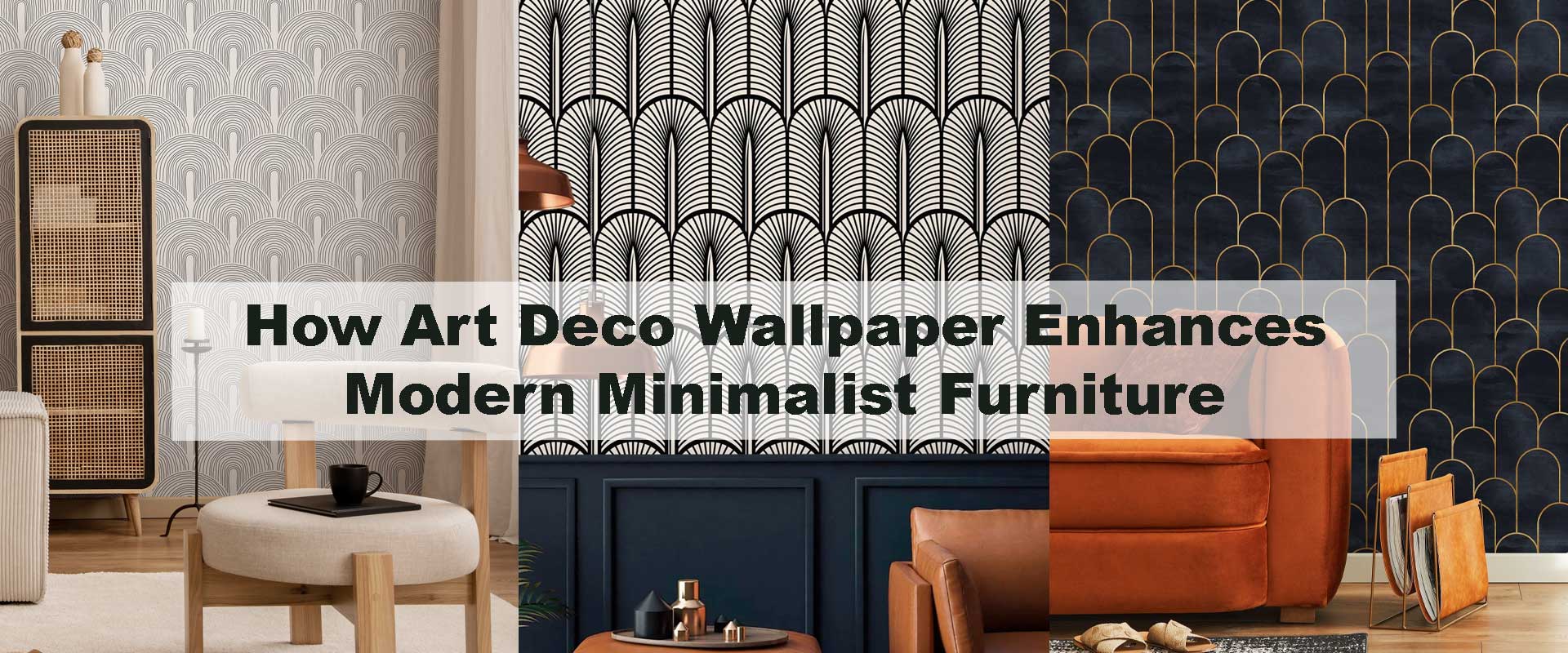
How Art Deco Wallpaper Enhances Modern Minimalist Furniture
Modern minimalist furniture is admired for its clean lines, calm palettes, and intentional restraint. Yet when walls remain completely plain, minimalist interiors can sometimes feel visually unfinished. This is where Art Deco wallpaper becomes an elegant design partner. With structured geometry, rhythmic symmetry, and refined detailing, it adds depth and character without disturbing the calm balance minimalist furniture relies on.
Rather than overpowering simplicity, Art Deco patterns sharpen it. They bring definition through order, not excess, allowing minimalist sofas, sculptural chairs, and streamlined tables to feel grounded and thoughtfully placed. When selected with care, Art Deco wallpaper transforms minimal spaces into interiors that feel architectural, expressive, and timeless.
Why Minimalist Furniture Benefits From Visual Anchors
Minimalist furniture is designed to create calm through reduction. Low-slung profiles, smooth planes, and restrained finishes remove visual distraction and allow space to breathe. Yet when walls are left completely blank, that same restraint can cause furniture to feel visually ungrounded, as though it is floating rather than intentionally placed. The room may look clean, but it can also feel incomplete.
Art Deco wallpaper introduces a strong visual anchor without breaking minimalist discipline. Its symmetry and architectural repetition give the eye a point of reference, allowing furniture to feel firmly positioned within the space. Seating arrangements gain definition, layouts feel resolved, and even the simplest furnishings appear more deliberate.
By allowing the wall to carry visual structure, minimalist interiors retain their clarity while achieving a greater sense of balance, presence, and compositional confidence.
Shared Design Principles Between Art Deco and Minimalism
Despite their contrasting reputations, Art Deco and minimalism are rooted in similar design principles. Both value geometry, proportion, and intentional composition over decorative excess. Minimalist furniture expresses this through clean silhouettes and careful spacing, while Art Deco wallpaper reinforces it through symmetry, linear rhythm, and architectural order.
Curved Deco motifs echo rounded furniture edges, while stepped patterns align seamlessly with cabinetry lines and modular layouts. Symmetrical compositions enhance spatial harmony, preventing the room from feeling visually scattered. Because both styles rely on structure rather than ornament, they naturally support one another.
The outcome is an interior that feels refined and cohesive—visually rich yet controlled, expressive without sacrificing the calm clarity that defines modern minimalist living.
Framing Minimalist Furniture With Art Deco Wallpaper
Art Deco wallpaper excels at giving minimalist furniture a sense of placement and intention. When a simple sofa is positioned against a geometric Deco wall, it immediately gains visual authority, no longer appearing isolated within the room. The structured backdrop acts almost like a frame, allowing the furniture’s clean silhouette to stand out with greater clarity and confidence.
This effect is especially powerful in dining areas, where streamlined tables and chairs can sometimes feel understated. Vertical lines or symmetrical Deco patterns behind the table establish rhythm and alignment, making the entire arrangement feel deliberate rather than merely functional. The furniture remains minimal, but the space feels complete.
In open-plan interiors, this framing quality becomes even more valuable. Art Deco wallpaper defines zones subtly, without screens or partitions, preserving openness while giving each area its own visual identity. The wall takes on an architectural role, allowing furniture to stay light, restrained, and purposeful.
Geometry That Enhances Clean Silhouettes
Minimalist furniture relies on precise geometry, and Art Deco wallpaper strengthens this foundation. Linear motifs mirror straight-edged sofas, tables, and shelving, reinforcing order and structure. At the same time, curved Deco forms introduce gentle contrast, softening rigid layouts without disrupting balance.
Geometric rhythm also shapes how a space is experienced. Vertical patterns draw the eye upward, enhancing the sense of height, while horizontal elements extend visual width. Symmetrical compositions create stability, helping minimalist rooms feel composed rather than empty.
This dialogue between form and pattern elevates the entire interior. Furniture and walls work together as a unified design system, resulting in spaces that feel intentional, refined, and quietly powerful.
Texture Without Visual Noise
Minimalism often restricts texture to protect a sense of calm, but when texture is removed entirely, interiors can feel flat and emotionally distant. Art Deco wallpaper introduces controlled texture—rich enough to add depth, yet disciplined enough to preserve visual clarity. This balance allows walls to contribute interest without disrupting the quiet order minimalist spaces depend on.
Subtle relief patterns, layered linework, and refined metallic inflections interact beautifully with smooth furniture surfaces. Matte upholstery, polished wood, and stone finishes gain warmth when set against textured Deco walls, creating a tactile contrast that feels intentional rather than decorative. Light plays softly across these surfaces, adding movement without noise.
Here, texture works as an architectural enhancement. It enriches the space quietly, supporting minimalism instead of competing with it.
Color Discipline That Complements Minimal Furniture
Neutral palettes are central to modern minimalist furniture, and Art Deco wallpaper succeeds when it respects this restraint. Rather than relying on bold saturation, Deco designs use depth, contrast, and tonal variation to create richness. Muted golds, deep charcoals, warm ivories, softened emeralds, and controlled navy tones add sophistication without overwhelming the room.
Because Art Deco patterns apply contrast with precision, minimalist furniture gains definition instead of blending into the background. Clean-lined sofas and tables appear sharper, more deliberate, and visually anchored against carefully balanced color compositions.
The result is an interior that feels polished and resolved. Color enhances structure, not spectacle, ensuring the space remains calm, elegant, and enduring rather than trend-driven.
Art Deco vs Plain Minimalist Walls: A Comparison
| Design Aspect | Plain Minimalist Walls | Art Deco Wallpaper With Minimalist Furniture |
|---|---|---|
| Visual Depth | Flat, understated | Layered with architectural interest |
| Furniture Presence | Can feel understated or floating | Furniture feels anchored and intentional |
| Sense of Luxury | Quiet, restrained | Refined, structured elegance |
| Spatial Definition | Relies only on layout | Defined through geometry and symmetry |
| Long-Term Appeal | Clean but sometimes bland | Timeless with character and balance |
This comparison highlights how Art Deco wallpaper enhances minimalist furniture without compromising simplicity.
Choosing Art Deco Styles for Minimalist Interiors
Not every Art Deco design complements minimalist furniture, which is why selection matters as much as placement. The most successful pairings prioritize symmetry, thoughtful scale, and visual restraint. Designs drawn from the Art Deco Wallpaper range work especially well when geometry leads the composition, allowing pattern to feel architectural rather than decorative. Clean lines, balanced repeats, and measured contrast reinforce minimalist order instead of interrupting it.
Depth-focused designs are particularly effective in pared-back spaces. Options such as 3D Effect Art Deco Wallpaper introduce dimensional interest that enhances spatial perception without adding visual clutter. These patterns create the illusion of movement and structure, giving minimalist rooms a stronger sense of depth while keeping furniture silhouettes crisp and uninterrupted.
For interiors that rely on tactile nuance rather than bold pattern, Textured Art Deco Wallpaper offers an ideal balance. Subtle surface variation adds warmth and sophistication, pairing effortlessly with smooth upholstery, matte finishes, and natural materials. When understated elegance is the goal, Luxury Metallic Art Deco Wallpaper provides a restrained glow that catches light gently, elevating the space without compromising minimalist discipline.
The key is choosing designs that feel intentional and architectural—patterns that support simplicity while quietly enriching the room’s visual structure.
Why Scale Matters More Than Pattern Density
In minimalist interiors, scale carries far more visual weight than pattern complexity. Large-scale Art Deco motifs read as architectural elements, giving walls a sense of intention and structure. They feel purposeful rather than decorative, which aligns naturally with minimalist furniture that relies on clarity and proportion.
Oversized patterns also give furniture room to breathe. Clean-lined sofas, tables, and seating remain the focal points, while the wallpaper supports them quietly from the background. Smaller, tightly repeated patterns can fragment the visual field, competing with minimalist silhouettes and disrupting the calm flow the space depends on.
By choosing fewer, bolder motifs, minimalist interiors maintain clarity while gaining depth. This disciplined approach reflects the core logic of minimalism—strength through simplicity rather than accumulation.
Lighting as the Final Connector
Lighting plays a crucial role in unifying Art Deco wallpaper with minimalist furniture. Soft ambient lighting reveals geometry and surface detail gently, allowing patterns to emerge without sharp contrast or visual tension. This subtle illumination keeps the space serene while enhancing depth.
Directional lighting adds another layer of refinement. As light moves across metallic accents or embossed textures, the wallpaper shifts throughout the day, introducing quiet movement without visual noise. These changes keep minimalist interiors dynamic while preserving their calm character.
In this way, lighting completes the relationship between wall and furniture. It binds structure, texture, and form into a cohesive whole, ensuring the space feels balanced, intentional, and effortlessly refined.
Frequently Asked Questions
Does Art Deco wallpaper overwhelm minimalist furniture?
No. When patterns are structured and palettes are controlled, Art Deco wallpaper enhances minimalist furniture by adding order and visual depth rather than clutter.
Is Art Deco wallpaper suitable for small minimalist spaces?
Yes. Large-scale, symmetrical patterns can actually make compact spaces feel more architectural and visually balanced when paired with simple furniture.
Can Art Deco wallpaper work with neutral furniture only?
Neutral furniture works exceptionally well with Art Deco designs, as controlled contrast allows both elements to stand out without overpowering the space.
How many walls should feature Art Deco wallpaper in minimalist interiors?
Usually one feature wall is enough. This maintains minimalism while allowing the wallpaper to define the space.
Does Art Deco wallpaper suit open-plan minimalist layouts?
It works very well. Wallpaper helps define zones visually without physical partitions, keeping the layout open and cohesive.
Conclusion
Art Deco wallpaper enhances modern minimalist furniture by introducing structure, depth, and refined contrast without compromising simplicity. Through geometry, controlled texture, and disciplined color, it transforms pared-back interiors into spaces that feel intentional and architecturally complete. This balance explains why many designers now revisit Deco influences, as reflected in Why Art Deco Wallpaper Is Returning as the Biggest Luxury Design Trend, where structure and elegance replace excess as the defining appeal.
Minimalist furniture gains presence, walls gain purpose, and the overall environment feels balanced rather than bare. When chosen thoughtfully, Art Deco wallpaper does not disrupt minimalism—it elevates it, creating interiors that feel timeless, expressive, and quietly luxurious. This refined impact becomes especially clear in feature-wall applications, similar to the visual depth discussed in Luxury Art Deco Murals That Redefine Feature Walls This Year, where architectural patterns enhance modern spaces without overwhelming them.