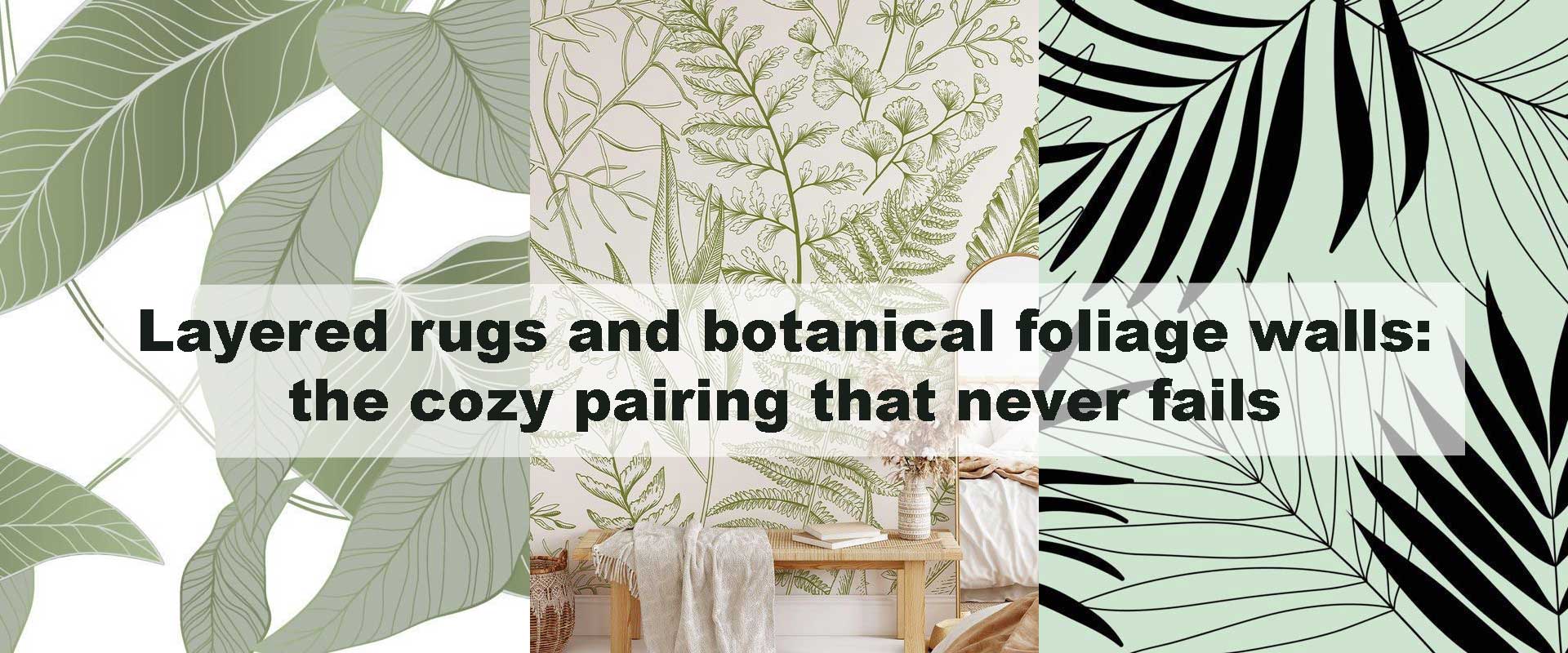
Layered rugs and botanical foliage walls: the cozy pairing that never fails
Creating a room that feels instantly warm, grounded, and full of life often comes down to pairing texture with nature. Layered rugs and botanical foliage walls form one of those effortlessly cozy combinations that make a space feel inviting from the moment you step in. The lush detailing of nature-inspired prints sets a calm backdrop, while stacked rug textures bring depth and softness underfoot, together creating a room that feels considered and lived-in.
Why This Duo Works So Well
The harmony between layered rugs and botanical foliage walls comes from the way softness meets structure. Leaf-inspired walls introduce gentle movement, shaded contours, and natural rhythm—elements that instinctively calm the mind. When these organic visuals meet the tactile richness of rugs in wool, jute, or cotton, the room gains both grounded depth and sensory warmth. Open layouts begin to feel more intimate, and subtle zoning emerges naturally without the need for heavy furniture or visual barriers.
Nature-detailed surfaces such as Botanical Wallpaper further amplify this effect by acting as a fluid, organic backdrop. Whether the foliage leans toward pastel watercolor strokes or deep, dramatic botanical silhouettes, the wall’s gentle flow pairs beautifully with the layered floor textures beneath. The result is a space that feels cohesive, nurturing, and effortlessly comfortable.
Choosing the Right Botanical Style
Selecting the ideal botanical surface begins with understanding the personality of your rugs. If your layered textiles feature soft neutrals—creams, sands, warm oat tones—they blend beautifully with the serene energy of Green Botanical Wallpaper. Rooms with richer rug palettes or warm-toned fibers feel more grounded alongside the nostalgic charm of Vintage Botanical Wallpaper.
Homes styled with woven textures, hand-loomed finishes, or earthy fibers often find natural synergy with Large Leaf Botanical Wallpaper. The scale of the foliage mirrors the boldness of statement rugs, allowing both elements to share the spotlight harmoniously. For interiors leaning toward calm, meditative energy, soft watercolor botanicals help quiet visual noise and ease the transition between multiple rug layers. This effect parallels the serene atmosphere described in Bringing calm to modern homes with soft botanical wallpaper themes, where soft patterning supports relaxation without losing personality.
How Layered Rugs Enhance Botanical Walls
Layering rugs is one of the most effective ways to add depth without clutter. A flat-woven base rug creates structure and defines the layout, while a softer layer—shag, tufted wool, or textured cotton—adds warmth from the ground up. Together, these layers create an anchoring effect that makes botanical foliage walls feel fuller, more dimensional, and naturally integrated into the space.
Rugs with gentle patterning subtly echo the organic movement already present in leafy motifs. As daylight shifts, their woven textures catch the light in soft variations, enhancing the natural flow of the room. This interplay of texture and pattern brings to mind the inviting atmosphere highlighted in Turning dining areas into cozy gathering spaces with botanical garden textures, where layered surfaces create depth, comfort, and effortless visual harmony. The result is a room that feels grounded yet vibrant—alive with subtle detail and soothing, nature-forward warmth.
Best Color Palettes for This Style
Warm earth tones—sand, clay, cocoa, and moss—create a grounding base that feels almost effortless against botanical foliage walls. These hues echo the natural tones within leaf patterns, helping the room feel cohesive while allowing layered rugs to melt softly into the space. When the goal is an airy, daylight-friendly atmosphere, whites, soft oat shades, and gentle sage introduce freshness that keeps the leafy backdrop feeling open rather than heavy.
In spaces with deeper light or richer wall tones, colors like olive, charcoal, or muted espresso offer beautiful contrast without diminishing warmth. Dramatic foliage designs benefit from subtle rug layering—think ivory, wheat, or pale stone—because the softness counterbalances the strong pattern. Conversely, botanical walls with light watercolor detailing feel much more intentional when paired with rugs in earthy tones like cocoa, terracotta, or warm brown, anchoring the room with quiet stability.
Styling Tips for a Cohesive Look
1. Mix Rug Textures With Intention
Blend two or three textures that feel naturally connected—such as a sturdy jute base paired with a soft wool top layer, or a cotton flat weave beneath a low shag. This variation adds tactile depth that echoes the layered movement of botanical foliage walls. The contrast between firm and plush creates a grounded yet inviting surface that feels visually warm.
2. Let Rug Placement Follow the Wall’s Energy
When your botanical walls feature generous leaf forms or sweeping patterns, pair them with a rug layout wide enough to anchor the entire seating or relaxation area. This helps the natural flow of the wall continue across the floor, making the space feel balanced and intentional. Subtle color parallels—like moss, oat, or warm beige—can strengthen the connection even more.
3. Keep Layering Loose and Comfortable
Allow rugs to overlap organically instead of forcing precise alignment. Gentle asymmetry mirrors the natural curves found in foliage motifs, giving the room a soft rhythm that feels relaxed rather than staged. This effortless arrangement invites movement, making the space feel lived-in and naturally cozy.
4. Use Calm, Earthy Accents to Support the Palette
Complement the pairing with warm wood tones, soft woven textiles, matte ceramics, or minimal greenery to extend the nature-inspired mood. These accents enrich the visual harmony without overpowering the botanical walls or layered rugs. Each piece contributes to the overall sense of comfort, helping the space feel cohesive and quietly grounded.
Cozy Rooms That Benefit Most
Living rooms instantly gain warmth and familiarity when layered rugs and botanical foliage walls work together. The combination grounds large open-plan layouts, making them feel more intimate and connected. Bedrooms become calmer and more nurturing, as the softness underfoot blends with leafy patterns that gently frame the space, encouraging rest.
Even small corners—reading spots, window-nook seating, or a quiet meditation area—benefit from this pairing. A layered rug stack provides a tactile invitation, while the botanical backdrop adds depth and soft movement, turning even modest spaces into personal, comforting retreats.
Layered Rugs vs. Botanical Foliage Walls
| Feature / Effect | Layered Rugs | Botanical Foliage Walls | Combined Impact |
|---|---|---|---|
| Primary Purpose | Add texture, warmth, grounding | Create atmosphere, introduce natural flow | A deeply cozy, layered interior |
| Visual Effect | Softens layout and defines zones | Adds depth, greenery, and dimension | Balanced movement and tactile richness |
| Style Versatility | Works with modern, rustic, transitional | Fits tropical, vintage, watercolor, dark botanicals | Easily adapts to any interior mood |
| Best for Small Spaces | Helps anchor compact seating areas | Makes walls feel lively but light | Opens up rooms by blending vertical and horizontal layers |
| Texture Contribution | High—woven fibers, pile height variation | Medium—visual texture through foliage patterns | Strong, harmonious sensory layering |
| Color Coordination | Earthy neutrals pair well | Greens, soft browns, or dramatic dark botanicals | Seamless tone blending for atmosphere |
| Maintenance Needs | Occasional vacuuming, rotation | Wipeable or low-maintenance wallpaper | Practical, everyday-friendly pairing |
Frequently Asked Questions
1. Do layered rugs clash with bold botanical foliage walls?
Not at all. Layered rugs actually help balance bold walls by adding tactile softness underfoot. If your foliage pattern has strong contrast or oversized leaves, neutral rug tones will anchor the space beautifully without competing visually.
2. How many rugs should I layer for the coziest effect?
Most interiors benefit from two layers: a larger base rug to define the layout and a smaller accent rug for texture. This combination enhances the organic movement found in styles like Green Botanical Wallpaper and ensures visual comfort without clutter.
3. Which rug textures pair best with botanical mural walls?
Jute, wool, cotton, and soft shag textures pair extremely well because they complement the natural rhythm of leafy motifs. Textured weaves echo the gentle flow highlighted in Bringing calm to modern homes with soft botanical wallpaper themes, helping the space feel grounded and comforting.
4. Can this pairing work in small rooms or narrow layouts?
Yes—layered rugs help zone the room, while botanical foliage walls create vertical depth. The combination opens up compact areas and supports a welcoming feel similar to Turning dining areas into cozy gathering spaces with botanical garden textures.
5. What color palette works best for layering rugs with botanical walls?
Earthy neutrals—sand, moss, clay, oat, olive—are ideal because they harmonize naturally with foliage patterns. If your walls use dramatic tones, light rug layers will soften the effect; and if the walls are soft and airy, deeper rug colors add grounding warmth.
Conclusion
Layered rugs and botanical foliage walls create a naturally cozy pairing because they merge texture with organic flow. This combination brings warmth, depth, and ease into any room while keeping the environment visually calm and grounded. Whether you embrace soft watercolor foliage or bold leafy murals, complementing them with layered rugs adds harmony that never fails to make a space feel welcoming.