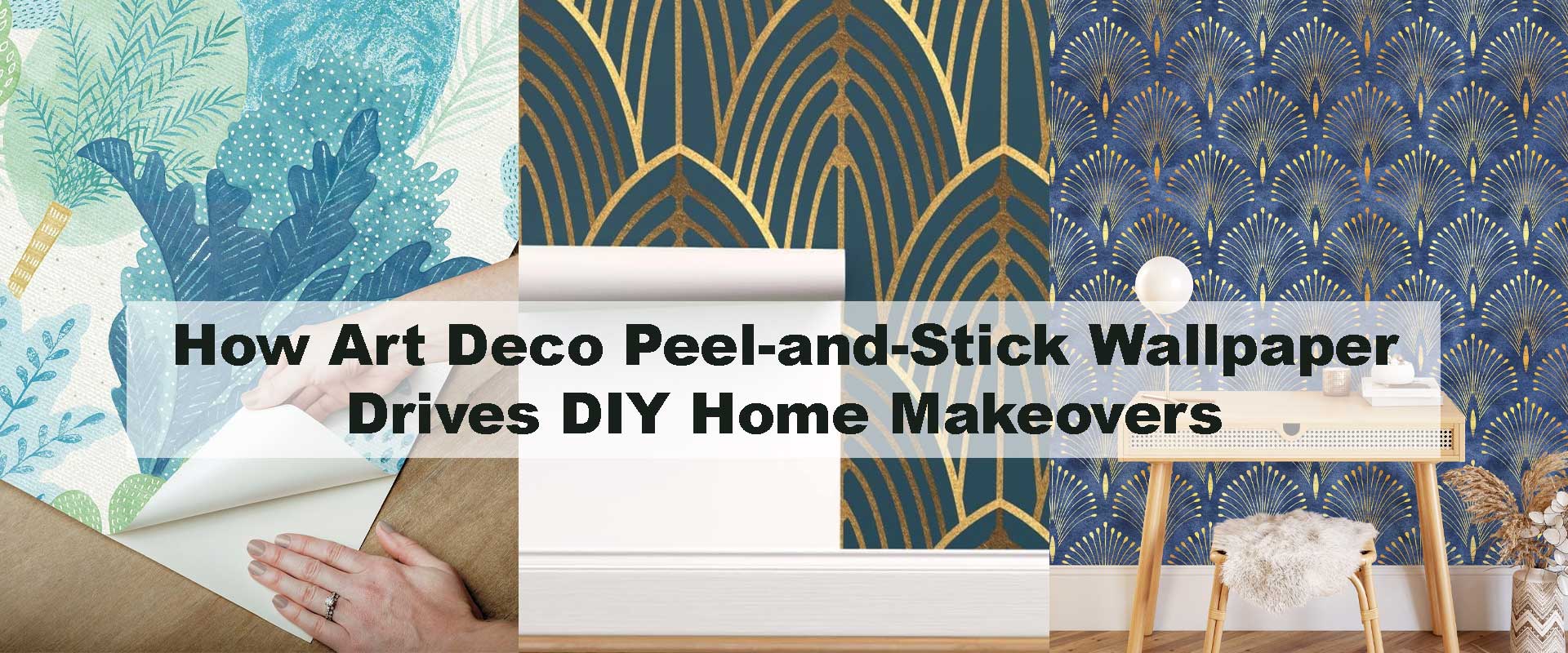
How Art Deco Peel-and-Stick Wallpaper Drives DIY Home Makeovers
Art Deco peel-and-stick wallpaper has quietly reshaped the way homeowners approach DIY home makeovers. What once required professional installers, long timelines, and permanent commitments can now be achieved in a single weekend with dramatic visual results. This shift isn’t just about convenience—it reflects a deeper change in how people view personal spaces, creativity, and design ownership. Walls are no longer static backdrops; they’ve become expressive surfaces that tell a story.
Within the broader appeal of Art Deco Wallpaper, peel-and-stick formats stand out because they remove fear from the design process. Bold geometry, metallic accents, and architectural symmetry—hallmarks of Art Deco—feel far less intimidating when installation is reversible. This accessibility has turned Deco patterns into a powerful driver of DIY confidence, allowing homeowners to explore luxury aesthetics without long-term risk.
As highlighted in
Why Art Deco Wallpaper Is Returning as the Biggest Luxury Design Trend, modern interiors are moving toward expressive, character-driven design. Peel-and-stick wallpaper aligns perfectly with this movement, giving people the freedom to experiment boldly while staying in control of their space.
The Rise of DIY Design Culture and Its Connection to Art Deco
DIY home makeovers are no longer about cost-saving alone. They’ve evolved into a form of personal expression, where homeowners actively shape the atmosphere of their living spaces. Social media, design inspiration platforms, and home-focused content have made high-end interiors feel attainable, but traditional renovation methods often lag behind this creative ambition.
Art Deco peel-and-stick wallpaper bridges that gap. It allows homeowners to translate inspiration into action almost immediately. The clarity of Deco design—clean lines, symmetry, and repetition—provides a sense of structure that reassures DIYers, even those with little experience. Unlike freeform or overly organic patterns, Deco motifs guide placement and alignment, reducing the chance of visual imbalance.
This balance between creativity and control explains why Deco styles feel especially approachable for first-time decorators. The patterns do the heavy lifting, turning simple walls into curated design elements.
Why Peel-and-Stick Wallpaper Has Become a DIY Essential
The rise of peel-and-stick wallpaper reflects a fundamental shift in how people approach home design. Today’s DIY audience values control, immediacy, and flexibility just as much as visual impact. Peel-and-stick wallpaper meets these expectations by removing the technical barriers that once made wall treatments feel intimidating and inaccessible. What was previously considered a specialist task is now a creative decision that can be acted on with confidence.
Rather than asking homeowners to commit to complex processes or permanent outcomes, peel-and-stick wallpaper aligns with modern lifestyles that favor adaptability. It allows design to evolve alongside daily living, making it a practical choice for those who want their interiors to remain expressive without becoming restrictive.
Eliminating Installation Anxiety
Traditional wallpaper installation often carries an emotional weight that goes beyond the task itself. Concerns about paste consistency, working time, air bubbles, and irreversible mistakes can turn what should be a creative experience into a stressful one. Peel-and-stick wallpaper removes this anxiety almost entirely by simplifying the process into clear, manageable steps.
The ability to reposition panels during installation fundamentally changes the DIY mindset. Instead of rushing to avoid errors, homeowners can work deliberately, adjusting alignment until the result feels right. This sense of control encourages experimentation, making bold Art Deco patterns feel approachable rather than risky. When mistakes are no longer permanent, confidence grows—and with it, a willingness to embrace statement walls that would otherwise feel intimidating.
Supporting Design Evolution Over Time
Homes are no longer static environments. Furniture is rearranged, color palettes shift, and personal tastes mature as lifestyles change. Peel-and-stick wallpaper supports this ongoing evolution by allowing walls to adapt without disruption. Rather than locking a room into a single identity, it creates space for reinvention.
Art Deco patterns are particularly well suited to this approach. Their timeless geometry provides visual continuity, even as surrounding décor changes. When paired with removable installation, this means homeowners can refresh a room’s mood without dismantling its design foundation. The result is an interior that feels flexible yet cohesive—an essential balance for long-term DIY satisfaction.
Why Art Deco Patterns Work So Well for DIY Transformations
Art Deco occupies a unique position in design history, blending expressive glamour with architectural discipline. This balance makes it exceptionally effective in DIY contexts, where visual clarity is just as important as creativity. Unlike styles that rely on layered ornamentation or irregular forms, Art Deco patterns offer structure that supports confident decision-making.
For DIYers, this structure acts as a guide. It reduces uncertainty, helping walls feel composed rather than experimental. Even when patterns are bold, their internal order prevents spaces from feeling chaotic.
Geometry That Creates Visual Stability
The structured nature of Geometric Art Deco Wallpaper plays a critical role in creating visual stability. Repeated lines, symmetrical forms, and intentional spacing establish rhythm across the wall, allowing the eye to move smoothly rather than searching for balance. This rhythm gives rooms a sense of calm order, even when color contrast or metallic detailing is strong.
For DIY projects, this built-in balance is invaluable. The wallpaper itself becomes a design framework, reducing reliance on additional décor to correct or compensate for visual imbalance. Furniture placement feels more intuitive, and the room naturally settles into a cohesive layout.
Luxury Without Excess
While Art Deco is historically associated with glamour, contemporary interpretations emphasize restraint and refinement. Instead of heavy ornamentation, modern Deco designs rely on precision—metallic accents are used sparingly, lines are layered with intention, and motifs feel architectural rather than decorative.
This restraint is ideal for DIY transformations. A single Art Deco wall can establish atmosphere and character, allowing the rest of the space to remain uncluttered. The room feels elevated without feeling busy, proving that luxury doesn’t require excess—it requires clarity.
How Peel-and-Stick Art Deco Wallpaper Transforms Different Spaces
Successful DIY design often depends on placing visual impact where it matters most. Art Deco peel-and-stick wallpaper excels when applied strategically, allowing homeowners to define spaces through emphasis rather than coverage. Its adaptability makes it effective across a range of rooms, each with distinct functional and emotional needs.
Living Rooms as Statement Spaces
Living rooms benefit from clear focal points that anchor both furniture and movement. An Art Deco feature wall behind a sofa or media unit introduces hierarchy, helping the space feel organized and intentional. Rather than competing with furnishings, the wallpaper establishes a visual backdrop that supports them.
Metallic finishes are especially effective in this setting. Luxury Metallic Art Deco Wallpaper interacts with ambient light, creating subtle shifts in tone throughout the day. This movement adds depth and richness, allowing the room to feel dynamic without relying on excessive décor or layered styling.
Bedrooms That Balance Calm and Glamour
Bedrooms require a careful balance between visual interest and restfulness. Art Deco peel-and-stick wallpaper achieves this through symmetry and controlled detailing. Patterns feel composed, guiding the eye without overstimulation, while muted metallics add a quiet sense of luxury.
Headboard walls are a popular choice for DIYers because they frame the bed like architectural detailing. This approach adds definition and elegance while maintaining a sense of calm—transforming the bedroom into a space that feels both refined and restorative.
Dining Areas That Feel Intentional
Dining areas thrive on atmosphere and cohesion. Art Deco wallpaper brings structure to these spaces, reinforcing a sense of occasion without overpowering the setting. Repeated lines and curves echo the formality of dining furniture, creating a rhythm that feels deliberate rather than decorative.
When paired with warm lighting, Deco patterns enhance depth and contrast, making dining spaces feel curated and inviting. The result is an environment that feels thoughtfully designed—supporting both everyday use and special gatherings with equal ease.
Small Spaces, Big Impact: Art Deco in Compact Areas
One of the most compelling advantages of peel-and-stick wallpaper is how effectively it transforms compact spaces. Hallways, alcoves, dressing corners, and narrow rooms often lack architectural interest, which can make them feel overlooked or visually flat. Art Deco patterns introduce instant identity, turning these transitional or limited areas into intentional design moments rather than leftover space.
As explored in Are Art Deco Line-Pattern Walls Making Small Rooms Look Taller?, vertical and elongated Deco motifs play a subtle but powerful role in spatial perception. Linear patterns guide the eye upward, creating a visual stretch that enhances perceived height. Instead of emphasizing boundaries, these designs redirect attention vertically, making walls feel more expansive and rooms feel less confined.
For DIYers working with limited square footage, this effect is especially valuable. A single Art Deco feature wall can recalibrate proportions, introduce rhythm, and visually reorganize the space—without knocking down walls or altering layouts. The transformation feels architectural, even though it’s achieved through a simple, reversible application.
Textured Finishes That Elevate DIY Results
Flat wall surfaces can sometimes feel incomplete, particularly in modern or minimalist interiors where decoration is intentionally restrained. This is where Textured Art Deco Wallpaper becomes an essential DIY upgrade. Texture adds another dimension to design, moving beyond color and pattern into depth and material illusion.
Textured Deco designs interact dynamically with light, creating soft shadows and highlights that shift throughout the day. Even when applied to a single wall, this layered surface effect introduces richness that feels thoughtfully constructed rather than purely decorative. The result is a wall that behaves like an architectural feature rather than a simple backdrop.
For DIY enthusiasts, textured peel-and-stick wallpaper offers the visual impact of bespoke finishes without the complexity of paneling, plaster treatments, or built-in detailing. It allows homeowners to achieve a refined, high-end aesthetic through accessible means, reinforcing the idea that sophisticated interiors can be self-created without technical barriers.
The Psychological Appeal of DIY-Controlled Luxury
Beyond visual appeal, Art Deco peel-and-stick wallpaper reflects a meaningful psychological shift in how homeowners engage with their spaces. Modern interiors are no longer shaped solely by designers or long-term commitments; they are increasingly driven by personal agency. DIY-controlled luxury allows individuals to participate directly in the creation of environments that reflect taste, mood, and identity rather than simply following trends.
Art Deco design aligns naturally with this mindset. Its architectural clarity and confident geometry convey intention, making even self-installed projects feel deliberate and considered. The result is a sense of authorship—homeowners don’t just live in the space; they actively shape its character.
Ownership of the Design Process
DIY installation creates an emotional bond between homeowner and space. When individuals apply wallpaper themselves, the transformation feels earned rather than outsourced. Art Deco patterns amplify this effect because they communicate strong visual purpose. Clean lines, symmetry, and structured motifs signal decisiveness, reinforcing the idea that the design choice was intentional rather than accidental.
This sense of ownership often leads to greater satisfaction with the final result. Spaces feel more personal, more expressive, and more aligned with the homeowner’s identity. Instead of decorating to impress others, DIY-controlled luxury encourages design decisions rooted in self-expression and confidence.
Confidence Through Reversibility
Reversibility plays a crucial psychological role in encouraging bold design choices. Knowing that a wall treatment can be removed without damage reduces anxiety and hesitation. Peel-and-stick wallpaper removes the fear of “getting it wrong,” allowing homeowners to explore dramatic Art Deco patterns they might otherwise avoid.
This safety net shifts behavior. Rather than defaulting to neutral or understated designs, people feel empowered to choose styles they genuinely love. As a result, Art Deco—once perceived as too expressive or intimidating—has become widely embraced within DIY culture. The ability to reverse decisions doesn’t dilute confidence; it strengthens it by creating freedom without consequence.
Common DIY Mistakes and How Art Deco Patterns Help Avoid Them
Many DIY projects fall short not because of poor execution, but because of visual imbalance or lack of cohesion. Art Deco peel-and-stick wallpaper inherently addresses these issues through its structured design language.
Overdecorating is a common pitfall when spaces lack a clear focal point. Art Deco patterns establish immediate visual authority, reducing the urge to compensate with excessive accessories or layered décor. One intentional wall often replaces multiple decorative elements.
Poor scale choices frequently disrupt DIY spaces, especially in smaller rooms. Repetitive geometry and proportional symmetry help maintain balance, guiding the eye in a controlled rhythm that prevents patterns from feeling overwhelming or undersized.
Unfocused layouts can make rooms feel unsettled. Art Deco symmetry subtly informs furniture placement and spatial flow, helping homeowners intuitively arrange interiors around a clear visual anchor.
These built-in safeguards explain why Art Deco peel-and-stick wallpaper consistently produces satisfying DIY results. The design itself supports better decisions, allowing homeowners to achieve polished, cohesive spaces with greater ease and confidence.
Long-Term Value of Peel-and-Stick Art Deco Wallpaper
While peel-and-stick wallpaper is often associated with flexibility, its value extends far beyond short-term use. High-quality Art Deco designs are crafted to retain visual clarity and richness over time, resisting the fatigue that often affects trend-led interiors. Instead of feeling temporary or disposable, these wallpapers age gracefully, maintaining their impact even as surrounding décor evolves.
Art Deco’s architectural foundations play a major role in this longevity. The style is built on proportion, symmetry, and deliberate structure—qualities that remain visually relevant regardless of changing color trends. Even when furniture, lighting, or accessories are updated, the geometric framework of Deco patterns continues to anchor the space. For DIYers, this means walls don’t need constant replacement to stay current; thoughtful design choices extend the life of the makeover while preserving flexibility.
Why Art Deco Peel-and-Stick Wallpaper Continues to Lead DIY Trends
The sustained appeal of Art Deco peel-and-stick wallpaper isn’t driven by novelty—it’s rooted in how seamlessly it fits modern living. Today’s homeowners want interiors that express personality without sacrificing adaptability. Spaces need to feel intentional yet flexible, refined yet approachable, and visually striking without being overwhelming.
Art Deco peel-and-stick wallpaper fulfills these expectations with remarkable consistency. Its bold lines and refined detailing deliver instant character, while removable installation supports evolving lifestyles and design confidence. The balance between classic structure and modern convenience makes it especially powerful for DIY projects that aim for meaningful transformation rather than surface decoration. As long as homeowners continue to value creative control and expressive interiors, this wallpaper style will remain a defining force in DIY home design.
Conclusion
Art Deco peel-and-stick wallpaper has become a defining force in modern DIY home makeovers because it empowers homeowners to design boldly without complexity. Its geometric clarity, refined glamour, and reversible installation transform walls into expressive architectural elements while keeping the process approachable. Whether applied in living rooms, bedrooms, dining areas, or compact spaces, this wallpaper style delivers professional-looking results through simple, confident action.
As DIY culture continues to prioritize creativity, control, and flexibility, Art Deco peel-and-stick wallpaper stands out as a tool that turns inspiration into reality—one wall at a time.