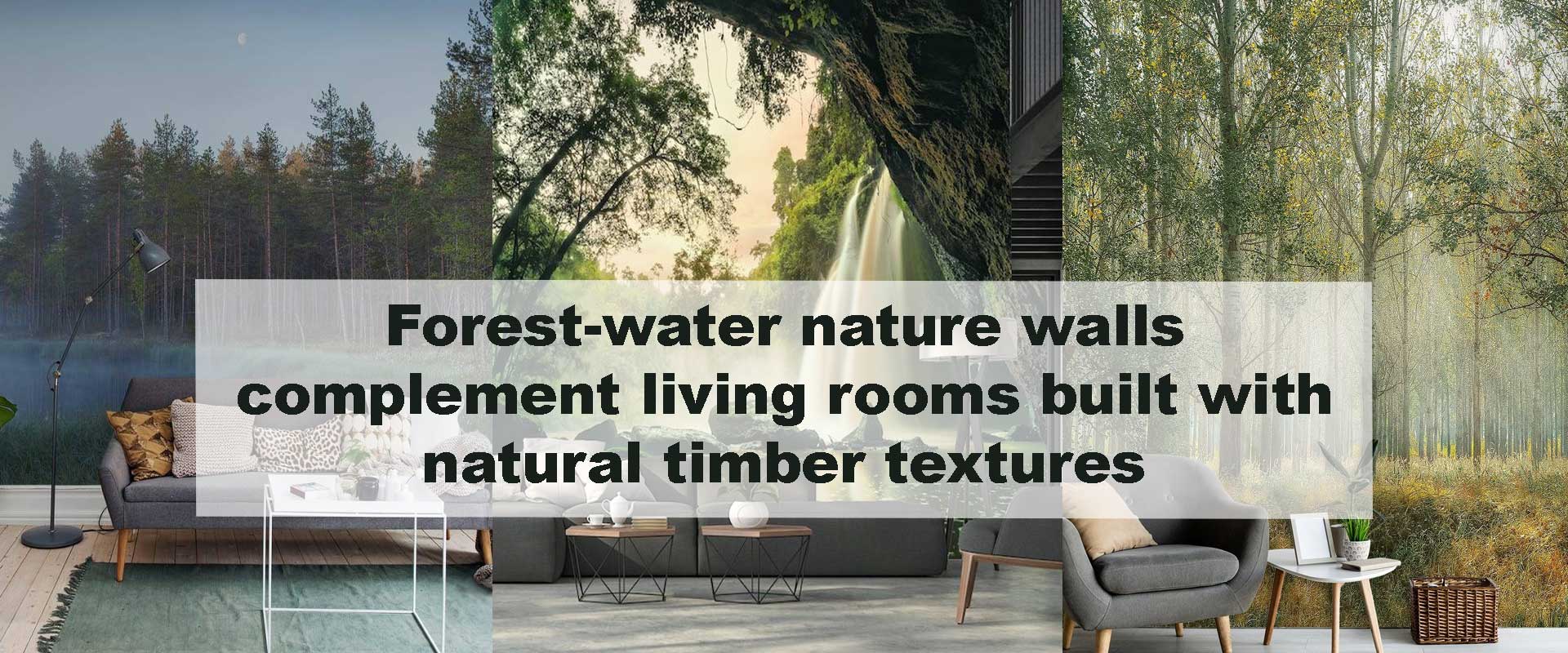
Forest-water nature walls complement living rooms built with natural timber textures
Forest-water nature walls do exactly that, blending flowing landscapes with the organic strength of timber interiors. As modern homes lean toward natural materials and sensory comfort, this pairing feels both intuitive and elevated. When water reflections meet wood textures, living rooms gain visual rhythm, softness, and a grounded atmosphere that never feels overstyled. This design direction is becoming a favorite among homeowners who want their spaces to feel restorative, authentic, and quietly luxurious without adding clutter or excess décor.
Why Forest-Water Nature Walls Feel Made for Timber-Rich Living Rooms
Natural timber already brings warmth, depth, and tactile character into a living space, but when paired with forest-water imagery, the effect becomes immersive rather than merely decorative. Flowing water visuals soften the visual weight of wood, while forest elements echo timber’s organic origins, creating a dialogue between surface and scene. Instead of competing, wall and material support each other, resulting in a layered environment that feels cohesive, calming, and intuitively connected to nature.
Living rooms built with oak beams, walnut flooring, or pine paneling benefit especially from this harmony. The gentle movement found in rivers, lakes, or misty waterlines counterbalances the solidity of wood, preventing the space from feeling visually heavy. At the same time, tree silhouettes and forest depth reinforce the natural narrative already present in the architecture. This is why many designers now approach Nature wallpaper as an architectural layer rather than a surface accent—allowing walls to visually breathe alongside timber textures instead of interrupting them.
How Water Imagery Softens Solid Wood Interiors
Timber-rich interiors can occasionally feel dense, particularly in living rooms with darker wood tones or expansive paneling. Forest-water walls introduce lightness through reflection, atmospheric haze, and subtle motion, gently easing the visual intensity of solid wood. Calm lakes, slow-moving streams, and soft waterfalls create spatial depth that contrasts beautifully with defined wood grain, making the room feel more expansive and balanced.
Water imagery also plays an important role in how light behaves within the space. Reflections and tonal gradation help distribute light more evenly, which is especially valuable in living rooms with limited daylight. Rather than flattening the warmth of timber, these reflective elements enhance it—maintaining richness while preventing enclosure. The result is a living area that feels open yet grounded, refined yet natural, and comfortably layered rather than overtly rustic.
Forest Motifs Reinforce the Authenticity of Timber Design
Wood naturally carries a sense of history—rings, grain shifts, and tonal variation quietly tell a story of growth and time. Forest imagery extends that narrative beyond furniture and flooring, allowing the walls to feel like a continuation of the material rather than a backdrop added afterward. In living rooms with exposed beams, timber ceilings, or reclaimed wood pieces, forest scenes feel instinctively right, as if the room is visually rooted in its own origins.
Subtle tree lines, layered foliage, and mist-softened woodland edges add depth without visual dominance. Instead of drawing attention away from timber, these motifs enhance its presence, reinforcing the room’s natural integrity. This harmony is especially effective in Scandinavian, Japandi, and rustic-modern interiors, where authenticity matters more than ornamentation. When forest imagery echoes the tone, rhythm, or grain direction of the wood, the space feels cohesive, intentional, and quietly refined rather than styled around a theme.
Choosing the Right Forest-Water Balance for Living Rooms
Forest-water walls succeed or fail based on balance. Timber-heavy living rooms—those with dark woods, wide planks, or extensive paneling—benefit from compositions where water plays a stronger visual role. Open lakes, gentle rivers, or reflective surfaces introduce breathing room, preventing the space from feeling dense or visually weighted.
In contrast, lighter wood interiors can comfortably support richer forest density without closing in the room. The relationship between trees and water should always respond to the architecture. Wide horizontal river scenes naturally ground seating areas, while vertical forest-water compositions work beautifully alongside tall shelving, slatted timber walls, or double-height spaces. When proportion is thoughtfully considered, the wall becomes a visual anchor—one that unifies wood, furnishings, and layout into a single, balanced environment.
Color Harmony Between Timber and Forest-Water Walls
Color harmony is what transforms a good pairing into a seamless one. Warm timber tones—such as walnut, teak, or honeyed oak—pair best with forest-water scenes grounded in mossy greens, softened blues, and earthy brown undertones. These palettes echo the warmth of wood while maintaining visual calm and depth.
Cooler timbers like ash, birch, or pale oak respond better to misty forests, gray-toned water reflections, and restrained green hues. These softer palettes preserve lightness without stripping the room of atmosphere. Highly saturated blues or artificial greens should be avoided, as they disrupt the organic relationship between wall and wood. Instead, layered, atmospheric tones mirror the complexity of natural grain, allowing walls, floors, and furnishings to feel connected—never competing, always cohesive.
Texture Contrast That Enhances Comfort
One of the most compelling reasons forest-water nature walls pair so effortlessly with timber is the contrast between physical and visual texture. Wood brings weight, grain, and tactile solidity, while water imagery introduces softness, motion, and visual release. This interplay prevents living rooms from feeling rigid or overly structured, allowing the eye to move gently across the space rather than stopping abruptly at hard surfaces.
When layered with linen-upholstered seating, woven rugs, or stone accents, forest-water walls feel like part of a complete natural ecosystem rather than a standalone feature. Each material supports the others, creating a living room that feels calm, intuitive, and comfortable. The result is a space designed for daily life—inviting, relaxed, and quietly refined—rather than one that feels staged or overly styled.
How Forest-Water Walls Support Biophilic Living Room Design
Biophilic design centers on restoring the human connection to nature within built environments, and forest-water walls express this principle in a deeply intuitive way. Timber already fulfills the tactile side of biophilia through texture and warmth, while forest-water imagery expands the experience visually. Together, they create a multi-sensory environment that feels immersive without being overwhelming.
This combination supports emotional well-being by lowering visual stress and encouraging mental ease. Living rooms designed this way often feel calmer, more grounded, and noticeably quieter in mood—even in dense urban settings. It’s why designers increasingly turn to expansive forest-water compositions when shaping emotionally supportive interiors, echoing how interior designers are leaning toward panoramic nature murals to build visual depth this year.
Best Forest-Water Styles for Timber-Focused Living Rooms
Artistic style plays a key role in how forest-water walls interact with wood textures. Soft realism enhances detail and depth, making timber grain feel more pronounced and dimensional. These styles suit living rooms where wood is a central design feature and deserves to be visually echoed rather than subdued.
Painterly or watercolor forest-water designs introduce a gentle softness that pairs beautifully with smooth or lightly finished timber. For contemporary wood interiors, minimalist compositions with negative space maintain clarity and restraint. Rustic timber spaces, by contrast, benefit from layered forests and flowing water that amplify warmth and character. Choosing the right style ensures the wall feels like a natural extension of the wood—not a competing visual statement.
Matching Wall Scale to Timber Architecture
Scale plays a defining role in how forest-water walls interact with timber architecture. In large living rooms with exposed beams, tall ceilings, or wide plank flooring, expansive scenes feel natural rather than overwhelming. The generous proportions allow layered forests and flowing water to unfold visually, reinforcing the architectural presence of wood without creating visual noise.
Smaller timber-focused living rooms benefit from restraint. Simplified compositions—such as distant tree lines, soft water horizons, or gently fading forest edges—suggest nature without compressing the space. Wide-format designs placed behind sofas or along primary seating walls work especially well, as they ground the room while allowing repeated timber elements to flow uninterrupted across zones. This balance helps the wall feel integrated into the structure rather than applied as decoration.
Lighting Considerations for Forest-Water and Wood Pairings
Lighting subtly determines whether forest-water walls feel enveloping or expansive within timber interiors. Warm lighting temperatures enhance the richness of wood grain while softening forest shadows, creating a relaxed, evening-friendly atmosphere ideal for living rooms. This warmth encourages comfort and makes natural materials feel more tactile and inviting.
Cooler lighting shifts the emphasis toward water reflections and atmospheric depth, helping forest scenes feel lighter and more open during the day. Indirect lighting techniques—such as wall washers, recessed uplighting, or concealed LED strips—are particularly effective. They illuminate the wall evenly without glare, allowing forest-water imagery and timber textures to coexist harmoniously, each enhancing the other without visual competition.
Popular Forest-Water Themes That Work With Natural Timber
Certain forest-water themes consistently feel at home in living rooms shaped by wood. Calm lakes framed by tree lines introduce a sense of stillness that balances the visual weight of timber furniture and flooring. These scenes encourage the eye to rest, making them ideal for family spaces that need to feel grounded without becoming visually heavy.
Gentle streams winding through forests add subtle movement, which keeps timber-rich rooms from feeling static. Misty riverbanks are especially effective in spaces with angular beams or slatted wood walls, as their softness visually rounds sharp lines and introduces atmosphere. Themes like these align beautifully with curated selections such as Forest nature wallpaper and Landscape nature wallpaper, where depth, layering, and organic flow enhance wood textures rather than distracting from them.
When to Choose Panoramic Forest-Water Walls
Panoramic forest-water walls shine in living rooms where timber already plays a defining architectural role. Open layouts, vaulted ceilings, and continuous wood flooring provide the scale needed for uninterrupted imagery to feel expansive rather than overwhelming. In these settings, a wide forest-water scene visually stretches the room, reinforcing openness while keeping the space emotionally grounded.
This approach is particularly powerful in homes with strong indoor–outdoor connections. When large windows, terraces, or garden views are nearby, panoramic forest-water walls blur the transition between interior wood and exterior landscape. The living room feels less enclosed and more immersive, as if the natural environment continues seamlessly across the walls rather than stopping at the glass.
Forest-Water Walls in Modern vs Rustic Timber Living Rooms
Modern timber living rooms are defined by clean lines, open layouts, and a restrained material palette, which means forest-water walls should feel quiet and intentional rather than visually dominant. Designs with soft gradients, misty horizons, or gently blurred water reflections complement contemporary wood surfaces without interrupting their simplicity. The wall acts as a subtle extension of the architecture, adding depth and atmosphere while preserving the calm precision modern interiors rely on.
Rustic timber living rooms invite a more expressive approach. Exposed beams, textured wood finishes, and handcrafted furniture pair naturally with layered forest scenes, flowing streams, and richer tonal variation. In these settings, forest-water walls amplify warmth and character, reinforcing the organic story already present in the space. In both styles, success comes from reading the room’s architectural language and allowing the wall to enhance it—never overpower it.
How Forest-Water Walls Reduce the Need for Extra Décor
Forest-water walls naturally carry visual narrative, which reduces the need for additional decorative elements. When a wall already delivers depth, movement, and emotional tone, extra artwork can feel unnecessary or even distracting. This allows timber furniture, natural textiles, and subtle accessories to stand out without competing for attention.
By simplifying décor, living rooms feel more breathable and thoughtfully composed. The wall becomes a grounding focal point, while wood textures, seating forms, and soft furnishings play supporting roles. This edited approach creates a space that feels calm, cohesive, and intentionally designed—one where every element has room to be appreciated rather than fighting for visual space.
Forest-Water Nature Walls vs Other Living Room Wall Treatments
| Wall Treatment Type | Visual Effect With Timber | Mood Created | Long-Term Appeal | Décor Dependency |
|---|---|---|---|---|
| Forest-Water Nature Walls | Softens wood grain while enhancing depth and flow | Calm, grounded, restorative | Very high due to nature-led timelessness | Low – wall acts as focal point |
| Solid Neutral Paint | Keeps timber dominant but adds no depth | Minimal, sometimes flat | Moderate, can feel dated | High – needs artwork and accents |
| Geometric Patterns | Creates contrast but competes with wood textures | Energetic, structured | Medium, trend-driven | Medium to high |
| Abstract Art Murals | Adds personality but may clash with natural wood | Expressive, bold | Variable depending on style | Medium |
| Stone or Concrete Finishes | Heavy visual weight with timber | Industrial, grounded | High but less cozy | Low to medium |
This comparison shows why forest-water nature walls stand out in timber-focused living rooms. They enhance wood rather than overpower it, while reducing the need for additional décor and maintaining a calm, lived-in atmosphere.
Frequently Asked Questions
Do forest-water nature walls suit all types of wood finishes?
Yes. They adapt well to light, mid-tone, and dark timber finishes when the color palette is chosen thoughtfully. Softer greens and misty blues work well with darker woods, while pale forests and reflective water tones complement lighter timber.
Will a forest-water wall make a living room feel darker?
No, when selected correctly. Water reflections and misty forest elements actually help bounce light gently around the room, especially when paired with warm ambient lighting.
Are forest-water nature walls too bold for minimalist living rooms?
Not at all. Minimalist spaces often benefit most from subtle forest-water designs with open compositions. These walls add depth without clutter, supporting a clean and balanced interior.
How many walls should feature forest-water imagery?
In most living rooms, a single feature wall is enough. This keeps the space visually calm while allowing timber textures and furnishings to remain prominent.
Do forest-water walls clash with modern furniture?
They pair beautifully with modern furniture when the imagery is refined and atmospheric. Clean-lined sofas, low-profile seating, and natural fabrics enhance the overall harmony rather than competing with the wall.
Is this style suitable for open-plan living areas?
Yes. Forest-water nature walls help visually anchor the living zone in open-plan layouts, creating gentle separation without disrupting the flow of timber flooring or ceilings.
Conclusion
Forest-water nature walls complement living rooms built with natural timber textures by creating balance, depth, and emotional warmth. The interplay between solid wood and flowing water imagery results in spaces that feel grounded yet open, curated yet relaxed. By choosing the right composition, color harmony, and scale, homeowners can transform timber-rich living rooms into calming retreats that age beautifully over time. If your goal is a living space that feels connected to nature without sacrificing sophistication, forest-water walls offer a timeless, restorative solution worth embracing.