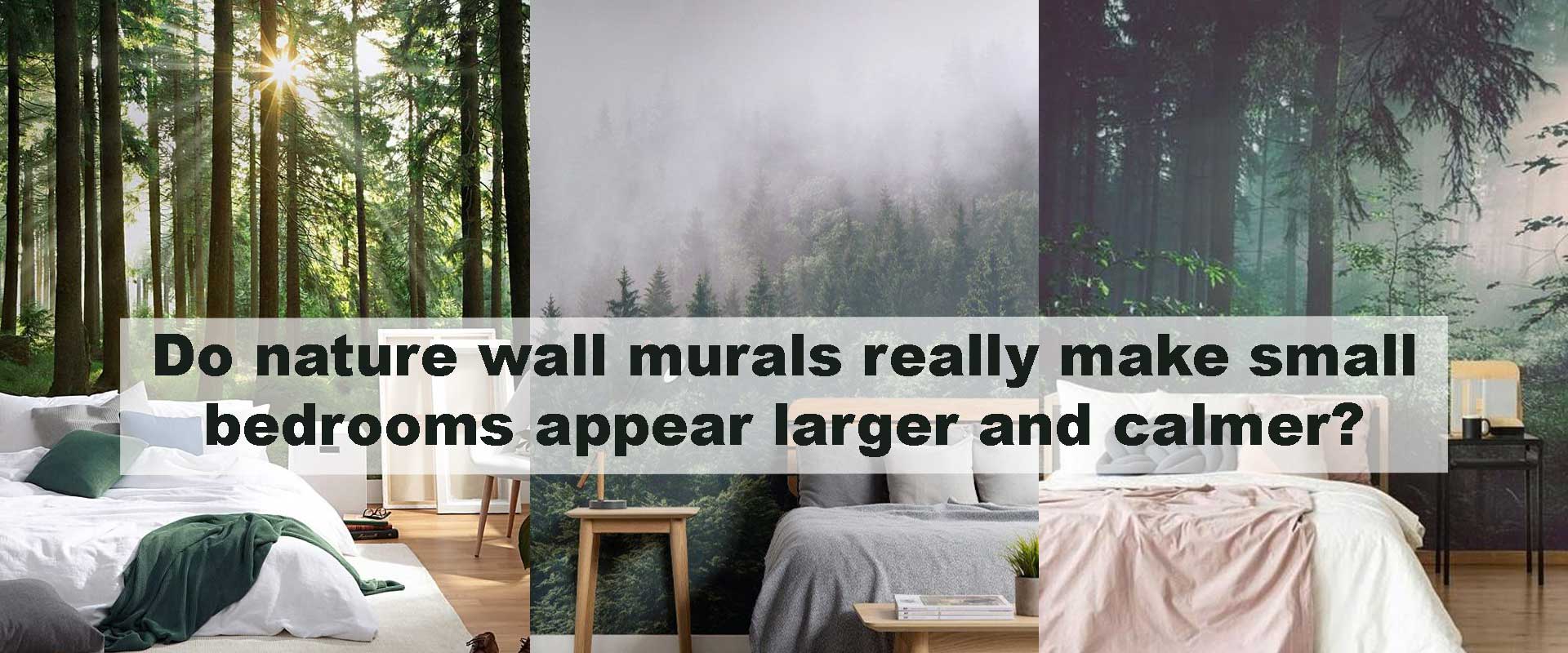
Do nature wall murals really make small bedrooms appear larger and calmer?
Small bedrooms often feel boxed in, especially when wall colors are heavy or furnishings compete for attention. Many homeowners wonder whether nature wall murals can meaningfully change that perception. The truth is that the right mural—especially one based on organic depth, soft gradients, or horizon-led compositions—can make a compact room feel noticeably more open while also creating a calmer emotional atmosphere. Designers have increasingly leaned on visual expansion techniques such as Nature wallpaper because natural imagery adds space, softness, and balance without demanding more physical square footage.
By choosing murals that echo outdoor views, bedrooms gain an almost architectural illusion of extending beyond their actual dimensions. These illusions are not accidental. They are created by layered scenery, controlled tonal transitions, and directional lines that guide sightlines outward. When combined with minimal décor and intentionally soft lighting, the mural becomes the primary feature that resets the scale and feel of the room. This is why smaller spaces, in particular, benefit so strongly from nature-themed signature walls—they deliver atmosphere, openness, and sensory calm in a single element.
How Nature Murals Expand the Perception of Space
Visual Depth Through Layered Scenery
Nature murals often incorporate depth-building elements such as distant mountains, woodland paths, reflective water, or layered canopies. These naturally include what designers call “progressive scale”—foreground detail leading gradually into soft backgrounds. Bedrooms that feature Landscape nature wallpaper often appear longer and more open because the eye travels through the image before returning to the confines of the room.
This layered depth mirrors the principles used in panoramic scenes often referenced in Interior designers are leaning toward panoramic nature murals to build visual depth this year, and these strategies work particularly well in small bedrooms where the goal is to avoid flat, boxed-in surfaces. By adding progression and atmospheric perspective, the mural creates the illusion of additional square footage, even when the room dimensions remain unchanged.
Natural Horizons That Stretch the Room
Horizon-based designs, such as lakesides, deserts, or open fields, introduce natural horizontal movement. When placed behind a bed, these horizons make the wall appear to continue outward, reducing visual confinement. This is why compact bedrooms respond so well to Mountain nature wallpaper, which offers distance and direction without relying on bold contrast.
Rooms with low ceilings also benefit because horizon-led murals visually “lift” vertical boundaries. The technique is the same one used in scenic architecture: draw the eye upward or outward, and the structure immediately feels bigger. When the horizon features soft tones or misty gradients, the calming effect grows exponentially.
Why Nature Murals Calm the Mind in Small Spaces
Soft Tones Reduce Sensory Clutter
Bedrooms are deeply emotional spaces, and overstimulation often prevents relaxation. Nature murals introduce gentle palettes—dusty greens, muted blues, warm neutrals—that regulate visual activity. This is similar to how Sunset-washed nature walls bring unexpected warmth into minimalist dining areas demonstrates the effect of warm gradients on ambience. Inside a small bedroom, these tones reduce the sense of confinement and create an enveloping calm.
Organic Forms Encourage Restfulness
Branch lines, flowing water, drifting clouds, and soft foliage create rhythmic, predictable patterns. These slow the eye and lower cognitive load. The result is similar to what homeowners experience when using Forest nature wallpaper, which adds serenity without stillness, creating gentle movement that supports restful routines.
Nature Imagery Supports Emotional Stability
Scientific research on biophilic design consistently shows improved mood and reduced stress in environments containing natural forms. A mural works similarly to a large window overlooking greenery. It reduces the emotional weight of closed walls and replaces them with visual cues associated with calm, open-air environments.
Best Types of Nature Murals for Expanding Small Bedrooms
1. Misty Forest Murals
Misty forest murals create one of the most powerful depth illusions because layered trees naturally recede into soft haze. Pale greens, greys, and muted shadows guide the eye further into the scene, making the room feel elongated and lightly cocooned rather than enclosed. Narrow bedrooms especially benefit from the vertical rhythm of tree trunks—these subtle lines visually lift the room and counteract low ceilings. When blended with gentle, diffused lighting, the mural produces the same meditative stillness often highlighted in How does lighting temperature influence the mood of forest-themed nature wallpaper?, allowing the entire space to settle into quiet calm.
2. Mountain Horizon Murals
Mountain horizon murals rely on distant ridgelines and atmospheric perspective to stretch the room outward. The gradual fade from rocky summits into pale sky tones makes small rooms feel expansive, as though the wall has dissolved into a sweeping view. Alpine gradients also pair beautifully with minimalist or transitional interiors because their cool tones complement clean bedding and soft textiles without overwhelming them. This style is particularly effective as a feature wall behind the bed, where the horizon creates a sense of grounded serenity.
3. Lake-Reflection Murals
Lake-reflection murals double the sense of depth by mirroring sky, shoreline, and distant hills across still water. The symmetry tricks the eye into perceiving a much larger field, making small bedrooms feel immediately more open. These murals echo principles explored in Lake-reflection nature wall mural tones create a soft evening ambience in master spaces, where reflective calm slows visual movement and creates soothing balance. Because the mirrored layers are naturally soft, they blend effortlessly with muted linens, airy curtains, and warm wood accents.
4. Sunset-Toned Murals
Sunset murals use soft gradients—peach, rose, lavender, muted amber—to expand a wall while gently warming the room’s emotional tone. Their horizontal transitions help push boundaries outward, ideal for primary bedrooms that feel cramped or visually heavy. As the mural glows subtly across the room, the ambience becomes more restful and enveloping. These murals work particularly well with simple, uncluttered décor because their softness does the spatial and emotional lifting on its own.
5. Minimal Line-Art Landscapes
For modern or minimalist spaces, line-art nature wallpaper introduces expansion through suggestion rather than detail. Clean strokes outline distant hills, waves, or trees, allowing the eye to travel freely across the design without encountering visual bulk. This approach is ideal for very small bedrooms where maintaining openness is essential. The understated lines add depth without introducing density, creating a refined, airy extension of the wall.
How to Position a Nature Mural for Maximum Space Illusion
Place It Behind the Bed
Positioning the mural behind the bed transforms that wall into a visual anchor that opens rather than closes the space. The headboard becomes part of the scenery, making the entire wall recede naturally. Small rooms benefit most because this placement instantly removes the boxed-in feel that solid walls often create.
Choose the Longest Wall
Installing the mural along the longest wall exaggerates the length of the room, stretching it visually from end to end. This technique is especially effective with horizon-led designs like Sunset nature wallpaper, where horizontal gradients flow uninterrupted, amplifying the perception of spaciousness.
Avoid Dark Foregrounds
Murals with heavy foreground silhouettes, dense shadows, or saturated colors can unintentionally compress the wall. Light, airy scenes—with open skies, misty trees, or soft reflections—maintain clarity and keep the room feeling expanded. Choosing subtle tones ensures the mural supports rather than competes with the room’s natural light.
Balance With Minimal Décor
Small bedrooms have limited visual capacity, so allow the mural to take the lead. Keep surrounding décor simple—clean fabrics, light woods, and uncluttered surfaces help the scenic depth remain uninterrupted. When the mural carries the room’s atmosphere, the space feels much larger and calmer.
Lighting Strategies That Enhance the Effect
Lighting is one of the most influential elements in how a mural affects room size. Warm, diffused lighting enhances sunset tones and earthy horizons, allowing their gradients to glow naturally. Cool-to-neutral lighting brings out the crispness in greens and blues found in alpine or forest murals, sharpening depth without adding harshness. The key is avoiding strong shadows or single-point glare, which flatten the scenic layers and reduce the illusion of distance.
This approach aligns with ideas explored in What color palette pairs best with watercolor nature prints in Japandi interiors?, where balanced tonality supports spatial clarity and emotional softness. When light interacts gently with the mural, the room feels wider, calmer, and more architecturally open.
For the best results:
- Use concealed LED strips behind headboards to wash soft light upward
- Choose wall sconces with an upward or diffused glow to avoid harsh angles
- Keep surfaces near the mural uncluttered so light spreads evenly across the scene
Best Nature Mural Styles for Small Bedrooms
| Mural Style | How It Expands Space | Calming Effect | Best Room Type |
|---|---|---|---|
| Misty Forest | Atmospheric depth; layered scenery | Softens mood; encourages rest | Narrow bedrooms |
| Mountain Horizon | Extends horizontal field | Stable, grounded calm | Small primary bedrooms |
| Lake Reflection | Doubles perceived space | Smooth, tranquil ambience | Rooms with low ceilings |
| Sunset Gradient | Warms and lifts the room | Emotional softness | Compact modern rooms |
| Minimal Line-Art | Clean outlines widen walls | Light visual rhythm | Minimalist bedrooms |
Should You Choose Realistic or Abstract Nature Murals?
Realistic Murals
Realistic nature murals work almost like substituting a solid wall with a serene outdoor view. Their photographic clarity, crisp detailing, and natural depth allow the eye to travel far beyond the physical boundaries of the room. This is why ultra-small bedrooms respond so powerfully to designs like 3D realistic nature wallpaper, where the projection of distant valleys, forests, or open skies produces the illusion of additional square footage. These murals immerse the viewer, creating a scenic escape that feels panoramic rather than confined. For sleepers who prefer a grounded environment—something that feels connected to real landscapes—realistic murals provide both authenticity and instant emotional ease.
Abstract Nature Murals
Abstract nature murals focus on capturing the atmosphere of a landscape rather than depicting it literally. Soft watercolor gradients, blurred contours, and gentle tonal transitions dissolve into the room seamlessly, creating calm without dominating the visual field. For homeowners who prefer minimalist or Zen-inspired interiors, these murals are ideal because they remove visual noise while still offering subtle movement and depth. Their fluid forms help small bedrooms feel more spacious by avoiding hard edges or heavy contrast, allowing the eye to rest and drift naturally. Abstract murals are especially well-suited for bedrooms where emotional softness, smooth transitions, and harmony with lighting and textiles are more important than detailed scenic imagery.
Common Design Mistakes to Avoid
Even the strongest mural can lose its impact if the surrounding design choices contradict its intent.
Here are the errors that most often shrink a room—visually or emotionally—despite using a mural:
- Selecting murals with dark or heavy foregrounds that compress the wall instead of extending it
- Placing tall furniture in front of key scenic focal points, which breaks the depth illusion
- Mixing too many bright accent colors that overwhelm the mural’s palette
- Adding decorative clutter that competes with large-scale scenery
- Using poor lighting angles that create harsh shadows and flatten scenic layers
When these issues are avoided, even the smallest bedroom gains spatial clarity and a calmer visual rhythm.
How Homeowners Can Personalize Small Bedrooms With Nature Murals
Personalization ensures the mural doesn’t just fit the room—it fits the lifestyle and emotional needs of the person who sleeps there. Some homeowners gravitate toward alpine views for the crisp tranquility they bring; these scenes add cool clarity and a sense of fresh air. Others find comfort in warm, atmospheric environments like lakeside dawns or dusky horizons, which introduce softness and romance without overpowering the bedroom.
For those who prefer a more artistic touch, watercolor compositions offer a gentle, dreamy character that blends effortlessly with soft bedding, brushed fabrics, and low-contrast interiors. Choosing a theme like Watercolor nature wallpaper allows the room to feel light, fluid, and ideal for unwinding at the end of the day.
Meanwhile, nature lovers who crave grounded calm often lean toward earthy woodland palettes. These tones echo the steady, restorative qualities highlighted in Botanical-green nature wallpaper in entry corridors sets a calming welcome immediately, reminding homeowners that leafy, organic hues consistently support emotional ease. By selecting scenery that resonates personally—whether airy, soothing, or warmly grounding—the mural becomes not just décor but a visual sanctuary tailored to the room’s atmosphere.
FAQ
Do nature murals actually make a room look bigger?
Yes. Murals with layered depth, soft gradients, or distant horizons create spatial illusions that visually extend the room.
Which mural style is best for very small bedrooms?
Misty forests, lake reflections, and open mountain horizons offer the strongest expansion effects without overpowering the space.
Do bold colors reduce calmness in small rooms?
Strong contrasts and saturated tones can feel stimulating. Soft palettes create a more restful environment.
How important is lighting for enhancing the mural’s effect?
Lighting is crucial. Warm or neutral lighting enhances depth, while harsh angles can flatten scenic detail.
Where should the mural be installed for the best result?
Place it behind the bed or along the longest wall to maximize perceived depth and give the room an extended feel.
Conclusion
Nature wall murals genuinely help small bedrooms appear larger and calmer by using visual depth, soft color transitions, and organic patterns that release spatial tension. When carefully chosen, they become a full sensory anchor that expands the room visually and soothes the atmosphere. Whether through forest canopies, alpine horizons, reflective lakes, or minimal line-art compositions, these murals offer both design functionality and emotional comfort. A thoughtfully selected nature mural can completely change the scale and mood of a room, turning small spaces into restorative environments that feel well beyond their physical boundaries.