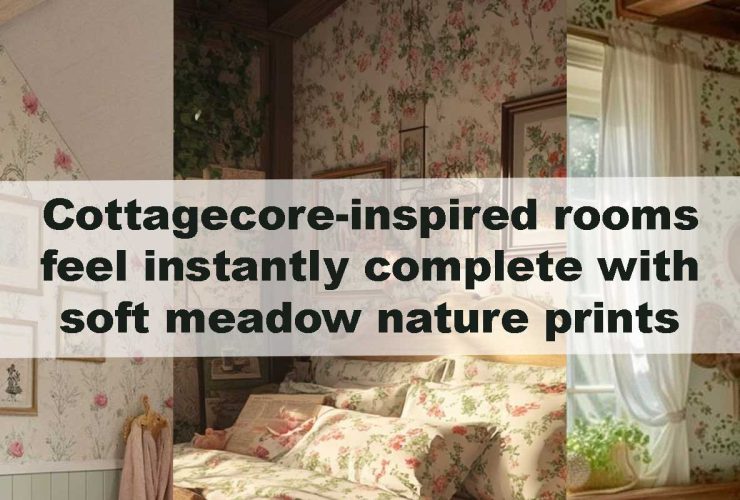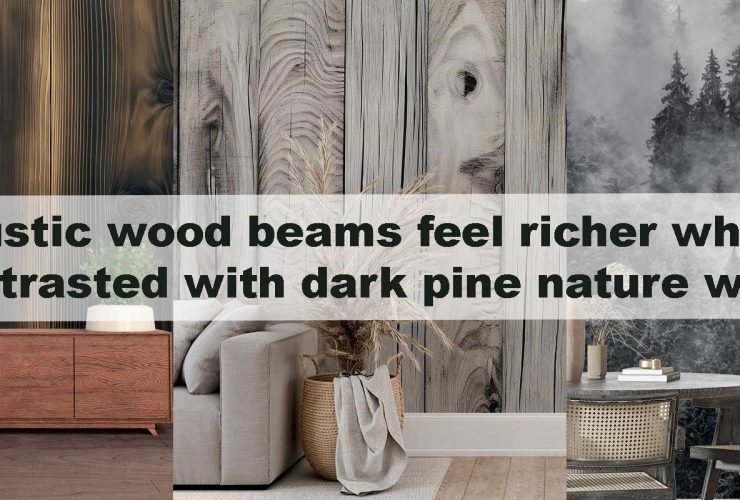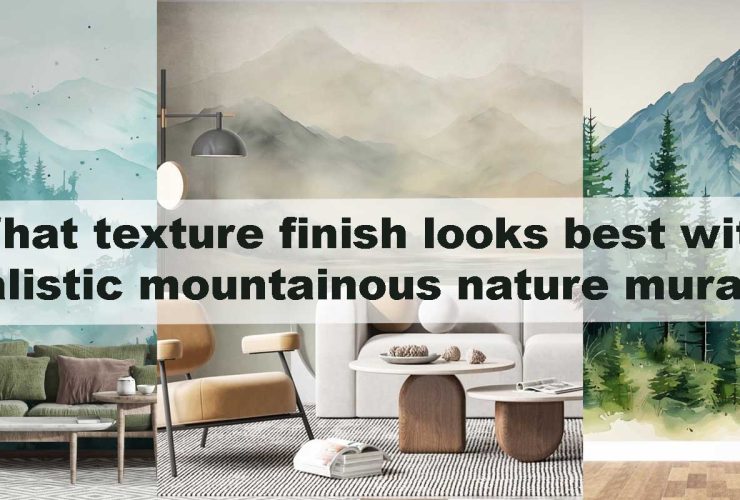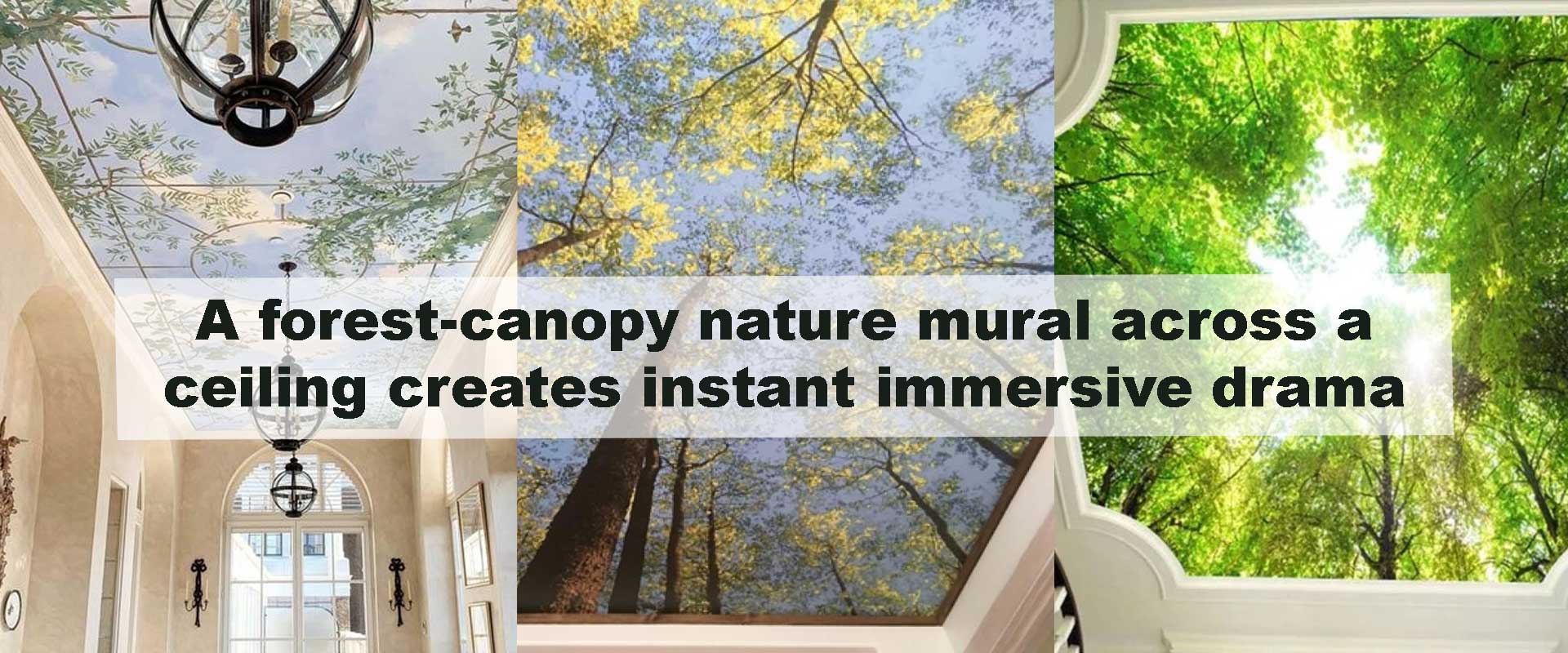
A forest-canopy nature mural across a ceiling creates instant immersive drama
Stepping into a room where the ceiling opens into a forest canopy instantly reshapes how the space feels. Instead of a flat surface overhead, layers of leaves, branches, and filtered light create the sensation of standing beneath tall trees. A forest canopy nature mural across a ceiling creates instant immersive drama by turning the room into an experience rather than a backdrop, offering calm, depth, and visual escape in one gesture.
Designers increasingly treat ceilings as the fifth wall, especially in interiors that prioritize mood over ornament. When that surface carries a canopy scene, the room gains atmosphere without adding clutter. This approach aligns naturally with the growing preference for immersive Nature wallpaper that feels architectural rather than decorative.
Why Ceiling Murals Feel More Immersive Than Wall Murals
Ceiling imagery engages the body and senses in a more instinctive way than vertical surfaces. While walls establish boundaries and orientation, ceilings shape how safe, open, or enclosed a room feels. A forest canopy overhead mirrors the real-world experience of standing beneath trees, where the eyes naturally lift and the body settles into a state of ease. This upward focus subtly shifts attention away from edges and corners, creating a sense of expansion rather than containment.
Unlike feature walls that assert themselves from a single viewpoint, ceiling murals work omnidirectionally. The canopy doesn’t demand attention; it gently surrounds the room, allowing the atmosphere to unfold evenly. This creates drama that feels immersive rather than dominant, making ceiling applications especially suited to interiors that value calm depth and quiet sophistication over overt visual statements.
The Psychological Effect of Forest Canopy Imagery
Nature-inspired imagery is widely associated with reduced stress and improved emotional balance, and canopy scenes intensify these effects when placed overhead. Layered leaves and branching forms introduce a slow, organic rhythm that replaces empty ceiling space with visual continuity. The eye moves gently rather than abruptly, which helps ease mental tension and visual fatigue.
Instead of stimulating the senses, a canopy ceiling creates a feeling of shelter. This overhead enclosure feels protective rather than heavy, which is why forest ceilings are particularly effective in bedrooms and restorative environments. Echoing the calming principles discussed in Nature wall murals really make small bedrooms appear larger and calmer?, the ceiling becomes an active contributor to emotional comfort, helping the entire room feel more grounded and harmonious.
How a Canopy Ceiling Changes Spatial Perception
A forest canopy ceiling has a unique ability to reshape how a room’s proportions are perceived. In spaces with higher ceilings, branching imagery emphasizes vertical movement, drawing the eye upward and amplifying the sense of openness. The ceiling feels taller and more expansive, as though it extends beyond the physical limits of the room.
In rooms with lower ceilings, organic canopy patterns soften the plane overhead, reducing the rigid, boxed-in feeling that flat surfaces can create. Designs that include glimpses of sky introduce lightness and visual lift, while denser foliage builds intimacy and warmth. Both approaches add drama, but the emotional experience shifts based on how much openness the canopy allows—either airy and expansive or cocooning and retreat-like.
Rooms That Benefit Most From Forest Canopy Ceilings
Bedrooms are especially well suited to forest canopy ceilings because they thrive on emotional softness and visual retreat. When foliage stretches overhead, the ceiling takes on a protective, cocoon-like quality that encourages rest rather than stimulation. This upward layer reduces visual noise, allowing the mind to unwind naturally, particularly when walls remain neutral and fabrics introduce warmth through texture. Designers often reinforce this calm by extending the palette with soft-toned Forest nature wallpaper accents elsewhere in the space, creating a seamless relationship between ceiling and surroundings.
Living rooms gain a different kind of value from canopy ceilings—one rooted in architectural depth rather than intimacy. In open-plan layouts where walls stay intentionally restrained, a forest ceiling adds character without interrupting flow. Transitional zones such as hallways, staircases, and upper landings benefit even more dramatically. Movement beneath a canopy transforms these overlooked passages into experiential moments, where the act of walking feels slower, quieter, and more intentional.
Choosing the Right Forest Canopy Style
The realism of a forest canopy mural directly shapes how immersive the space feels. Highly detailed or photographic canopies create the strongest sense of presence, making the ceiling feel less like a surface and more like an opening into another environment. These styles work particularly well in rooms designed for escape, where emotional immersion is the goal rather than visual subtlety.
Softer interpretations—such as painterly or watercolor-inspired canopies—offer a gentler alternative. Their blurred edges and layered washes blend easily into relaxed interiors, allowing the ceiling to feel atmospheric rather than dominant. Minimal or abstract canopy patterns focus on rhythm and repetition instead of scenery, making them ideal for contemporary homes. Looking toward designs that mirror the openness of Landscape nature wallpaper can help determine whether the ceiling should feel expansive, airy, or quietly enveloping.
Color Palette Considerations for Ceilings
Color choice becomes especially nuanced when applied overhead, as ceilings reflect and diffuse light differently than walls. Green-forward canopies tend to feel grounding and restorative, echoing the natural balance found outdoors. Muted olive, sage, or moss tones introduce sophistication and longevity, avoiding the brightness that can feel overstimulating over time.
Warmer green undertones pair naturally with wood finishes, woven textiles, and beige interiors, creating a cohesive, earthy atmosphere. Cooler greens work well alongside stone, concrete, and grey palettes, reinforcing a more modern calm. Introducing soft sky tones within the canopy helps prevent visual heaviness, particularly in smaller rooms. Gentle gradients and layered transitions consiste
Lighting That Enhances Canopy Drama
Lighting plays a crucial role in making a forest canopy ceiling feel natural rather than theatrical. The goal is to recreate the sensation of light filtering gently through leaves, not to spotlight the mural as a feature. Indirect lighting methods—such as concealed coves, perimeter washes, or softly diffused fixtures—allow the artwork to glow evenly, revealing depth, shadow, and layered detail without flattening the scene.
Direct spotlights aimed at the ceiling tend to break the illusion by creating harsh focal points and visual interruptions. When lighting is soft and directional, it mimics the irregular rhythm of sunlight moving through branches, helping the mural feel immersive and emotionally believable. The ceiling becomes part of the room’s atmosphere rather than a surface being lit.
Furniture and Material Pairings
Forest canopy ceilings feel most cohesive when the materials below echo the calm of the imagery above. Natural textures like wood, linen, wool, and stone ground the space, reinforcing the organic narrative without competing for attention. These materials create a visual dialogue with the ceiling, allowing the room to feel layered and intentional rather than themed.
Furniture with clean silhouettes is especially effective, as it balances the richness of the overhead imagery. Simple forms prevent visual overload and give the canopy space to breathe. Keeping wall treatments restrained further supports this balance, ensuring the ceiling remains the emotional focal point while the rest of the room provides quiet support.
Modern and Traditional Interpretations
In modern interiors, a forest canopy ceiling introduces warmth and depth without disrupting minimal structure. The contrast between crisp architectural lines and organic overhead imagery feels deliberate, adding softness while preserving clarity. The ceiling becomes a subtle counterpoint to minimalism rather than a departure from it.
Within traditional spaces, canopy ceilings feel equally at home. They complement textured finishes, layered detailing, and classic proportions, enhancing character rather than overshadowing it. In both design languages, the ceiling mural succeeds because it operates as atmosphere—not ornament—adapting seamlessly to different aesthetics while maintaining its immersive presence.
Ceiling Canopy vs Wall Feature
| Design Approach | Emotional Effect | Visual Impact | Best Fit |
|---|---|---|---|
| Forest canopy ceiling mural | Enveloping and calming | Evenly immersive | Bedrooms, lounges |
| Forest wall mural | Directional focus | Strong focal point | Feature walls |
| Neutral ceiling, forest walls | Balanced | Moderate | Layered interiors |
| Abstract canopy ceiling | Artistic restraint | Soft drama | Modern homes |
This comparison highlights why ceilings deliver a deeper sense of immersion when the goal is atmosphere rather than decoration.
Longevity and Design Value
Forest canopy ceilings age with remarkable elegance because nature imagery resists trend cycles. Unlike graphic patterns or bold color statements that quickly date a space, a canopy scene feels timeless, rooted in experiences that remain emotionally relevant year after year. As furniture styles, finishes, or décor preferences change, the ceiling continues to act as a quiet emotional constant—supporting the atmosphere rather than anchoring the room to a specific design moment.
This longevity is strengthened through thoughtful palette choices and visual restraint. Soft greens, layered neutrals, and natural light variation allow the mural to evolve alongside the room, never competing with new elements introduced over time. Instead of demanding attention, the ceiling matures into an integral architectural layer, ensuring the design feels intentional, adaptable, and enduring well into the future.
FAQs
Will a forest canopy ceiling make a room feel darker?
Not when designed thoughtfully. Light-filtered canopies and balanced lighting prevent heaviness and maintain brightness.
Is this style suitable for small rooms?
Yes. Canopy designs with visible sky or lighter tones often make compact rooms feel taller and more open.
Does a ceiling mural overwhelm minimalist spaces?
When walls and furnishings remain simple, the ceiling adds controlled drama without visual clutter.
Can forest canopy ceilings work beyond bedrooms?
Absolutely. Living rooms, hallways, and reading nooks all benefit from the immersive calm overhead imagery provides.
Conclusion
A forest canopy nature mural across a ceiling creates instant immersive drama by transforming an overlooked surface into the emotional anchor of the room. Instead of decoration, it offers experience—depth, calm, and quiet spectacle that unfolds every time you look up. When paired with thoughtful lighting and grounded materials, a canopy ceiling elevates interiors into spaces that feel restorative, intentional, and enduring.