Turning winter interiors warm with deep botanical color palettes
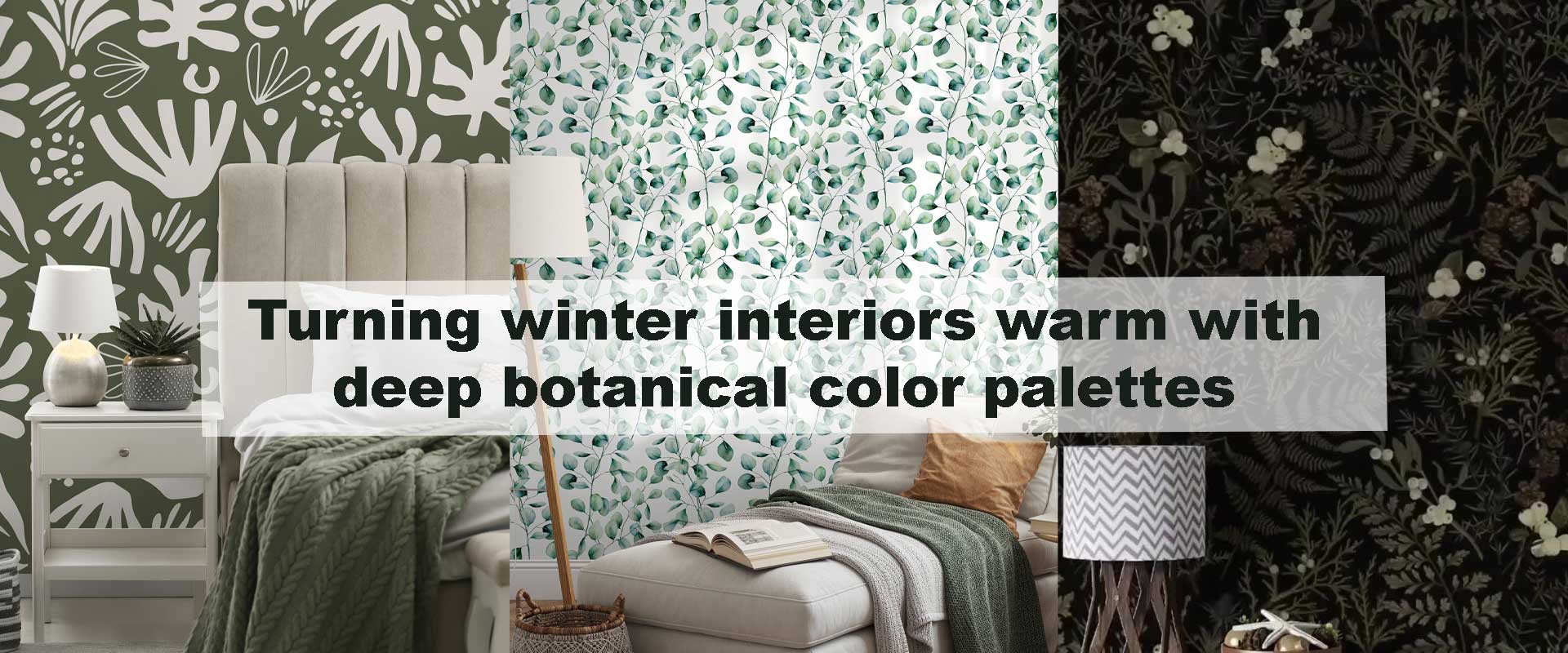
Winter interiors can feel a little sharper than we expect—cool daylight, longer shadows, and rooms that suddenly seem quieter. Deep botanical wallpaper fixes that feeling in a surprisingly natural way, because darker foliage palettes don’t just “add colour,” they add presence. When you layer forest greens, olive shadows, and softened florals, the room starts to feel held, warmer, and more comforting the moment evening light takes over.
Deep botanical colour palettes also help winter spaces look styled without over-accessorising. Instead of relying on extra décor, the wall becomes the atmosphere—rich, grounded, and calm. With the right lighting and textures, botanical wallpaper can make winter rooms feel intimate and gently luxurious, without turning them heavy.
Choosing a Deep Botanical Colour Palette That Feels Warm, Not Heavy
Deep colour doesn’t automatically mean dramatic or overpowering. In winter interiors, warmth comes from undertone harmony and visual balance rather than darkness alone. Botanical palettes work best when their depth feels layered and organic, allowing rooms to feel enveloped without becoming visually dense. The goal is to let colour support comfort, not dominate it.
Forest Green, Olive, and Moss for Grounded Warmth
These tones feel naturally insulating, much like evergreen landscapes that remain comforting even in colder months. Forest green, olive, and moss shades pair seamlessly with timber finishes, warm neutrals, and textured upholstery, creating a grounded atmosphere that feels cozy without tipping into rustic styling. This combination works especially well in living areas where you want steadiness and calm, and the approach aligns beautifully with ideas shared in How green botanical prints create an earth-inspired living room atmosphere, where colour depth and natural materials work together to create emotional warmth.
Deep Florals on Charcoal or Cocoa Bases for Intimacy
Florals take on a completely different character in winter when they sit against darker, muted bases. Charcoal, cocoa, espresso, and shadowed taupe backgrounds ground the pattern, while the floral detailing adds softness and rhythm. This balance prevents the wall from feeling flat or heavy, making the space feel intimate and quietly elegant rather than dark.
Blue-Green Botanicals for Balanced Richness
Teal, eucalyptus, and blue-green botanicals strike a refined middle ground that feels especially sophisticated in winter. These tones absorb cool daylight gently while responding beautifully to warm evening lighting. When paired with brass accents, walnut wood, and soft cream textiles, blue-green palettes create richness without heaviness, ideal for spaces that need calm focus as well as warmth.
Where Deep Botanical Wallpaper Works Best in Winter Homes
Winter naturally shifts how rooms are used. Interiors become slower, more evening-oriented, and more reliant on texture and atmosphere than brightness. Deep botanical wallpaper supports this shift by giving rooms visual weight and emotional grounding.
Living rooms benefit from foliage depth because it anchors seating arrangements and makes the space feel gathered and settled, especially during long evenings. Dining areas feel warmer and more intentional as deep botanicals interact with soft lighting, turning everyday meals into atmospheric moments. Bedrooms respond particularly well, as darker botanical tones support rest and stillness, allowing the wall behind the bed to act as a calm focal point rather than an empty surface.
If you’re working across multiple rooms or want flexibility in tone and pattern, Botanical Wallpaper provides a strong foundation for winter palettes, offering everything from cocooning depth to softly layered botanicals that adapt beautifully as light changes through the season.
Texture Pairings That Make Deep Botanicals Feel Luxurious in Winter
Deep botanical wallpaper truly comes alive when it’s surrounded by texture, especially during winter when interiors rely more on touch and atmosphere than brightness. Fabrics like velvet, boucle, wool, and brushed cotton soften the visual strength of darker foliage tones, giving the room a layered, inviting feel. Rather than matching colours exactly, the most successful spaces echo undertones—olive with warm cream, forest green with muted camel, deep floral bases with gentle taupe—so the wall feels integrated instead of dominant.
Wood remains the most natural companion because it instantly reinforces the organic story of botanical patterns while adding visual warmth. Whether it’s walnut, oak, or lightly aged finishes, wood grounds the space and prevents deep palettes from feeling heavy. Many winter interiors feel especially cohesive when furniture is chosen with this relationship in mind, something beautifully demonstrated in Why wooden furniture feels richer against soft botanical garden print walls, where depth, grain, and pattern work together to create a calm, luxurious balance.
Lighting Tips That Make Deep Botanical Palettes Glow
Lighting is what turns deep botanical wallpaper from dramatic to magnetic. Layered lighting allows foliage patterns to reveal themselves gradually, rather than appearing flat under a single overhead source. Table lamps, floor lamps, and subtle wall lighting create pockets of glow that highlight leaves, stems, and shadows, making the wall feel textured and alive as evening settles in.
Warm-toned bulbs are essential for bringing out olive, moss, and floral undertones, allowing the palette to feel rich rather than muted. Cooler lighting can drain warmth from deep botanicals, especially in winter when natural light fades quickly. When lighting is thoughtfully layered, the wallpaper becomes the room’s evening atmosphere—soft, dimensional, and quietly luxurious—without needing extra decoration.
Quick Comparison: Which Deep Botanical Style Fits Your Winter Mood?
| Deep Botanical Direction | Best Visual Effect in Winter | Mood Created | Works Especially Well In |
|---|---|---|---|
| Forest-green foliage | Soft absorption of cool light | Cozy, grounded | Living rooms, dining spaces |
| Dark floral botanicals | Depth softened by detail | Intimate, romantic | Bedrooms, lounges |
| Blue-green leaves | Balanced richness | Calm, refined | Offices, reading corners |
| Shadowy botanical silhouettes | High contrast and drama | Cocooned, statement | Feature walls, entry moments |
This makes it easier to choose a palette based on how you want winter to feel in the room, not just how you want it to look.
Making Small Winter Rooms Feel Warm Without Closing Them In
In compact spaces, deep botanical wallpaper feels best when it’s used like a design “anchor” rather than a full-room wrap. A single wall behind a sofa, bed, or dining nook adds instant warmth and depth, while the remaining walls stay lighter so the room still breathes. This contrast keeps the space feeling open, but no longer chilly or unfinished—especially in winter light that can make pale rooms feel stark.
Vertical botanical layouts are a smart winter trick for small rooms because they quietly stretch the eye upward. When stems, leaves, or panel-like motifs run vertically, ceilings appear taller and the room feels less boxed-in, even if the palette is deep. Pair that with a light ceiling and a softly reflective floor finish, and the wallpaper reads as elegant depth instead of visual weight.
A reliable shortcut is “lift and glow”: choose furniture with visible legs (so the floor line stays open) and keep finishes warm—oak, walnut, cane, brushed brass, and soft cream textiles. This prevents the darker wall from swallowing light and instead turns it into a cozy backdrop that makes the whole room feel more intimate. If winter daylight is limited, placing a mirror opposite the wallpaper and using two warm lamps at different heights can multiply the gentle glow without making the space feel overly bright.
Deep Botanical Variations That Suit Different Winter Styles
If your winter mood is candlelit and refined, Dark Botanical Wallpaper creates that “evening lounge” richness where the room feels wrapped, not weighed down. The key is letting the pattern do the atmosphere while you keep the rest of the palette simple—warm neutrals, one or two metals, and soft textures that catch light.
For homes that lean classic, layered, and timeless, Vintage Botanical Wallpaper offers warmth through heritage tones and softer detailing. It brings that collected, lived-in comfort that suits winter especially well, because the design feels gentle even when the colours are deep. Pair it with aged wood, linen-look curtains, and ceramic accents for a natural, relaxed finish.
If you want winter warmth that still feels fresh and restorative, Green Botanical Wallpaper keeps the room grounded without pushing it into dramatic territory. Olive, moss, and evergreen undertones read naturally cozy, especially beside warm wood and creamy textiles, making smaller spaces feel balanced rather than dark.
Choosing the variation is less about trends and more about the emotional tone you want the room to hold each evening—cocooned and luxe, softly nostalgic, or calm and nature-grounded.
Frequently Asked Questions
Do deep botanical palettes make rooms feel darker in winter?
They can, but that’s often the cozy advantage. With layered lighting, deep botanicals feel warm and dimensional rather than dim.
Are botanical walls too busy for winter interiors?
Not when the palette is deep and balanced. Layered foliage patterns often replace the need for extra seasonal décor.
Can deep botanicals look modern instead of traditional?
Yes. When furniture lines stay clean and décor remains edited, botanical wallpaper reads like organic texture rather than ornament.
What colours pair best with deep botanicals in winter?
Cream, warm taupe, muted rust, soft camel, and warm wood tones keep the room welcoming while letting the wallpaper stay rich.
Final Thoughts
Turning winter interiors warm with deep botanical color palettes is one of the most natural ways to make a home feel comforting during colder months. Botanical wallpaper adds depth that softens winter light, strengthens atmosphere, and makes everyday rooms feel more settled by evening. With the right undertones, layered textures, and warm lighting, the space feels cozy without being seasonal, and stylish without needing extra décor.