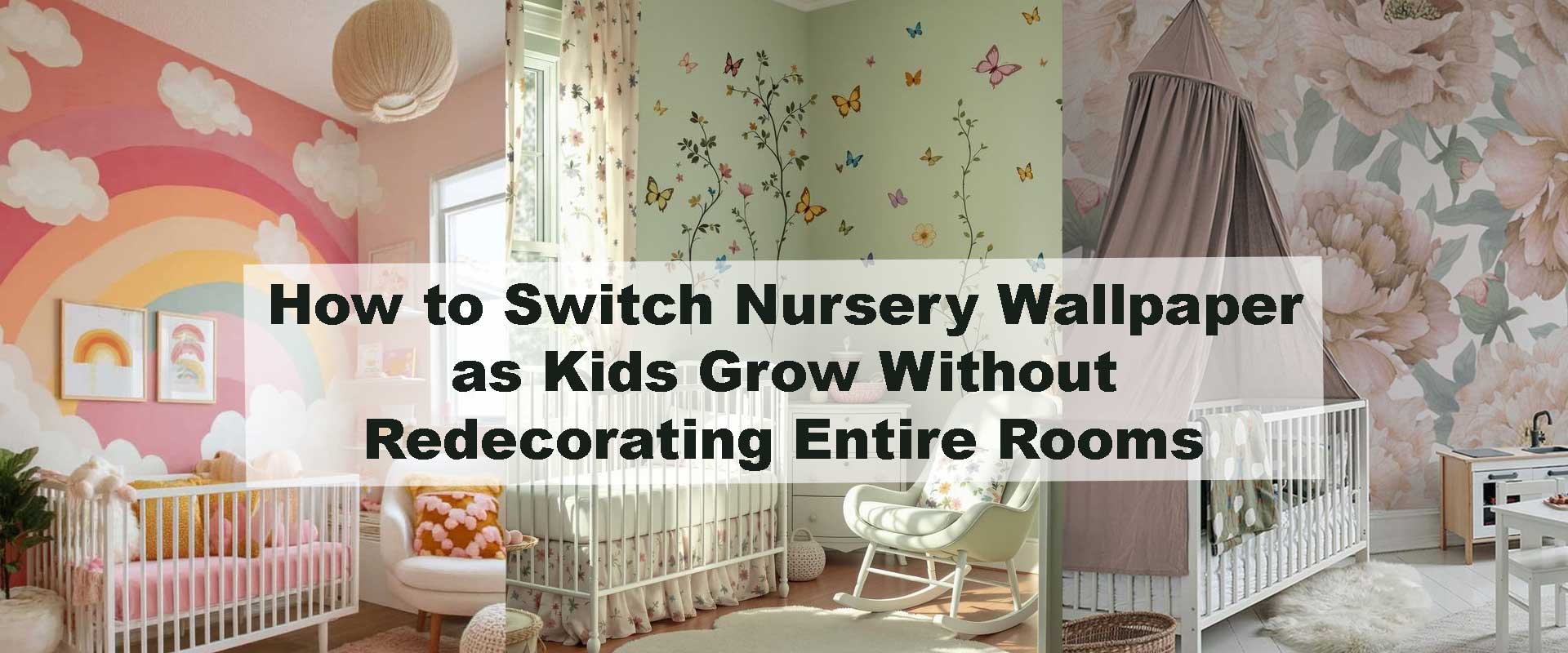
How to Switch Nursery Wallpaper as Kids Grow Without Redecorating Entire Rooms
Designing a nursery is one of the most meaningful parts of preparing a home, yet children grow faster than most interiors are designed to adapt. What feels perfect for a newborn can start to feel limiting once curiosity, movement, and personality begin to shape the space. The challenge many parents face is how to update nursery wallpaper without tearing the room apart every few years. With thoughtful planning and flexible design choices, it’s entirely possible to let the room grow naturally while keeping its foundation intact.
By approaching wallpaper as an evolving backdrop rather than a fixed decision, you can refresh the look, mood, and energy of the space without replacing furniture or starting over. Small, strategic changes make a lasting difference.
Why Nursery Wallpaper Should Be Designed to Evolve
Nursery rooms rarely exist for just one phase of childhood. What begins as a quiet, soothing environment for a newborn naturally shifts into a space for play, learning, and self-expression as the years pass. Because wallpaper visually anchors the entire room, it strongly influences whether this transition feels smooth and intentional or suddenly out of step with daily life.
Highly age-specific designs often feel delightful in the early months but can quickly start to feel limiting as a child’s interests expand. Planning with growth in mind means choosing wallpaper that can be interpreted differently over time. A pattern that reads as calming and protective during infancy may later feel imaginative, expressive, or grounding rather than overtly childlike. This flexibility allows the room to mature without constant visual resets.
Designing with evolution in mind also reduces long-term costs and prevents repeated disruptions during important developmental stages. Instead of redesigning every few years, the room gently adapts—supporting emotional continuity as much as visual harmony.
Choose Timeless Motifs Over Literal Themes
One of the most effective ways to future-proof nursery walls is to step away from highly literal baby imagery. While cartoon characters, novelty icons, and overtly themed prints can feel joyful early on, they often lose relevance quickly as children grow and their interests become more layered.
Motifs drawn from nature, gentle animal forms, abstract shapes, or soft celestial elements tend to age far more gracefully. These designs invite imagination rather than dictating a single story, allowing the meaning of the space to shift naturally over time. A woodland pattern may begin as a calming visual and later become a setting for storytelling or quiet reflection, while animal-inspired designs can feel playful without becoming visually restrictive.
This approach works particularly well when supported by adaptable design foundations like Nursery Wallpaper, where colour balance and pattern rhythm are designed for long-term use rather than short-lived trends.
Use Feature Walls to Limit Future Changes
Wallpapering every wall can create strong immersion, but it also increases the effort required when it’s time to refresh the room. Feature walls offer a more flexible solution, delivering visual impact without committing the entire space to a single look.
By focusing wallpaper behind a crib, bed, or reading nook, you establish a clear focal point that can evolve independently. When updates are needed, only one surface changes while furniture placement, lighting, and the overall layout remain untouched. This keeps transitions calm and manageable rather than disruptive.
Feature walls also make it easier to adjust pattern scale or mood as children grow. A softer design can later be replaced with a bolder or more structured variation without overwhelming the room, allowing the space to mature gracefully rather than feeling repeatedly redesigned.
Let Removable Wallpaper Do the Heavy Lifting
Flexibility becomes genuinely effortless when removable wallpaper is part of your nursery plan. Peel-and-stick designs make it easy to adapt the walls as your child’s world expands, without committing to a permanent look. This allows the room to move smoothly from soft, calming patterns suited to infancy toward more expressive or structured designs as curiosity and personality begin to show.
This solution works especially well for families who expect tastes to change quickly or who enjoy refreshing interiors seasonally. The ease and adaptability behind this approach closely reflect the thinking shared in Why Peel-and-Stick Nursery Wallpaper Is a Life Saver for New Parents, where practicality and emotional ease go hand in hand. When the rest of the room remains visually grounded, removable wallpaper becomes a flexible layer that evolves naturally rather than feeling like a repeated redesign.
Keeping furniture, flooring, and lighting consistent ensures the wallpaper carries the transformation without disrupting the room’s sense of stability.
Keep Color Palettes Calm and Adaptable
Color is one of the strongest signals of maturity within a space, yet it doesn’t need to shift dramatically to feel current. Soft neutrals, warm off-whites, muted greens, and gentle blues offer a timeless foundation that works beautifully across different stages of childhood. These tones absorb changing light well and support a wide range of decorative updates without ever feeling dated.
What makes these palettes especially effective is their ability to shift mood through styling alone. With the addition of playful accessories, the room feels lively and imaginative; with more restrained accents, it becomes calm and composed. Design ranges such as Neutral Nursery Wallpaper excel at this balance, offering longevity without sacrificing warmth or personality.
By choosing adaptable colours early on, you allow the room to grow without visual friction.
Allow Accessories to Reflect Age and Personality
Wallpaper doesn’t need to communicate every stage of your child’s growth on its own. Accessories provide a far more fluid way to express personality and development while keeping the walls consistent. Elements like wall art, shelving, cushions, rugs, and bedding can evolve easily as interests change, making updates feel natural rather than forced.
Early on, gentle illustrations and soft textures may dominate. Over time, these can transition into learning-focused prints, favourite themes, or personal artwork without altering the wallpaper beneath. This layered approach keeps the room feeling personal and relevant while preserving its original design structure.
By letting accessories tell the story of growth, the wallpaper remains a calm, reliable backdrop—supporting each new phase without ever needing to start over.
Evolve the Theme Instead of Replacing It
Instead of treating nursery themes as temporary, think of them as design stories that can mature over time. A nature-inspired space doesn’t need to disappear once babyhood ends—it simply needs refinement. Soft forest animals can gradually give way to simplified foliage, tree silhouettes, or abstract woodland textures that feel calmer and more age-neutral. The theme remains familiar, but its expression grows more sophisticated.
This gradual evolution works beautifully with cohesive design families like Animal Nursery Wallpaper or Woodland Nursery Wallpaper, where patterns share visual DNA across different moods and maturity levels. Because the core idea stays intact, the room feels thoughtfully curated rather than constantly reset. Over time, this continuity creates emotional comfort while still allowing visual growth.
By refining rather than replacing, the space evolves naturally—mirroring how children grow without sudden shifts.
Adjust Pattern Scale for a More Mature Look
Pattern scale is one of the quietest yet most impactful tools for transitioning a nursery as children grow. Fine, delicate repeats tend to feel soothing and protective for newborns, creating a sense of closeness and calm. As children become more independent, larger-scale patterns feel more confident, open, and visually balanced.
Updating wallpaper with the same motif in a bolder or more spacious scale can instantly shift the room’s tone without altering its colour story or theme. The wall feels more grown-up, yet still familiar. This technique is especially effective when paired with existing furniture and accessories, allowing everything else to stay in place.
Many parents find this approach more satisfying than introducing entirely new themes, as it preserves continuity while clearly signalling growth and maturity within the space.
Use Zoning to Control Updates
Wallpaper zoning is one of the most effective ways to future-proof a nursery without locking the entire room into one moment in time. By applying wallpaper above a dado rail, inside softly framed wall panels, or behind a defined zone such as a bed, reading corner, or desk, updates become precise rather than disruptive. You’re changing a visual layer, not the whole environment.
This approach works particularly well in shared rooms or long-term spaces where frequent full-wall updates aren’t realistic. Neutral paint surrounding the wallpaper creates visual breathing room, helping the patterned sections feel intentional and calm rather than busy. Zoning also supports better balance as children grow, ensuring the room stays organised and visually grounded.
Over time, these defined areas make it easier to refresh the space with minimal effort, whether that means swapping a single panel or adjusting one focal section while everything else stays in place.
Introduce Learning Elements Subtly
As children develop, their surroundings naturally begin to influence curiosity, focus, and imagination. Wallpaper that includes gentle learning cues—such as softly integrated letters, numbers, maps, or storytelling illustrations—can support this growth without turning the room into a teaching space. The goal is quiet encouragement, not visual instruction.
Subtle educational designs feel far more timeless than overt learning graphics. When patterns hint at discovery rather than spelling it out, they remain appealing across age stages and blend seamlessly with calming interiors. This balance aligns closely with the principles shared in How to Avoid Overstimulation When Designing a Nursery Feature Wall, where visual clarity supports both rest and engagement.
When learning elements feel woven into the design rather than placed on top of it, the room continues to feel soothing, cohesive, and emotionally supportive—no matter how your child’s needs evolve.
Smart Ways to Update Nursery Wallpaper Over Time
| Approach | Initial Effort | Ease of Updating | Long-Term Flexibility |
|---|---|---|---|
| Feature wall design | Low | High | High |
| Removable wallpaper | Very low | Very high | Very high |
| Neutral timeless patterns | Medium | Medium | High |
| Zoned wallpaper areas | Medium | Medium | Medium–High |
| Full-room themed wallpaper | High | Low | Low |
When It’s Time to Make a Change
Frequently Asked Questions
Can the same nursery wallpaper work from babyhood to early childhood?
Yes. Timeless patterns, calm colour palettes, and adaptable motifs can remain relevant for many years with simple styling updates.
Is removable wallpaper reliable for children’s rooms?
High-quality options are designed to hold up well and make future changes easier without surface damage.
Should wallpaper changes happen before furniture updates?
Wallpaper works best as a backdrop. Keeping furniture neutral allows walls to evolve independently.
Does changing wallpaper affect how big the room feels?
Pattern scale and colour influence perception. Lighter tones and balanced repeats help maintain a sense of openness.
Are feature walls better than full-room wallpaper long term?
For most families, yes. They offer flexibility and reduce the effort needed for future updates.
Final Thoughts
Switching nursery wallpaper as kids grow doesn’t require starting from scratch when the design is approached with flexibility from the beginning, as adaptable patterns, calm colour palettes, and thoughtful placement allow the same room to support multiple stages of childhood without visual disruption. When wallpaper is chosen to evolve rather than define a single age, it becomes a quiet backdrop that grows alongside your child, while shifts in pattern scale, accessories, artwork, and soft furnishings naturally refresh the space over time, keeping it intentional, comforting, and visually balanced without the need to redecorate the entire room.