Which Art Deco Wallpaper Suits Japandi–Glam Interiors?
Japandi–Glam interiors sit at a delicate crossroads where calm minimalism meets quiet luxury. This hybrid style values restraint, warmth, and natural materials, yet it also welcomes refined metallic accents and structured visual rhythm. Choosing the right Art Deco wallpaper becomes less about bold drama and more about balance—how geometry, tone, and finish can elevate a serene space without disrupting its sense of calm.
The beauty of Art Deco lies in its discipline. When softened through Japandi principles, Deco patterns become architectural rather than ornamental, adding intention instead of excess. Understanding which wallpaper styles enhance this harmony is key to creating interiors that feel composed, warm, and unmistakably refined.
Understanding the Japandi–Glam Balance
Japandi design is rooted in simplicity, texture, and natural flow. Soft woods, muted neutrals, and uncluttered layouts create spaces that feel grounded and restorative. Glam elements, when introduced thoughtfully, add polish rather than spectacle. Art Deco fits seamlessly into this conversation because its geometry brings order, while its finishes introduce subtle luxury.
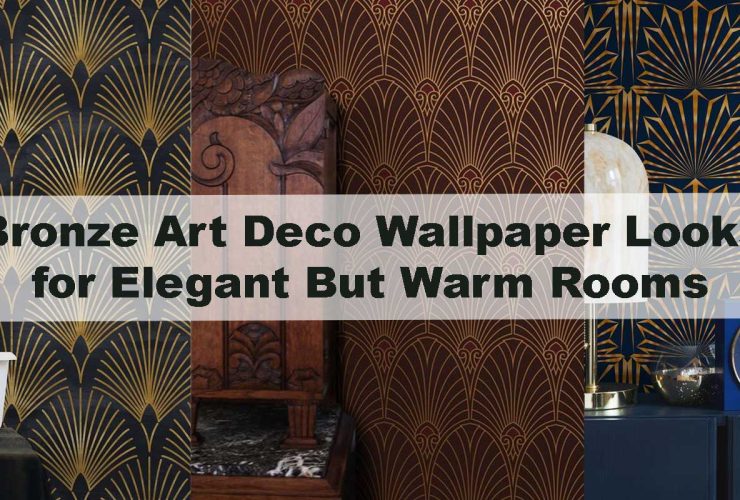
Rather than high-contrast black-and-gold statements, Japandi–Glam interiors respond best to Art Deco wallpapers with softened colour palettes, matte or satin finishes, and patterns that feel architectural instead of decorative. This restrained approach mirrors why many designers highlight Deco’s return as a refined luxury expression, as discussed in Why Art Deco Wallpaper Is Returning as the Biggest Luxury Design Trend, where structure and material quality take precedence over excess.
Art Deco Wallpaper Styles That Complement Japandi–Glam
Soft Geometric Linework
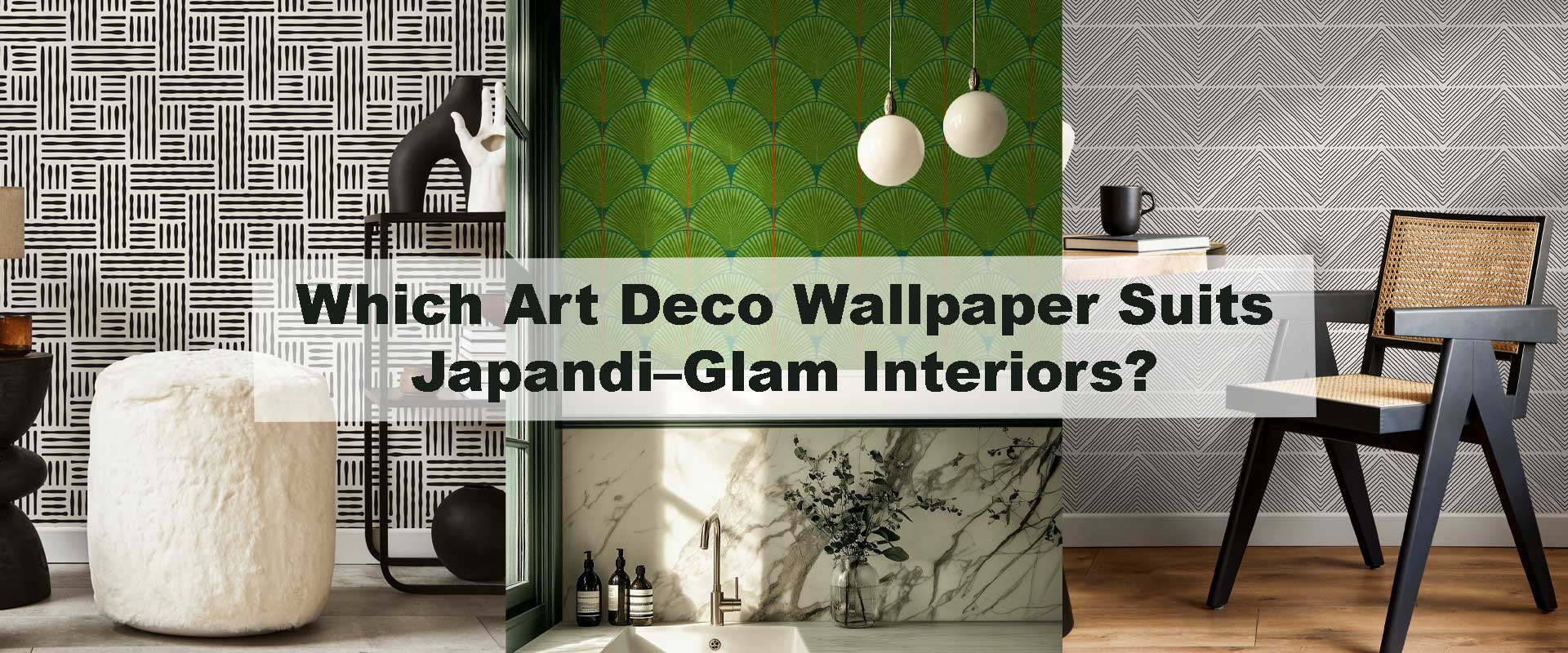
Fine-line Art Deco patterns feel especially at home in Japandi–Glam interiors because they introduce rhythm without visual pressure. Vertical fluting, fan motifs, and stepped arches guide the eye gently across the wall, creating a sense of structure that feels architectural rather than decorative. Rendered in low-contrast palettes, these designs maintain spatial openness while quietly elevating the room. Their precision reflects Japanese architectural clarity, while their softness aligns naturally with Scandinavian restraint.
Muted Metallic Accents
Rather than high-shine finishes, Japandi–Glam spaces respond best to restrained metallic detailing. Brushed gold, champagne, and antique bronze woven delicately into the pattern catch light in a controlled, understated way. These accents warm the space without introducing glare or distraction, allowing glamour to feel integrated rather than imposed. This subtle application reflects why metallic geometry continues to feel refined and grounding, as explored in The Science Behind Why Gold Geometry Walls Feel Luxurious.
Organic Art Deco Motifs
Art Deco isn’t limited to rigid symmetry. Stylised florals, curved shells, and softly arched botanical motifs introduce movement that feels calm and intentional. When expressed in neutral or earth-led tones, these patterns soften Deco’s geometry and connect naturally with Japandi’s nature-driven sensibility. The result is visual flow rather than contrast—where elegance feels organic and the wall becomes part of the room’s rhythm rather than a focal interruption.
Textural Depth Over Bold Contrast
Texture is fundamental to Japandi design, and Art Deco wallpapers that emphasise surface quality over colour contrast deliver the most harmonious results. Linen-like weaves, stone-inspired finishes, and gently embossed geometry add dimension without demanding attention. These tactile surfaces respond beautifully to changing light and pair effortlessly with wood, ceramic, and natural fabrics, reinforcing a sense of warmth, material honesty, and quiet luxury throughout the space.
Colour Palettes That Work Best
Japandi–Glam interiors rely on colour as atmosphere rather than statement. Warm greys, sand, taupe, soft ivory, and muted greens create a visual softness that allows Art Deco geometry to sit comfortably within the space. These tones act as a quiet canvas, letting pattern and structure emerge gradually instead of demanding immediate attention.
Metallic accents should feel woven into the palette rather than layered on top of it. Brushed gold, champagne, and antique bronze work best when they echo surrounding materials such as wood grain, clay finishes, or woven textiles. This restrained approach explains why neutral Deco walls continue to feel enduring, as highlighted in 1920s-Era Art Deco Wallpaper Patterns That Still Work in 2026, where longevity is rooted in balance rather than contrast.
Darker palettes can still succeed when handled with sensitivity. Charcoal softened with bronze detailing or muted navy paired with fine gold linework introduces depth without visual weight. These deeper tones create intimacy and evening warmth, making them ideal for feature walls that add mood while preserving the calm foundation essential to Japandi–Glam interiors.
Where Art Deco Fits Best in Japandi–Glam Spaces
In Japandi–Glam settings, placement is a design decision rather than an afterthought. A single feature wall often provides the most refined outcome, allowing Art Deco wallpaper to anchor the room while surrounding surfaces remain quiet and textural. This approach preserves spatial clarity and prevents pattern from overwhelming the overall composition.
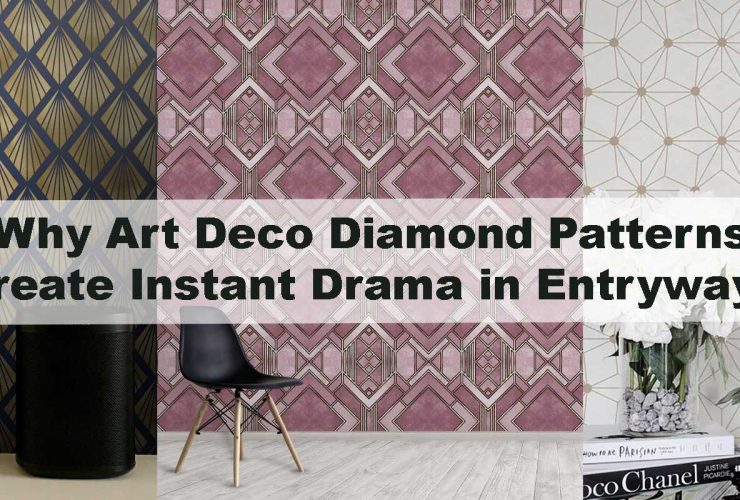
Art Deco geometry works especially well behind low-profile seating, along dining backdrops where visual rhythm enhances shared moments, or framing bedroom headboards to introduce subtle structure. In these positions, pattern feels architectural—almost built into the space—rather than decorative.
This is where carefully considered designs from the broader Art Deco Wallpaper range feel most natural. When proportion, tone, and material harmony lead the design, Art Deco becomes an extension of Japandi calm, adding quiet definition instead of visual dominance.
Art Deco Styles for Japandi–Glam Interiors
| Art Deco Style | Visual Impact | Best Colour Direction | Japandi Compatibility |
|---|---|---|---|
| Fine-line geometry | Subtle, architectural | Warm neutrals, soft grey | Excellent |
| Muted metallic patterns | Soft luxury | Champagne, antique gold | Excellent |
| Bold high-contrast Deco | Dramatic | Black, bright gold | Low |
| Organic Deco motifs | Calm, flowing | Beige, sage, stone | High |
| Heavy glossy finishes | Reflective, strong | Dark jewel tones | Low |
Choosing the Right Finish
Finish plays a subtle yet decisive role in shaping Japandi–Glam interiors. Matte and soft satin wallpapers gently diffuse light, allowing walls to feel calm, grounded, and visually breathable throughout the day. These finishes prevent harsh reflections and support the Japandi preference for surfaces that feel tactile rather than decorative.
High-gloss finishes, while striking, often interrupt this balance. Their reflective nature draws attention to the surface itself, which can feel at odds with Japandi’s quiet material honesty. A restrained sheen works best when it quietly enhances texture—revealing depth in linework, relief, or pattern without competing for focus.
Textured finishes inspired by fabric weaves, limewash, or plaster integrate seamlessly with natural wood furniture and mineral flooring. They introduce visual softness and dimensional warmth, helping the space feel layered rather than styled. Importantly, these finishes age gracefully, developing character over time instead of feeling trend-driven or overstated.
Integrating Art Deco Without Overpowering the Space
Successful Japandi–Glam interiors rely on intentional restraint. Art Deco walls should act as a framework rather than a focal spectacle, providing structure while allowing furniture and materials to breathe. Clean-lined seating, low-profile forms, and uncluttered layouts ensure that geometry feels architectural instead of ornamental.
Keeping contrast low is essential. When wallpaper, furniture, and flooring sit within a closely related tonal range, the space feels cohesive and composed. Natural materials—wood, linen, stone, ceramic—soften Deco symmetry and prevent the room from tipping into visual excess. This balance reflects a broader movement toward calm luxury interiors, where impact comes from proportion and harmony rather than decoration, a principle echoed in Minimal Art Deco Geometry Walls for Calm and Sophisticated Interiors.
Lighting completes the equation. Layered illumination using warm ambient sources allows metallic details and geometric lines to appear softly dimensional rather than sharp or reflective. When light is controlled, Art Deco elements feel intentional and serene, reinforcing Japandi’s philosophy of quiet sophistication rather than overt glamour.
FAQ
Can Art Deco wallpaper feel calm enough for Japandi interiors?
Yes. When patterns are refined, colours are muted, and finishes are soft, Art Deco adds structure without disrupting calm.
Should Japandi–Glam spaces use full-room wallpaper?
Most interiors benefit from a feature wall approach, allowing visual interest without overwhelming minimal layouts.
Are metallic details necessary for the glam element?
They are helpful but not essential. Texture, symmetry, and material quality can also deliver understated luxury.
Do dark Art Deco wallpapers work in Japandi–Glam rooms?
They can, provided the tones are softened and balanced with warm lighting and natural materials.
What patterns should be avoided?
Highly ornate, glossy, or high-contrast designs tend to overpower Japandi interiors and disrupt harmony.
Final Thoughts
The right Art Deco wallpaper enhances Japandi–Glam interiors by adding quiet structure, warmth, and refined elegance. When geometry is softened, colours remain restrained, and finishes feel tactile, Deco becomes a natural extension of Japandi philosophy rather than a competing statement. Thoughtful selections—especially those rooted in balanced symmetry and subtle detailing, such as refined options found within Geometric Art Deco Wallpaper—help walls feel intentional instead of decorative.
This measured approach ensures interiors remain calm, grounded, and timeless, while still carrying a sense of understated luxury that evolves gracefully with the space.