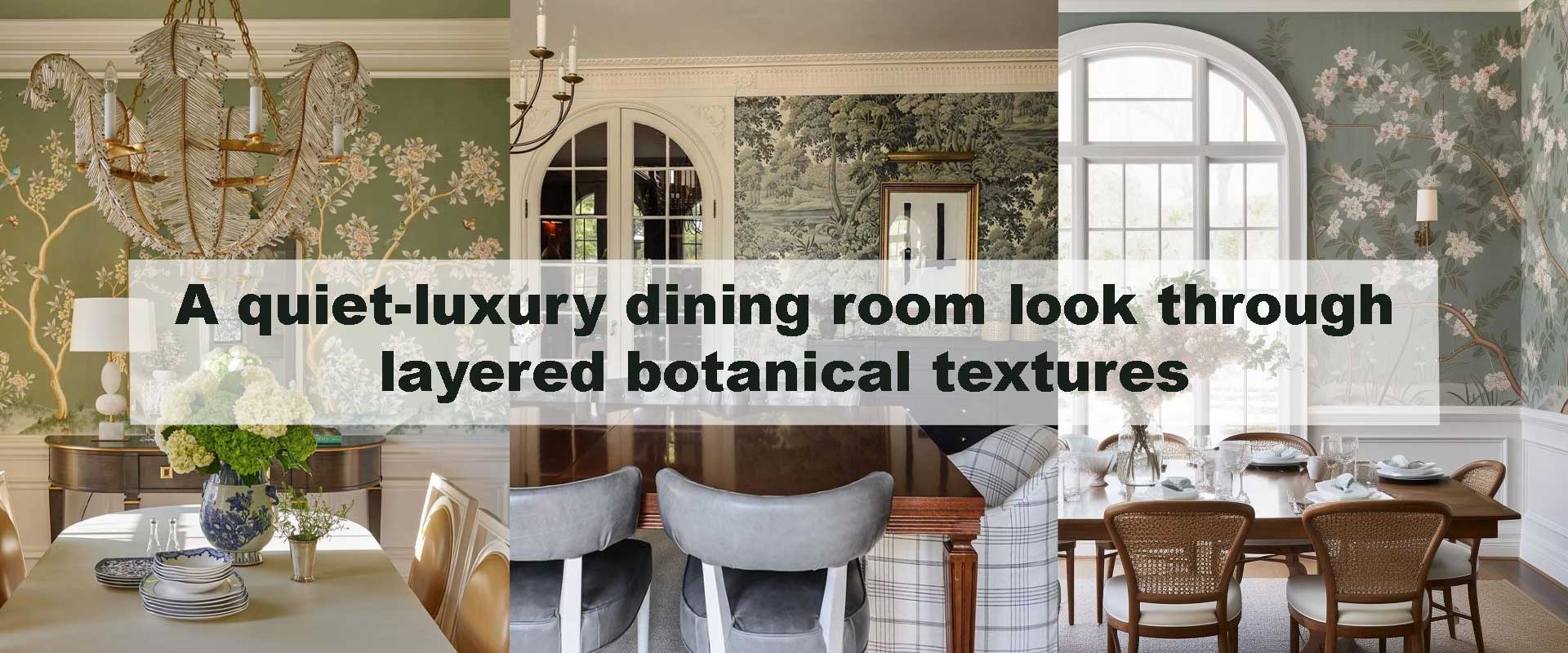
A quiet-luxury dining room look through layered botanical textures
A dining room designed around quiet luxury feels intentional without trying too hard. Instead of bold statements or high-contrast drama, this approach relies on restraint, texture, and visual calm to create spaces that feel elevated yet welcoming. Layered botanical textures play a key role in achieving this balance, bringing softness, natural rhythm, and understated elegance to dining environments meant for lingering conversations and slow meals.
When botanical elements are handled with subtlety—muted palettes, gentle line work, and organic spacing—they align perfectly with the philosophy of quiet luxury. These designs enhance the atmosphere without dominating it, allowing furniture, lighting, and table settings to breathe. The result is a dining room that feels curated, serene, and timeless rather than decorative or trend-driven.
Understanding Quiet Luxury in Dining Spaces
Quiet luxury is defined by intention rather than display. In dining rooms, it reveals itself through surfaces and patterns that feel layered, tactile, and thoughtfully composed while remaining visually calm. Botanical textures align naturally with this philosophy because they reflect nature’s inherent order, offering movement and softness without decorative excess.
Rather than commanding attention, quiet-luxury botanicals rely on negative space, muted contrast, and gentle repetition. Leaves and stems dissolve into the background, becoming part of the room’s atmosphere instead of its focal point. This restraint allows dining spaces to feel cohesive and grounded, even when paired with expressive materials like natural wood grains, linen seating, or handcrafted ceramic tableware.
Light further elevates this relationship. Subtle botanical walls respond gracefully to shifting daylight and warm evening illumination, holding depth without glare or harsh reflection. This adaptability makes botanical textures especially valuable in dining interiors, where the mood must transition effortlessly from daytime openness to intimate evening gatherings.
Why Botanical Textures Work So Well in Dining Rooms
Dining rooms thrive on comfort, rhythm, and connection, and botanical textures support all three. Their organic forms soften architectural edges and introduce a visual cadence that encourages slower meals and longer conversations. Instead of stimulating the space, these textures gently relax it.
Versatility is another key strength. Botanical designs can feel contemporary, classic, or transitional depending on their scale, spacing, and palette. This allows homeowners to refine a dining room gradually, without committing to bold statements that may feel restrictive over time. Many designers use Botanical Wallpaper as a foundational layer, setting a calm visual tone before introducing furniture, lighting, and accessories.
Because dining rooms often balance everyday use with special occasions, botanical textures help bridge that dual role. They bring quiet sophistication to the space while remaining emotionally grounding, ensuring the room feels welcoming rather than formal, and elegant without ever feeling staged.
Layering Botanical Textures Without Overstatement
Quiet luxury is achieved not through accumulation, but through intention. In dining rooms, botanical textures work best when they feel embedded into the space rather than layered on top of it. This begins with designs that emphasize restraint—soft line work, gentle shading, and compositions that allow the wall to breathe rather than compete for attention.
Expanses of softened background color create a visual pause, giving botanical forms room to unfold naturally. This negative space is what transforms pattern into texture, adding depth without visual noise. When paired with materials like warm wood grain, honed stone surfaces, or subtly woven textiles, the room gains a layered richness that feels organic and composed. Harmony, not contrast, is what allows each element to enhance the other quietly.
Light conditions further guide this layering approach. Dining rooms filled with natural daylight benefit from airy botanical palettes with open spacing, ensuring the walls feel calm even at peak brightness. In lower-light settings, slightly deeper botanical tones introduce warmth and intimacy, adding dimension while preserving the understated elegance that defines quiet luxury.
Choosing the Right Botanical Color Palette
Color plays a defining role in how botanical textures support a quiet-luxury dining room. The most refined palettes lean toward neutrality—soft greens, warm beiges, muted olives, and gently softened charcoal outlines. These tones complement natural materials effortlessly, allowing wood finishes, stone tabletops, and subtle metallic accents to appear elevated rather than pronounced.
Soft green botanical designs are especially effective for dining spaces that aim to feel grounded and enduring. Options like Green Botanical Wallpaper introduce freshness with restraint, creating a sense of calm continuity throughout the room. Their balanced hues pair seamlessly with oak, walnut, and mineral surfaces, reinforcing a natural, cohesive atmosphere.
For interiors that favor warmth and subtle character, vintage-inspired botanical palettes offer a richer emotional layer. Muted sepias and time-softened greens bring depth without heaviness, allowing dining rooms to feel inviting yet refined. This makes Vintage Botanical Wallpaper particularly well suited to transitional homes where classic elegance meets contemporary simplicity.
Texture Over Pattern: A Quiet-Luxury Principle
In quiet-luxury dining rooms, texture takes precedence over obvious pattern repetition. Botanical designs that rely on soft shading, watercolor diffusion, or delicate line work create a tactile richness that feels intentional rather than decorative. Instead of announcing themselves, these walls reveal depth gradually—rewarding close attention while remaining visually composed from across the room.
This textural subtlety allows the dining space to feel layered without feeling busy. Botanical forms blur gently into their backgrounds, creating a surface that behaves more like fabric or plaster than traditional wallpaper. The result is a room that feels calm and enveloping, where visual interest is sensed rather than immediately seen.
Another advantage of textural botanicals is their flexibility. As dining décor evolves—through seasonal linens, sculptural centerpieces, or changing lighting—the walls remain a steady, harmonious backdrop. Because the botanical elements are understated, they support both everyday meals and formal gatherings without ever competing for attention, reinforcing the timeless ease that defines quiet luxury.
Subtle botanical textures also protect against visual fatigue. Designs that avoid literal detailing or dense repetition remain engaging over time, allowing the dining room to feel as serene years from now as it does when first styled. This enduring quality is essential to luxury that is meant to be lived with, not merely admired.
Botanical Scale and Its Impact on Dining Atmosphere
Scale plays a quiet but powerful role in how botanical designs shape a dining room’s atmosphere. Oversized botanical elements can overwhelm a space, while overly small repeats often introduce unnecessary visual noise. Quiet luxury finds its balance in thoughtfully moderated scale.
Medium-scale botanical motifs offer just enough presence to ground the room without dominating it. Leaves and stems that move vertically or diagonally guide the eye gently upward and outward, subtly enhancing ceiling height and spatial openness around the dining table. This sense of flow supports conversation and comfort, rather than distraction.
In larger dining rooms, expansive botanical murals with generous spacing can introduce depth and sophistication without heaviness. Their restrained composition creates visual drama through scale alone, allowing the room to feel elevated while remaining calm. In more intimate dining areas, softened repeats and open layouts preserve elegance, ensuring the space feels inviting rather than enclosed.
When botanical scale is chosen with intention, the dining room gains rhythm and proportion. The walls no longer act as decoration, but as an architectural element—quietly shaping how the space feels, moves, and invites people to gather.
Coordinating Botanical Walls With Dining Furniture
Furniture plays a crucial role in allowing botanical walls to feel intentional rather than decorative. The most successful quiet-luxury dining rooms echo the softness of botanical textures through clean silhouettes, gentle curves, and materials that feel honest and tactile. Dining tables with refined profiles, softened edges, and natural finishes reinforce the layered calm established by botanical walls, rather than competing with them.
Wood becomes a grounding element in this relationship. Light to mid-tone woods enhance the organic rhythm of botanical designs, amplifying their warmth and natural flow. Deeper wood tones can also work beautifully when balanced carefully, adding visual contrast without introducing heaviness. Upholstered dining chairs in linen, boucle, or subtly textured fabric further extend this softness, creating a seating experience that feels relaxed yet considered.
Accessories should follow the same restrained logic. When botanical walls are present, fewer objects make a stronger statement. Ceramic vessels, stone serving pieces, and softly brushed metallic accents provide just enough contrast to elevate the space while allowing the walls to remain the quiet foundation. This restraint ensures the dining room feels curated rather than styled, reinforcing a sense of timeless ease.
Creating Depth Through Botanical Layering
True quiet luxury emerges when botanical influence extends beyond the wall surface itself. Rather than introducing overt motifs, the most refined dining rooms repeat botanical cues subtly through form, material, and texture. This might be expressed through the natural grain of a wooden dining table, the gentle curve of a leaf-inspired pendant light, or the tactile weave of placemats and runners.
These layers work together to create cohesion rather than theme. Each element references nature in a restrained way, allowing the room to feel immersive without becoming literal. The dining space gains depth through quiet repetition, where nothing feels accidental yet nothing demands attention.
This approach reflects the same design philosophy found in Bringing calm to modern homes with soft botanical wallpaper themes, where visual harmony is achieved through balance and restraint instead of contrast or excess. When botanical textures are layered thoughtfully across surfaces and furnishings, the dining room transforms into a space that feels emotionally grounded, visually calm, and effortlessly luxurious.
Botanical Walls in Open-Plan Dining Areas
Open-plan homes demand a delicate balance between openness and definition. Dining spaces, in particular, need to feel anchored without interrupting visual continuity, and botanical textures excel at achieving this quiet separation. Rather than relying on architectural dividers, a softly layered botanical wall creates a natural point of focus, gently distinguishing the dining area from adjoining living or kitchen zones.
Neutral botanical designs are especially effective in these layouts. Their organic forms introduce depth without visual weight, ensuring the dining area feels intentional rather than transitional. The wall becomes a subtle backdrop that signals purpose, giving the dining space its own identity while still feeling fully integrated within the larger plan.
Another strength of botanical textures in open layouts is their responsiveness to light. As daylight shifts across the space, these designs adapt gracefully—appearing airy and expansive in the morning, then richer and more enveloping as evening approaches. This fluid interaction helps maintain balance throughout the day, preventing the dining area from feeling either washed out or visually disconnected at different hours.
Balancing Botanicals With Lighting Choices
Lighting is essential in revealing the true depth of botanical textures. When chosen thoughtfully, it enhances their softness rather than overpowering them. Warm ambient lighting brings out subtle tonal variations and layered details, allowing botanical walls to feel tactile and dimensional instead of flat.
Pendant lighting above the dining table should be understated and purposeful. Soft, diffused illumination creates an inviting pool of light that supports conversation while avoiding harsh contrasts or glare. The goal is to complement the botanical surface, not compete with it.
Indirect lighting, such as wall washers or concealed uplighting, further enriches the atmosphere during evening meals. These techniques trace the contours of botanical designs gently, adding quiet drama and intimacy without visual excess. Overly ornate fixtures, by contrast, can disrupt this balance. Simplicity in lighting allows botanical textures to remain the understated focal point—reinforcing the calm, composed elegance that defines a truly quiet-luxury dining room.
When to Choose Tropical or Minimal Botanical Styles
Although quiet luxury is often associated with restraint, it does not exclude expressive botanical styles when they are handled with care. Tropical designs, for instance, can feel surprisingly refined when their palettes are softened and their compositions remain open. Instead of dense foliage or high contrast, these interpretations focus on fluid movement, generous spacing, and muted greens that bring warmth without visual intensity.
Dining rooms that aim for relaxed elegance benefit from this softened tropical approach. The gentle sweep of leaves introduces natural rhythm and depth, creating a sense of ease that complements long meals and informal gatherings. Carefully curated options within Tropical Botanical Wallpaper offer this balance beautifully, allowing organic motion to exist without overwhelming the space or disrupting the calm atmosphere.
Minimal line-art botanicals serve a different but equally refined purpose. Their strength lies in reduction—using form rather than color to create interest. Fine outlines, restrained repetition, and ample negative space suit dining rooms with a contemporary or architectural edge. These designs reinforce calm through clarity, allowing the dining space to feel intentional, modern, and quietly expressive.
Ultimately, moderation is what allows any botanical style to align with quiet luxury. When scale, palette, and spacing are chosen thoughtfully, even expressive motifs become refined. The design never competes with the room; it supports it—creating visual presence without visual noise.
Maintaining Timelessness Through Botanical Design
Quiet-luxury dining rooms are designed with longevity in mind, favoring choices that feel enduring rather than momentary. Botanical textures naturally support this goal because they reference nature instead of trend cycles. Leaves, branches, and organic forms carry an inherent familiarity that never feels outdated when presented with restraint.
Timelessness emerges through balance. Designs that prioritize texture over contrast, openness over density, and subtle variation over repetition remain visually relevant year after year. This measured approach ensures the walls do not dictate the style of the room but instead provide a stable, elegant foundation.
One of the greatest advantages of botanical walls is their adaptability. Furniture, lighting, and accessories can evolve without disrupting the overall harmony of the space. As noted in Why wooden furniture feels richer against soft botanical garden-print walls, botanical surfaces enhance surrounding materials rather than competing with them, allowing dining rooms to age gracefully while maintaining visual richness.
When botanical design is rooted in restraint and material harmony, it transcends decoration. The dining room becomes a space shaped by atmosphere rather than era—quietly elegant, deeply comfortable, and timeless by design.
Botanical Texture Styles for Quiet-Luxury Dining Rooms
| Botanical Texture Style | Visual Impact | Light Interaction | Overall Mood | Best Suited Dining Spaces |
|---|---|---|---|---|
| Soft Line-Art Botanicals | Subtle and refined | Reflects light evenly | Calm and modern | Contemporary dining rooms with clean furniture lines |
| Watercolor Botanical Textures | Gentle and atmospheric | Diffuses light softly | Airy and serene | Sunlit dining spaces seeking relaxed elegance |
| Vintage Botanical Layers | Warm and textural | Softens daylight tones | Nostalgic and cozy | Transitional or classic dining interiors |
| Large-Scale Botanical Motifs | Balanced visual depth | Creates natural shadow play | Sophisticated and grounded | Spacious dining rooms with minimal décor |
| Minimal Botanical Silhouettes | Understated and graphic | Maintains visual clarity | Quiet and intentional | Minimalist or modern-luxury dining settings |
Final Thoughts: Quiet Luxury Rooted in Nature
A quiet-luxury dining room is not about minimalism for its own sake; it is about thoughtful layering that feels natural and enduring. Botanical textures bring this philosophy to life by offering softness, depth, and organic rhythm without visual excess.
When chosen with care, botanical walls elevate dining spaces into environments that feel composed, welcoming, and quietly refined. Through gentle palettes, balanced scale, and harmonious materials, layered botanical textures create dining rooms that invite connection while reflecting understated luxury.
For homeowners seeking elegance that whispers rather than shouts, botanical design remains one of the most powerful tools in shaping dining spaces that feel both beautiful and timeless.
Frequently Asked Questions
Do botanical textures suit formal dining rooms?
Yes. When designed with muted palettes and refined detailing, botanical textures enhance formal dining rooms by adding softness and depth without compromising elegance. They support a composed atmosphere that feels welcoming rather than rigid.
Will layered botanical walls overpower a dining space?
Not when chosen thoughtfully. Designs with open spacing, gentle contrast, and breathable composition integrate seamlessly, allowing the room to feel balanced rather than visually heavy.
Are botanical textures suitable for small dining areas?
Absolutely. Soft botanical textures with light backgrounds help small dining spaces feel more expansive while maintaining intimacy. Scale and spacing are key to preserving visual calm.
How do botanical walls interact with dining room lighting?
Botanical textures respond beautifully to warm ambient lighting. They enhance depth in the evening while remaining light and breathable during the day, supporting a consistent mood throughout meals.
Can botanical dining rooms still feel modern?
Yes. Minimal line-art botanicals and restrained color palettes align perfectly with modern interiors, offering organic softness without traditional ornamentation.
How long do botanical designs remain visually timeless?
Botanical textures rooted in natural forms age exceptionally well. Their organic inspiration ensures longevity, allowing dining rooms to feel relevant even as furniture or décor evolves.