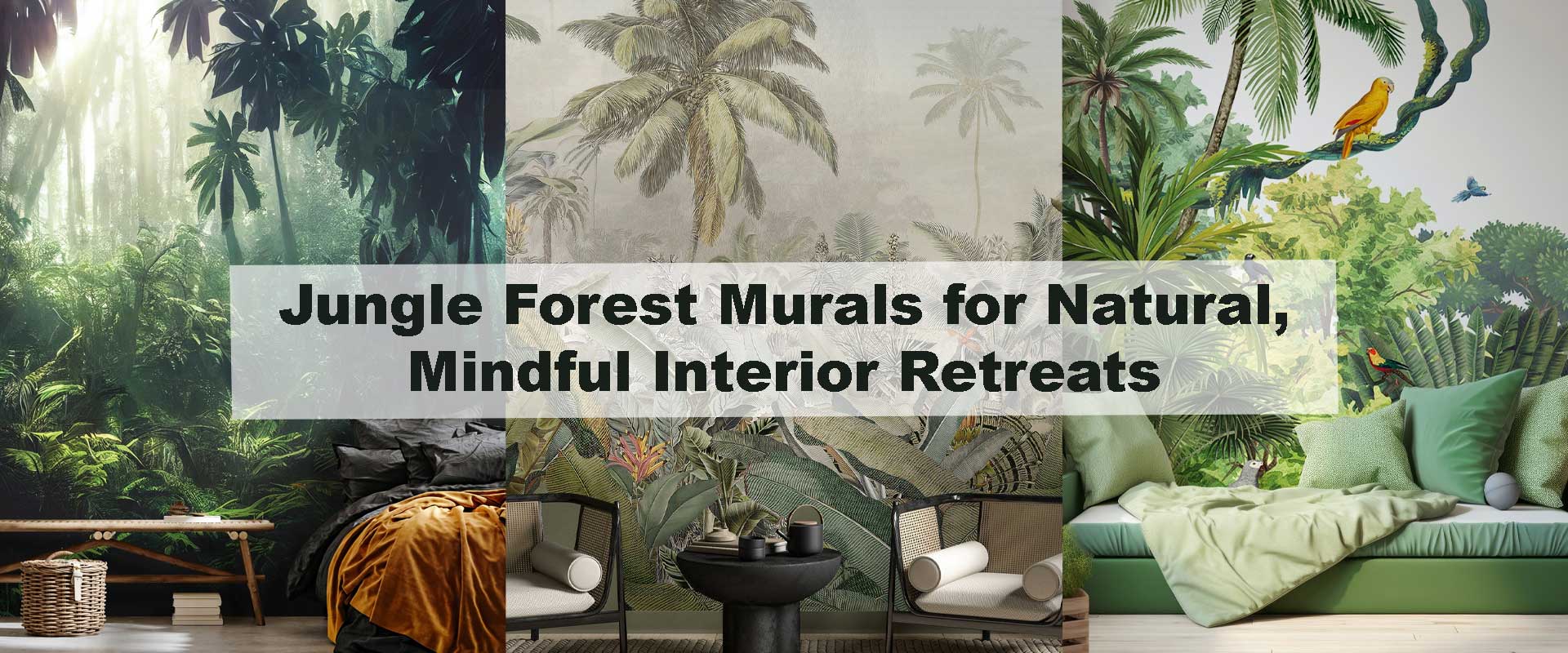
Jungle Forest Murals for Natural, Mindful Interior Retreats
What if your walls could slow your thoughts, soften your senses, and quietly reconnect you with nature? Jungle forest murals are increasingly shaping interiors that feel grounded, restorative, and emotionally balanced. In homes where overstimulation is common, these immersive landscapes offer visual breathing room, replacing sharp edges and digital noise with layered foliage, gentle depth, and organic rhythm. When chosen thoughtfully, jungle forest murals don’t overwhelm a space—they create mindful interiors that feel calm, intentional, and quietly alive.
Rather than acting as decoration alone, jungle-inspired walls behave like spatial anchors. They guide the eye, reduce visual tension, and encourage slower movement through a room. For those seeking interiors that support focus, relaxation, and emotional clarity, forest murals have become a powerful design language rooted in nature and mindful living.
Why Jungle Forest Murals Support Mindful Living
Mindful interiors are shaped around sensory balance, visual calm, and emotional comfort rather than visual impact alone. Jungle forest murals naturally support this approach by introducing complexity that feels organic instead of overwhelming. Overlapping leaves, softened shadows, and gradual shifts in tone create a visual rhythm that encourages the eye to move slowly and freely, rather than locking onto a single focal point.
Unlike bold geometrics or high-contrast artwork that can heighten alertness, forest murals rely on organic repetition. These repeating natural forms echo patterns found in real landscapes, subtly signaling safety and familiarity to the brain. This effect helps reduce mental tension, allowing interiors to feel grounded, restorative, and intuitively soothing rather than visually demanding.
Designers often place jungle murals within mindful settings alongside natural textures, warm neutral materials, and gentle lighting. When these elements are layered thoughtfully, the space begins to support quieter activities—meditation, reading, creative thinking, or reflective pauses—without feeling staged or overly curated.
Visual Depth That Encourages Mental Stillness
One of the most calming qualities of jungle forest murals is their ability to create visual depth. Instead of sitting flat against the wall, layered foliage and receding backgrounds draw the eye inward, suggesting distance and spatial openness. This illusion of depth subtly expands the room, easing feelings of confinement or visual pressure.
In interiors designed for mindfulness, this sense of openness is essential. Spaces feel more breathable when walls appear to dissolve rather than close in. Murals featuring softened horizons, misted layers, or gently fading foliage allow the eye to rest naturally, reinforcing calm without demanding constant attention.
This is why many designers gravitate toward layered compositions inspired by Jungle Tropical Wallpapers. These designs prioritise tonal flow and depth over sharp contrast, creating walls that feel immersive yet balanced—ideal for interiors where mental stillness and emotional ease are part of daily living.
Natural Color Palettes That Soothe the Senses
Color has a profound influence on how a space feels emotionally, and jungle forest murals lean into palettes that naturally calm rather than stimulate. Soft greens, mossy olives, bark-inspired browns, and shadowed neutrals mirror the tones found in real forest environments, helping the mind relax almost instinctively. These hues are associated with balance and restoration, making them especially effective in interiors designed for mindfulness and quiet focus.
What sets these palettes apart is their gentle flow. Instead of sharp contrasts or abrupt colour shifts, tones transition gradually, allowing the eye to move slowly and comfortably across the surface. This visual continuity reduces mental effort, supports longer periods of calm attention, and makes the wall feel expansive rather than busy. Murals inspired by forest collection styles often excel here, using muted undertones that respond beautifully to daylight, subtly changing from morning to evening without ever feeling overpowering.
Creating a Retreat-Like Atmosphere Without Isolation
A truly mindful interior feels sheltered yet connected, calm without becoming withdrawn. Jungle forest murals achieve this balance by introducing nature in an open, breathable way rather than enclosing the space visually. The presence of foliage creates a sense of refuge, while depth and light keep the room feeling accessible and integrated with the rest of the home.
In open-plan layouts, these murals work particularly well as soft zoning tools. A reading nook, meditation area, or quiet seating zone can feel distinct without walls or screens interrupting flow. The mural becomes a visual threshold—subtly signaling a shift in pace and purpose while maintaining openness. This effect is especially nuanced in designs inspired by rainforest styles, where layered greenery is tempered by filtered light, creating intimacy without visual heaviness.
How Jungle Murals Influence Emotional Wellbeing
Nature imagery has long been associated with reduced stress and improved emotional balance, which is why it appears so often in wellness-focused environments. Jungle forest murals bring this same psychological support into everyday interiors, offering a constant, gentle visual anchor. Their presence encourages slower breathing, softer focus, and a general sense of ease.
The organic rhythm of leaves, branches, and shadow helps regulate attention naturally. Unlike rigid patterns that demand focus, these flowing forms allow the mind to drift or settle depending on what the moment calls for. This makes jungle murals particularly effective in spaces meant for reflection, creativity, or rest. Designers often draw on principles similar to those discussed in Deep Jungle Wallpaper Designs That Bring Natural Calm Indoors, where carefully balanced visual complexity is used to ground emotions without overwhelming the senses.
Material Pairings That Enhance the Retreat Effect
A jungle forest mural becomes far more immersive when supported by materials that echo its natural language. Warm woods, woven fibres, linen upholstery, and softly textured stone finishes extend the mural’s organic story beyond the wall, allowing the entire room to feel cohesive rather than staged. These elements introduce tactile calm, grounding the visual richness of the mural in materials that feel familiar and comforting.
When materials are thoughtfully layered, the mural no longer reads as a single feature but as part of a wider sensory environment. Neutral-toned furnishings give the artwork space to breathe, while subtle surface variation—grain, weave, or gentle irregularity—adds warmth without visual clutter. This restraint ensures the space feels intentional and restorative rather than decorative.
Designers typically steer away from glossy or highly reflective finishes in these settings. Shiny surfaces interrupt the soft rhythm established by foliage and shadow, pulling attention away from the mural’s depth. Matte finishes, on the other hand, absorb light gently, preserving visual softness and reinforcing the quiet, mindful atmosphere the mural is meant to create.
Light and Shadow: Letting the Mural Evolve
Mindful interiors thrive on lighting that feels natural and responsive rather than fixed. Jungle forest murals are especially receptive to this approach, as their layered compositions reveal different qualities throughout the day. As daylight shifts, certain leaves recede while others come forward, allowing the wall to feel subtly alive without becoming distracting.
Indirect lighting plays a key role in maintaining this balance. Soft wall washers, diffused uplighting, or warm ambient sources allow the mural’s depth to emerge gradually, avoiding harsh glare or flattened colour. This gentle illumination enhances tonal transitions and texture, strengthening the sense of immersion.
The result mirrors outdoor environments, where light constantly changes but rarely demands attention. In this way, the mural becomes an evolving backdrop—supporting mindfulness through quiet variation rather than overstimulation or visual noise.
Choosing the Right Scale for Serenity
Scale is one of the most overlooked yet influential factors in mindful design. Jungle forest murals with oversized leaves introduce drama and movement, while smaller, finely layered foliage tends to feel more introspective and calming. Neither approach is inherently better; the key lies in matching scale to the emotional purpose of the space.
Areas intended for meditation, reading, or rest often benefit from murals with softer detailing and gentle repetition, allowing the eye to settle rather than roam. In creative or reflective spaces, slightly bolder compositions can spark inspiration without overwhelming the senses. What matters most is visual balance—depth without dominance, interest without excess.
Styles drawn from deep jungle designs often achieve this harmony especially well, combining richness and shadow with controlled composition. They offer visual depth that feels enveloping yet composed, making them well suited to interiors designed for calm, focus, and long-term comfort.
Comparing Jungle Murals to Other Nature-Inspired Walls
| Wall Style | Visual Energy | Emotional Effect | Best For |
|---|---|---|---|
| Jungle forest murals | Layered, immersive | Calm, grounded | Mindful retreats, reading zones |
| Botanical prints | Light, decorative | Uplifting | Casual living spaces |
| Abstract nature art | Expressive | Stimulating | Creative studios |
| Solid earth tones | Minimal | Neutral calm | Transitional spaces |
This comparison highlights why jungle forest murals excel in mindful interiors. They provide depth and emotional grounding without overstimulation, making them uniquely suited to retreat-like environments.
Integrating Jungle Murals Into Daily Living
A mindful retreat doesn’t need to exist apart from everyday routines. Jungle forest murals blend naturally into lived-in spaces, subtly shaping mood from morning through evening. Their layered foliage and gentle depth create a visual pause that feels restorative without interrupting how a room functions.
In work-from-home settings, these murals help sustain focus by easing visual strain and softening the mental edges of long screen hours. In living areas, they bring a sense of calm that supports conversation and relaxation without muting energy or warmth. Even hallways and in-between zones benefit, as the organic flow of greenery smooths transitions and makes movement through the home feel more fluid. This balance echoes ideas explored in Why Choose Jungle Wallpaper Over Traditional Patterned Prints, where natural forms are shown to feel more emotionally supportive than rigid repeats.
Subtle Styling Choices That Preserve Mindfulness
To protect the retreat-like quality, styling should feel deliberate rather than layered. Allow the mural space to breathe by avoiding crowded arrangements or excessive decor placed directly in front of it. Visual quiet is a key part of mindfulness, and negative space helps the mural do its work without distraction.
Natural accents such as plants can echo the mural’s theme, but restraint keeps the effect calming rather than busy. A few thoughtfully placed elements feel more intentional than filling every corner. Soft textiles in muted tones, along with natural fibers and gentle textures, support the atmosphere without competing for attention. The aim is harmony and flow, not contrast or visual tension.
Long-Term Appeal of Jungle Forest Murals
Mindful interiors are created with longevity in mind, not passing trends. Jungle forest murals age beautifully because their source of inspiration—nature itself—remains timeless. As styles shift and furnishings evolve, these murals continue to feel relevant, anchoring the space with quiet consistency.
Their adaptability allows rooms to change character over time while maintaining a sense of calm and identity. This enduring quality makes jungle murals a thoughtful, long-term investment in emotional comfort as well as visual design. Similar lasting appeal is often noted in Fresh Botanical Wallpaper Themes Inspired by Tropical Leaves, where organic motifs continue to resonate across different interior styles and years.
FAQ: Jungle Forest Murals for Mindful Interiors
Do jungle forest murals make rooms feel darker?
When designed with balanced tones and depth, they actually add softness rather than darkness, especially when paired with thoughtful lighting.
Are jungle murals suitable for small spaces?
Yes. Murals with layered depth can visually expand smaller rooms by creating a sense of distance.
Can jungle murals feel overwhelming?
Not when patterns are chosen thoughtfully. Soft color transitions and natural repetition prevent visual overload.
Do these murals work with minimalist interiors?
Absolutely. Their organic flow complements minimalist furnishings by adding warmth without clutter.
Are jungle murals only for relaxation spaces?
No. They work equally well in creative and transitional areas where calm focus is desired.
Conclusion
Jungle forest murals offer more than visual beauty—they create environments that support mindfulness, emotional balance, and quiet restoration. Through layered depth, natural palettes, and organic rhythm, these walls transform interiors into spaces that feel grounded and intentional. When thoughtfully styled, they become timeless backdrops for daily life, gently reconnecting us with nature’s calming influence.
For anyone seeking a home that feels less rushed and more reflective, jungle forest murals provide a powerful design solution. Explore options that align with your personal sense of calm and allow your walls to become part of a mindful retreat that evolves with you.