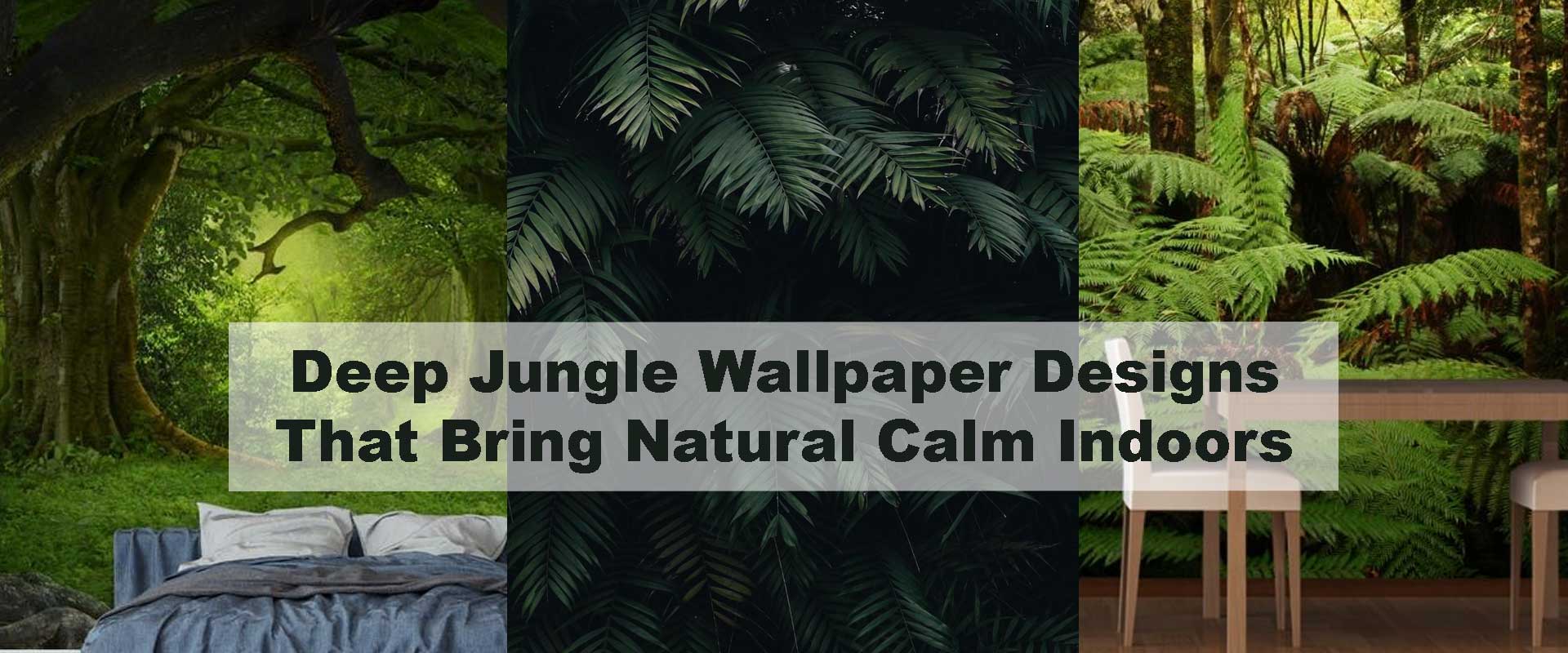
Deep Jungle Wallpaper Designs That Bring Natural Calm Indoors
When life feels fast and noisy, interiors that feel grounded and peaceful become priceless. Deep jungle wallpaper captures that feeling by wrapping walls in rich greens, layered foliage, and quiet shadow. Instead of flat pattern, these designs suggest depth, movement, and cool forest air, so rooms feel calmer, slower, and more connected to nature—even in the middle of a city apartment.
In this guide, you’ll discover what makes deep jungle designs so soothing, how to style them in real homes, and how to choose patterns that support natural calm rather than overwhelm. You’ll also see how these looks fit into the wider world of jungle tropical wallpapers and how to use them as the backbone of a soft, biophilic interior style.
Why Deep Jungle Wallpaper Feels Naturally Calming
Deep jungle wallpaper doesn’t just look lush; it taps into how our minds respond to greenery, shadow, and depth. When you surround a room with layered leaves and rich, shaded color, you echo the feeling of standing beneath a canopy—protected, held, and slightly removed from the outside world. That sense of shelter makes spaces feel like quiet retreats instead of just decorated rooms.
Unlike busy graphic prints, deep jungle designs typically feature soft gradients and organic forms. Edges blur, leaves overlap, and tones shift gently from moss to emerald. This lack of harsh contrast means your eyes don’t have to work hard, which quietly reduces visual stress. Over time, that softer visual field helps rooms feel slower, deeper, and more restful.
The psychology of green and gentle depth
Green sits right at the heart of the color spectrum, halfway between stimulating warm tones and cooling blues. In deep jungle wallpaper, muted greens, teals, and olive shades mimic real foliage, which our brains associate with safety, shade, and resources. That connection is why a deep jungle wall can make a compact room feel more like a lush hideaway than a plain box.
Depth also plays a key role in calm. When foliage appears to recede into the background, it gives your eyes somewhere to wander without hitting a hard boundary. That visual “escape route” is one reason designs that add depth—like those explored in tropical wallpaper for small spaces articles such as How Can Tropical Wallpaper Make Small Rooms Feel Larger?—feel more spacious and relaxing.
Soft shadows and layered foliage
Shadows in deep jungle wallpaper might sound dramatic, but they usually land as soft gradients rather than harsh lines. Leaves appear stacked over one another, with darker shapes receding and lighter ones catching a gentle glow. This layered effect suggests quiet movement, like light filtered through branches, instead of static pattern.
Because the pattern feels organic, it remains interesting without demanding attention. You can sit in a room with deep jungle walls for hours—reading, resting, or working—without feeling visually tired. The result is a backdrop that supports long, calm days and slow evenings.
Key Design Elements of Deep Jungle Wallpaper
Not every leafy print will create that serene, cocooned feeling. The most effective deep jungle wallpaper for calm interiors usually combines three elements: balanced color, controlled contrast, and thoughtful scale. Understanding each will help you choose designs that enhance natural calm rather than compete with it.
Color palettes: moss, emerald, and muted tones
Deep jungle palettes lean into greens enriched with blue or earth. Think moss, fern, pine, and muted teal, sometimes grounded with charcoal or soft brown. These tones feel grounded and timeless, unlike very bright lime or neon green, which can energize but rarely calm. For a soothing look, choose designs where brighter accents appear sparingly, like small highlights on leaf edges.
If you love an immersive forest feeling, explore focused looks such as the forest-inspired options within Jungle Forest Wallpaper collections. These often use cooler, misted greens that naturally quiet a space and make it feel deeper.
Light vs dark: finding your balance
Deep jungle designs often lean dark, but darkness doesn’t have to mean heavy. A calming design usually includes lighter leaves, hazy gaps, or soft “mist” areas that break up darker zones. This balance keeps the wall from feeling flat or oppressive, especially in smaller rooms.
Ask yourself: if you squint at the pattern, does any lightness come through, or does it read as a solid dark block? If it feels too solid, it might work best as a single feature wall, paired with pale surrounding surfaces. If it already has natural light breaks, it can comfortably wrap more of the room without closing it in.
Pattern scale and spacing
Calm deep jungle wallpaper rarely looks fussy. Instead of tiny, repeated motifs, it uses larger leaves, longer fronds, and broad silhouettes. Bigger pattern elements naturally slow down the visual rhythm, making the design feel relaxed rather than busy.
Leave a bit of breathing room between major shapes too. If every inch is crammed with detail, the eye never gets to rest. Larger, spaced leaves or layered silhouettes create pauses, so the pattern feels like a continuous landscape instead of static noise—ideal for natural calm.
Styling Deep Jungle Wallpaper in Different Rooms
One of the strengths of deep jungle wallpaper is how adaptable it is across different rooms. The same print can feel chic in a living room, restful in a bedroom, and dramatic in an entryway, just by changing how you layer furniture, texture, and light.
Living rooms: grounded and welcoming
In living rooms, use deep jungle wallpaper as a grounding backdrop for your main seating area. Place it behind the sofa or across the wall you first see when you walk in. Choose furniture in soft neutrals—beige, cream, sand, or stone gray—so the foliage takes center stage while the room still feels calm.
Natural materials like wood, rattan, or linen add warmth and texture without competing with the pattern. For a minimalist, airy take, you can combine deep jungle walls with many of the ideas from Which Jungle Wallpaper Suits a Minimal Modern Home?, using slimline furniture and simple silhouettes to keep the space feeling open.
Bedrooms: cocooned, quiet retreats
In bedrooms, deep jungle wallpaper shines behind the bed. The leafy wall frames the headboard, creating a natural canopy effect that feels protective and peaceful. Pair with layered bedding in muted whites, olives, or earthy taupes, and use soft lighting—warm bedside lamps, concealed strips, or fabric shades—to keep the shadows gentle.
Curtains, rugs, and cushions in low-contrast patterns or solid tones prevent visual overload. A few accents in brass or matte black can introduce contrast without breaking the calm, especially when used in lamp bases or picture frames.
Entryways and hallways: immersive first impressions
Narrow spaces often benefit from a strong, immersive statement. Deep jungle walls in an entryway or hallway can make a small transitional zone feel intentional instead of forgotten. Because you don’t linger as long here, you can be a little bolder with contrast or shadow.
Keep the flooring simple—wood, stone, or plain tile—and choose streamlined console tables or wall hooks. Mirrors can reflect the foliage and add depth without adding more pattern. This creates a first impression that feels both dramatic and surprisingly soothing as you step inside.
Deep Jungle Wallpaper vs Other Tropical Styles
Deep jungle designs are only one branch of the larger tropical family, but they behave quite differently from breezy palm prints or sun-washed beach scenes. Understanding this helps you decide where deep jungle fits in your overall home story.
Rainforest intensity vs composed jungle calm
Rainforest wallpapers often emphasize dense biodiversity—many leaf types, bright birds, flowers, and strong color contrasts. They feel vibrant and alive, perfect for energetic spaces. Deep jungle wallpaper, by contrast, usually edits the scene down to leaves and shadows. It focuses on mood rather than variety, which makes it better suited to calm rooms.
If you enjoy a slightly wilder feel but still want natural depth, you might explore more layered looks within tropical rainforest wallpaper collections, then choose the calmer, less color-heavy options in that family.
Coastal and sunset tropical vs shaded jungle interiors
Tropical coastal designs centre around bright turquoise waters, sandy tones, and light-splashed foliage. These look beautiful in open, sun-filled spaces but can feel too light or beachy if you crave a grounded, forest mood. Sunset tropical wallpapers tilt warm, with corals, oranges, and golds that mimic evening skies.
Deep jungle wallpaper sits at the other end—cooler, shaded, and quieter. Rather than framing a horizon, it wraps you in foliage. Consider coastal or sunset looks for open-plan, light-heavy rooms, and reserve deep jungle for spaces where you want a more cocooned, meditative feel.
Texture-rich foliage for subtle depth
Some designs lean into texture over color, using layered leaves and bark-like surfaces in a more tonal palette. These bridge the gap between purely decorative pattern and near-solid texture. Collections focused on subtle surface detail, like jungle texture and foliage wallpapers, can create depth and calm even in very minimal rooms.
Similarly, if you prefer fresher, slightly lighter greens but still want a deep, natural mood, explore softer palettes in fresh green jungle wallpapers. These keep the jungle feeling but introduce more airy lightness.
Using Deep Jungle Wallpaper in Small or Dark Rooms
A common worry is that deep jungle wallpaper will make a small or low-light room feel cramped. Used thoughtfully, it usually does the opposite—adding depth, interest, and a wrapped-in-nature calm that plain paint struggles to match.
Creating depth instead of weight
In small rooms, choose deep jungle designs with visible layering and some lighter gaps between the foliage. When the pattern suggests a view into something deeper, your walls feel like a backdrop rather than a solid barrier. That’s one reason many designers use jungle prints as a tool to expand compact spaces, similar to the ideas in Are Jungle Wallpapers Too Heavy for Small Apartments? and related articles in your blog cluster.
If the room lacks natural light, pair the wallpaper with warm, diffused artificial lighting. Wall lights that wash softly across the print can highlight the gradients and shadows, emphasizing depth instead of flat darkness.
Accent walls vs full wrap
If you’re nervous, start with one feature wall—often behind the bed, sofa, or dining table. This gives you a strong mood anchor without committing every surface. As you get used to the look, you might extend the design onto adjacent walls or into small connecting spaces like short hallways.
When you do wrap a room, balance deep jungle wallpaper with pale ceilings, skirting boards, and floors. That crisp outline keeps the look fresh and prevents the pattern from feeling overpowering.
Practical Tips for Choosing and Installing Deep Jungle Wallpaper
Deep jungle wallpaper looks effortless when installed, but a few planning steps make the result feel truly calm and cohesive rather than just decorative.
Read the room’s light and direction
Note where light enters, how strong it is, and what time of day you use the room most. North-facing or low-light spaces often benefit from designs with softer, diffused greens and subtle highlights. Ideas explored in topics like Is Tropical Wallpaper Good for North Facing Low Light Rooms? show how choosing the right tone can lighten a room without losing depth.
In bright, sun-flooded rooms, you can lean into darker, moodier leaves. Strong natural light will keep the pattern legible and prevent the space feeling too heavy.
Match pattern scale to room purpose
For calm spaces—bedrooms, reading corners, meditation spots—larger leaves and slower, sweeping forms usually work best. For more social rooms, like dining areas or casual lounges, you can use slightly smaller details to create gentle visual energy.
Before committing, order samples and tape them to different parts of the wall. Look at them morning, afternoon, and evening. You’ll quickly see which patterns keep the room feeling calm across the whole day.
Install with calm styling in mind
When the wallpaper goes up, style the room in a way that supports its mood. Keep furniture clean-lined, avoid too many competing patterns, and use a limited palette of accent colors. Articles such as How to Use Jungle Wallpaper to Build Cozy Interior Corners offer great starting points for arranging seating and accessories so the jungle wall feels like a natural hug.
Deep Jungle Wallpaper Design Ideas and Themes
Within the broader category of deep jungle wallpaper, you’ll find multiple design moods—from moody and dramatic to soft and misty. Each tells a slightly different calm story.
Misty canopy scenes
These designs mimic distant trees and branches fading into fog, with the sharpest detail in the foreground and softer shapes receding into hazy distance. They’re perfect if you want the feeling of looking out into a forest from a cabin window. Pair with light woods, wool throws, and simple, low furniture to emphasize the restful, retreat-like mood.
Jungle shadows and silhouettes
Some wallpapers focus less on leaf detail and more on shadow. Overlapping silhouettes create large, flowing shapes that read almost like abstract art from a distance. These “jungle shadow” looks are especially effective in dining rooms or lounges where you want drama without chaos—a visual language echoed in many jungle shadows wallpaper content pieces across your blog.
Soft botanical gradients
For those who love green but fear heavy walls, gradient-rich botanical designs blend pale and deep greens in waves. Leaves might be gently blurred or painted in watercolor style, letting color pools and soft outlines carry the mood. Combined with light fabrics and simple decor, these prints foster a calm that feels fresh rather than dark.
Balancing Deep Jungle Wallpaper With Furniture and Decor
A calm wall can lose its serenity if paired with hectic furniture. Thoughtful styling ensures deep jungle wallpaper remains the quiet hero of your room rather than part of a visual clash.
Choosing the right furniture shapes
Look for furniture with simple silhouettes and rounded edges—curved sofas, oval coffee tables, and soft-edged armchairs. Sharp, angular lines can feel at odds with flowing foliage, while curves echo the natural shapes in the pattern.
In many contemporary homes, the question isn’t whether jungle wallpaper works at all but how to make it coexist with clean lines. Posts like Can Jungle Wallpaper Work With Modern Minimal Furniture? show how slim, low-profile pieces allow jungle walls to feel considered rather than cluttered.
Materials and textures that support calm
Natural materials—wood, jute, linen, cotton, clay—blend effortlessly with deep jungle designs. They extend the nature theme into the room, so the wallpaper feels like part of a larger biophilic palette rather than a decorative afterthought.
Avoid too much glossy finish. A little metal or glass is fine, but satin and matte surfaces usually complement the soft shadows of deep jungle wallpaper better than high-shine ones, which can create visual noise.
Accessories and art
Keep accessories intentional. A few ceramic vases, woven baskets, or leafy plants will echo the wallpaper and strengthen the calm story. Art can be minimal—abstract linework, botanical sketches, or monochrome photographs work well. You don’t need more jungle motifs on top of jungle walls; instead, let the wallpaper act as the main artwork.
Coordinating Deep Jungle Walls With the Rest of Your Home
Even if only one room uses deep jungle wallpaper, it should still feel connected to your home’s wider design language.
Color echoes and soft transitions
Pick one or two shades from the wallpaper and repeat them in small touches beyond the room—cushions in the living room, a throw on a hallway bench, or a piece of art with similar greens. This creates a gentle visual thread that ties spaces together and prevents the jungle room from feeling isolated.
Where rooms meet, use transition zones like small corridors or arches to introduce simpler walls painted in one of the wallpaper’s softer tones. This keeps the journey from calm jungle to other styles feeling smooth rather than abrupt.
Working with open-plan layouts
In open layouts, deep jungle wallpaper works best on one main wall that anchors the seating or dining zone. Surrounding areas can remain lighter and more neutral, with smaller nods to foliage in textiles or art. Ideas in How to Balance Jungle Wallpaper With Minimal Decor align perfectly with this: let the jungle be a statement, but give it room to breathe.
Suggested Image Ideas and Alt Text
To support SEO and accessibility, pair this article with imagery that clearly shows depth, calm, and deep jungle mood. Here are three sample alt texts you can adapt (125–140 characters each):
- Living room styled with deep jungle wallpaper, soft neutral sofa, wooden coffee table, and warm lamp lighting creating a calm, nature-inspired retreat.
- Bedroom feature wall in deep jungle wallpaper behind simple bed, layered white bedding, and tan accents for a cocooned, peaceful forest-like atmosphere.
- Entryway with deep jungle wallpaper, slim console table, round mirror, and natural textures, offering a grounded, calming first impression indoors.
FAQs About Deep Jungle Wallpaper and Natural Calm
Does deep jungle wallpaper make a room feel smaller?
Not if you choose designs with visible depth and soft light areas. Layered foliage and gradients can actually help walls recede visually, making rooms feel larger and more atmospheric than plain, flat paint.
Is deep jungle wallpaper only suitable for bold interiors?
No. When paired with simple furniture, muted textiles, and controlled accessories, deep jungle wallpaper reads as sophisticated and serene rather than loud. It can suit both bold and very quiet interiors, depending on how you style it.
Can I use deep jungle wallpaper in a rental?
In many modern rentals, removable or peel-and-stick wallpapers offer a flexible way to enjoy deep jungle designs without permanent commitment. Always check your lease and installation guidelines, but in principle, jungle walls can absolutely work in rented spaces.
What colors pair best with deep jungle walls?
Soft neutrals—ivory, stone, greige, and warm sand—almost always work. Clay, terracotta, and muted gold add warmth, while touches of black or charcoal can provide elegant contrast. The key is to keep accent colors limited and cohesive.
How many walls should I cover?
Start with one feature wall if you’re unsure. If the room still feels balanced and calm after styling, you can gradually extend the design. Small, transitional spaces like hallways and entryways often look wonderful fully wrapped in deep jungle pattern.
Conclusion
Deep jungle wallpaper is more than decoration; it quietly reshapes how a room feels. Layered greens, soft shadows, and gentle depth create a sense of shelter that plain walls rarely offer, turning everyday spaces into calm retreats. Whether it appears as a misty canopy in the bedroom, a grounded backdrop in the living room, or a dramatic statement in a hallway, deep jungle wallpaper supports slower, more restful moments at home. When you next refresh a room, choose designs with balanced color, soft contrast, and natural depth so your walls don’t just look stylish—they help you breathe a little easier too.