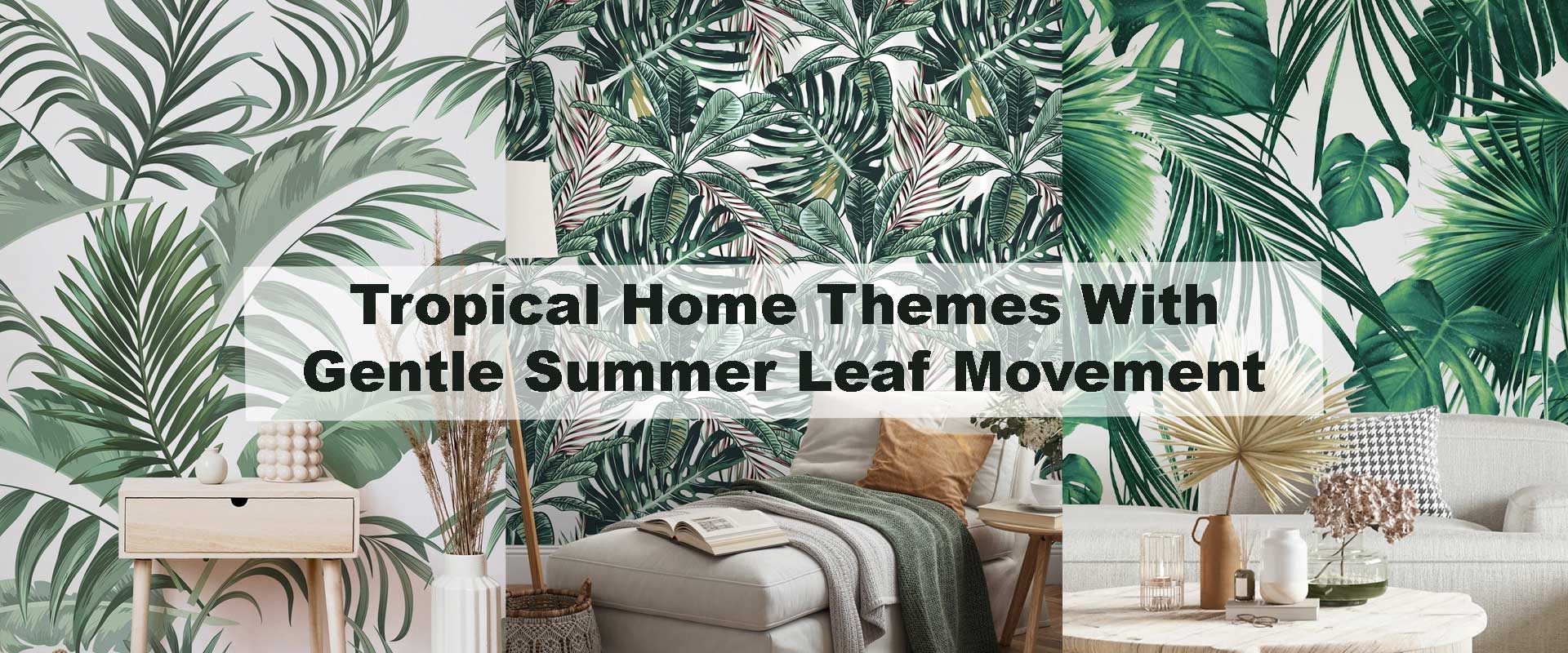
Tropical Home Themes With Gentle Summer Leaf Movement
Homes today are leaning toward interiors that feel lighter, calmer, and more emotionally grounding. Tropical home themes with gentle summer leaf movement reflect this shift by focusing on softness rather than drama. Instead of dense foliage or bold contrast, these designs rely on subtle rhythm—leaves that appear to drift, overlap, and breathe across the wall surface. The result is an interior that feels naturally alive, not styled or staged.
This approach suits homes that value ease and longevity. Gentle tropical movement blends into daily life, creating atmospheres that feel relaxed in the morning and quietly comforting by evening. Rather than dominating a room, the wall becomes part of the home’s natural cadence.
Why Gentle Leaf Movement Feels Different From Traditional Tropical Styling
Traditional tropical interiors often rely on bold contrast, saturated greens, and densely layered motifs. While these designs create instant impact, they can begin to feel visually heavy as time passes. Gentle summer leaf movement takes a different approach, shifting emphasis from statement-making to subtle flow, allowing walls to soften a space rather than dominate it.
Through generous spacing and restrained contrast, foliage is given room to breathe. The eye travels slowly and comfortably across the surface, creating a sense of ease instead of stimulation. Interiors feel more open, balanced, and settled, particularly in homes where calm is valued as much as visual identity. This approach reflects the same thinking found in Why Choose Jungle Wallpaper Over Traditional Patterned Prints, where organic rhythm gently replaces rigid repetition and visual noise.
Emotional Calm Created by Soft Tropical Walls
Patterns that feel natural rather than imposed tend to create deeper emotional comfort. Gentle leaf movement mirrors the way foliage behaves outdoors—overlapping, drifting, and responding softly to space. When translated indoors, this rhythm reduces visual tension and supports a more restorative atmosphere throughout the home.
Homeowners often describe rooms with softened botanical walls as easier to unwind in. The surface doesn’t compete for attention or dictate the mood; instead, it quietly holds the space together. This understated emotional quality closely aligns with the principles discussed in Deep Jungle Wallpaper Designs That Bring Natural Calm Indoors, where foliage functions as ambient presence rather than decorative focal point.
Colour Choices That Enhance Summer Leaf Flow
Colour has a powerful influence on whether tropical foliage feels soft and breathable or visually dense. Muted greens, washed olive tones, gentle sage, and eucalyptus-inspired hues allow leaf forms to feel suspended rather than anchored. These shades interact calmly with natural light, helping patterns sink subtly into the wall instead of sitting sharply on the surface.
When paired with warm neutrals—creamy whites, sandy beiges, or pale wood finishes—the foliage feels naturally absorbed into the interior. This tonal balance is what gives tropical spaces their timeless quality, avoiding anything overly seasonal or trend-driven. Many interiors built around these palettes feel brighter and more open without slipping into starkness, echoing the principles discussed in Tropical Leaf Patterns That Refresh Clean Neutral Spaces.
How Gentle Tropical Themes Shape Living Areas
In shared living spaces, gentle leaf movement allows walls to feel expansive rather than enclosing. Instead of creating a single focal moment that halts the eye, the pattern encourages a continuous visual rhythm across the room. This sense of flow naturally relaxes seating zones and softens strong architectural lines.
The effect works seamlessly alongside contemporary furniture, neutral upholstery, and tactile accents. Tropical character is present, but it remains calm and supportive rather than dominant. Homes styled this way often feel immediately welcoming, as the space communicates ease and balance the moment one steps inside.
Creating Restful Private Spaces With Leaf Movement
In bedrooms and quiet corners, gentle tropical designs play a subtle but powerful role in supporting rest. Leaves that drift softly across the wall introduce a sense of enclosure without heaviness, creating a cocoon-like atmosphere that feels protective rather than closed in. Because the pattern flows continuously, the eye moves calmly across the surface, reducing sharp visual interruptions that can subtly disrupt relaxation.
Instead of functioning as a focal statement, the wall recedes into a soothing backdrop for rest and reflection. This is why many homeowners instinctively choose softer tropical foliage for sleeping spaces, particularly when layered with breathable textiles and warm, diffused lighting. The effect aligns closely with the calming principles seen in Soft Tropical Wallpaper Ideas for Relaxing Bedroom Makeovers, where restrained foliage supports comfort without visual noise.
Pattern Scale, Spacing, and the Feeling of Movement
The sense of gentle summer leaf movement is shaped largely by scale and spacing. Larger leaf forms, when placed with generous breathing room, feel slow, grounded, and reassuring—ideal for spaces that need visual calm. Finer foliage, on the other hand, creates a lighter, almost whisper-like texture that adds interest without demanding attention. Both approaches succeed when contrast is softened and repetition feels unforced.
Negative space is just as important as the leaves themselves. Open areas between motifs allow the wall to breathe, preventing the pattern from becoming visually tiring over time. This careful balance ensures tropical walls remain comfortable to live with long-term, adapting gracefully as furniture, colour accents, and décor naturally evolve around them.
Choosing the Right Tropical Expression for Your Home
Not all tropical designs evoke the same feeling, and understanding these nuances helps create interiors that feel emotionally aligned rather than visually forced. Forest-inspired styles tend to feel layered and grounded, with overlapping foliage that introduces depth while maintaining a sense of stability. These expressions work beautifully in homes that favour warmth, texture, and a slightly cocooned atmosphere without feeling heavy or enclosed.
Coastal-influenced foliage, by contrast, carries a lighter, more breathable character. Softer outlines, gentler contrast, and wider spacing allow these designs to feel sun-washed and open, making them ideal for interiors filled with natural light. This style supports a relaxed, breezy mood where walls feel expansive and quietly uplifting rather than dominant.
Homes drawn to artistic softness often respond to painterly interpretations, where leaf movement feels organic and expressive instead of precise. For those who prefer richness without intensity, deeper green palettes with muted contrast provide presence while remaining calm and composed. Exploring these variations within Jungle Tropical Wallpapers allows homeowners to sense which type of leaf rhythm resonates most naturally with their space and lifestyle.
Interiors that lean toward grounding and warmth often connect effortlessly with styles found in the forest collection, while bright, open homes tend to feel more at ease with coastal patterns. Spaces that value creativity and fluid expression frequently find harmony in watercolor murals, where foliage appears softly brushed, allowing movement to feel intuitive rather than structured.
Styling Around Gentle Tropical Walls
A restrained, thoughtful approach allows gentle tropical walls to feel intentional rather than decorative. Instead of repeating botanical motifs through accessories or furnishings, let the foliage remain the quiet anchor of the space. Clean-lined furniture, softly textured upholstery, and neutral fabrics help the wall breathe, ensuring the leaf movement feels like part of the architecture rather than an added layer.
Natural materials play an important supporting role. Light woods, woven finishes, linen, and stone subtly echo the organic quality of the foliage without competing with it. These elements reinforce the sense of calm and create a tactile balance that keeps the interior grounded and visually relaxed.
Subtle contrast elevates the overall look. Smooth ceramics, muted metallic finishes, or sculptural lighting introduce refinement without disrupting the softness of the wall. When these accents are kept minimal and purposeful, the space feels curated and composed, avoiding the feeling of a themed or overly literal tropical interior.
Why These Tropical Themes Age Gracefully
Gentle leaf movement has a timeless quality because it draws inspiration from natural rhythm rather than trends. Unlike bold patterns that rely on novelty or high contrast, soft tropical foliage remains visually comfortable as tastes evolve. The design never feels dated because it mirrors the enduring patterns found outdoors.
As furniture, colour accents, and textiles change over the years, the wall continues to adapt seamlessly. It supports new styles instead of competing with them, allowing homeowners to refresh their interiors without rethinking the foundation. This quiet flexibility is what makes gentle tropical themes a long-term choice—walls that grow with the home rather than define it too rigidly.
Gentle Leaf Movement vs Other Tropical Styles
| Design Style | Visual Intensity | Sense of Movement | Long-Term Comfort | Overall Atmosphere |
|---|---|---|---|---|
| Gentle summer leaf movement | Low to medium | Soft, flowing | Very high | Calm, airy, natural |
| Dense jungle foliage | High | Fast, layered | Medium | Bold, immersive |
| High-contrast tropical prints | Very high | Sharp, repetitive | Low to medium | Energetic, dramatic |
| Minimal botanical accents | Low | Subtle, static | High | Clean, understated |
Frequently Asked Questions
Do gentle tropical walls feel too subtle?
They are intentionally understated, allowing atmosphere to build over time rather than relying on instant impact.
Can this style work in compact homes?
Yes. Soft spacing and muted tones often enhance openness instead of making rooms feel smaller.
Will these designs clash with modern furniture?
No. Clean-lined furniture pairs naturally with organic leaf movement, creating balance.
Are gentle tropical themes only suitable for warm climates?
Not at all. Their calming quality works year-round, adding warmth in cooler seasons and lightness in warmer months.
Final Thoughts
Tropical home themes with gentle summer leaf movement offer a refined way to bring nature indoors. By focusing on softness, spacing, and natural rhythm, these designs create interiors that feel calm, breathable, and timeless. Rather than making a statement, they support everyday living—quietly enhancing how a home feels, day after day.