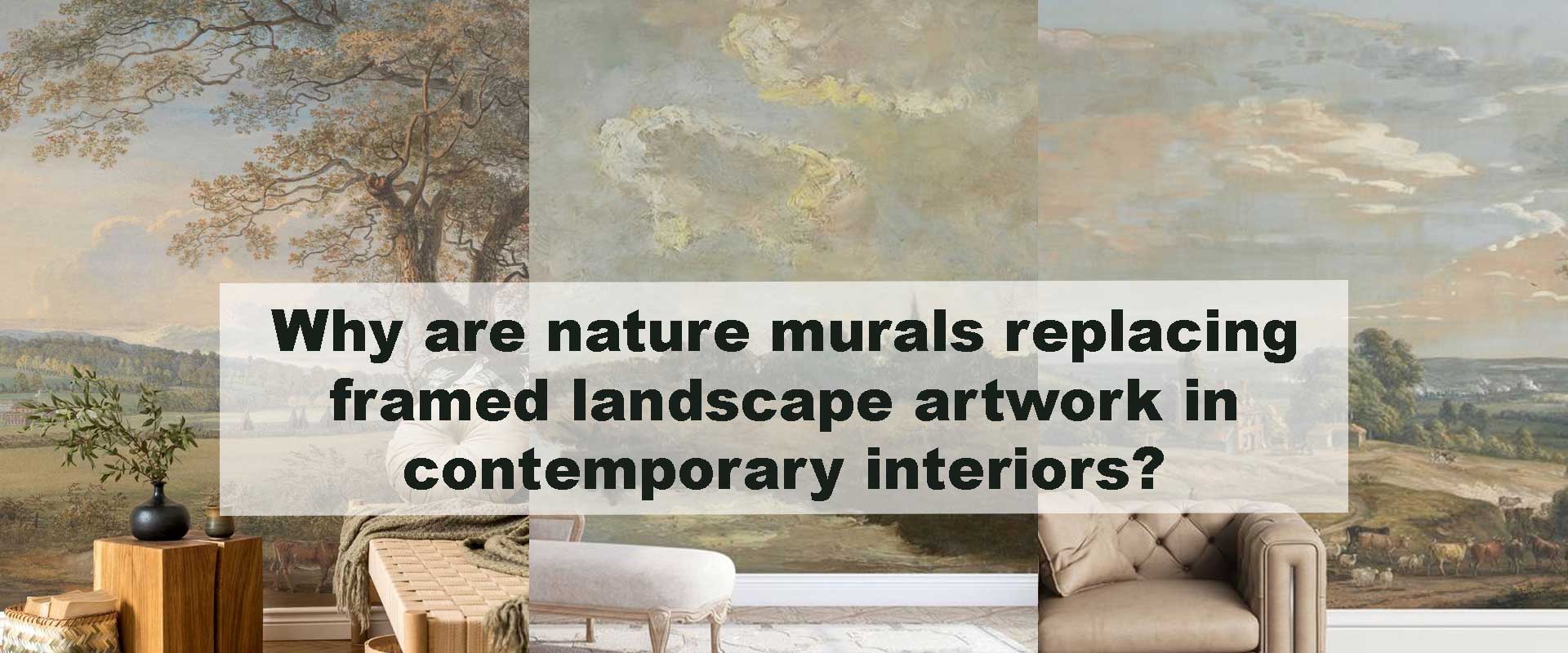
Why are nature murals replacing framed landscape artwork in contemporary interiors?
Nature murals are quickly becoming the new design staple in contemporary homes, shifting attention away from traditional framed landscape artwork. The change is not subtle; it’s a clear movement toward immersive, room-enveloping scenes that offer more depth, emotion, and personal expression. Homeowners who once hung simple prints are now embracing full-wall murals that deliver sweeping mountain silhouettes, textured forests, and lakeside calm. This shift aligns with a growing preference for biophilic design, where the **primary keyword—nature murals—**helps every interior feel grounded, soothing, and visually expanded within those first few moments of entering a space.
How full-wall murals reshape the experience of a room
Traditional framed landscapes serve as accents, but murals redefine the entire mood of a room. Murals extend beyond boundaries, surrounding the viewer with depth that stretches across surfaces. This creates a visual continuity that framed artwork can’t replicate. When someone steps into a space with a panoramic forest or mountain mural, the scene becomes part of the architecture rather than a decorative addition. This effect is especially powerful when homeowners choose large-scale prints similar to those found in Landscape nature wallpaper, where layered horizons and open perspectives widen compact rooms.
Many homeowners mention how murals introduce serenity through color gradients and open vistas. This trend echoes ideas raised in How nature wall murals really make small bedrooms appear larger and calmer, which highlights how visual depth encourages emotional ease without overwhelming the senses. Instead of hanging frames at eye level, the mural itself becomes the room’s canvas—redefining what people now expect from contemporary design.
Murals align with lifestyles that prioritize calm and minimalism
Minimalist interiors often struggle with maintaining warmth. While framed artwork can add personality, it sometimes interrupts clean lines and simple palettes. Nature murals, however, offer gentle transitions between wall, décor, and furniture. Their expansive character supports uncluttered living without sacrificing detail or emotion.
Designers increasingly rely on mural styles like Forest nature wallpaper, which deliver organic patterns and restful greens, adding life without requiring multiple decorative pieces. The shift also connects to principles discussed in Bedrooms transform instantly when mountain-inspired nature wallpaper sets the mood, where murals shape not just aesthetics but also the sensory comfort of everyday spaces.
This preference reflects a broader cultural desire for restorative interiors. With more people working from home, rooms that once functioned solely for rest or entertainment now serve multiple purposes. Nature murals soften these transitions, making spaces feel adaptable and peaceful.
Why framed artwork feels limiting compared to murals
Framed landscape art, while timeless, offers limited scale. Its borders define its impact. Even large framed pieces function as objects rather than environments. Murals change this relationship entirely. They immerse. They envelop. They remove boundaries. That emotional impact is why more homeowners are moving toward designs similar to Mountain nature wallpaper, where sweeping alpine lines replace the need for multiple accessories.
Another hidden difference lies in lighting. Murals react to ambient light more dynamically. Morning sunlight draws out soft tones; evening shadows enhance contours. This subtle movement deepens connection to the room. In contrast, framed prints remain static regardless of changing conditions.
Additionally, contemporary interiors often embrace open floor plans. Murals visually anchor wide spaces, functioning like architectural features. They introduce directional flow—leading the eye toward specific seating, dining, or relaxation areas. Framed artwork simply can’t achieve that level of spatial influence.
Biophilic design is no longer a trend—it’s a standard
Homes today prioritize well-being. The desire to recreate natural scenes indoors supports calmness, mental clarity, and emotional grounding. Biophilic design once belonged primarily to upscale homes and professional studios; now it’s accessible to everyone through murals that mimic forest trails, soft lakeside horizons, and earthy watercolor gradients. Some homeowners lean toward fluid, dreamy looks found in Watercolor nature wallpaper, appreciating how gentle tones help create rooms suited for unwinding after long, overstimulating days.
The rise in biophilic styling aligns with a global emphasis on mental wellness. People want their homes to feel like sanctuaries. Murals accomplish this through immersion—offering nature not as a picture on a wall, but as an environment that shapes the whole atmosphere.
Murals provide greater creative freedom than framed art
With framed artwork, choices often revolve around size, frame color, and style. Murals, however, open a world of customization. Scale can be dramatic or subtle. Tones can be muted or richly saturated. Layers can be airy, bold, abstract, or photographic. This versatility allows homeowners to align murals with personal narratives.
Clients who love modern minimalism may select something as refined as monochrome nature wallpaper. Meanwhile, those who enjoy intricate detail often prefer Vintage nature wallpaper, where textures and classic tones bring nostalgic charm into contemporary layouts. These options make murals a highly expressive medium for shaping identity through décor.
Nature Murals vs. Framed Landscape Artwork
| Feature | Nature Murals | Framed Landscape Art |
|---|---|---|
| Scale Impact | Room-transforming, immersive | Limited to frame size |
| Emotional Effect | Calming, spacious, enveloping | Decorative but contained |
| Design Flexibility | Highly customizable | Restricted by format |
| Integration with Space | Part of architecture | Sits on surface of wall |
| Lighting Response | Dynamic, shifting | Static |
| Best Use Cases | Feature walls, mood building | Accent décor |
Technology and printing advances are accelerating the shift
Modern printing techniques offer exceptionally sharp resolution, accurate color reproduction, and durable finishes. This progress means murals now achieve the realism and craftsmanship once achievable only through fine art. Homeowners appreciate lifelike textures and depth that go beyond framed prints.
High-resolution forest gradients, sweeping coastlines, and distant mountains bring cinematic presence into living areas. Many designers use mural types related to Sunset nature wallpaper to add quiet glow and soft warmth—qualities that framed prints can’t deliver with equal impact across an entire wall.
Combined with the ability to print on seamless materials, murals feel more refined, intentional, and architectural than ever before.
Murals support contemporary interior themes
Today’s interiors revolve around cohesion. Rather than mixing unrelated decorative elements, homeowners build environments around unified themes. Nature murals make this process intuitive. Their tones can guide furniture choices, material textures, and lighting setups.
Earthy mountain gradients pair well with warm wood furniture. Soft lake reflections complement neutral upholstery. Lush forest silhouettes support modern Japandi aesthetics. This harmony explains why murals are replacing framed pieces—they help complete a room rather than simply accessorize it.
Sustainability considerations appeal to today’s homeowners
Many murals today use eco-conscious materials and low-VOC inks, aligning with sustainability-focused living. Instead of purchasing multiple decorative pieces, buyers choose one mural that shapes an entire room. This reduces overall décor consumption.
While framed artwork can be reused, the growing preference for environmentally mindful décor encourages choosing impactful, long-lasting installations like murals.
Why nature murals are becoming emotional anchors
In a world that feels increasingly fast-paced, nature murals bring comfort. People want grounding elements—quiet morning lakes, calm forests, or distant mountainscapes. These environments provide emotional oxygen, giving busy households a peaceful pause.
Designers have noticed that homeowners frequently respond emotionally to mural scenes. A mural is not just décor—it becomes a reminder of past travels, childhood memories, or personal aspirations. This emotional depth is rarely matched by framed prints.
How murals redefine bedrooms, living rooms, and entry spaces
Bedrooms benefit from soothing gradients and dreamy silhouettes. Living rooms gain a focal point that frames conversation areas. Entryways adopt a sense of arrival, guiding guests into the home’s narrative. Murals provide a presence. Instead of being one object among many, they act as the room’s foundation.
Scenes with gentle layers—like those found in Nature wallpaper for bedrooms—support relaxation. Designs appropriate for open layouts may align more with Nature wallpaper for living room, offering balance in busy, shared spaces.
Murals shape how each room feels and functions, whether calm, energizing, cozy, or expansive.
They complement contemporary furniture better than framed art
Modern furniture often emphasizes simplicity and clean silhouettes. Murals enhance these choices by creating a contextual backdrop that softens sharp edges and ties together materials like stone, metal, and wood.
For example, a room featuring neutral furniture instantly feels lifted when paired with scenic layers similar to those in Nature wallpaper for dining room. Murals bridge gaps between textures, ensuring furniture doesn’t appear isolated.
Why murals feel more future-forward than framed artwork
Contemporary design values cohesion, immersion, and atmosphere. Murals deliver all three. Their ability to reinvent environments makes them feel aligned with the future of interior aesthetics. Homeowners today prefer spaces that feel expressive yet restful—and murals offer that balance seamlessly.
By integrating the natural world into daily living, murals encourage a sense of continuity between indoors and outdoors. This timeless connection is why homeowners increasingly choose murals over frames.
FAQ
1. Are nature murals suitable for small rooms?
Yes. Their panoramic depth visually widens compact rooms while adding calming flow.
2. Do murals replace the need for additional décor?
Often they do, since one full-wall scene provides atmosphere without requiring extra accents.
3. Are murals better than framed artwork for minimalist interiors?
Absolutely. Murals support clean lines without introducing visual clutter.
4. How long do modern murals typically last?
High-quality murals can last many years, maintaining color and detail when installed on properly prepared walls.
5. Are nature murals easy to maintain?
Yes. Most are wipeable and resistant to minor marks, making them practical for everyday living.
Conclusion
Nature murals are replacing framed landscape artwork because they offer immersion, emotional resonance, and architectural impact. By shaping entire rooms rather than functioning as isolated pieces, they enhance calm, widen compact areas, and support modern minimalist aesthetics. The primary keyword—nature murals—captures a movement toward design that prioritizes presence, atmosphere, and connection. For homeowners seeking depth, warmth, and a naturally unified space, murals deliver a transformative experience that framed artwork simply cannot match.