Why Art Deco Diamond Patterns Create Instant Drama in Entryways
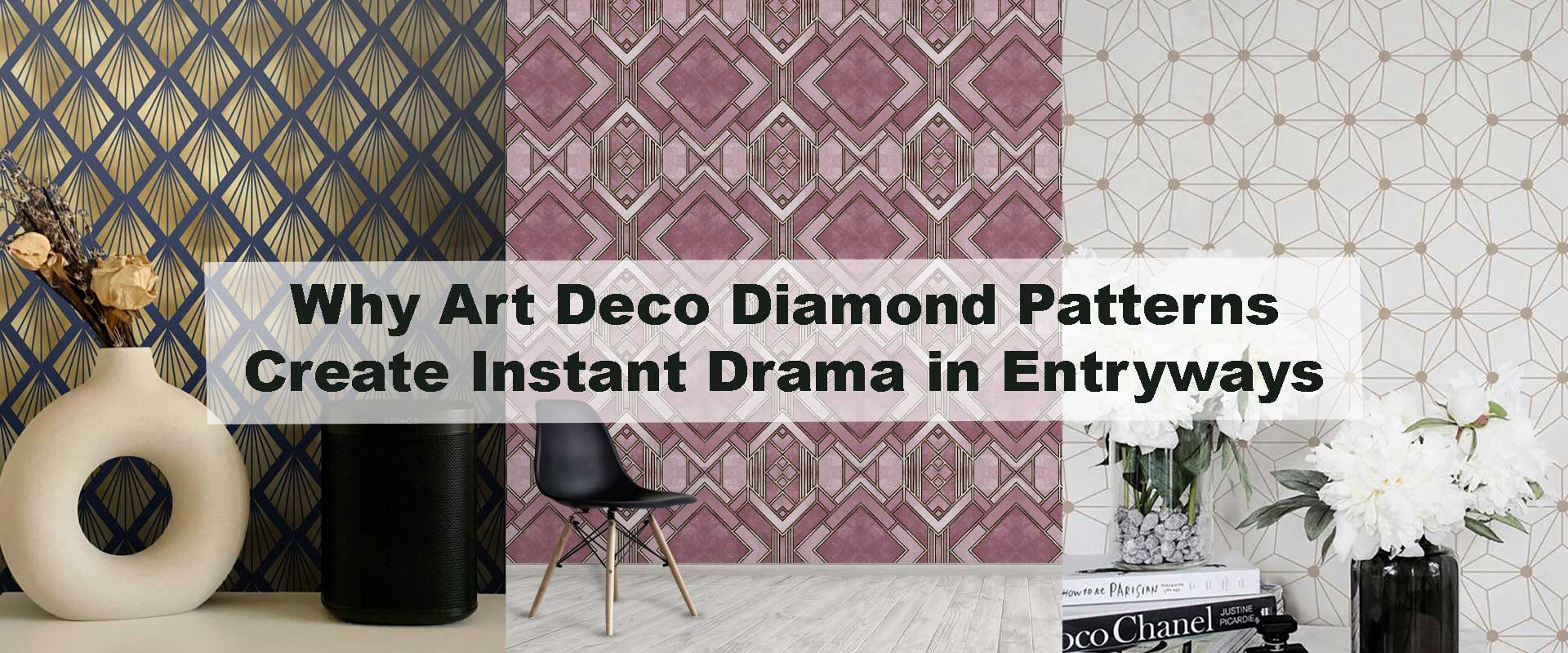
First impressions are formed in seconds, and few interior elements command attention as powerfully as Art Deco diamond patterns in entryways. These bold geometric arrangements immediately establish rhythm, structure, and confidence the moment someone crosses the threshold. In homes where the entryway sets the emotional tone, diamond geometry transforms blank walls into architectural statements rather than decorative backdrops.
Art Deco diamond patterns bring together symmetry and contrast in a way that feels both historic and modern. Their angular repetition creates visual tension that naturally draws the eye inward, guiding movement and shaping spatial perception. When layered with metallic accents or deep tonal contrasts, these patterns elevate entry spaces into immersive experiences that feel intentional and luxurious rather than transitional.
The Psychological Impact of Diamond Geometry at the Threshold
Entryways operate as psychological bridges between exterior chaos and interior calm. Diamond patterns excel here because they offer visual order without feeling static. The intersecting angles subtly energize the space, creating a sense of momentum that invites movement deeper into the home.
Unlike softer motifs, diamonds introduce controlled drama through precision. This structured intensity gives entryways a ceremonial quality, making arrivals feel purposeful rather than incidental. Designers often rely on this geometry when they want to establish confidence and clarity right from the start, echoing the principles discussed in Why Art Deco Wallpaper Is Returning as the Biggest Luxury Design Trend.
How Diamond Patterns Shape Spatial Perception
Diamond motifs are particularly effective in entryways because of how they manipulate scale and direction. Vertical diamond arrangements subtly lift ceilings, while wider, elongated diamonds visually expand narrow corridors. This optical influence helps smaller entry zones feel composed rather than constrained.
Because the pattern repeats predictably, it offers rhythm that balances boldness with harmony. Even when executed in high-contrast palettes, the geometry keeps the space grounded. This balance explains why diamond-based designs frequently appear within curated selections like Geometric Art Deco Wallpaper, where structure and visual flow remain central to the aesthetic.
Contrast as a Tool for Instant Drama
Drama in entryways is rarely created through excess; it emerges through deliberate contrast. Art Deco diamond patterns are built on tension—light set against dark, matte surfaces interrupted by metallic lines, and shadow sharpened by reflective highlights. This controlled opposition gives walls a sense of depth and structure, making them feel architectural rather than purely decorative.
Rich tones such as deep emerald, inky navy, and charcoal black become especially powerful when edged with gold or brass detailing. The contrast feels bold yet measured because the diamond geometry imposes order and rhythm, preventing visual overload. Designers often rely on this disciplined balance when working with finishes like Luxury Metallic Art Deco Wallpaper, where reflective accents intensify impact while preserving clarity and refinement.
Why Entryways Benefit More Than Other Rooms
Unlike living rooms or bedrooms, entryways are not spaces for prolonged visual rest. They are transitional zones, experienced in motion rather than stillness, which allows them to carry stronger visual statements without fatigue. Diamond patterns thrive in this context by delivering instant impact that feels energising rather than overwhelming.
This makes them an ideal choice for homeowners seeking expressive design without saturating the entire interior. A dramatic entry establishes confidence and character at the threshold, allowing softer tones and calmer compositions to emerge deeper within the home. This layered design strategy mirrors the principles discussed in How Art Deco Wallpaper Enhances Modern Minimalist Furniture, where bold surfaces set the tone while restrained elements maintain balance throughout the space.
Entryway Pattern Impact
| Pattern Style | Visual Energy | Space Enhancement | Best Entryway Size | Overall Drama |
|---|---|---|---|---|
| Diamond Geometry | High, directional | Expands and elevates | Small to medium | Very strong |
| Fan Motifs | Moderate, rhythmic | Adds elegance | Medium to large | Balanced |
| Linear Patterns | Low to moderate | Organises flow | Narrow corridors | Subtle |
| Abstract Shapes | Variable | Artistic focus | Large foyers | Expressive |
Styling Entryways Around Diamond Walls
Because diamond patterns already carry strong visual authority, the most successful entryways treat surrounding elements as quiet supporters rather than competitors. Slim-profile consoles, understated benches, and sculptural mirrors with clean outlines allow the geometry to remain the focal point while still adding function. Lighting works best when it is intentional and restrained—soft wall sconces or warm overhead fixtures highlight angles and metallic accents without overpowering the pattern’s natural rhythm.
Introducing natural materials helps temper the sharp precision of diamond geometry. Stone floors, wood consoles, or subtly grained finishes introduce warmth and tactility, preventing the space from feeling overly formal. This balance between crisp lines and organic textures creates an entryway that feels composed yet inviting, reinforcing the sense of luxury discussed in The Science Behind Why Gold Geometry Walls Feel Luxurious without tipping into visual severity.
Long-Term Appeal and Timeless Drama
Despite their bold and expressive nature, Art Deco diamond patterns possess a quiet longevity that many statement designs lack. Their reliance on symmetry, proportion, and architectural order ensures they remain visually relevant even as colour trends shift or furnishings change. Rather than feeling dated, diamond motifs continue to read as intentional and grounded because they are built on design principles rather than fleeting aesthetics.
This enduring quality makes them especially well suited to entryways, where updates are infrequent but impressions are lasting. Over time, furnishings and accessories can evolve around the walls without diminishing their impact. The result is a space that feels confidently dramatic from the first day and increasingly refined as the home’s style matures, proving that true visual drama does not need constant reinvention to remain poerful.
FAQ
Do diamond patterns make small entryways feel crowded?
When scaled correctly, diamond patterns actually enhance spatial perception. Elongated or vertical arrangements help small entryways feel taller and more structured rather than confined.
Are Art Deco diamond designs suitable for modern homes?
Yes. Their clean geometry integrates seamlessly with contemporary architecture, especially when paired with minimalist furniture and controlled colour palettes.
Should diamond patterns cover all entryway walls?
In most cases, a single feature wall delivers maximum impact. This keeps the space balanced while allowing the pattern to command attention naturally.
How do lighting choices affect diamond wallpaper?
Directional lighting enhances the angular structure, highlighting contrast and reflective details. Soft ambient lighting keeps the look elegant rather than overpowering.
Can diamond patterns work with neutral interiors?
Absolutely. Neutral diamonds with subtle metallic accents offer quiet luxury, adding depth without overwhelming calm interior schemes.
Final Thoughts
Art Deco diamond patterns create instant drama in entryways because they unite structure, contrast, and movement in a single visual language. Their geometry transforms transitional spaces into statements, setting the emotional tone for the entire home. By combining disciplined symmetry with expressive contrast, these designs deliver impact without excess. For homeowners seeking an entry that feels intentional, confident, and timeless, diamond patterns remain one of the most powerful design choices available.