Why do cabin-inspired nature murals pair so well with plush velvet interiors?
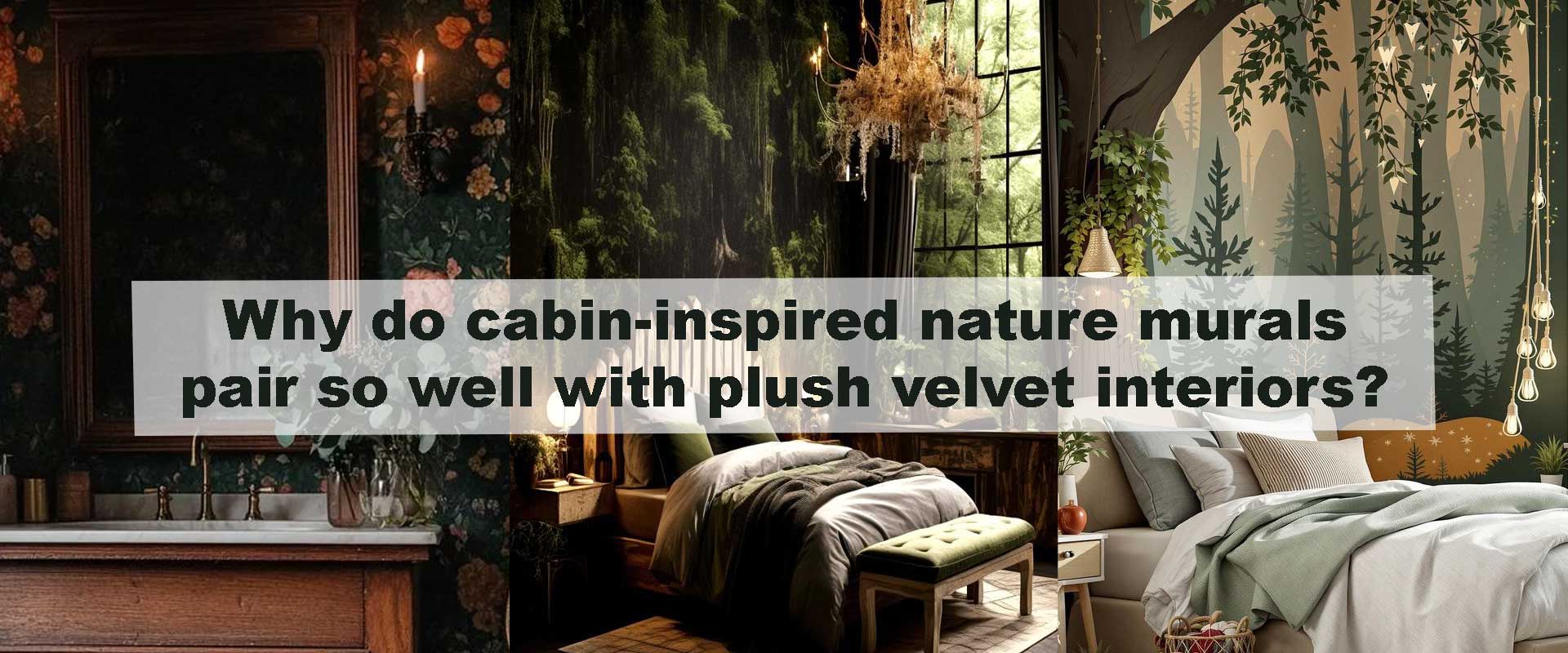
Cabin-inspired nature murals feel instinctively comforting, and when layered with plush velvet interiors, the result is a space that feels grounded, indulgent, and emotionally warm. This pairing works so effortlessly because both elements slow visual energy and soften how a room is experienced. Rather than competing, they reinforce each other—nature grounding the walls and velvet enriching how the space feels to the touch and eye.
Nature wallpaper establishes atmosphere first, setting a backdrop that feels immersive instead of decorative. When velvet seating, drapery, or headboards are introduced, the room gains physical softness that echoes the calm suggested by woodland scenes, mountain silhouettes, and shadowed forests. The combination feels intentional rather than styled, making interiors feel like retreats rather than displays.
Shared Sensory Warmth Creates Balance
Cabin-inspired murals are built around softened light, layered shadow, and organic depth that feels protective rather than dramatic. Forest paths fading into mist, canopies closing overhead, and distant ridgelines all suggest enclosure and quiet retreat. Velvet responds to this atmosphere instinctively, absorbing light and easing contrast so the room feels visually hushed instead of sharp.
When these elements meet, neither tries to dominate the space. The walls establish emotional calm, while velvet furnishings reinforce it through touch and presence, creating a continuous sensory rhythm. This balance becomes especially natural with Forest nature wallpaper, where deep greens and muted transitions echo velvet’s dense, light-softening surface, allowing the room to feel enveloping without feeling heavy.
Texture-Driven Layers Without Overstatement
One reason this pairing feels refined rather than rustic is its reliance on texture instead of ornament. Cabin-style murals avoid sharp graphics, favoring tonal variation, soft gradients, and visual depth that feels atmospheric rather than decorative. Velvet mirrors this approach by offering richness through surface density, allowing softness to carry the design instead of pattern or contrast.
Together, these materials create layered interiors that feel complex yet controlled. The wall behaves like a textured environment rather than a focal interruption, while velvet keeps furnishings visually grounded and calm. Spaces shaped this way feel settled rather than styled, following the same principles highlighted in Minimal interiors feel grounded when finished with subtle charcoal-toned nature walls, where reduced visual noise allows texture and tone to do the emotional work.
Earth-Led Palettes Enhance Velvet’s Depth
Cabin-inspired murals draw their strength from grounded, natural colour stories—bark browns, moss greens, charcoal greys, and softened sky tones that feel weathered rather than styled. These hues naturally deepen velvet’s visual presence, allowing the fabric to appear richer and more dimensional without becoming heavy. A forest-green velvet sofa feels anchored and substantial against woodland scenery, while charcoal velvet seating becomes more enveloping when framed by mountain dusk imagery.
This colour harmony prevents velvet from reading as overly formal while ensuring nature scenes remain calm instead of rugged. The wall and the fabric support one another, creating a layered atmosphere that feels intentional and emotionally warm. Mountain nature wallpaper works especially well here, as its receding horizons and tonal gradients echo the way velvet subtly shifts shade as light moves across its surface.
Light Absorption Creates Cocooned Spaces
Both velvet and cabin-inspired murals soften how light behaves in a room. Nature-led walls often depict filtered daylight, drifting fog, or muted woodland skies, which visually diffuse brightness before it spreads across the space. Velvet reinforces this effect by absorbing light at a material level, reducing glare and softening hard reflections.
When combined, interiors feel quieter and more intimate without becoming heavy. Light settles gently instead of bouncing, supporting relaxation and emotional ease in areas designed for rest or unwinding. This same cocooning quality appears in Snow-dusted mountain nature walls that create warmth without visual weight, where controlled illumination enhances calm rather than brightness.
Rustic Imagery Meets Refined Comfort
Cabin-inspired imagery brings authenticity through references to woodland shelters, alpine landscapes, and natural retreat. Velvet introduces refinement without interrupting that story, acting as a contemporary extension of traditional comfort rather than a contrast. The softness feels earned, not decorative, elevating the space while maintaining its grounded character.
This balance keeps interiors from tipping into either extreme. The mural prevents velvet from feeling overly polished, while velvet ensures the nature imagery never feels raw or literal. Vintage nature wallpaper supports this relationship beautifully, blending aged visual texture with plush modern comfort to create interiors that feel layered, timeless, and deeply welcoming.
How Each Element Contributes
| Design Element | Visual Contribution | Sensory Effect | Overall Impact |
|---|---|---|---|
| Cabin-inspired murals | Depth, atmosphere, enclosure | Visual calm | Grounds the room emotionally |
| Plush velvet upholstery | Softness, richness, warmth | Tactile comfort | Adds indulgence and intimacy |
| Earth-toned palettes | Visual cohesion | Reduced contrast | Creates seamless layering |
| Softened light interaction | Muted reflections | Visual quiet | Enhances cocooning effect |
Where This Pairing Works Best
Living rooms feel more welcoming when nature-led walls establish a relaxed rhythm and velvet seating subtly encourages lingering conversations. The mural softens the perimeter of the space, while plush textures draw people inward, making the room feel settled rather than styled. This effect becomes especially natural in shared spaces shaped around Nature wallpaper for living room, where visual depth supports comfort without demanding attention.
Bedrooms benefit even more deeply from this pairing, as layered textures and softened light promote emotional rest as much as physical comfort. The mural creates a quiet backdrop that slows the mind, while velvet headboards or accent chairs add a cocooning quality that feels protective rather than heavy. Reading corners and lounges gain similar intimacy, feeling absorbed into the space when both elements are applied with intention instead of excess.
The key lies in restraint—allowing the mural to remain atmospheric and velvet to stay tactile rather than dominant. When neither competes for focus, the pairing adapts effortlessly across aesthetics, from modern rustic interiors to refined quiet luxury, always maintaining warmth, balance, and visual calm.
Frequently Asked Questions
Do cabin-inspired murals make rooms feel too dark when paired with velvet?
No. When murals rely on tonal depth rather than contrast, and velvet is balanced with warm lighting, rooms feel enveloping rather than heavy.
Is velvet too formal for nature-led interiors?
Not when paired with organic imagery. The mural softens velvet’s formality, allowing it to feel comforting rather than ornate.
Can this pairing work in smaller rooms?
Yes. Atmospheric walls create depth, while velvet absorbs visual noise, helping compact spaces feel calm rather than crowded.
Which colours work best with this combination?
Forest greens, charcoal greys, warm browns, and muted blues maintain harmony without overwhelming the space.
Does this style age well over time?
It does. Both elements appeal to sensory comfort rather than trends, giving interiors lasting emotional relevance.
Final Thoughts
Cabin-inspired nature murals and plush velvet interiors succeed together because they speak to the same desire for warmth, comfort, and emotional grounding. One calms the eye, while the other comforts the body, creating a layered experience that feels immersive rather than decorative. This balance is why Nature wallpaper works so effortlessly in spaces designed for retreat, anchoring the room in scenery that feels familiar, protective, and quietly soothing.
By allowing nature to guide the walls and softness to shape the furnishings, interiors become places to settle into rather than statements to perform. The result is a timeless atmosphere—grounded, enveloping, and deeply inviting—where visual calm and tactile comfort exist in perfect harmony.