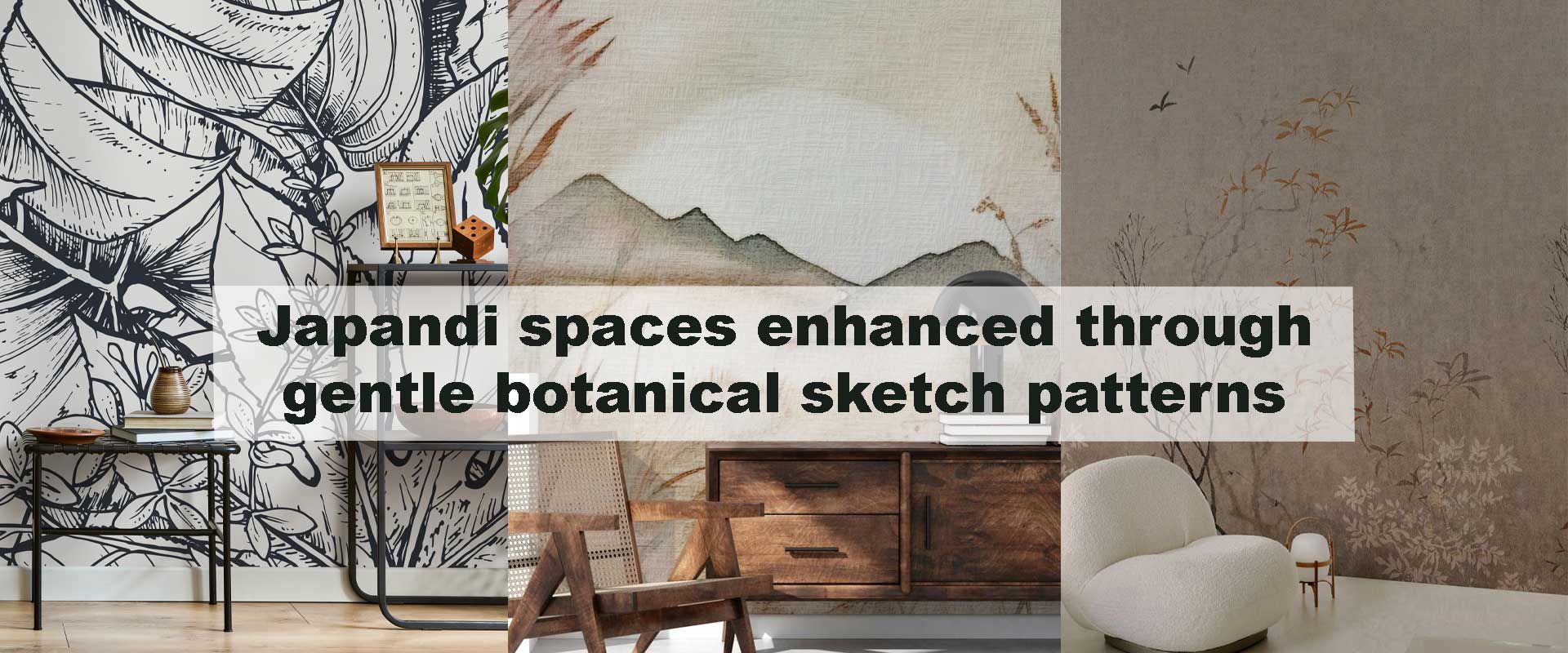
Japandi spaces enhanced through gentle botanical sketch patterns
Calm doesn’t have to feel empty. In thoughtfully designed homes, the Japandi style proves that warmth, restraint, and nature can coexist beautifully. When gentle botanical sketch patterns are introduced into Japandi interiors, they add quiet movement without disturbing the balance that makes this aesthetic so appealing. Japandi spaces enhanced through gentle botanical sketch patterns feel grounded yet expressive, minimal yet alive.
This design approach blends Japanese simplicity with Scandinavian comfort, allowing soft botanical lines to echo nature in its most refined form. Rather than bold florals or dense foliage, sketch-style botanicals feel intentional, breathable, and timeless—perfect for interiors that prioritize calm, texture, and emotional ease.
Understanding Japandi Design at Its Core
Japandi interiors sit at the intersection of two philosophies that value intention over excess. Japanese design emphasizes wabi-sabi, celebrating imperfection and natural aging, while Scandinavian interiors focus on warmth, light, and everyday comfort. Together, they create spaces that feel quietly luxurious without visual noise.
What makes Japandi distinctive is its restraint. Furniture lines are clean, color palettes remain soft and earthy, and décor is chosen with care. Every surface matters, which is why walls play such a critical role. When walls are left completely blank, Japandi spaces can sometimes feel too stark—an effect often discussed in Bringing calm to modern homes with soft botanical wallpaper themes, where subtle nature cues restore emotional balance without clutter.
Why Botanical Sketch Patterns Suit Japandi So Naturally
Botanical sketch patterns feel inherently aligned with Japandi design because they express nature in its most distilled form. Rather than presenting greenery in a literal or decorative way, sketches suggest natural forms through line, pause, and proportion. This restraint mirrors Japandi’s respect for nature as something to be interpreted quietly, not displayed boldly, allowing the space to feel grounded without becoming visually dominant.
Unlike photographic murals or richly colored florals, sketch patterns feel human and contemplative. Their hand-drawn quality introduces gentle imperfection, echoing wabi-sabi values while harmonizing with the clean silhouettes of Scandinavian-influenced furniture. This balance between precision and softness creates walls that feel thoughtful rather than styled.
Equally important is how these sketches protect negative space. Leaves, stems, and branches appear lightly etched, never filled or dense, allowing the wall to breathe and light to move freely across the surface. This measured pacing supports the same calming design psychology explored in Creating a minimalist sanctuary with neutral botanical wall designs, where simplicity doesn’t strip warmth away but instead deepens emotional comfort and visual ease.
Soft Lines Over Bold Motifs: The Power of Visual Restraint
In Japandi interiors, restraint is not a limitation—it is the foundation of calm. Bold motifs, high contrast, or heavy pattern repetition can interrupt the quiet rhythm of a space, pulling attention outward rather than allowing the room to settle inward. Botanical sketch patterns avoid this disruption by relying on suggestion rather than declaration.
Soft, continuous lines guide the eye gently across the wall without abrupt pauses or focal overload. This uninterrupted movement creates a sense of flow that supports relaxation and spatial clarity, especially in rooms meant for rest or gathering. Instead of demanding attention, the pattern becomes part of the room’s architecture.
This philosophy explains why Japandi spaces often favor layered subtlety over visual density, a balance echoed in Why wooden furniture feels richer against soft botanical garden-print walls. When patterns remain restrained, natural materials like wood, linen, and stone are allowed to speak more clearly. The result is an interior where every element feels intentional, calm, and deeply connected rather than visually competing.
Botanical Sketch Patterns in Japandi Living Spaces
Living areas benefit profoundly from botanical sketch walls because they provide structure without visual dominance. Positioned behind a sofa or along the main seating wall, these delicate patterns act as quiet visual anchors, grounding the room while allowing furniture and natural materials to remain the focus. The sketched lines introduce movement at eye level, giving the space depth without interrupting Japandi’s calm, open rhythm.
When paired with warm, diffused lighting and tactile textures like linen upholstery, timber finishes, and woven accents, botanical sketches subtly elevate the atmosphere. They soften clean architectural lines and add a sense of organic continuity, which is why curated selections from Botanical Wallpaper feel so at home in Japandi living spaces—refined, restrained, and intentionally understated rather than overtly decorative.
Bedrooms That Feel Restful, Not Empty
Japandi bedrooms are designed around stillness, making visual softness essential. Botanical sketch patterns work beautifully here because they introduce gentle character without creating stimulation. A lightly sketched leaf or branch motif behind the bed can replace multiple art pieces, simplifying the room while maintaining emotional warmth and visual interest.
Soft, nature-led designs like Botanical Wallpaper for Bedrooms help sustain a sense of calm while preventing the space from feeling unfinished or sparse. The subtle flow of line work supports relaxation, echoing the same serene atmosphere found in The botanical watercolor wall trend bringing dreamy calm to bedrooms. The result is a sleep environment that feels grounded, peaceful, and quietly expressive—perfectly aligned with Japandi’s restorative intent.
Kitchens and Workspaces with Gentle Botanical Rhythm
Japandi kitchens and home offices benefit from visual softness just as much as living spaces, especially in areas dominated by clean lines and functional surfaces. Botanical sketch patterns introduce warmth and organic rhythm without interrupting clarity, allowing stone countertops, wood cabinetry, and matte finishes to remain visually grounded. Rather than decorating the space, these patterns quietly soften it, reducing visual sharpness while preserving purpose.
Subtle options like Botanical Wallpaper for Kitchen and Botanical Wallpaper for Office help walls feel intentional rather than purely practical. Their calm, flowing line work supports mental ease and sustained focus, reflecting the same thoughtful balance described in Designing a home office with botanical wall patterns that support focus. In Japandi settings, this gentle rhythm encourages productivity without visual fatigue.
Minimal Line Art and Japandi Harmony
Among botanical styles, line art feels especially aligned with Japandi interiors due to its disciplined restraint. Fine outlines of leaves and stems echo the simplicity of the design language, reinforcing cohesion between walls, furnishings, and architectural form. The absence of shading or heavy fill allows negative space to remain dominant—a core principle in Japandi design.
Designs such as Minimal Line Art Botanical Wallpaper offer a refined way to introduce nature without visual density. These patterns often feel almost architectural, as though drawn into the structure of the room rather than placed upon it. Their quiet presence supports Japandi’s long-term relevance, aging gracefully as interiors evolve while maintaining balance, clarity, and calm.
Comparing Botanical Sketch Styles for Japandi Spaces
| Botanical Style | Visual Impact | Best Use in Japandi |
|---|---|---|
| Fine line sketches | Very subtle | Bedrooms, offices |
| Loose hand-drawn botanicals | Soft organic flow | Living rooms |
| Vertical branch sketches | Height-enhancing | Narrow spaces |
| Large-leaf outlines | Calm statement | Feature walls |
Each option supports Japandi interiors differently, but all rely on restraint, spacing, and natural rhythm to succeed.
Avoiding Common Styling Mistakes
One of the most frequent missteps in Japandi interiors is over-layering visual elements in an attempt to add warmth. When botanical sketch wallpaper is paired with heavy artwork, bold cushions, or competing patterns, the space can quickly lose its sense of quiet order. Japandi relies on visual breathing room, where each element has purpose and space to exist without overlap or noise.
Another common issue is selecting botanicals that feel overly decorative rather than contemplative. Dense florals, ornate detailing, or sharp color contrasts can pull the interior toward traditional or maximalist territory, disrupting Japandi’s refined balance. Sketch-style botanicals should remain light, spacious, and understated—present enough to add character, yet restrained enough to let simplicity lead.
How Lighting Enhances Botanical Sketch Walls
Lighting plays a subtle but powerful role in how botanical sketch patterns are experienced. Soft, diffused light allows fine line work to emerge gently, creating delicate shadowing that adds depth without emphasis. This kind of illumination supports Japandi’s preference for atmosphere over contrast, helping walls feel calm rather than decorative.
Warm-toned lighting is especially effective, as it complements natural materials like wood, linen, and stone while softening the appearance of sketch lines. Instead of spotlighting the pattern, the light interacts quietly with it, allowing the design to shift throughout the day. This evolving relationship between light and line brings dimension to the space without introducing visual complexity.
Long-Term Appeal of Sketch Botanicals in Japandi Homes
One of the most enduring qualities of botanical sketch patterns lies in their ability to transcend trends. Rather than relying on bold color statements or seasonal motifs, sketch designs draw their strength from structure, proportion, and natural form. This makes them inherently timeless, aligning seamlessly with Japandi’s philosophy of choosing elements that age gracefully rather than demand frequent change.
As interiors evolve over the years—whether through new furniture, shifting layouts, or subtle updates in décor—these walls remain visually relevant. Their understated presence allows them to adapt quietly, supporting the space instead of dominating it. This flexibility ensures the room feels cohesive long-term, offering continuity without visual stagnation.
Subtle Texture Without Visual Weight
Although Japandi interiors avoid excess, they never feel flat. Texture plays a crucial role, and botanical sketch patterns introduce it in the most restrained way possible. Fine lines and hand-drawn contours create the impression of depth without adding visual density, allowing walls to feel softly layered rather than decorated.
This delicate texture works in harmony with natural materials such as wood grain, stone surfaces, woven textiles, and matte ceramics. The result is a space that feels tactile and grounded while remaining visually calm. By balancing interest with restraint, sketch botanicals reinforce one of Japandi design’s core strengths—rich atmosphere achieved through simplicity.
FAQ: Japandi Botanical Sketch Patterns
Do botanical sketch patterns suit small Japandi rooms?
Yes. Their light, open composition helps small rooms feel calmer and more spacious without visual overload.
Are sketch botanicals better than solid walls for Japandi design?
In many cases, yes. They add warmth and personality while preserving the minimalist foundation of the style.
Can botanical sketch wallpaper feel too decorative?
Only if the pattern is dense or high-contrast. Fine-line, spaced designs maintain Japandi restraint.
Do these patterns work with dark wood furniture?
Absolutely. Soft botanical sketches balance darker woods by adding lightness and organic contrast.
Is one wall enough in Japandi interiors?
Typically, yes. A single botanical sketch wall often provides enough visual interest without disrupting harmony.
Conclusion: Quiet Nature for Thoughtful Living
Japandi spaces enhanced through gentle botanical sketch patterns offer a refined way to bring nature indoors without compromising calm. These designs respect negative space, celebrate imperfection, and support emotional ease—everything Japandi stands for.
By choosing subtle lines, soft palettes, and intentional placement, botanical sketch walls become more than décor. They become part of the home’s rhythm, supporting balance, focus, and comfort. For interiors that value serenity over statement, this quiet approach to nature-inspired design remains timeless and deeply satisfying.