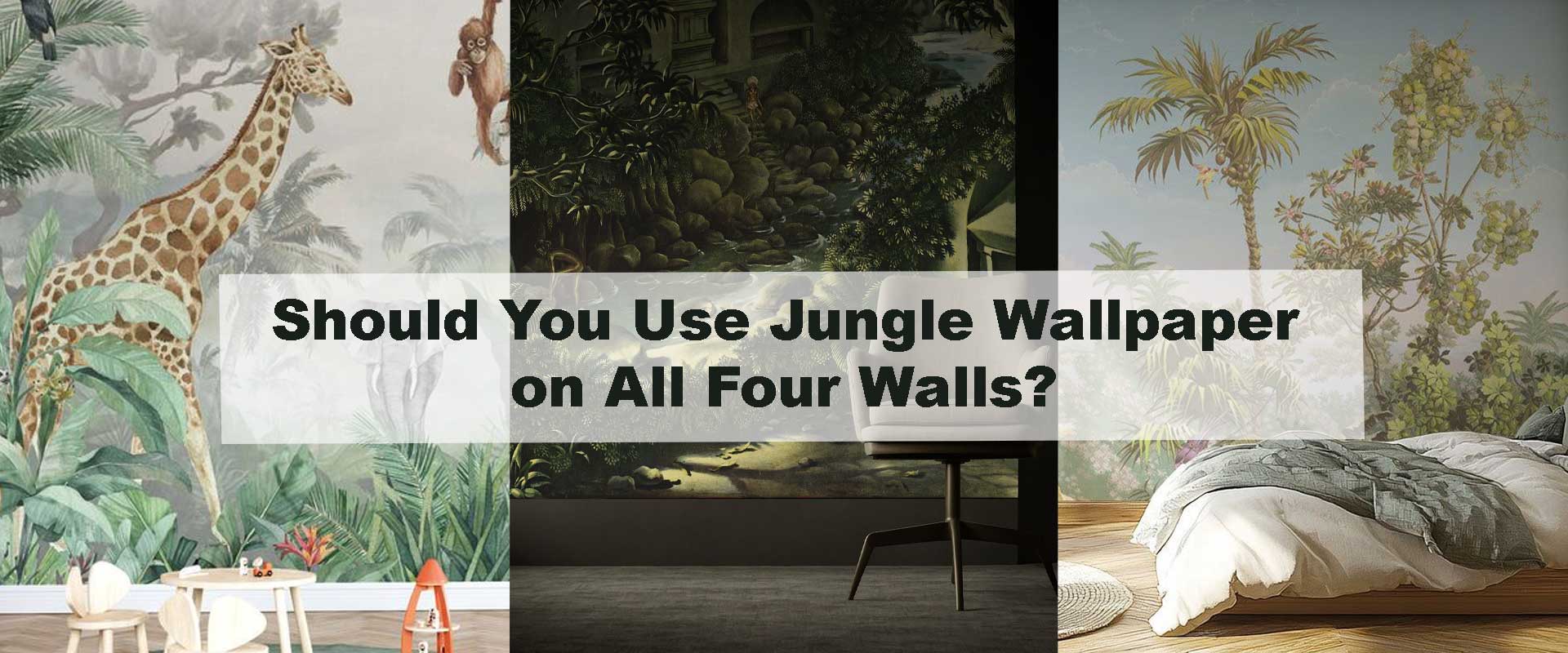
Should You Use Jungle Wallpaper on All Four Walls?
Jungle wallpaper has an unmistakable presence, bringing layered greenery, organic movement, and a sense of immersion into interior spaces. Yet the idea of using it on all four walls often raises hesitation. Will the room feel enveloping or overpowering, serene or visually intense? The answer lies in thoughtful design choices, from pattern scale and color depth to lighting and furniture balance. When these elements work in harmony, full-wall jungle wallpaper can create a space that feels intentional, calming, and deeply atmospheric rather than overwhelming.
This guide explores when covering all four walls works beautifully, when a more restrained approach makes sense, and how to style jungle wallpaper so it enhances the room with balance, depth, and refined visual comfort.
Understanding the Visual Impact of All-Over Jungle Wallpaper
Jungle wallpaper is inherently expressive—layered leaves, organic movement, and nuanced greens create a sense of living texture rather than flat decoration. When applied to all four walls, this richness shifts from being a visual accent to becoming the defining atmosphere of the room. The space no longer feels styled around the walls; instead, the walls actively shape how the room is experienced.
Rather than functioning as a background, the wallpaper becomes the environment itself. This immersive quality feels luxurious and enveloping, similar to stepping into a shaded conservatory or a quiet forest interior where visual boundaries soften. Because contrast is reduced, the eye stops scanning for focal points and begins to absorb the space as a unified whole.
When the pattern flows continuously around the room, visual tension actually decreases. The absence of abrupt transitions allows the design to feel intentional and composed, which is why full-coverage jungle wallpaper often feels calmer and more harmonious than a single bold feature wall paired with plain paint. Continuity, in this case, creates comfort rather than intensity.
When Using Jungle Wallpaper on All Four Walls Works Best
Rooms Designed for Mood, Not Minimalism
Spaces created for relaxation, retreat, or slow, intentional living are especially well suited to four-wall jungle wallpaper. Bedrooms, reading lounges, dining rooms, and boutique-style powder rooms benefit from the cocooning effect, where the walls gently wrap the space rather than frame it.
Because jungle patterns naturally draw the gaze inward, they minimize visual distractions and external noise. The layered foliage encourages focus and stillness, supporting emotional ease in much the same way immersive designs do in Deep Jungle Wallpaper Designs That Bring Natural Calm Indoors, where depth and repetition foster a sense of grounding and quiet escape.
Homes With Controlled Styling
All-over jungle wallpaper thrives in interiors where styling is thoughtful and restrained. Clean furniture silhouettes, curated accessories, and natural finishes allow the walls to remain the dominant visual element without competition. When excess ornamentation is removed, the wallpaper reads as refined and deliberate rather than overwhelming.
Neutral upholstery, warm-toned woods, stone surfaces, and matte metals provide balance by anchoring the richness of the pattern. These materials introduce subtle contrast through texture instead of color, helping the room feel layered, composed, and intentionally curated rather than visually crowded.
Pattern Scale Matters More Than Room Size
A common misconception is that jungle wallpaper on all four walls only works in large rooms. In reality, visual scale plays a far greater role than square footage. How the pattern is sized, spaced, and repeated determines whether a room feels expansive or visually compressed.
Large-scale leaves with generous breathing space between motifs often feel calmer and more sophisticated in smaller rooms than dense micro-patterns. Oversized designs simplify what the eye has to process, reducing visual noise and allowing the space to feel more open and intentional. This is why even compact rooms can feel surprisingly expansive when wrapped in thoughtfully scaled jungle wallpaper, reflecting the same visual principles discussed in How Can Tropical Wallpaper Make Small Rooms Feel Larger?.
By contrast, tightly packed, small-repeat patterns introduce constant visual stops. While they can add energy, they require more space to breathe. In larger rooms, these dense designs have room to unfold gradually, creating texture and richness without overwhelming the senses.
Color Depth and Light: The Deciding Factors
Dark Jungle Wallpapers Create Cocooning Comfort
Deep emeralds, inky greens, and shadowed foliage tones absorb light softly rather than reflecting it harshly. When applied across all four walls, these darker jungle palettes create a sense of enclosure that feels intimate and emotionally grounding instead of heavy. In spaces designed for evening use—such as dining rooms or bedrooms—this depth adds warmth and a quiet sense of retreat.
The cocooning effect becomes especially refined when paired with warm, layered lighting. Table lamps, wall sconces, and indirect illumination highlight tonal variation within the design, enhancing depth without flattening the pattern or darkening the room excessively.
Lighter Jungle Palettes Feel Airy and Natural
Softer greens, mist-washed botanicals, and watercolor-style jungle designs interact differently with light. Rather than absorbing it, they diffuse illumination gently across the surface. When used on all four walls, these lighter palettes preserve openness while still delivering an immersive, nature-inspired atmosphere.
These designs are particularly well suited to daytime living areas where natural light shifts throughout the day. As brightness changes, the wallpaper evolves subtly—appearing crisp and fresh in the morning, then softer and more layered by afternoon—keeping the space feeling dynamic without ever becoming visually demanding.
Four Walls vs Feature Wall: A Clear Comparison
| Design Approach | Visual Effect | Best For |
|---|---|---|
| Jungle wallpaper on one wall | High contrast, focal emphasis | Modern layouts, open plans |
| Jungle wallpaper on all four walls | Immersive, cohesive atmosphere | Bedrooms, dining rooms, intimate spaces |
| Neutral walls with jungle accents | Safe, minimal commitment | Transitional interiors |
| Full-room jungle styling | Boutique, intentional design | Statement homes, curated spaces |
Feature walls create contrast, while four-wall applications create continuity. If your goal is atmosphere rather than emphasis, full coverage is the stronger choice.
How Furniture and Decor Influence the Outcome
When jungle wallpaper wraps every wall, furniture should feel grounded, tactile, and visually calm rather than ornate or highly detailed. Natural materials such as linen, rattan, oak, and softly finished leather introduce warmth and authenticity, helping the space feel anchored instead of visually busy. These materials echo the organic character of the wallpaper, creating a natural dialogue between surfaces rather than competition.
Busy patterns in upholstery or accessories can disrupt this balance. Instead of repeating pattern, contrast it with texture—woven rugs, raw ceramics, hand-thrown vessels, soft throws, and matte finishes add depth without distraction. This approach allows the wallpaper to remain the dominant visual layer while the furnishings quietly support it, resulting in a space that feels layered, intentional, and quietly luxurious rather than loud.
Choosing the Right Jungle Style for Full-Wall Use
Not all jungle designs respond the same way when applied across four walls, which makes selection especially important. Designs with soft botanical compositions, flowing leaves, and organic spacing tend to feel calmer and more immersive than high-contrast wildlife scenes or sharply defined motifs. When movement feels natural rather than dramatic, the room reads as atmospheric instead of themed.
Watercolor effects, tonal foliage, and gently overlapping leaves introduce rhythm without visual tension. These designs encourage the eye to move slowly, creating continuity rather than interruption. When browsing immersive options within Jungle Tropical Wallpapers, look for patterns that emphasize depth and layered movement over bold contrast. Collections such as botanical themes, deep jungle designs, and texture and foliage are particularly well suited to full-room applications where cohesion matters most.
Lighting Makes or Breaks Full-Wall Jungle Wallpaper
Lighting plays a defining role in how jungle wallpaper is perceived throughout the day. Soft, layered lighting reveals depth and tonal variation within the print, while harsh overhead lighting can flatten the design and reduce its natural complexity. The goal is to create illumination that feels diffused rather than direct.
Warm bulbs enhance greens, olives, and earthy undertones, keeping the palette rich and inviting. Indirect lighting—through lamps, sconces, or concealed sources—introduces gentle shadow play that mirrors natural forest light filtering through leaves. This shifting interaction between light and surface keeps the wallpaper visually engaging without becoming tiring, allowing the room to feel both dynamic and deeply restful.
Common Concerns—And Why They’re Often Unfounded
“Will it feel too busy?”
This is the most common hesitation, yet it’s often based on how we view wallpaper as decoration rather than environment. When a jungle pattern wraps all four walls, the eye stops jumping between contrast points and instead reads the room as one cohesive visual field. Because the pattern is uninterrupted, it becomes atmospheric rather than attention-seeking, allowing the space to feel calmer and more settled than a single dramatic feature wall ever could.
“Will it date the room?”
Unlike trend-driven motifs that rely on novelty, jungle wallpaper is rooted in natural forms that never truly fall out of relevance. Leaves, branches, and organic movement have existed in interiors for centuries, continually reinterpreted rather than replaced. When the design leans toward botanical authenticity instead of exaggerated fashion colors, it ages gracefully and adapts effortlessly to evolving furniture and décor choices.
“Is it too bold for everyday living?”
Bold does not automatically mean overwhelming. In fact, immersive wall treatments often feel more soothing than stark minimalism because they remove visual emptiness and replace it with gentle rhythm. The continuity of foliage creates a sense of enclosure that feels protective and grounding, supporting relaxation rather than overstimulation—especially in spaces used daily for rest, dining, or quiet focus.
When You Should Reconsider All-Four-Wall Coverage
Despite its versatility, jungle wallpaper isn’t always the best solution for every layout. Highly open-plan interiors with multiple visual zones can feel visually crowded when a dense pattern extends uninterrupted across expansive sightlines. In these cases, defining specific areas with wallpaper rather than covering every wall helps maintain clarity and spatial flow.
Rooms rich in architectural detail—ornate moldings, dramatic ceiling features, or bold structural elements—may also struggle with full-wall jungle coverage. When too many focal points compete, the space can feel visually compressed rather than composed. Here, a more selective application or pairing jungle wallpaper with calmer adjacent spaces allows the design to breathe while still delivering its signature sense of depth and balance.
Final Thoughts: Is Jungle Wallpaper on All Four Walls Worth It?
Using jungle wallpaper on all four walls isn’t about boldness—it’s about intention. When pattern scale, color depth, lighting, and furnishings work together, the result feels immersive, calming, and thoughtfully designed rather than overwhelming.
If your goal is to create a space that feels wrapped in nature, emotionally grounding, and visually rich, full-wall jungle wallpaper delivers an experience that paint alone simply can’t match. With the right design choice, it transforms walls into atmosphere and rooms into destinations.