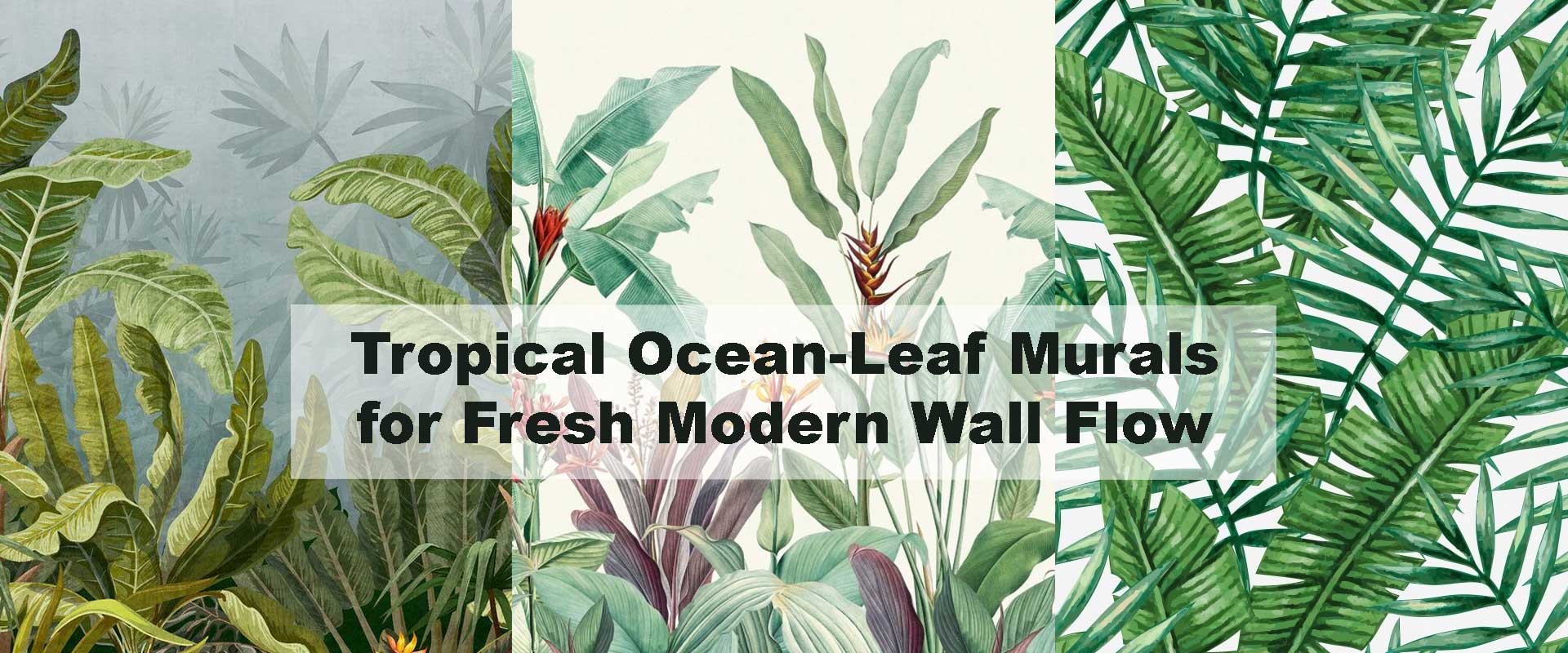
Tropical Ocean-Leaf Murals for Fresh Modern Wall Flow
Ocean-leaf murals have become one of the most refreshing ways to shape a modern interior, especially when a room needs movement, clarity, and a sense of breathable calm. The primary keyword tropical ocean-leaf murals lands beautifully within design conversations because it brings fluidity, soft gradients, and natural green-blue synergy into contemporary spaces. These murals feel gentle but impactful, weaving oceanic rhythm with layered foliage that guides the eye across the wall in one calm motion. Many homeowners turn to natural mural artistry because it helps rooms feel continuous, brighter, and more connected to the outdoors, which is why this design direction is gaining momentum across modern interiors.
To understand why ocean-leaf motifs produce such restorative energy, it helps to look at how movement, color blending, and organic lines reshape the perception of a room. Ocean-leaf murals carry gentle sweeps that mimic currents, creating visual flow that works beautifully with coastal palettes and minimal furniture. They don’t overwhelm surfaces; instead, they soften architecture while forming a welcoming backdrop, offering the same spatial openness mentioned in How Can Tropical Wallpaper Make Small Rooms Feel Larger?. For anyone aiming to build a fresh modern wall flow, few styles perform as consistently and elegantly as tropical ocean-leaf murals.
How Ocean-Leaf Murals Create a Fresh Modern Wall Flow
The most captivating trait of ocean-leaf mural design is how it brings gentle, controlled motion to a room. Unlike static patterns, these murals replicate natural currents—swaying leaves, drifting water, soft shadowing—which help walls feel active without becoming busy. This “motion without chaos” concept is central to modern design, where interiors benefit from clarity and calm. It also aligns with the soothing gradients found within many Jungle Tropical Wallpapers, especially those designed to evoke natural shifts in light.
Using Oceanic Color Palettes for Natural Movement
Ocean-inspired palettes—seafoam greens, teal currents, aqua washes, and muted navy layers—add depth and breathing space. These colors work especially well with neutrals like sand, stone, oat, and white pine. When ocean tones blend into leafy overlays, murals create visual expansion similar to the depth-giving layers discussed in Deep Jungle Wallpaper Designs That Bring Natural Calm Indoors. Modern interiors benefit from this effect because the walls begin to feel further away, guiding the user’s gaze across a gentle horizon.
Why Leaf Patterns Enhance Fluidity
Leaf silhouettes—especially elongated, arching forms—mirror tidal movement. When combined with ocean gradients, they act like natural pathways for the eye. The shapes direct attention upward, outward, or diagonally depending on how the mural is composed. Designers often use these flow patterns to soften boxed architecture or highlight ceiling height. Rooms that feel rigid or angled gain fluidity, making the overall environment feel more intentional and more aligned with contemporary style.
Blended Transitions for Softer Atmospheres
In many ocean-leaf murals, shadows are feathered, colors are layered seamlessly, and the transition between light and dark is gradual. This prevents visual interruption and keeps the atmosphere tranquil. This technique mirrors watercolor transitions, making it a perfect fit for homes that already incorporate watercolor murals in adjacent rooms. A consistent design rhythm ensures the house feels coherent, even when the visuals are diverse.
Why Tropical Ocean-Leaf Murals Work So Well in Contemporary Interiors
Tropical murals have a long history, but the ocean-leaf variation stands out because it expresses natural calm through a distinctly modern lens. Instead of dense tropical repeats, these murals lean into open compositions and airy spacing. For people designing minimal modern environments, this balance is ideal: natural enough to feel organic, yet sleek enough to complement clean-lined furniture.
A Perfect Fit for Soft Minimalism
Soft minimalism has become a leading aesthetic in today’s homes, emphasizing rounded edges, plush textures, tonal palettes, and serene focal walls. Ocean-leaf murals complement this style because they never feel heavy. Their movement is slow and intentional—creating a sense of harmony similar to the observations found in Fresh Botanical Wallpaper Themes Inspired by Tropical Leaves. These murals create an emotional softness, which soft minimalism heavily relies on.
Enhancing Natural Light With Leafy Ocean Gradients
Light interacts beautifully with ocean-leaf murals because the gradients amplify brightness and extend the perception of sunlight. When placed opposite a window, the mural appears to glow slightly, as if catching the day’s natural illumination. This effect is strongest with sea-green and aqua tones, which reflect light efficiently. Rooms with limited natural light also benefit hugely, as the gradients mimic the soothing dispersal of soft daylight.
Balanced Texture for Modern Architecture
Where modern architecture often uses smooth surfaces—polished concrete, matte walls, slim metal frames—ocean-leaf murals offer a gentle textural contrast. Their organic lines soften the rigidity of these materials, making the environment feel more human and more grounded. This contrast is part of the same design principle that makes jungle leaf murals that add depth to modern interior corners so effective. By pairing natural texture with structured forms, the room gains balance.
Rooms That Benefit Most From Tropical Ocean-Leaf Murals
Living Rooms That Need Airy Openness
Living rooms often set the tone for a home’s overall atmosphere. Ocean-leaf murals instantly brighten these spaces with their relaxing palette and expansive flow. When used on the longest wall, they help unify the room’s focal points—sofa, artwork, shelving—by creating a consistent visual direction. They also pair well with coastal patterns in nearby hallways or secondary rooms, ensuring a cohesive home theme.
Bedrooms Seeking Calm and Gentle Motion
Ocean-leaf murals are perfect for bedrooms because their movement is soft and calming. Placed behind the headboard, they create a restful backdrop that feels natural but not overwhelming. Many homeowners choose aqua or mist-green leaf designs because they lend a gentle sunrise effect. This aligns strongly with the principles mentioned in Soft Tropical Wallpaper Ideas for Relaxing Bedroom Makeovers, where subtlety leads to relaxation.
Dining Rooms That Need Light but Not Boldness
Dining rooms are often challenging spaces because they require both personality and subtlety. Ocean-leaf murals provide the right mix of flow and calm. Their gentle motion keeps the room lively, while their color palette prevents distraction during gatherings. Pairing the mural with soft linen chairs, coastal ceramics, or brushed oak tables enhances the natural aesthetic.
Entryways Looking for a Welcoming Gesture
An entryway with a tropical ocean-leaf mural immediately feels open and refreshing. The sweeping lines naturally guide guests inward, creating a sense of invitation. This is especially powerful in small entry halls, where even slight visual expansion can significantly improve the perception of space.
Color Directions for Ocean-Leaf Walls
Aqua & Mist Green: The Classic Ocean Pairing
Aqua and mist green remain the signature duo for ocean-leaf murals because they deliver clarity, lift, and gentle movement in a way that feels both natural and contemporary. Aqua carries the brightness of shallow coastal water, while mist green adds botanical softness, creating a palette that seems to drift across the wall. Together, they generate a refreshing openness that instantly brightens a room. Because the gradients often fade softly into each other, this combination produces a lightweight atmosphere—perfect for spaces that need calm without losing character. Aqua-mist murals shine especially well in living rooms and light-filled bedrooms where their subtle luminosity becomes part of the room’s daily rhythm.
Deep Teal & Forest Green for Dramatic Calm
Deep teal currents mixed with forest-green foliage create a more immersive, cocooning mood ideal for large rooms or interiors seeking dramatic serenity. These palettes echo the richness of untouched wilderness, drawing parallels to the tonal depth found in the forest collection and the enveloping tones inherent in moody palettes. The darker hues help walls recede visually, adding a sense of quiet sophistication while amplifying the mural’s fluidity. In expansive spaces with high ceilings, deep teal and forest green work beautifully to soften architectural scale, making large rooms feel intimate yet luxurious. Their depth also complements soft metallics, charcoal linens, and warm wood tones, creating a refined balance between drama and calm.
Ocean Grey & Soft White for Minimal Modernism
For homes embracing minimal modern design, ocean greys combined with soft white leaf silhouettes deliver effortless refinement. The muted grey tones mimic the quiet stillness of early-morning shorelines, while the white accents introduce clarity and precision. This pairing is subtle yet deeply atmospheric, giving the wall gentle motion without introducing strong color contrast. Ocean-grey murals work best alongside monochrome furnishings, brushed steel fixtures, cloud-white upholstery, and light woods, creating a seamless design language. The result is a modern interior that feels both airy and structured—a perfect fit for minimalists who want the calmness of nature without strong botanical presence.
Pairing Furniture With Ocean-Leaf Murals
Light Woods and Woven Textures
Light natural woods—ash, birch, oak, or pale maple—harmonize exceptionally well with ocean-leaf murals. These woods reflect daylight softly and complement the mural’s airy gradients. When paired with woven textures like rattan, jute, seagrass, and bamboo, the combination invites nature deeper into the room. These materials offer structure while still feeling soft and approachable, echoing the mural’s gentle currents. Their effect mirrors the grounded, organic balance emphasized in Why Choose Jungle Wallpaper Over Traditional Patterned Prints, where natural elements help anchor visual movement. Together, these textures create a cohesive serenity that suits contemporary, coastal, and soft-minimal spaces.
Soft Fabrics and Organic Shapes
Soft upholstery materials like linen, boucle, cotton canvas, and textural blends complement the mural’s flow. When shaped into cloudlike sofas, rounded armchairs, curved benches, or circular poufs, these pieces reinforce the mural’s organic motion. The room feels more fluid and inviting because each object gently echoes the leaf sweeps and waterlike transitions. These silhouettes help the eye move without interruption, making the space feel connected and emotionally calm. Rooms that rely on softness—such as bedrooms, reading nooks, or coastal-modern living rooms—benefit immensely from this pairing.
Neutral Ceramics and Matte Décor
Neutral ceramics, matte vases, handcrafted pottery, textured stone bowls, and sculptural pieces in soft beige, sand, clay, slate, or warm grey elevate the natural atmosphere without competing visually. Their quiet texture and subtle shadows complement the ocean-leaf mural rather than distract from it. By using matte finishes instead of glossy ones, the room avoids harsh reflections, preserving the mural’s gentle glow and fluid rhythm. These accents help maintain a unified palette that supports the mural’s calm, making the entire space feel thoughtfully layered and aesthetically sound.
How Ocean-Leaf Murals Influence Room Perception
They Stretch Horizontal Space
Ocean-leaf murals often incorporate flowing horizontal sweeps that mimic waves or drifting seagrass. These movements subtly pull the gaze outward, giving narrow rooms or elongated spaces the illusion of increased width. This horizontal extension helps reduce the feeling of confinement in compact areas and makes open-plan homes feel more expansive. When paired with streamlined furniture or long-line shelving, the effect becomes even stronger, resulting in rooms that feel open, relaxing, and naturally coordinated.
They Lift Vertical Space
Upward curves and arching leaf silhouettes draw the eye toward the ceiling, making a room feel taller and more open. This vertical lift is invaluable in spaces with standard or low ceilings, as it stretches the perceived height. The principle is similar to what underpins many uplifting design choices discussed in What Tropical Wallpaper Style Works Best for Bright Living Rooms, where airy motifs help elevate the atmosphere. When combined with tall drapery, slim lighting fixtures, or vertical plant arrangements, the effect becomes transformative—shifting the architectural mood without structural changes.
They Improve Spatial Flow
A mural with consistent directional movement—whether diagonal, vertical, or horizontal—helps guide the eye across the room in a smooth, uninterrupted path. This improves spatial flow by preventing visual blockages that might otherwise fragment the room. In open-plan homes, this is particularly valuable because the mural helps unify different zones such as the living area, dining section, and entryway. Instead of feeling disjointed, the space becomes visually harmonious, with each area subtly connected by the mural’s fluid design.
Choosing the Right Ocean-Leaf Mural for Your Home
Consider Room Size Before Pattern Density
Room size influences how much pattern detail a space can comfortably support. Smaller rooms benefit from airy ocean-leaf murals with softer gradients and open spacing, preventing the walls from feeling heavy. Larger rooms can handle deeper tones and denser leaf arrangements without becoming visually crowded. Ocean-leaf murals come in a wide spectrum—from faint botanical shadows to lush, full-motion tropical compositions reminiscent of rainforest styles. Selecting the appropriate density helps ensure the room feels balanced and thoughtfully proportioned.
Balance Your Lighting
Lighting has a profound effect on how ocean-leaf murals appear throughout the day. Natural light enhances aqua, teal, and sea-green tones, making the mural feel luminous and alive. In dimly lit rooms, watercolor-style gradients help amplify brightness and soften shadows. Warm LED lighting adds evening coziness, while layered lighting—table lamps, floor lamps, soft uplights—adds dimensionality to the mural’s transitions. This ensures the wall maintains depth and clarity in all conditions.
Match Complementary Collections
To build a cohesive home-wide visual story, ocean-leaf murals should transition smoothly into adjacent areas. Complementary collections like fresh green designs or botanical themes extend the natural mood without repeating the same motif. This approach allows each room to feel unique while maintaining an overarching flow. Subtle palette echoes—matching greens, softened blues, natural neutrals—strengthen this continuity and produce a home that feels layered, calm, and connected.
Ocean-Leaf Murals vs Other Tropical Wall Styles
Here is a helpful comparison to see how ocean-leaf murals differ from other common tropical choices:
| Feature | Ocean-Leaf Murals | Traditional Tropical Murals | Tropical Watercolor |
|---|---|---|---|
| Atmosphere | Light, airy, flowing | Dense, vibrant, bold | Soft, artistic |
| Movement | Gentle currents and leaf sweep | Busy repeats | Blended washes |
| Best For | Modern, coastal, calming rooms | Bold feature walls | Relaxation spaces |
| Depth Effect | Expansive, fluid | Strong, immersive | Subtle, smooth |
| Visual Density | Low–medium | Medium–high | Low |
| Room Impact | Adds clarity and openness | Adds energy | Adds softness |
Each one has its own purpose, but ocean-leaf murals remain the most versatile for modern interiors.
Creating a Coastal-Modern Theme Using Ocean-Leaf Murals
A coastal-modern interior thrives on clean silhouettes, softened edges, and nature-driven calm, and ocean-leaf murals are one of the most effective elements to bridge these qualities. Their fluid gradients mimic drifting currents while the leafy sweeps create movement that feels fresh rather than busy. This combination naturally supports contemporary rooms seeking balance—spaces where you want openness, clarity, and a connection to nature without relying on bold tropical density. Ocean-leaf murals bring a serene pulse into the home that works beautifully alongside minimal wood textures, pale textiles, and soft shadows, making them a natural anchor for coastal-modern style.
Use Natural Neutrals as the Base
A strong coastal-modern foundation begins with a palette of understated neutrals that feel sun-washed and quiet. Think sands, oat creams, stone-beige, driftwood brown, and pale mushroom tones. These hues reflect coastal softness while keeping the mural’s movement at the center of attention. When placed around ocean-leaf gradients, these neutrals act like a shoreline—steady, grounding, and supportive. They allow the teal or seafoam tones within the mural to glow without overpowering the room, keeping everything light, refined, and gently harmonious.
Add Blue-Green Accents
Blue-green accents reinforce the mural’s natural palette while maintaining the room’s airy rhythm. Soft teal cushions, sage-green throws, aqua ceramic pieces, or mist-blue lamps create subtle echoes of the mural’s oceanic undertones. The key is moderation: a few carefully placed accents keep the palette cohesive without tipping the room into theme-heavy décor. This controlled repetition of color helps the eye move softly from object to object, blending décor with the mural in a way that feels intentional and calming.
Introduce Botanical Layering
Botanical layering is one of the most reliable ways to enrich a coastal-modern room without overwhelming it. Small doses of nature-inspired textures—linen drapery, foliage-patterned cushions, woven bamboo accents, or soft botanical prints—add dimensional warmth.
When the room already features an ocean-leaf mural, these subtle additions help reinforce the organic flow without creating visual clutter. A balanced approach works best: a single botanical fabric or a cluster of nature-toned vases can echo the textures of texture and foliage perfectly. This strategy mirrors the calm visual transitions discussed in Botanical Wallpaper Panels Adding Gentle Jungle Color Movements, where layered softness enhances overall depth.
How Ocean-Leaf Murals Support Wellness and Mood
They Promote a Calm State of Mind
Ocean-leaf murals gently replicate nature’s slow, rhythmic motion, which the mind instinctively interprets as calming. The leaf curves mimic the soft sway of underwater plants, while the gradients replicate the fading of coastal light. These sensations create a psychological ease that supports rest, relaxation, and emotional grounding. Bedrooms, quiet reading corners, and restorative spaces benefit deeply from this environment because the mural encourages a natural slowing of thought and breath, similar to how ocean movement calms the mind outdoors.
They Increase Visual Breathing Space
Walls that feel open and layered allow the room to feel more breathable, giving the user a sense of freedom rather than confinement. Ocean-leaf murals excel in this because their transitions fade naturally rather than stopping abruptly. This removes the sharp visual boundaries that often make rooms feel cramped. The result is biophilic comfort—an interior that feels closer to nature, where depth and spaciousness coexist without dramatic contrast.
They Reduce Visual Noise
Unlike dense tropical prints or sharp geometric patterns, ocean-leaf murals avoid repetition and visual clutter. Their open compositions minimize cognitive load, allowing the eye to rest. This low-noise environment is essential for modern homes where overstimulation is common—especially in multitasking rooms that double as workspaces or relaxation hubs. By softening the visual field, ocean-leaf murals help create a restorative setting perfectly aligned with today’s preference for peaceful, uncluttered living.
Using Ocean-Leaf Murals in Multi-Room Layouts
Hallways and Connected Spaces
Hallways often serve as visual connectors, and ocean-leaf murals transform them into gentle pathways rather than transitional dead zones. The flow of the mural naturally guides movement, subtly directing guests from one part of the home to another. When placed in narrow corridors, these murals soften hard lines and give a sense of expanded space. In open layouts, they unify the home’s narrative, blending multiple rooms with shared curves and airy gradients.
Open-Plan Living
In open-plan spaces, ocean-leaf murals provide visual distinction without relying on heavy partitions. Their movement helps define the seating area or main gathering zone while still maintaining flow across the larger layout. This design choice is especially effective when the mural’s palette is echoed in nearby accents—light blues, sea-green decor, or warm sandy neutrals. Designers often enhance cohesiveness by bringing subtle color shifts from the sunset tones range into adjacent spaces, allowing the home to transition gradually from ocean-cool to evening-warm.
Bathrooms and Utility Spaces
Although bathrooms and utility areas aren’t the primary focus in your article, ocean-leaf murals can elevate these spaces into soft spa-like retreats. The fluid, nature-inspired visuals pair beautifully with warm lighting, pale tiles, and simple fittings. The designs help break the harshness often found in functional rooms, replacing it with a sense of renewal and calm. When printed on moisture-resistant materials, the murals maintain integrity while enhancing the serenity of the space.
Final Tips for Choosing an Ocean-Leaf Mural
- Match color intensity with natural light
Deep teal currents and emerald-leaf blends look stunning in bright rooms, while lighter ocean mists and pale aqua transitions are best for rooms with subtle or limited lighting. - Leave breathing space around the mural
Heavy or bulky furniture can interrupt the mural’s flow. Aim for lighter pieces or open shelving that allow the gradients to breathe, keeping the room visually calm. - Use rounded or soft-edged décor
Circular mirrors, curved sofas, cloud-like poufs, and round side tables all complement the mural’s motion, preventing sharp angles from conflicting with its natural rhythm. - Blend supporting collections naturally
When moving from an ocean-leaf room to nearby areas, tonal cohesion matters. Categories such as deep jungle designs add richness and transition well into secondary rooms without breaking the home’s flow. - Keep the palette cohesive
Stick to ocean blues, leafy soft greens, and natural sand neutrals. Cohesion ensures the mural becomes an elegant focal point rather than one competing element among many.
FAQs About Tropical Ocean-Leaf Murals
1. What makes ocean-leaf murals ideal for creating fresh modern wall flow?
Ocean-leaf murals blend gentle oceanic gradients with soft tropical foliage, creating a flowing motion that helps walls feel open and naturally calm. Their airy composition adds lightness to a room without overwhelming it, and this makes them particularly effective in modern interiors that rely on clarity and balance. Because the eye follows the leaf sweeps and layered currents, the room gains a sense of visual expansion similar to the openness described in How Can Tropical Wallpaper Make Small Rooms Feel Larger?.
2. Can ocean-leaf murals work in compact spaces?
Yes. Their blended gradients and gentle movement prevent the room from feeling boxed in. By avoiding dense patterns and using smooth transitions, ocean-leaf murals actually widen the visual field. Lighter ocean tones—seafoam, aqua, mist green—create more depth, helping compact living corners or narrow entryways feel softer and more breathable.
3. Which color palettes work best with tropical ocean-leaf designs?
Soft greens, aqua washes, sea-blue layers, and misty teal gradients pair beautifully with this concept. These colors mimic shallow coastal waters and drifting leaves, producing an airy calm that aligns well with modern décor. Neutral furniture—stone, oat, ash wood, and sandy tones—helps anchor the palette and keeps the wall flow clean and cohesive.
4. Are ocean-leaf murals suitable for bedrooms?
Absolutely. Their natural rhythm and softened leaf silhouettes promote restfulness, turning the wall into a calming visual. Because the gradients catch and distribute light gently, ocean-leaf murals enhance the bedroom’s mood without competing with fabrics or décor. This approach supports the type of serene atmosphere featured in Soft Tropical Wallpaper Ideas for Relaxing Bedroom Makeovers.
5. How do ocean-leaf murals compare to bold tropical prints?
Bold tropical prints carry high contrast and dense detailing, which make rooms feel energetic and dramatic. Ocean-leaf murals, on the other hand, rely on gentle movement, open spacing, and softer color mixing. They add quiet depth rather than intensity, making them preferable for minimal modern homes where calmness and flow matter more than visual punch. For rooms that require subtle enhancement rather than a strong statement, ocean-leaf murals tend to be the more adaptable choice.
6. Can I pair ocean-leaf murals with other tropical or botanical themes?
Yes. These murals complement a wide range of nature-focused styles because their softness doesn’t clash with other patterns. They work beautifully with botanical accents, watercolor murals, and subtle jungle-inspired décor. When placed near spaces that feature artistic transitions—such as those discussed in Botanical Wallpaper Panels Adding Gentle Jungle Color Movements—ocean-leaf motifs help create a soothing, unified home design.
7. Do ocean-leaf murals help rooms feel brighter?
They do. Their gradients reflect natural and artificial light more evenly than flat colors, creating the impression of glow and airy depth. Even in rooms with limited natural light, ocean-leaf murals brighten the environment just enough to soften edges and bring freshness to the space.
Conclusion
Tropical ocean-leaf murals offer the perfect balance of clarity, softness, and natural movement—helping modern homes feel refreshed, open, and visually connected. Their gentle gradients and flowing leaf silhouettes make them incredibly versatile, supporting both minimalism and coastal-modern design themes. When paired with subtle décor choices, natural materials, and complementary collections, these murals transform walls into calming, fluid landscapes. For homeowners seeking soft rhythm and fresh modern wall flow, ocean-leaf murals remain one of the most reliable and uplifting design directions available today.
If your goal is to build a calm, naturally aligned interior that still feels contemporary, tropical ocean-leaf murals deliver the harmony, brightness, and gentle energy that modern spaces deserve.