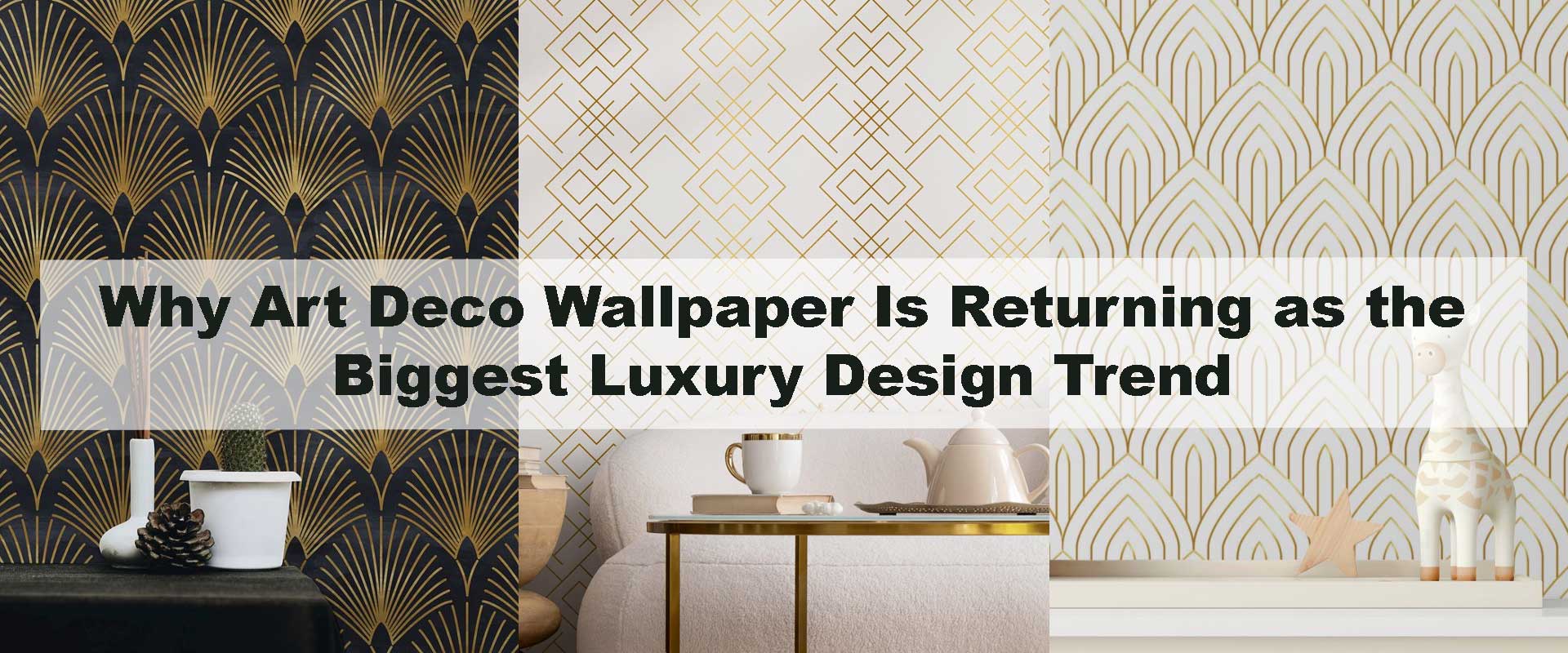
Why Art Deco Wallpaper Is Returning as the Biggest Luxury Design Trend
Luxury interiors are moving away from plain walls toward bold, crafted surfaces that feel intentional, glamorous and deeply atmospheric. That shift is exactly why Art Deco wallpaper is returning as one of the most powerful design choices in high-end homes today. Strong geometric lines, metallic accents, elegant symmetry and rich color stories together create walls that feel architectural rather than simply decorative. Within this movement, everything from softly shimmering Textured Art Deco Wallpaper to dramatic fan motifs is being embraced as a visual language of confidence and contemporary elegance.
The New Face of Luxury: Why Art Deco Fits Today’s Mood
Luxury in modern interiors has evolved into something far more curated than simple opulence. Today’s homeowners value depth, craftsmanship and visual intention—and this is precisely where Art Deco wallpaper excels. Its geometry introduces order and rhythm, its metallic accents add atmospheric glow, and its structured lines bring an architectural backbone to rooms that might otherwise feel flat. Even a subtle hint of brass or champagne gold can shift a space from ordinary to softly illuminated, especially during evening hours when warm light plays gently across reflective detailing.
This renewed appreciation for expressive yet disciplined design echoes the perspective highlighted in Why Art Deco Wallpaper Is Returning as the Biggest Luxury Design Trend, where the focus rests on how Deco’s visual clarity enhances room styling without overwhelming the senses. When these motifs sit behind sculptural furniture or minimalist décor, they create a layered depth that feels both glamorous and thoughtfully restrained.
Even a single refined choice—such as the sculpted angles and balanced patterning found in Geometric Art Deco Wallpaper—can rewrite the atmosphere of a room. It becomes a backdrop that supports maximal interiors with confidence and enriches minimalist spaces with subtle, structured luxury.
Glamour Through Geometry: The Design DNA of Art Deco
Symmetry That Feels Intelligent and Purposefully Crafted
Art Deco geometry has always been associated with confidence—yet modern interpretations refine that strength into something more fluid, elegant and emotionally appealing. Instead of rigid repetition, today’s patterns use softened diagonals, sculpted fan motifs, radiant sunbursts and stepped arches to introduce movement. These shapes guide the eye across a room with calm intention, helping walls feel thoughtfully composed rather than simply decorative.
This is why many elevated interiors naturally gravitate toward concepts reminiscent of Geometric Art Deco Wallpaper Ideas for Glamorous Modern Homes. These designs communicate clarity and sophistication instantly, creating a foundation that enhances sculptural furniture, plush upholstery and even minimal spaces with equal finesse. The geometry becomes a quiet framework of luxury—present, striking, but never dominant.
Metallic Accents That Glow Rather Than Glitter
Metallic detailing is one of the most defining elements of Art Deco, but its modern expression is far more nuanced. Instead of loud shine, today’s metals offer a soft radiance that enriches the entire room. Sunlight traces the edges of brushed gold lines during the day, while evening lighting warms them into a gentle halo, transforming the atmosphere with effortless glamour.
This refined glow is why designs from Luxury Metallic Art Deco Wallpaper stand out. They provide an indulgent yet balanced sheen that works beautifully with velvet, silk, wood and glass. Even in understated rooms, these metallic rhythms create a low, luxurious hum—an ambiance that feels handcrafted and beautifully layered.
Texture That Builds Depth Without Visual Noise
The tactile quality of modern Art Deco wallpaper is one of the key reasons for its renewed popularity. Raised linear embossing, velvety surfaces and marble-inspired finishes introduce dimension in a way that feels sculptural rather than decorative. These textures deepen a room’s character, especially in minimal or contemporary spaces where pattern must elevate without overwhelming.
Designs influenced by Marble Art Deco Wallpaper capture this effect brilliantly. Soft stone-like shading paired with refined geometry creates walls that look carved rather than printed, giving the entire space a gallery-grade finish.
This synthesis of pattern, metallic glow and quiet texture brings harmony to the room—resulting in luxury that feels intentional, breathable and enduring.
Why Homeowners Are Choosing Art Deco Over Plain Minimalism
Minimalism shaped interiors for years by offering calm, uncluttered surfaces—but many homeowners now crave something more expressive, more dimensional and more emotionally engaging. This shift toward character-rich spaces is exactly why Art Deco wallpaper is rising again. It introduces personality without sacrificing order, blends confidence with refinement, and brings sculptural rhythm to walls that once felt blank. Deco doesn’t reject minimalism—it elevates it, adding depth that feels curated rather than crowded.
1. It Harmonizes Beautifully with Modern Furniture
Modern furniture often features clean silhouettes, slim frames and refined simplicity. Art Deco geometry pairs with these elements like a natural extension of their design language. When structured pattern sits behind a sleek sofa or streamlined wooden console, the room immediately feels more intentional. The geometry doesn’t compete—it frames, highlights and enhances.
This synergy echoes the design approach expressed in How Art Deco Wallpaper Enhances Modern Minimalist Furniture, where the emphasis is on how patterned structure provides a subtle architectural anchor for quiet, contemporary pieces. A living room with minimal décor suddenly gains a sense of direction, mood and elegant purpose.
2. It Brings Emotional Warmth Where Minimalism Can Feel Cold
Minimalist interiors can sometimes drift into sterility—too quiet, too flat, too neutral. Art Deco steps in with warm metallics, rhythmic detailing and rich undertones that gently soften these spaces. Champagne gold, burnished bronze and understated brass infuse warmth into corners that previously felt stark.
Designs inspired by Gold Art Deco Wallpaper Styles That Transform Living Rooms Instantly show how even a single feature wall can turn a neutral space into an inviting, evening-ready environment. The metallic glow interacts with floor lamps, pendant lighting and natural daylight to create a luxurious haze that feels welcoming and intimate.
3. It Works Across Rooms with Effortless Adaptability
One of the strongest advantages of Art Deco wallpaper is its flexibility. Whether a homeowner wants dramatic geometry, soft curves, jewel-toned depth or subtle metallic texture, Deco adapts easily to the purpose of each room.
Refined choices from Art Deco Wallpaper for Living Room add structure and sophistication to social spaces, while gentler palettes from Art Deco Wallpaper for Bedrooms create a restful mood perfect for winding down. The same design family can shift from bold to serene simply by adjusting scale and color, making it a rare style that thrives in both expressive and understated interiors.
How Modern Materials Are Powering the Revival
Advancements in printing technology and material innovation have transformed the way Art Deco wallpaper presents itself in today’s interiors. Precision detailing now brings every geometric line into sharp, sculptural focus. Metallic inks appear softer, deeper and more dimensional, catching light with a gentle radiance rather than a harsh reflection. Textures that once felt flat now mimic carved stone, brushed metal or velvety fabric, making walls look genuinely crafted rather than merely patterned.
Equally important, modern substrates have made installation smoother and maintenance far more practical. Homeowners can now introduce luxurious surfaces without the weight or complexity historically associated with ornate décor. This accessibility has allowed bold, expressive Art Deco motifs to flourish even in high-traffic or compact spaces, delivering refinement without compromising durability.
These improvements have broadened the appeal of the style significantly. Ideas reflected in Top Art Deco Wallpaper Styles for Luxury Rental Apartments show how contemporary materials elevate even temporary spaces, giving rental homes a sense of permanence, personality and quiet indulgence. The combination of high-performance substrates and elevated design ensures that Art Deco walls maintain their elegance long after installation, turning everyday rooms into polished, character-filled environments.
How Art Deco Shapes the Mood of Each Room
Different rooms call for different levels of intensity, and Art Deco’s genius lies in its ability to adapt effortlessly. Whether a space needs drama, calmness, or sculpted visual rhythm, Deco shifts its tone with remarkable ease, shaping atmosphere through geometry, depth, color and reflection.
Living Rooms: A Stage for Style and Conversation
Living rooms benefit immensely from Art Deco’s presence, because these spaces thrive on personality and welcoming energy. A confident geometric motif placed behind a sofa or media wall instantly defines the room’s character, giving it a sense of crafted identity. Warm woods and metallic detailing—echoing ideas from Art Deco Wallpaper Ideas for Living Rooms with Wooden Furniture—create a refined contrast that feels grounded yet sophisticated. The result is a social space with presence, warmth and a touch of cinematic polish that makes every gathering feel more intentional.
Bedrooms: Rich Calm Wrapped in Soft Geometry
Bedrooms require serenity, but they also benefit from visual richness that supports relaxation. This is where Art Deco truly excels. Designers turn to softer interpretations—deep jewel tones, gentle repeats and subtle metallic whispers—to create an environment that feels cocoon-like and indulgent. The atmosphere mirrors the mood described in Navy Art Deco Wallpaper Designs That Create Rich Cinematic Bedrooms, where layered lighting and enveloping blues deliver a space that feels tranquil, intimate and immersive.
Using palettes from Navy Blue Art Deco Wallpaper introduces quiet depth while retaining luxurious structure, allowing the room to calm the mind without losing its sense of sophistication.
Dining Rooms: Glamour That Comes Alive at Night
Dining rooms are natural hosts for Art Deco’s expressive side. Here, dramatic geometry and warm metallics amplify evening ambience, making the space glow with understated luxury. Deep hues and sculpted lines—similar to the ideas presented in Best Art Deco Wallpaper Patterns for Dining Rooms with Warm Lighting—respond beautifully to candlelight and pendant fixtures, creating a layered radiance across the room.
Combining these motifs with surfaces like Art Deco Wallpaper for Dining Area transforms everyday meals into special moments, enveloping guests in a mood that feels elegant, warm and subtly theatrical.
Hallways and Transitional Spaces: Direction, Energy and Height
Hallways and stairwells are often overlooked, yet they define how a home flows. Art Deco brings purpose and direction to these zones. Vertical lines, angled repeats and structured geometry—echoing concepts from Art Deco Wallpaper for Hallways That Instantly Elevates Entry Spaces—visually lengthen narrow corridors, draw the eye upward and transform transitions into mini-design moments.
Instead of feeling like connective spaces, hallways become part of the home’s narrative, contributing beauty and rhythm while guiding movement with quiet sophistication.
Choosing the Right Art Deco Wallpaper for Your Space
Selecting the perfect Art Deco wallpaper is less about choosing a pattern and more about shaping the atmosphere you want the room to express. Deco design carries its own architectural rhythm, so every element—scale, color temperature, and texture—shifts the mood in a different direction. When these components work together, walls stop functioning as backgrounds and instead become sculpted surfaces that elevate the entire environment.
Consider Pattern Scale
Scale is one of the most influential decisions in Art Deco styling. A large-scale motif with sweeping arcs, radiant fans, or stepped geometry commands attention instantly, making it ideal for feature walls or spacious living rooms that need a strong visual anchor. These patterns deliver drama without clutter, giving the room a structured, gallery-like presence.
Smaller repeats, on the other hand, offer gentle movement and create a smoother, more continuous flow. They are ideal for compact bedrooms, transitional spaces and full-room applications where you want pattern to feel luxurious but not overwhelming. For anyone experimenting with Deco for the first time, beginning with a single accent wall inspired by Minimal Art Deco Geometry Walls for Calm and Sophisticated Interiors provides a balanced way to introduce detail without too much intensity. This approach lets the geometry breathe while still reshaping the atmosphere of the room.
Evaluate Color Temperature
Color temperature determines whether your walls feel warm and enveloping or crisp and contemporary. Warm metallics—gold, champagne, bronze—infuse the room with softness and quiet luxury, gently reflecting natural and artificial light throughout the day. Cooler metallics—silver, pewter, platinum—introduce a sharper, sculptural effect that pairs beautifully with modern furnishings and clean architectural lines.
These decisions often align with palettes highlighted in Most Popular Art Deco Wallpaper Color Palettes This Year, where emerald, navy, blush, charcoal and soft metallic hues stand out for their timeless appeal. Deep greens from Emerald Green Art Deco Wallpaper create a powerful focal point without overwhelming the space. The crisp geometry layered over rich color adds depth, elegance and a dramatic sense of verticality that suits both contemporary and heritage-inspired interiors.
Think About Texture
Texture is one of the clearest indicators of quality in Art Deco design. Raised embossing, marble-like shading, velvety matte finishes and lightly brushed metallics all contribute to a wall surface that feels intentional and multi-dimensional. The right texture can soften a bold pattern, enhance the glow of metallic elements or amplify the architectural shape of the motif.
Matching these tactile qualities with furniture and fabrics anchors the design. A plush velvet sofa or a wool rug feels richer against softly grained or subtly embossed surfaces. This is why walls that echo the warmth and dimension found in Textured Art Deco Wallpaper That Adds Warmth and Evening Ambience work so beautifully—they create a cohesive sensory layer that connects the entire room. Texture grounds the geometry, making even the most expressive patterns feel harmonious and livable.
The Role of Color: From Jewel Tones to Soft Neutrals
Color is one of the most transformative elements in Art Deco wallpaper, shaping not only the visual tone of a room but also its emotional temperature. Deco’s revival has encouraged homeowners to embrace bolder palettes while also reimagining neutrals in more sophisticated, layered ways. Whether the goal is opulent intensity or quiet, sculpted calm, Deco offers a color story for every mood.
Jewel Tones for Statement Rooms
Jewel tones remain one of the most iconic signatures of Art Deco, celebrated for their theatrical richness and unmistakable luxury. Deep emerald, sapphire, ruby and amethyst-inspired hues saturate a space with dramatic depth, creating a sense of intensity that feels curated rather than overpowering. Walls influenced by Emerald Green Art Deco Walls for Bold Statement Interiors bring a commanding elegance to formal lounges, refined dining rooms and architectural niches. The colors envelop the room, making it feel indulgent, confident and visually immersive—perfect for homeowners who want their interiors to make a striking, memorable impression.
Deep Blues for Cinematic Calm
Navy-centered designs offer a completely different form of luxury: serene, moody and cinematic. These palettes soften the room while adding visual gravity, making them ideal for bedrooms, home libraries, intimate lounges or any environment meant to encourage relaxation. When paired with layered lighting—warm sconces, soft lamps, gentle glows—navy Art Deco motifs evoke boutique hotel sophistication. Plush textiles, velvety cushions, and deep-toned woods complement these designs beautifully, allowing the room to feel peaceful yet richly atmospheric.
Soft Neutrals for Understated Elegance
Deco doesn’t always need bold color to shine. Soft neutrals—champagne, ivory, dove grey, warm stone—reveal the architectural finesse of the pattern. Metallic detailing becomes more pronounced against these subtle tones, catching light gently and offering a luxurious shimmer that shifts throughout the day. These palettes are particularly effective in open-plan homes, where the wallpaper must remain harmonious across multiple zones. Soft neutrals allow Art Deco geometry to breathe, creating an elegant foundation that feels both modern and timeless.
How Art Deco Supports Lifestyle and Practical Needs
The resurgence of Art Deco isn’t driven solely by aesthetics; it also reflects how modern homeowners live, decorate and express themselves. Deco’s structure, versatility and emotional richness align seamlessly with contemporary lifestyle demands, making it far more than a decorative trend—it’s a practical design language that supports everyday living.
Flexible Enough for Changing Decor
Homes evolve. Cushions rotate seasonally, rugs change with mood, and furniture layouts adjust over time. Art Deco wallpapers—with their disciplined geometry and balanced composition—adapt effortlessly to these shifts. Because the patterns anchor a room without dictating style, they support both bold seasonal décor and pared-down arrangements. This flexible spirit echoes ideas within Top Art Deco Wallpaper Styles for Luxury Rental Apartments, where adaptable motifs allow temporary or evolving spaces to feel consistently elegant and considered, even when décor elements shift.
Supportive of Layered, Collected Interiors
Modern interiors often blend vintage heirlooms, handcrafted objects, contemporary furniture and art collected over time. Without a strong visual anchor, this layering can feel scattered. Art Deco geometry solves this gracefully. Its lines create coherence, its symmetry establishes order, and its tonal richness connects disparate pieces. Instead of appearing mismatched, a layered home feels intentional—unified by the quiet structure of its walls. Deco becomes the visual thread that ties the story together.
Ideal for Photography and Social Sharing
In an era where homeowners love capturing their spaces, backdrops matter. Art Deco’s bold contrasts, sculptural shapes and sweeping patterns—like those highlighted in Bold Contrast Art Deco Wallpaper Styles Dominating Instagram Trends—translate exceptionally well through the camera lens. These designs make a room instantly recognizable and visually memorable, whether photographed for social sharing or simply admired in everyday life. The geometry brings drama; the metallic detailing brings glow; together they create a setting that needs little additional decoration to look styled and refined.
Modern Art Deco vs. Historical Art Deco: A Quick Look
Art Deco is rooted in early 20th-century design, yet today’s interpretations are carefully adapted to suit contemporary living.
| Feature | Historical Art Deco | Modern Art Deco |
|---|---|---|
| Color Palette | Strong black, gold, chrome | Jewel tones, neutrals, blush, soft metallics |
| Texture | High-gloss finishes, lacquered surfaces | Subtle texture, matte-metallic blends |
| Pattern Complexity | Highly detailed, dense compositions | Cleaner geometry, selective detail |
| Best Room Placement | Formal halls, grand lounges | Bedrooms, living spaces, dining areas, home offices |
| Styling Approach | Heavy décor and ornate furnishings | Layered but curated, with breathable negative space |
This evolution explains why Art Deco feels right at home in apartments, townhouses and contemporary villas, not just historic buildings.
Bringing Art Deco Into Different Design Styles
One of the most compelling reasons behind the renewed rise of Art Deco wallpaper is its extraordinary ability to integrate into a wide range of interior styles without overpowering them. Rather than acting as a competing visual force, Deco’s structured geometry, metallic accents and rhythmic detailing harmonize effortlessly with both minimal and maximal aesthetics. This adaptability allows homeowners to express personality while maintaining a cohesive atmosphere that feels polished, intentional and beautifully curated.
With Modern Minimalism
In pared-back spaces defined by clean lines and quiet restraint, a well-chosen Art Deco wall becomes the expressive core that reshapes the room’s mood. Geometry introduces movement where minimalism often feels still, and subtle metallics provide warmth without diminishing the clarity of the layout. The balance shown in How Art Deco Wallpaper Enhances Modern Minimalist Furniture illustrates exactly how Deco softens starkness, adding emotional depth while preserving the purity of minimalist form. A single feature wall can enliven an entire room, turning simplicity into sculpted sophistication.
With Classic or Transitional Interiors
Classic interiors thrive on structure, moulding profiles and traditional silhouettes—and this is where Art Deco finds a remarkably natural fit. Its symmetry echoes architectural detailing, while its curves and stepped forms echo historical craftsmanship. When paired with paneling, elegant woodwork or vintage furnishings, Deco patterns highlight the home’s heritage while giving it a refined modern edge. Transitional spaces, which blend old and new, benefit greatly from Deco’s ability to bridge eras, resulting in rooms that feel timeless yet refreshed.
With Glamorous or Hollywood-Regency Looks
For homeowners who gravitate toward velvet sofas, mirrored finishes, crystal lighting and richly layered decor, Art Deco serves as the aesthetic backbone that heightens the glamour. Metallic fans, chevrons and dramatic linear motifs amplify the luxurious mood, evoking the indulgent energy of golden-age cinema. These walls create a setting that feels ready for evening gatherings—dramatic, intimate and visually captivating—without overwhelming the space. It’s Deco at its most confident and theatrical, yet still deeply refined.
3D and Abstract Interpretations: Pushing the Style Forward
Art Deco’s revival doesn’t rely solely on repeating its historical patterns. Many of today’s most sophisticated designs reinterpret the style through texture, shadow play and sculptural illusion.
Patterns featuring layered shading and dimensional embossing—similar to those in 3D Effect Art Deco Wallpaper—create the impression of carved architectural panels. These surfaces feel tactile, immersive and artistically sculpted, allowing even simple rooms to gain gallery-like depth.
Meanwhile, more fluid reinterpretations inspired by Abstract Art Deco Wallpaper soften the movement of traditional Deco motifs. These variations offer a refined, contemporary twist that suits creative studios, modern lounges and home offices where expression matters but historic literalism is less important.
Together, these forward-looking styles ensure that Art Deco continues to evolve—remaining relevant, elegant and adaptable—while honoring its iconic visual language. The result is a design style with both heritage and momentum, capable of shaping the future of luxury interiors just as powerfully as it shaped the past.
Conclusion
The renewed prominence of Art Deco wallpaper proves that luxury today is about deliberate pattern, atmospheric lighting and a finely tuned sense of mood. Geometry brings order, metallics introduce warmth and reflection, and texture adds subtle depth that makes every wall feel crafted. From emerald dining rooms and cinematic navy bedrooms to minimal living spaces with a single structured feature wall, Art Deco offers a versatile toolkit for creating distinctive, future-ready interiors. As more homeowners choose walls that tell a confident design story, it’s clear why Art Deco has returned as one of the biggest—and most enduring—luxury design trends.